Why try escape rooms in Colorado Springs: engaging fun
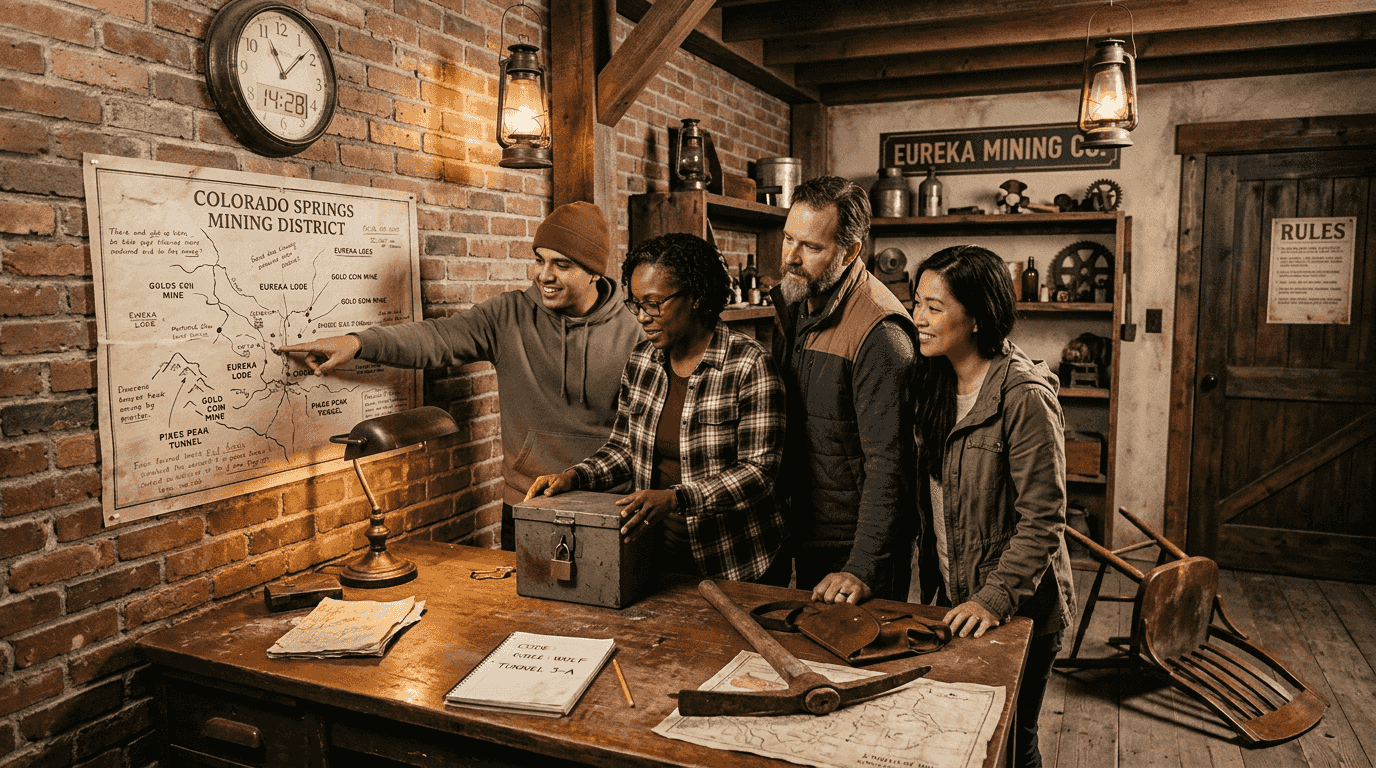
Think you need Sherlock Holmes-level skills to enjoy an escape room? This widespread myth stops countless groups from discovering one of Colorado Springs’ most engaging entertainment options. Escape rooms welcome everyone, from puzzle novices to seasoned strategists, offering immersive experiences that blend storytelling, teamwork, and problem solving. Unlike passive group activities, these interactive adventures create lasting memories while strengthening bonds among families, friends, and colleagues. This guide reveals why escape rooms deliver unmatched value for your next group outing.
Table of Contents
- What Are Escape Rooms? Defining The Experience
- The Psychological And Cognitive Appeal Of Escape Rooms
- How Escape Rooms Promote Social Bonding And Teamwork
- Common Misconceptions About Escape Rooms
- Choosing The Right Escape Room For Your Group
- Practical Benefits For Families, Friend Groups, And Corporate Teams
- Why Escape Rooms Stand Out Among Group Entertainment Options
- Summary: Why Escape Rooms Are Worth Trying
- Discover The Best Escape Rooms In Colorado Springs
Key takeaways
| Point | Details |
|---|---|
| Immersive storytelling drives engagement | Escape rooms combine themed narratives with collaborative puzzles that activate memory, logic, and creativity. |
| Social bonds strengthen through teamwork | Shared challenges improve communication, build trust, and create memorable experiences across all group types. |
| Misconceptions limit participation unnecessarily | Rooms cater to all skill levels with adjustable difficulty, making them accessible for beginners and families. |
| Cognitive benefits exceed passive entertainment | Players develop adaptive problem solving and multitasking skills while experiencing emotional engagement. |
| Right room selection maximizes enjoyment | Matching theme, difficulty, and group size to your team’s preferences ensures optimal fun and success rates. |
What are escape rooms? Defining the experience
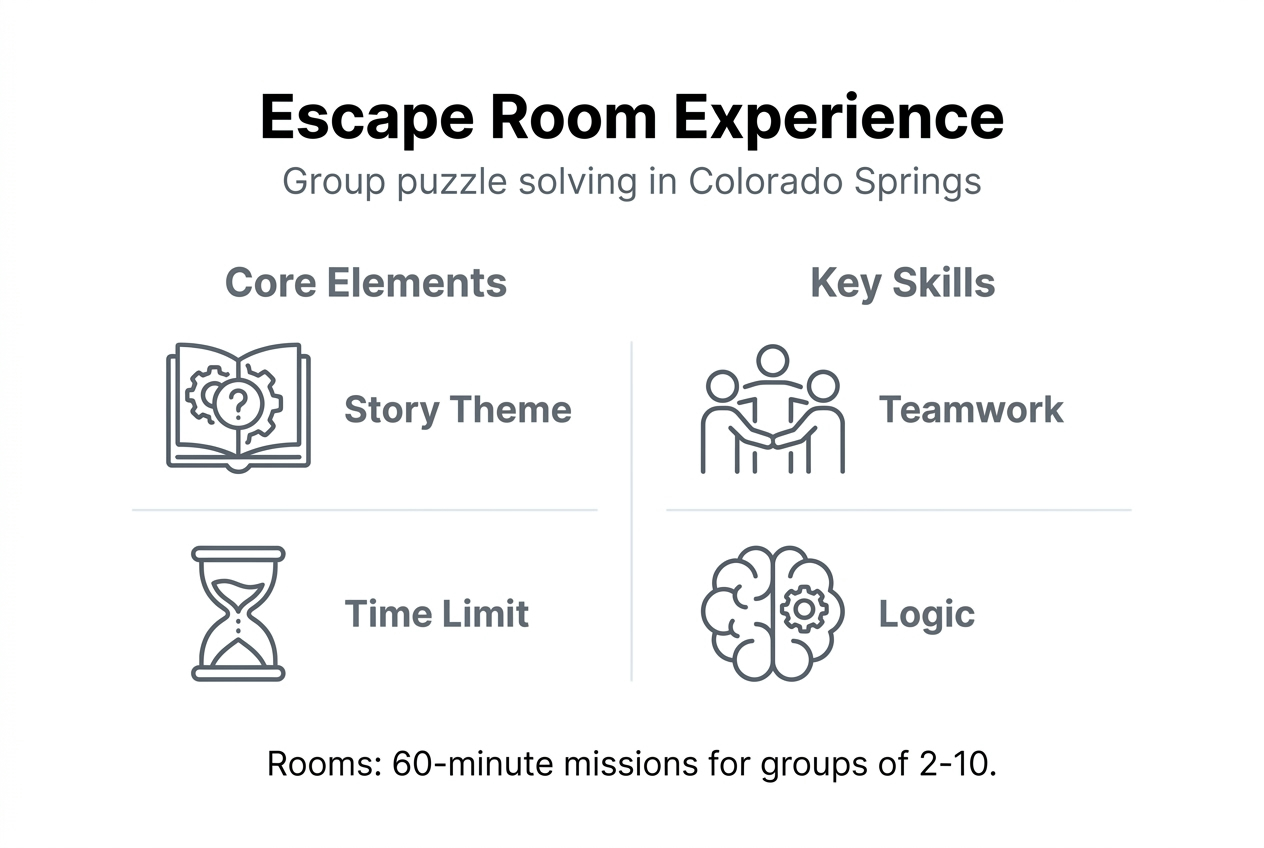
Escape rooms are timed, group-based games where participants solve interconnected puzzles to complete a mission or “escape” within 60 minutes. These experiences transport players into carefully crafted environments, from mysterious laboratories to thrilling heist scenarios, where every detail supports the narrative. Success requires decoding clues, finding hidden objects, and connecting story elements under time pressure.
The escape rooms in Colorado Springs scene offers diverse themes and difficulty levels to match different interests and ages. Each room combines physical props, digital interfaces, and environmental storytelling to create fully immersive worlds. Players must work together, pooling observations and skills to progress through multi-layered challenges that unfold as the story advances.
Key characteristics define the escape room experience:
- Physical immersion through detailed set design and atmospheric elements
- Collaborative problem solving requiring team communication and strategy
- Progressive puzzle chains where solving one challenge unlocks the next
- Time constraints creating urgency and heightened emotional engagement
- Varied difficulty tiers accommodating novice through expert skill levels
Unlike individual puzzle games or passive entertainment, escape rooms demand active participation from every team member. One person might excel at pattern recognition while another spots hidden compartments or connects narrative clues. This diversity of contribution creates natural opportunities for each participant to shine, building confidence and group cohesion throughout the experience.
The psychological and cognitive appeal of escape rooms
Your brain lights up during escape room challenges in ways that passive entertainment simply cannot match. These experiences activate multiple cognitive systems simultaneously, engaging memory recall, logical reasoning, spatial awareness, and creative thinking. Players constantly shift between analyzing new information, testing hypotheses, and adapting strategies based on feedback.
Escape rooms stimulate emotional and physiological responses similar to real world problem solving, offering stress relief through engaged focus rather than passive relaxation. The combination of moderate challenge and achievable goals triggers flow states where time seems to disappear and concentration peaks. This mental engagement creates stronger memory formation, explaining why participants vividly recall escape room experiences months or years later.
The cognitive workout extends beyond puzzle solving:
- Working memory holds multiple clues while connecting patterns
- Lateral thinking generates creative solutions to unconventional problems
- Multitasking balances time management with simultaneous puzzle streams
- Metacognition develops as teams reflect on strategy effectiveness mid-game
“The best escape room moments happen when your brain makes unexpected connections between seemingly unrelated clues, creating that electrifying ‘aha’ sensation.”
Emotional arousal during gameplay heightens both focus and enjoyment. The ticking clock creates productive pressure, while small victories release dopamine that motivates continued effort. This neurochemical response explains why escape rooms feel rewarding even when teams don’t complete every puzzle. The journey itself provides cognitive satisfaction that standard entertainment rarely delivers.
Pro Tip: Embrace uncertainty and voice every observation, even if it seems irrelevant, because your team’s collective cognitive resources spot connections individual players miss.
How escape rooms promote social bonding and teamwork
Shared challenges forge stronger connections than casual social gatherings ever could. When your family, friend group, or colleagues tackle an escape room together, you experience genuine interdependence where success requires meaningful collaboration. This dynamic builds trust as members rely on each other’s unique strengths, whether that’s numerical reasoning, spatial visualization, or narrative interpretation.

Communication skills improve organically as teams develop efficient information sharing under time pressure. Players quickly learn that hoarding discoveries slows progress, while openly discussing observations accelerates breakthroughs. These teamwork stories to boost family unity demonstrate how collaborative challenges create lasting bonds through shared triumph and occasional frustration.
The social benefits manifest across multiple dimensions:
- Active listening skills sharpen as team members process rapid information exchanges
- Role flexibility emerges naturally as different puzzles suit different strengths
- Conflict resolution practice occurs when teammates disagree on approaches
- Celebration moments bond groups through collective achievement recognition
Corporate teams particularly benefit from the leadership dynamics that surface during gameplay. Natural leaders emerge, quieter members contribute valuable insights, and hierarchies flatten as puzzle solving ability matters more than job titles. These authentic interactions reveal team dynamics that office settings often mask, providing valuable insights for managers while strengthening working relationships.
Family groups find escape rooms in Colorado Springs offer rare opportunities for intergenerational cooperation where children and adults contribute equally. Kids often spot visual details adults overlook, while parents provide context and pattern recognition. This balanced participation creates memorable bonding experiences that strengthen family cohesion beyond typical activities.
Pro Tip: Encourage everyone to share ideas openly without judgment, because the quietest team member often holds the key insight that unlocks progress.
Common misconceptions about escape rooms
Many potential participants avoid escape rooms based on inaccurate assumptions that limit their willingness to try this engaging entertainment. These misconceptions create unnecessary barriers preventing groups from discovering experiences perfectly suited to their skill levels and interests. Understanding reality versus myth helps you make informed decisions about your next group outing.
Myth: Escape rooms require expert puzzle solving abilities or special training. Reality: Most facilities design rooms across difficulty spectrums, with family-friendly and beginner options featuring intuitive puzzles and generous hint systems. Success rates for first-time players often exceed 40%, and the experience remains enjoyable regardless of completion.
Myth: Players work individually rather than collaboratively throughout the game. Reality: Room designs intentionally require distributed attention and combined efforts. Puzzles often demand simultaneous work across different areas, making teamwork essential rather than optional for progress.
Myth: The challenge level overwhelms casual players or younger participants. Reality: Difficulty scales match group composition, with themed rooms specifically created for children, beginners, and mixed-skill teams. Game masters monitor progress and provide calibrated hints maintaining engagement without frustration.
Key realities worth understanding:
- No prior escape room experience necessary for enjoyment or reasonable success
- Physical requirements remain minimal, focusing on mental rather than athletic challenges
- Claustrophobia concerns are addressed through spacious rooms and exit availability
- Time pressure creates excitement without genuine stress for most participants
These debunking myths approaches apply equally to escape rooms, where firsthand experience quickly reveals how accessible and inclusive the activity truly is. Facilities welcome diverse groups seeking interactive fun, from elementary school children to senior citizens, with appropriate room selections ensuring positive experiences across all demographics.
Choosing the right escape room for your group
Selecting the optimal escape room maximizes enjoyment and success probability through strategic matching of theme, difficulty, and capacity to your team’s characteristics. This decision process requires evaluating several factors that significantly impact the overall experience quality.
Assess your group size first, as rooms specify optimal player ranges. Teams smaller than recommended may struggle with puzzle volume, while overcrowding creates chaos and limits individual contribution. Most rooms accommodate 4 to 8 participants comfortably, though specific capacities vary by design.
Theme selection drives engagement through personal interest alignment. Horror enthusiasts gravitate toward suspenseful narratives, while families prefer adventure or mystery themes without intense scares. Corporate teams often choose scenarios emphasizing strategy and collaboration, like heist or espionage missions that mirror workplace dynamics.
Difficulty assessment prevents frustration or boredom:
- Beginners should target rooms with 40% or higher success rates
- Mixed experience groups benefit from intermediate difficulty with robust hint systems
- Veteran players seek advanced challenges offering unique puzzle mechanics
- Family groups need age-appropriate content with varied puzzle types engaging both children and adults
Pro Tip: Review detailed room descriptions and contact providers directly about accessibility features, scare factors, and physical requirements before booking.
| Group Type | Recommended Themes | Ideal Size | Difficulty Level |
|---|---|---|---|
| Families with children | Adventure, mystery, fantasy | 4 to 6 | Beginner to intermediate |
| Friend groups | Horror, heist, sci-fi | 5 to 8 | Intermediate to advanced |
| Corporate teams | Strategy, espionage, problem solving | 6 to 10 | Intermediate |
| Date night couples | Romantic mystery, thriller | 2 to 4 | Beginner to intermediate |
| Mixed age groups | Historical, comedy, general adventure | 5 to 8 | Beginner to intermediate |
Consider timing preferences as well. Weekend prime slots fill quickly, while weekday afternoons offer more availability and sometimes discounted rates. Booking well in advance ensures access to your preferred room and time, particularly for larger groups or special occasions requiring specific scheduling.
Practical benefits for families, friend groups, and corporate teams
Each group type derives distinct advantages from escape room experiences, with benefits extending well beyond the 60 minute gameplay window. Understanding these tailored outcomes helps you recognize why this entertainment format suits diverse social and professional contexts.
Families gain intergenerational bonding opportunities that incorporate fun and educational puzzle solving adapted for children and adults together. Parents and kids develop mutual respect as they witness each other’s problem solving approaches and celebrate combined victories. These shared challenges create conversation topics and inside jokes that strengthen family identity for months afterward.
Friend groups enjoy immersive narratives that transform ordinary hangouts into memorable adventures. The cooperative challenge format reveals personality traits and thinking styles friends might not encounter during typical social activities. Success or amusing failures both generate stories that become part of group lore, deepening friendship bonds through shared experience.
Corporate teams develop workplace-applicable skills:
- Communication efficiency improves through rapid information sharing practice
- Trust building occurs as colleagues rely on each other under time constraints
- Leadership dynamics surface organically without formal authority structures
- Creative problem solving transfers to workplace innovation challenges
The cross-functional collaboration required mirrors project team dynamics, making escape rooms valuable for new team formation or existing group cohesion building. Unlike forced team building exercises, the engaging format keeps participants genuinely invested in the outcome.
“Escape rooms reveal how teams actually function under pressure, providing honest insights into communication patterns and collaboration strengths that inform better workplace dynamics.”
Post-experience discussions often yield valuable reflections about individual contributions, communication gaps, and successful collaboration strategies. These debriefs translate learnings into actionable workplace improvements, extending the value well beyond entertainment into professional development.
Why escape rooms stand out among group entertainment options
Comparing escape rooms to traditional group activities reveals significant advantages in cognitive engagement, social interaction quality, and memory formation. While movies, bowling, or dining offer pleasant social contexts, they lack the active participation and collaborative challenge that make experiences truly memorable.
Escape rooms engage participants continuously rather than creating passive consumption. Every team member contributes actively to progress, contrasting sharply with activities where some participants remain spectators. This universal engagement prevents the common problem where quieter group members fade into background roles.
The immersive storytelling component enhances emotional investment beyond standard entertainment. When you decode the final clue and “escape” with seconds remaining, the triumph feels personal because your decisions and actions directly caused the outcome. This agency creates stronger memory encoding than experiences where you simply observe or participate minimally.
| Entertainment Option | Cognitive Engagement | Social Collaboration Required | Immersive Storytelling | Memory Formation |
|---|---|---|---|---|
| Escape rooms | Very high | Essential | Deep narrative immersion | Strong, detailed |
| Movie theater | Low to moderate | None | Passive observation | Moderate |
| Bowling | Moderate | Optional | Minimal | Moderate |
| Restaurant dining | Low | Conversational only | None | Variable |
| Mini golf | Moderate | Optional | Themed but minimal | Moderate |
| Trivia night | High | Team-based | None | Moderate to strong |
The collaborative problem solving requirement distinguishes escape rooms from competitive activities where participants work against each other. Shared goals unite rather than divide groups, building cohesion through cooperative success. This dynamic particularly benefits families and corporate teams where internal competition can create tension.
Preference data supports these experiential differences, with participants reporting higher satisfaction and likelihood to repeat escape rooms in Colorado Springs compared to conventional group activities. The combination of mental challenge, emotional engagement, and social bonding creates multidimensional value that single-focus entertainment cannot match.
Summary: why escape rooms are worth trying
Escape rooms uniquely combine immersive storytelling, cognitive challenges, and meaningful social interaction in ways that traditional entertainment simply cannot replicate. The collaborative puzzle solving format builds communication skills, strengthens trust, and creates vivid shared memories that last far beyond the experience itself.
Well chosen escape rooms deliver engaging fun precisely calibrated to your group’s preferences, whether you’re seeking family bonding, friend adventures, or corporate team building. The accessibility across skill levels means beginners and experts alike find appropriate challenges that maintain engagement without overwhelming frustration.
Trying escape rooms for your next Colorado Springs group outing leads to more satisfying and memorable entertainment experiences. The active participation requirement ensures everyone contributes meaningfully, while the time-bounded challenge creates shared triumphs that strengthen group bonds. These benefits explain why escape rooms have become preferred choices for discerning groups seeking genuine connection alongside entertainment.
Discover the best escape rooms in Colorado Springs
Ready to experience these benefits firsthand? CodeBusters Escape Room offers Colorado Springs’ premier themed adventures, with diverse storylines and difficulty levels designed for families, friends, and corporate teams. Expert staff guide your experience while immersive room designs transport you into compelling narratives.
Whether you’re planning family fun, celebrating with friends, or building workplace teams, CodeBusters provides the perfect setting to create lasting memories. Their award-winning rooms feature innovative puzzles and atmospheric details that maximize engagement. Book your adventure today and discover why escape rooms deliver unmatched group entertainment value.
FAQ
What types of escape rooms are best for families?
Family-friendly escape rooms feature age-appropriate puzzles with varied difficulty levels allowing both children and adults to contribute meaningfully. Adventure and mystery themes without intense scares work best, offering collaborative challenges that build intergenerational bonds through shared problem solving.
Can beginners succeed in escape rooms without puzzle experience?
Absolutely. Many escape rooms design beginner tiers with intuitive puzzles and success rates exceeding 40% for first-time players. Game masters provide calibrated hints maintaining engagement, and the collaborative format means teammates compensate for individual knowledge gaps.
How do escape rooms help improve corporate teamwork?
Corporate escape rooms challenge teams to solve complex problems collaboratively under time pressure, building trust and communication efficiency. The experience reveals natural leadership dynamics and collaboration patterns that inform workplace improvements, while the engaging format keeps participants genuinely invested in outcomes.
What should groups consider when choosing an escape room?
Consider group size relative to room capacity, theme alignment with participant interests, and difficulty matching your collective skill level. Review detailed descriptions, ask providers about physical requirements and scare factors, and book popular time slots well in advance for optimal scheduling.
Are escape rooms suitable for mixed age groups?
Yes. Well-designed escape rooms offer puzzle variety engaging different cognitive strengths, allowing children’s observational skills and adults’ pattern recognition to complement each other. Choose rooms explicitly marketed for mixed ages with adjustable difficulty and family-friendly themes for best results.