Why Themed Escape Rooms Are Perfect for Fun and Bonding
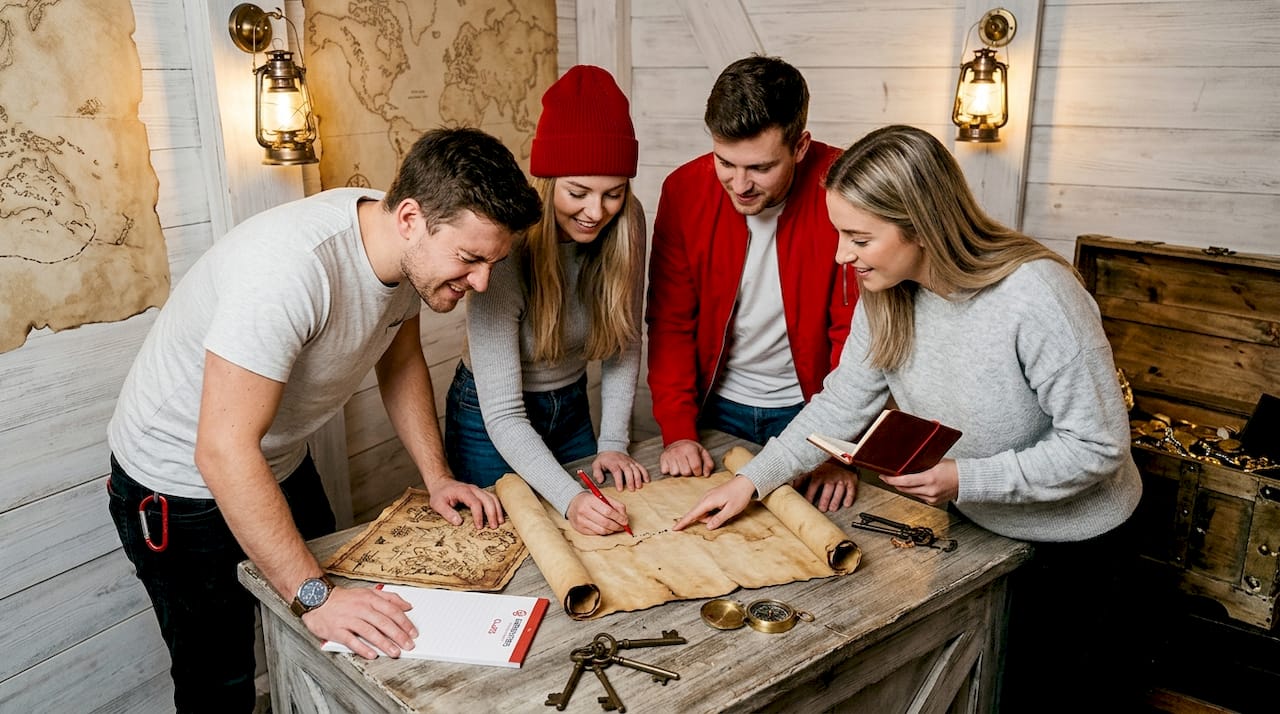
Escape rooms have quietly become one of the most popular group activities in the country, and for good reason. Most people assume they’re just collections of tricky puzzles designed to frustrate you for an hour, but that couldn’t be further from the truth. Research shows escape rooms score a remarkable 4.94 out of 5 for enjoyment, with 100% of participants recommending the experience to others. This article breaks down exactly why themed escape rooms work so well for families, friends, and corporate groups, and how to make the most of every minute inside the room.
Table of Contents
- What makes themed escape rooms different?
- How themed escape rooms drive fun and bonding
- Choosing the right theme for your group
- Beyond the game: Maximizing your experience
- The real reason themed escape rooms are thriving
- Ready to book your themed escape room?
- Frequently asked questions
Key Takeaways
| Point | Details |
|---|---|
| Immersive themes boost fun | Themed escape rooms make group outings exciting with unique stories and environments. |
| Collaboration drives bonding | Working together in themed settings strengthens bonds between friends and family. |
| Choose the right difficulty | Selecting age-appropriate themes and difficulty levels ensures everyone enjoys the experience. |
| Post-game debriefs matter | Reflecting after the game increases learning and keeps the fun going. |
| Industry is growing locally | Quality venues in Colorado Springs thrive, making escape rooms increasingly popular. |
What makes themed escape rooms different?
Not all escape rooms are created equal. A generic puzzle room hands you a locked box and a timer. A themed escape room drops you into a living story where every detail, from the furniture to the soundtrack, serves a purpose.
Themed rooms use storytelling, costume props, custom lighting, and original set design to create an environment that feels completely real. When you step into a room styled like a 1980s basement or the cockpit of a hijacked aircraft, your brain starts treating the challenge as something personal. The puzzles aren’t just intellectual exercises. They become obstacles standing between your character and survival, escape, or victory.

This emotional investment is the key difference. Studies confirm that themes enhance emotional engagement and bonding in ways generic puzzle formats simply cannot replicate. When the narrative stakes feel real, your group communicates more naturally, divides tasks more intuitively, and celebrates wins more genuinely.
Here’s a quick comparison to see how themed rooms stack up against standard puzzle rooms:
| Feature | Standard puzzle room | Themed escape room |
|---|---|---|
| Narrative story | Minimal or none | Fully developed |
| Environmental design | Basic | Immersive set design |
| Emotional engagement | Low to moderate | High |
| Replay appeal | Limited | Strong, due to varied themes |
| Group bonding potential | Moderate | Very high |
Popular themes you’ll find at quality local escape rooms include:
- Time travel adventures that blend history and science fiction
- Mystery and detective narratives with crime scenes to solve
- Horror or thriller settings that create shared suspense
- Fantasy and adventure worlds with mythical elements
- Retro decade experiences like an 80s-themed room full of nostalgia
Each of these themes attracts a different emotional response, which is exactly why groups return again and again. A family with teenagers might gravitate toward the thriller angle, while coworkers might love the absurdity of a time travel narrative. The theme does the heavy lifting of drawing people in before a single puzzle is solved.
How themed escape rooms drive fun and bonding
Having established the value of themes, the next step is understanding why these rooms create fun and lasting connections. The answer lies in how collaboration is deliberately designed into every puzzle.
Escape room designers build challenges that no single person can solve alone. One puzzle might require two people reading clues from opposite sides of the room while a third physically manipulates an object. Another might need someone with sharp pattern recognition working alongside someone who has a head for numbers. This isn’t accidental. It ensures that every person in your group contributes meaningfully.
Empirical data shows escape rooms improve motivation, engagement, and real-world communication skills, with post-game scores significantly higher than pre-game baselines. That’s not just entertainment. That’s measurable personal and professional development wrapped inside a fun hour.
Here’s what a typical themed escape room experience looks like from start to finish:
- Arrival and briefing. Your group receives the backstory, rules, and objectives. This sets the scene and gets everyone invested before the clock starts.
- Room entry and exploration. You enter the themed environment and begin searching for clues, noting hidden items, codes, and props that might matter later.
- Collaborative puzzle solving. The group divides naturally based on what they notice and what they’re drawn to. Communication becomes essential here.
- Breakthrough moments. As puzzles unlock new areas or reveal new clues, the energy in the room spikes. These shared wins are when group bonds form most strongly.
- Escape or debrief. Whether you escape in time or not, the experience closes with the team reviewing what happened, what worked, and what they’d do differently.
“The moment a team cracks a puzzle no one could figure out alone is when you see the real magic. People cheer for each other, grab each other’s arms, and laugh together in a way that doesn’t happen watching a movie.”
Pro Tip: Don’t skip the debrief. Post-game debriefs with your group, even a casual five-minute chat outside the room, significantly increase both skill retention and long-term bonding. Talk about what surprised you, who spotted something unexpected, and what you’d try differently next time.
The shared memory created inside a themed room is powerful. Months later, your group will still reference specific moments, the time someone finally figured out the hidden compartment, or when everyone thought the clock had run out. These are the experiences that strengthen relationships far beyond what a dinner out or a movie night can offer.

Choosing the right theme for your group
Knowing how rooms create bonds, let’s walk through picking the perfect theme for your group. The best experience isn’t just about picking the coolest-sounding room. It’s about matching the right environment to the right audience.
Start by honestly assessing your group’s makeup. A family with young children needs a theme that’s engaging but not frightening, with puzzles designed for a range of cognitive abilities. An all-adult group celebrating a birthday might enjoy something with a higher scare factor or more complex logic chains. Corporate groups often benefit from themes that force structured communication, since the activity serves a dual purpose of entertainment and team development.
Quality industry data supports selecting age-appropriate themes and moderate difficulty for first-timers, noting that venues offering both contribute to stronger long-term growth and repeat business. That tells you something important: the best venues invest in variety because they understand their customers need options.
Here’s a breakdown of popular theme types and who they work best for:
- Fantasy and quest themes (great for families with kids ages 8 and up, lower scare factor, collaborative storytelling)
- Mystery and detective rooms (ideal for adults and teens, moderate difficulty, rewards sharp observation)
- Retro or decade themes (fun for mixed-age groups, nostalgia bridges generational gaps)
- Thriller or suspense rooms (best for adults or older teens, higher stakes, stronger narrative intensity)
- Sci-fi and time travel rooms (great for tech-savvy groups or fans of speculative fiction)
Research into escape room design shows that rooms with a 40% success rate sit in the ideal difficulty sweet spot. Hard enough to feel meaningful, but achievable enough that groups don’t disengage. If your group is brand new to escape rooms, look specifically for venues that offer hint systems so you can ask for help without breaking immersion or losing momentum.
Pro Tip: Ask the venue staff about hint frequency before you book. Some rooms allow unlimited hints while others restrict them. If your group includes younger players or first-timers, unlimited hints keep the energy positive and the experience focused on fun rather than frustration.
Matching the theme to your group’s energy is just as important as matching the difficulty level. A room themed around a spy thriller creates a completely different vibe than one built around a whimsical fairy tale, even if the puzzle difficulty is identical. Take a few minutes to read the room descriptions carefully and talk to your group about what sounds genuinely exciting to them.
Beyond the game: Maximizing your experience
After choosing and completing a themed room, maximizing the fun doesn’t end at the exit. In fact, some of the richest moments happen after the timer stops.
The post-game phase is wildly underutilized by most groups. People tend to either rush out or immediately pull out their phones. But expert insights on debriefs show that structured reflection after an escape room dramatically improves both learning outcomes and group satisfaction, particularly when groups include people with mixed ages or skill sets.
Your group just spent an hour solving problems together under pressure. That’s worth unpacking. What did you notice about how each person contributed? Who surprised you? What communication style ended up being most effective? These are not just fun questions. They’re conversations that reveal real things about the people you care about.
Here are some great ideas for extending the fun after your escape room experience:
- Grab food together nearby. Relive the highlights over a meal while the energy is still fresh.
- Do a group vote on the most surprising moment, funniest mistake, and most valuable contributor.
- Write a quick shared review as a team to capture the memory and support the venue.
- Plan the next room. If your venue has multiple themes, booking the next adventure while you’re still excited is the easiest way to keep the tradition going.
- Take a group photo outside the venue to mark the occasion.
- Compare notes on what each person noticed first, since different perspectives often reveal who on your team is an out-of-the-box thinker.
Pro Tip: Share honest feedback about what each person contributed during the room. This doesn’t need to be formal. A simple “I had no idea you were so good at finding hidden patterns” goes a long way toward reinforcing the bonds formed during the experience. People feel seen, and that feeling sticks.
The escape room itself is the catalyst. What you do with the experience afterward determines how deep the bonding goes. Groups that invest even a little time in reflection come away with something genuinely memorable, not just a fun hour they’ll half-forget by the following weekend.
The real reason themed escape rooms are thriving
Here’s the perspective most articles skip over. People assume themed escape rooms are popular because they’re trendy or because there’s a novelty factor driving interest. That’s not what we’ve observed, and it’s not what the data shows either.
The real driver is emotional resonance. When you place a group of people inside a story that feels real, something shifts. The competitive instinct softens. People stop performing for each other and start actually working together. The theme isn’t decoration. It’s the permission structure that lets people drop their guard.
Think about how rarely adults get to play without self-consciousness. Themed rooms solve that problem elegantly. The narrative gives everyone a reason to be fully present, to shout across the room, to grab a teammate’s shoulder, to fail loudly and laugh about it. The theme provides the social cover that makes all of that feel natural instead of awkward.
Industry data confirms that quality venues are thriving while lower-effort competitors struggle. That’s not a coincidence. Groups can tell the difference between a room that was designed with genuine care and one that was thrown together quickly. The venues investing in narrative craft, detailed set design, and staff training are the ones building loyal repeat customers.
What most people underestimate is how adaptable a great themed escape room can be. A well-designed room serves a birthday party, a corporate team, a first date, and a family reunion, sometimes in the same weekend. That adaptability is a design achievement, not an accident. The best venues, especially those that are locally owned and veteran-operated, understand their community well enough to build experiences that speak to a wide range of people without diluting the quality for any of them.
The local venue quality of businesses deeply rooted in Colorado Springs reflects this philosophy. When a business is built by people who know and care about their community, the experiences they create carry that intentionality in every detail.
Ready to book your themed escape room?
If everything you’ve just read has you thinking about your next group outing, you’re already halfway there.
At Codebusters Escape Room in Colorado Springs, we’ve built every room with the goal of creating exactly the kind of connection and joy described above. From the retro nostalgia of Stranger 80’s to the high-stakes suspense of Flight of Deception, each of our themed escape rooms in Colorado Springs is designed to challenge, entertain, and bond your group in ways you’ll still be talking about weeks later. We’re veteran and family owned, privately bookable, and proudly award-winning. Whether you’re planning a family outing, a corporate event, or a birthday celebration, we make it easy to book the right experience for your group.
Frequently asked questions
What age groups are themed escape rooms suitable for?
Most themed escape rooms offer variations designed for kids, families, and adults, with age-appropriate themes and difficulty levels clearly described online so you can choose what fits your group best.
Do escape rooms help with team building?
Yes, and the evidence is strong. Studies show escape rooms improve motivation, communication, and group engagement with 100% of participants recommending the experience for skill and bonding development.
How difficult are themed escape rooms?
Difficulty ranges from beginner-friendly to advanced, with 40% average success rates representing the typical challenge level, and most quality venues offer hint systems to keep your group moving forward.
Should we debrief after our escape room experience?
Absolutely. Debriefs maximize learning and enjoyment, especially for mixed-age or mixed-skill groups, and even a short informal conversation after the game strengthens the bonds formed during the experience.