Why escape rooms are so popular: the real reasons
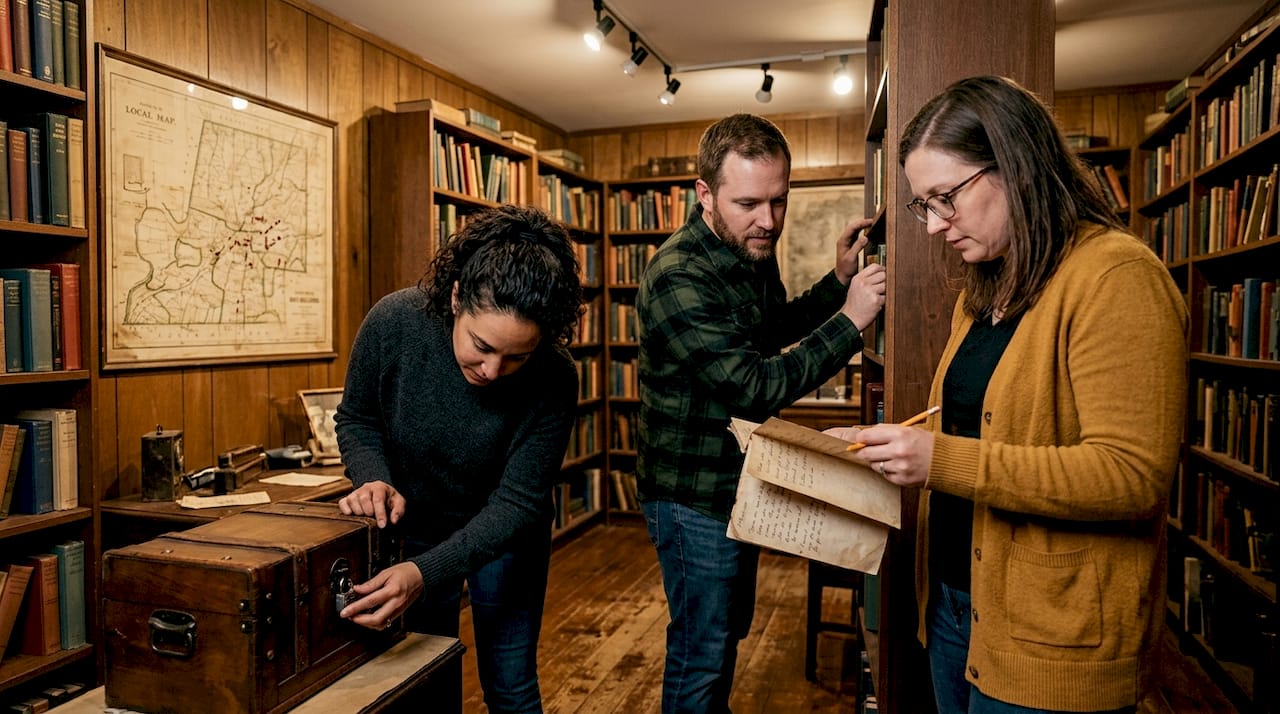
Escape rooms in Colorado Springs are filling up fast, and it’s not just because they’re a fun night out. There’s real science behind why people keep coming back. Puzzles trigger a dopamine rush and push your brain into a rare “flow” state where time disappears and focus sharpens. Add in the pressure of a ticking clock and a group of friends or coworkers, and you have a recipe for one of the most memorable shared experiences available today. This guide breaks down the psychology, social appeal, design secrets, and honest criticisms of escape rooms so you know exactly what makes them so hard to resist.
Table of Contents
- The psychology behind escape room popularity
- Why escape rooms are perfect for socializing and team building
- Design secrets: why escape rooms feel so real and fun
- Common challenges and criticisms of escape rooms
- Perspective: here’s what most people miss about escape room popularity
- Discover Colorado Springs escape rooms for your next adventure
- Frequently asked questions
Key Takeaways
| Point | Details |
|---|---|
| Dopamine and flow | Solving escape room puzzles gives your brain a dopamine boost and a rewarding sense of immersion. |
| Social connection | Escape rooms help groups bond and communicate, making them a top choice for friends and work teams. |
| Smart design matters | Well-designed rooms blend story and challenge, keeping things exciting and accessible for everyone. |
| Know the pitfalls | Large groups can experience idle time or bottlenecks, so choose rooms with smart facilitation. |
| Local appeal | Colorado Springs venues offer tailored escape room adventures perfect for celebrations and team building. |
The psychology behind escape room popularity
Now that you know the popularity is more than hype, let’s look at the psychology that hooks people from the very first room.
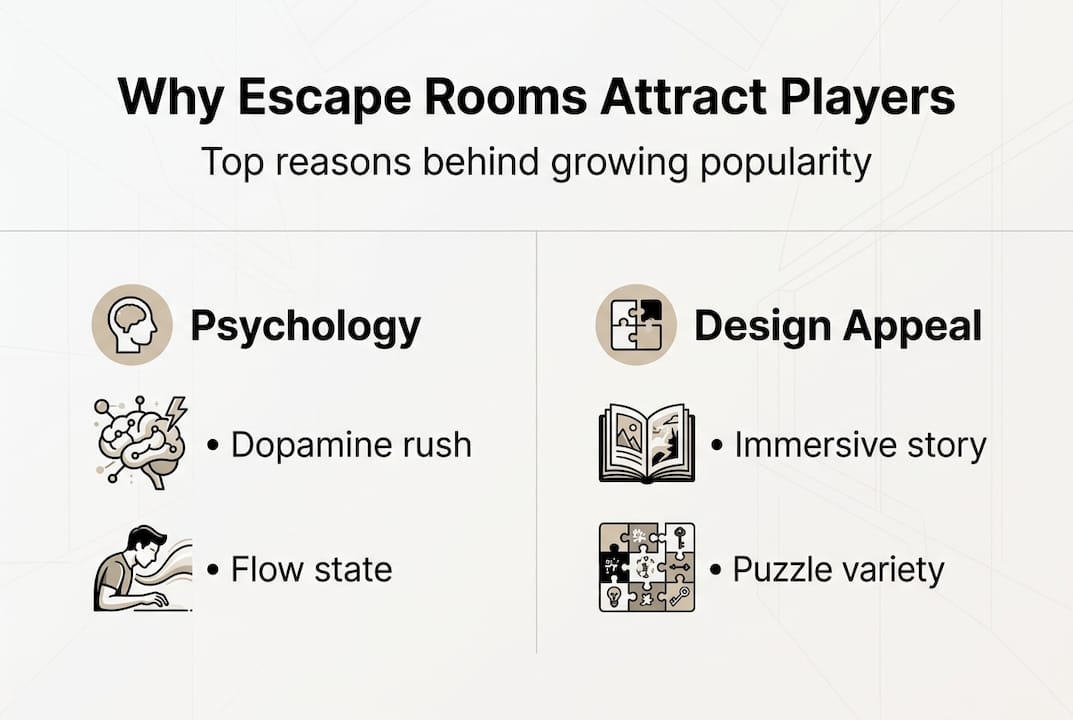
Dopamine is the brain’s reward chemical. It fires when you accomplish something, solve a problem, or feel a sense of progress. Escape rooms are essentially dopamine delivery machines. Every clue you crack, every lock you open, every hidden compartment you find sends a small reward signal to your brain. String enough of those together in 60 minutes, and the experience becomes genuinely addictive in the best possible way.
Beyond dopamine, escape rooms create what psychologists call a “flow” state. Flow is the mental zone where a task is challenging enough to demand full attention but not so hard that it causes panic. Solving puzzles releases dopamine and creates these optimal flow states, which is why players often describe losing track of time completely. It’s the same feeling athletes get in the zone or musicians feel during a perfect performance.
“Flow and dopamine drive the addictive thrill of escape rooms, making each solved puzzle feel like a small victory that keeps players hungry for the next one.”
Time pressure adds another layer. The countdown clock isn’t just a game mechanic. It forces your group to communicate faster, delegate tasks, and trust each other’s instincts. That kind of pressure, when shared, creates real bonds. Here’s what the psychology of escape rooms consistently shows:
- Puzzle-solving triggers dopamine, reinforcing the desire to keep going
- The flow state makes 60 minutes feel like 10
- Shared time pressure builds genuine trust between players
- 82% of players report improved communication after completing a room
- Repeated success loops keep players motivated throughout the game
For groups in Colorado Springs, this translates directly into escape room satisfaction that goes far beyond a typical night out. The experience leaves people feeling accomplished, connected, and ready to book the next room.
Why escape rooms are perfect for socializing and team building
With those psychological levers in play, the next reason for escape rooms’ popularity is their unmatched social draw, especially for groups.
Escape rooms work for almost every type of gathering. Friend groups, couples on dates, birthday parties, corporate teams, and family reunions all find something to love. Unlike passive activities, escape rooms demand participation from everyone. Nobody can sit on the sidelines and scroll their phone when there’s a cipher on the wall and 20 minutes left on the clock.
40% of millennials choose escape rooms for team building, and 65% say they would recommend the experience to a friend. Those numbers reflect something real: escape rooms create stories people want to share.
Here’s how escape rooms stack up against other popular group activities:
| Activity | Interaction level | Memorable moments | Teamwork required | Replayability |
|---|---|---|---|---|
| Escape rooms | Very high | Very high | Yes | High (different rooms) |
| Bowling | Medium | Medium | Optional | Medium |
| Movies | Low | Low | No | Low |
| Trivia night | Medium | Medium | Yes | Medium |
The collaboration in escape rooms isn’t accidental. It’s built into the structure. Here’s how it unfolds from start to finish:
- Briefing phase: The group hears the story together, setting shared stakes.
- Exploration phase: Players spread out and discover clues, naturally forming mini-teams.
- Problem-solving phase: Subgroups share findings and work puzzles collaboratively.
- Final push: Everyone converges on the last challenge, building collective urgency.
- Debrief: Win or lose, the group relives the experience together.
Pro Tip: If your group has more than six people, ask the venue to assign specific puzzle zones to subgroups at the start. This prevents bottlenecks and keeps everyone active. Colorado Springs local venues increasingly offer structured group management for larger bookings.
Post-pandemic, the demand for in-person shared experiences surged. Escape rooms were among the first entertainment formats to benefit because they deliver exactly what people missed: real connection, real laughter, and real stakes. You can explore team building packages tailored for Colorado Springs groups who want that experience without the guesswork.
Design secrets: why escape rooms feel so real and fun
Beyond socializing, escape rooms stand out because their design makes every experience feel unique and real.

The best escape rooms use a concept called ludonarrative harmony. This means the story and the puzzles are woven together so tightly that solving a puzzle feels like advancing the plot, not just completing a task. When you decode a message that reveals a villain’s secret, you’re not just playing a game. You’re living a scene. Diegetic puzzles and multi-intelligence design are the mechanics that make this possible.
Room layouts also matter. Designers choose between two main structures:
- Linear design: Puzzles must be solved in order. Great for beginners and smaller groups because it keeps everyone focused on the same challenge.
- Nonlinear design: Multiple puzzles are available at once. Better for larger groups because it prevents idle time and lets people work in parallel.
Here’s a breakdown of common puzzle types and the skills they engage:
| Puzzle type | Primary skill | Best for |
|---|---|---|
| Ciphers and codes | Logic and pattern recognition | Detail-oriented players |
| Physical locks | Spatial reasoning | Hands-on learners |
| Observation tasks | Attention to detail | Methodical thinkers |
| Story-based riddles | Reading comprehension | Creative thinkers |
| Team coordination | Communication | Group dynamics |
Only 32% of players escape successfully on a global average. That statistic surprises most first-timers. It also explains why escape rooms feel so rewarding when you do crack them. The difficulty is intentional and carefully calibrated.
Multi-intelligence design is the real secret weapon. By mixing logic puzzles, physical tasks, and observation challenges, escape rooms make sure that every personality type finds at least one moment to shine. The quiet observer who spots the hidden symbol becomes the hero. The analytical thinker who cracks the cipher gets the applause. Everyone contributes.
Common challenges and criticisms of escape rooms
While escape rooms have fans, it’s worth knowing their criticisms and how smart operators address them.
Not every escape room delivers on its promise. Common criticisms include vague puzzles, bottlenecks in group play, poor hint systems, and lower immersion in virtual rooms. Knowing what to watch for helps you choose a quality venue and avoid disappointment.
Here are the most frequently cited player pain points:
- Illogical clues: Puzzles that rely on guessing rather than reasoning frustrate players and break immersion
- Idle time: In large groups, poorly designed rooms leave some players standing around with nothing to do
- Unclear resets: When props aren’t properly reset between groups, clues get misplaced or spoiled
- Hint systems: Overly restrictive or vague hints leave groups stuck without recourse
- Accessibility gaps: Rooms that rely heavily on color-coded clues can exclude color-blind players
“High player counts can lead to some participants being left out of key puzzle moments, reducing overall satisfaction for the group.”
Horror-themed rooms carry their own specific risks. Jump scares and intense atmospheres aren’t for everyone, and some venues don’t communicate the intensity level clearly before booking. Virtual escape rooms, while convenient, often struggle to replicate the physical and social energy of an in-person experience. The screen creates distance that weakens the group bond.
Pro Tip: Before booking, ask the venue directly how they manage large groups, what their hint policy is, and how they handle accessibility needs. A quality operator will answer these questions confidently. You can also check escape room complaints from experienced players to know what red flags to avoid.
The best venues in Colorado Springs treat these criticisms as design challenges, not excuses. Consistent staff training, thoughtful puzzle logic, and clear communication before the game starts separate great experiences from forgettable ones.
Perspective: here’s what most people miss about escape room popularity
Wrapping up the core reasons, here’s a different angle on what truly sustains escape rooms’ appeal.
Most people explain escape room popularity by pointing to puzzles or adrenaline. That’s only part of the story. The deeper reason is that escape rooms make you the protagonist. Movies, bowling, and trivia put you in the audience. Escape rooms put you inside the story with real decisions, real consequences, and real teammates depending on you.
Passive entertainment has its place, but it doesn’t build the kind of shared memory that people talk about for years. When your coworker figures out the final code with 30 seconds left, that moment belongs to your group. Nobody else has it.
60% of escape room revenue comes from repeat players, and 80% of players report high satisfaction ratings. Those numbers don’t reflect a passing trend. They reflect a genuine need being met. People want to be active participants in their own entertainment, and escape rooms deliver that better than almost anything else available right now.
For Colorado Springs groups looking for something that actually brings people together, repeat escape room visits aren’t surprising at all. Once you’ve lived through a shared adventure, you want to do it again.
Discover Colorado Springs escape rooms for your next adventure
If you’re ready to experience why escape rooms are so popular, here’s how to get started.
At CodeBusters Escape Room in Colorado Springs, every room is designed with the psychology, social dynamics, and design principles covered in this article. Whether you’re planning a birthday celebration, a corporate team-building event, or a night out with friends, there’s a themed room and a package built for your group.
From the time-traveling twists of Past to the Future to the nostalgic tension of Stranger 80’s, each experience is crafted to keep everyone engaged from the first clue to the final lock. Private room bookings mean your group gets the full experience without interruption. Book your adventure today and find out firsthand why Colorado Springs keeps coming back.
Frequently asked questions
Are escape rooms good for large groups or corporate team building?
Yes, most escape rooms offer tailored experiences for groups and team building, with 40% of millennials and many companies choosing them specifically for this purpose. Venues often provide structured formats and private bookings to maximize engagement for larger teams.
How hard are escape rooms to solve?
Escape room success rates average 32% globally, with difficulty varying by room theme and design. Most venues offer rooms at different difficulty levels to match beginner and experienced groups.
What makes a good escape room experience?
Effective escape rooms feature immersive stories, diegetic puzzles and multi-intelligence design, and challenges appropriate for the group’s size and experience level. Clear hint systems and well-reset props also play a big role in overall quality.
Can escape rooms be booked for birthdays or celebrations?
Yes, many venues offer celebration packages specifically designed for birthdays and private events, and local venues offer team-building packages that align with both social and recreational needs. Private bookings ensure your group has the room to yourselves for the full experience.