What to expect in escape rooms: guide for Colorado Springs
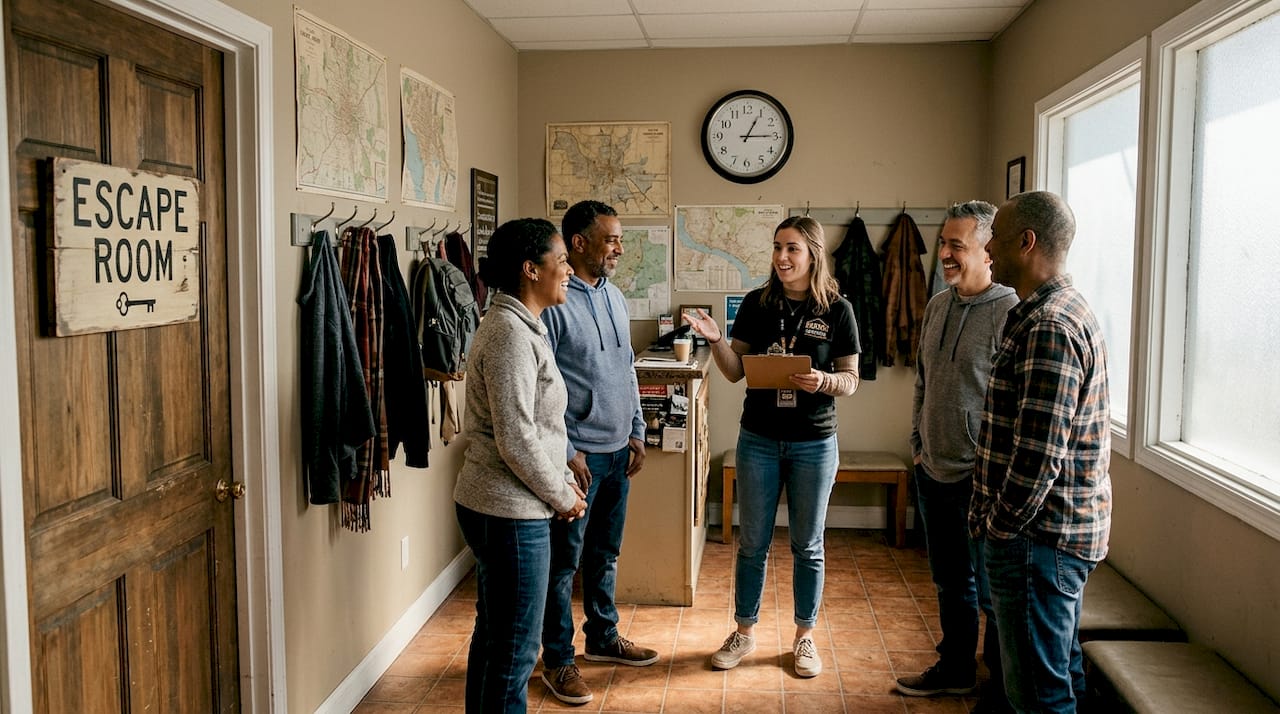
Most people walk into their first escape room expecting to crack every code and walk out victorious. Here’s the reality: most teams don’t escape, yet satisfaction rates stay above 80%. That gap tells you everything about what escape rooms are actually designed to do. They aren’t tests of intelligence or competitive events. They’re shared experiences built around curiosity, laughter, and a little pressure. Whether you’re planning a family outing, a night out with friends, or a corporate team-building event in Colorado Springs, this guide walks you through exactly what to expect and how to make the most of every minute inside the room.
Table of Contents
- What actually happens in an escape room?
- Understanding difficulty, success rates, and why most teams don’t finish
- Puzzles, stories, and immersion: what makes escape rooms memorable
- Maximizing fun for families, friends, and teams in Colorado Springs
- Why escape rooms are more about teamwork than solving puzzles
- Ready to try an escape room in Colorado Springs?
- Frequently asked questions
Key Takeaways
| Point | Details |
|---|---|
| Success isn’t everything | Most teams don’t escape, but the real rewards are teamwork, fun, and shared memories. |
| Know your group | Choose room difficulty, theme, and group size for the best experience tailored to your players. |
| Enjoy the immersion | Modern escape rooms blend story, puzzles, and technology for engaging challenges. |
| Communicate and collaborate | The most successful groups assign roles, use hints, and work together instead of solo efforts. |
What actually happens in an escape room?
The experience starts before you even enter the room. A game master, the staff member who runs your session, gives your group a briefing. You’ll learn the rules, the story behind your mission, and how to ask for hints. Then the clock starts and you’re in.
Inside, your group faces a mix of physical searches, logic puzzles, combination locks, and narrative clues woven into the set. One important thing to understand: most modern rooms are non-linear. That means multiple puzzles can be worked on at the same time by different people. You don’t need to solve puzzle one before touching puzzle two. This design keeps everyone busy and prevents one person from bottlenecking the whole group.
Premium rooms feature diegetic puzzles, meaning the puzzles feel like a natural part of the story and environment rather than random brain teasers bolted onto a wall. A combination lock might be hidden inside a prop that fits the narrative. A clue might be revealed by shining a UV light on a painting. The best rooms make you feel like you’re actually living the story.
Here’s a simple breakdown of how a typical session flows:
- Pre-game briefing: Rules, story setup, and safety walkthrough (5-10 minutes)
- Active play: Searching, communicating, and solving puzzles (60 minutes on average)
- Hint requests: Signal the game master when your team is stuck
- Time’s up or escape: Either the clock runs out or you crack the final puzzle
- Debrief: Staff walks you through anything you missed and takes group photos
Rooms are designed to work for top escape rooms in Colorado Springs audiences ranging from curious kids to seasoned corporate teams. The difficulty and theme shift, but the core loop stays the same.
Pro Tip: Assign loose roles before the game starts. Have one or two people search the room for clues, one person manage found items and track what’s been used, and one person focus on active puzzles. This structure prevents chaos and keeps communication clear.
Understanding difficulty, success rates, and why most teams don’t finish
The word “escape” in escape room creates a false expectation. Many first-timers assume finishing is the norm. It isn’t, and that’s completely intentional.
Industry success rates vary depending on room difficulty: easy and family-friendly rooms see completion rates between 45% and 70%, medium rooms fall between 25% and 60%, and hard rooms often sit between 5% and 40%. These numbers shift based on group size, experience level, and how the room is designed. Stats vary due to room and team factors, and many operators intentionally design failure into the experience because the challenge itself is the fun.
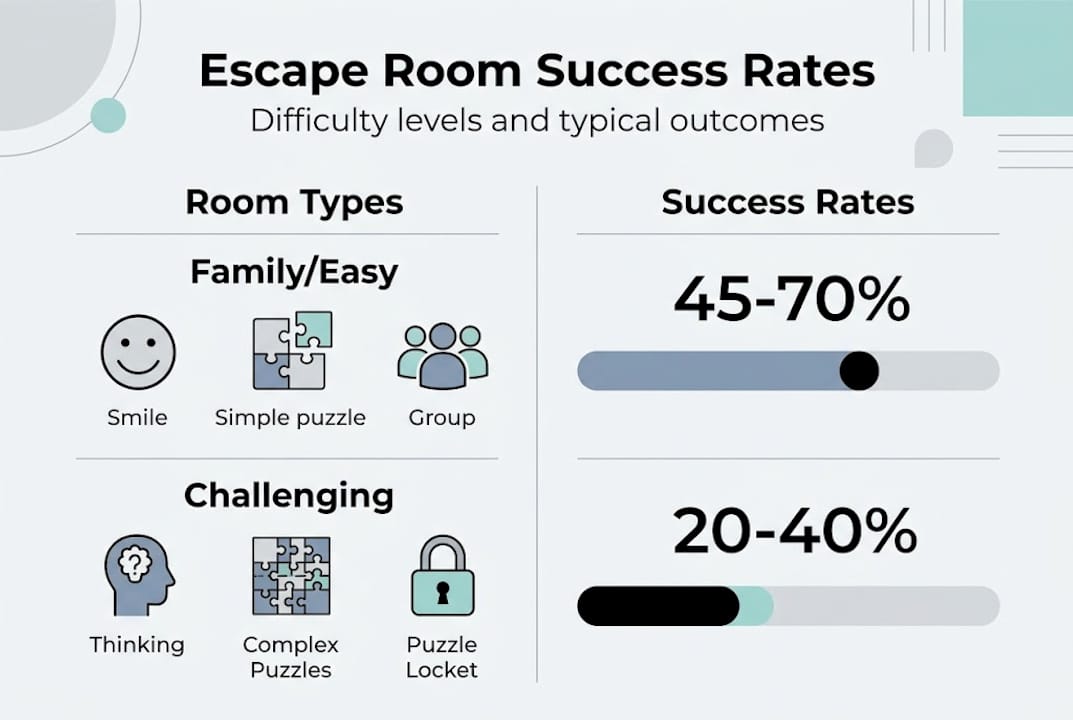
Here’s a comparison to help you pick the right room for your group:
| Room type | Average success rate | Best for |
|---|---|---|
| Family/easy | 45% to 70% | Kids, first-timers, mixed ages |
| Medium | 25% to 60% | Friend groups, casual teams |
| Hard/expert | 5% to 40% | Experienced players, corporate events |
The real takeaway here is that finishing is a bonus, not the goal. Groups that obsess over winning often enjoy themselves less than groups that stay loose and communicate freely. The most memorable escape room moments come from the wild theories, the accidental discoveries, and the shared frustration of being one clue away from the answer.
A few things that genuinely improve your experience regardless of difficulty:
- Use your hints. Most rooms allow 3 to 5 hints per session. Using them isn’t cheating. It keeps the game moving and prevents frustration.
- Talk out loud. Announce everything you find, even if it seems irrelevant. Your teammate might connect it to something else.
- Don’t hoard puzzles. If you’ve been staring at something for more than two minutes without progress, hand it off or call for help.
- Separate what’s been used. Create a physical pile of solved clues so you don’t waste time revisiting them.
Understanding difficulty upfront helps you set realistic expectations and choose the right challenge level for your group’s first or next session.
Puzzles, stories, and immersion: what makes escape rooms memorable
Not all escape rooms are created equal. The ones people talk about for weeks share a specific set of design qualities that go well beyond padlocks and combination codes.
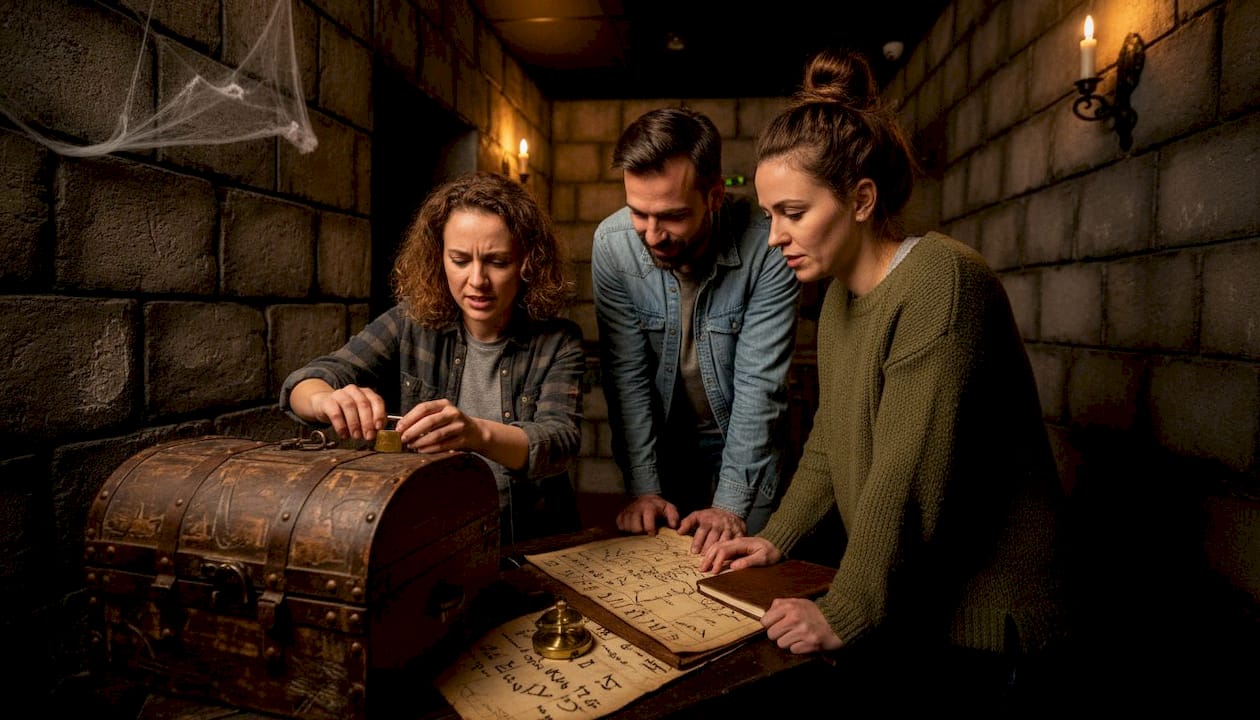
The most important element is story integration. When the narrative and the puzzles connect, the experience feels meaningful rather than arbitrary. You’re not just solving a lock because it’s there. You’re decoding a message because your character needs to stop something from happening. That emotional context makes each solved puzzle feel like a real win.
Premium rooms use diegetic puzzles, engaging multiple intelligences and immersive technology to create environments where the challenge and the setting feel inseparable. Sound design, lighting shifts, and physical props all work together to pull you deeper into the story.
Here’s a look at the design elements that separate average rooms from exceptional ones:
| Design element | What it does | Why it matters |
|---|---|---|
| Diegetic puzzles | Puzzles exist within the story world | Feels natural, not forced |
| Non-linear structure | Multiple puzzles available at once | Keeps whole group engaged |
| Immersive tech | Sound, lighting, and effects | Builds atmosphere and tension |
| Multiple puzzle types | Logic, observation, physical, creative | Engages different strengths |
“Non-linear rooms avoid bottlenecks and keep every team member engaged throughout the session, rather than leaving half the group watching one person solve a puzzle.”
This design philosophy matters for mixed groups especially. When a room tests different kinds of thinking, everyone contributes. The person who spots a hidden symbol on a wall is just as valuable as the one who cracks the cipher. Great escape rooms are built to make everyone feel like the hero at least once.
Themed rooms like Past to the Future, Stranger 80’s, and Flight of Deception use specific eras and narratives to anchor the experience in something familiar and exciting. The theming isn’t decoration. It’s the engine that drives curiosity and keeps groups searching.
Maximizing fun for families, friends, and teams in Colorado Springs
Choosing the right room for your group is the single biggest factor in how much fun you’ll have. A horror-themed hard room is a terrible choice for a family with young kids. A simple family room might bore a group of competitive coworkers. Matching the room to your group matters.
Here’s what to think about when booking:
- Theme fit: Does your group love sci-fi, history, mystery, or pop culture? Pick a theme that excites everyone, not just one person.
- Group size: 4 to 6 players is optimal for most rooms, with an average cost around $35 per person. Smaller groups can feel overwhelmed; larger groups can get chaotic.
- Difficulty level: First-timers should start with easy or medium rooms. Save the hard rooms for your second or third visit.
- Private bookings: Many venues, including CodeBusters, offer private room bookings so your group isn’t mixed with strangers. This makes a big difference for corporate events and family outings.
- Age range: Check minimum age requirements. Family rooms are usually designed for ages 8 and up, while some intense rooms are better for adults.
For corporate groups, escape rooms work especially well as team-building events because they create real pressure situations that reveal how people communicate and collaborate. Unlike a ropes course or a workshop, the stakes feel real even though they aren’t.
For families, the shared mission creates a rare dynamic where kids and adults contribute equally. A ten-year-old who spots a clue the adults missed becomes the hero of the story, and that memory sticks.
Explore Colorado Springs escape adventures to find themed rooms that match your group’s vibe, from family-friendly mysteries to intense corporate challenges.
Pro Tip: Before you arrive, spend five minutes as a group talking about your approach. Agree to communicate everything out loud, support each other’s ideas, and laugh when things go sideways. Groups that set this tone before entering consistently have better experiences.
Why escape rooms are more about teamwork than solving puzzles
Here’s what most guides skip over: the groups who enjoy escape rooms the most are rarely the smartest ones in the room. They’re the ones who communicate best.
We see this pattern repeatedly. A group of highly analytical individuals can fall apart because everyone wants to solve puzzles alone and nobody shares information. Meanwhile, a group of friends with no puzzle experience flies through a medium room because they’re talking constantly, building on each other’s ideas, and celebrating every small win out loud.
The experience is designed to reward collaboration, not individual brilliance. Rooms are built with more puzzles than any one person can track. The only way to move efficiently is to share everything, delegate naturally, and trust your teammates.
What truly sticks with groups after the session isn’t whether they escaped. It’s the moment someone made a ridiculous guess that accidentally worked. It’s the laughter when a clue turned out to be hiding in plain sight the whole time. It’s the story you retell at dinner afterward.
Our hard-won advice: celebrate every small breakthrough, not just the final escape. Every solved lock, every discovered clue, every connected idea deserves a reaction. That energy keeps the group moving and makes the experience genuinely memorable, win or lose.
Ready to try an escape room in Colorado Springs?
Now that you know what to expect, choosing your first or next room becomes a lot easier. You understand the structure, the difficulty curve, and what actually makes the experience worth it.
CodeBusters Escape Room offers a range of themed rooms built for families, friend groups, and corporate teams right here in Colorado Springs. From beginner-friendly adventures to challenging expert rooms, private bookings are available so your group gets the full experience without distractions. Gift vouchers are also available if you want to share the fun. Browse the available rooms, check group size recommendations, and book your session today. Your next great story starts the moment the clock begins.
Frequently asked questions
Do you really get locked in during an escape room?
No, safety regulations mean you’re never actually locked in. You can leave at any time if needed, and emergency exits are always accessible.
What happens if our team doesn’t finish the escape room in time?
Most groups don’t escape, and that’s completely normal. Staff will walk you through the remaining puzzles after the session and keep the focus on the fun you had, not what you missed.
How much does an escape room cost in Colorado Springs?
You can expect to pay around $35 per person for most rooms, though pricing varies by venue, group size, and room type.
What should we bring or prepare for our escape room experience?
Just bring enthusiasm. No special attire or equipment is needed, and comfortable clothes are all you require for a great session.