What makes a quality escape room: key features
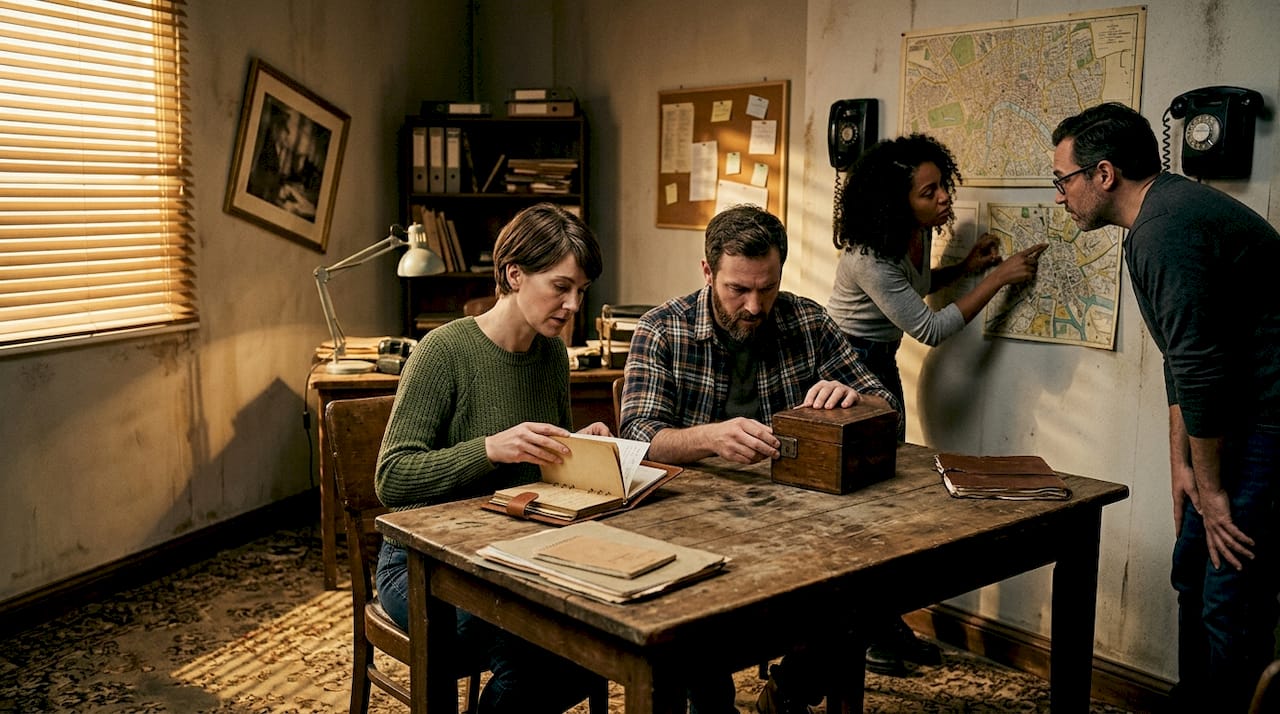
Most people assume a great escape room is just a room full of clever puzzles. That assumption misses almost everything that matters. The escape room industry has grown dramatically, and the rooms that consistently earn top ratings share something deeper than tricky locks and hidden codes. TERPECA top rooms prioritize immersive environments and emotional storytelling, not just mechanical difficulty. If you’re planning a night out, a team event, or a special occasion in Colorado Springs, understanding what separates a forgettable room from a truly memorable one will help you choose better and enjoy more.
Table of Contents
- The core ingredients of a quality escape room
- Why story and emotion matter more than difficulty
- Balancing challenge and accessibility: The science of fun
- Replayability versus immersion: Which matters most?
- Why the best escape rooms aren’t just about puzzles
- Discover Colorado Springs’ top escape room experiences
- Frequently asked questions
Key Takeaways
| Point | Details |
|---|---|
| Immersive storytelling | Quality escape rooms craft a compelling narrative that draws players in and keeps them engaged. |
| Balanced challenge | Rooms that gradually increase difficulty help ensure everyone can contribute and enjoy the experience. |
| High production value | Top rooms feature impressive sets, effects, and scene changes that enhance immersion. |
| Emotional impact | Memorable escapes evoke emotions and create lasting impressions beyond solving puzzles. |
The core ingredients of a quality escape room
To understand what separates ordinary from extraordinary, we first need to define the core building blocks of quality. A well-designed escape room is not just a collection of puzzles arranged in a space. It is a carefully constructed experience with multiple layers working together.
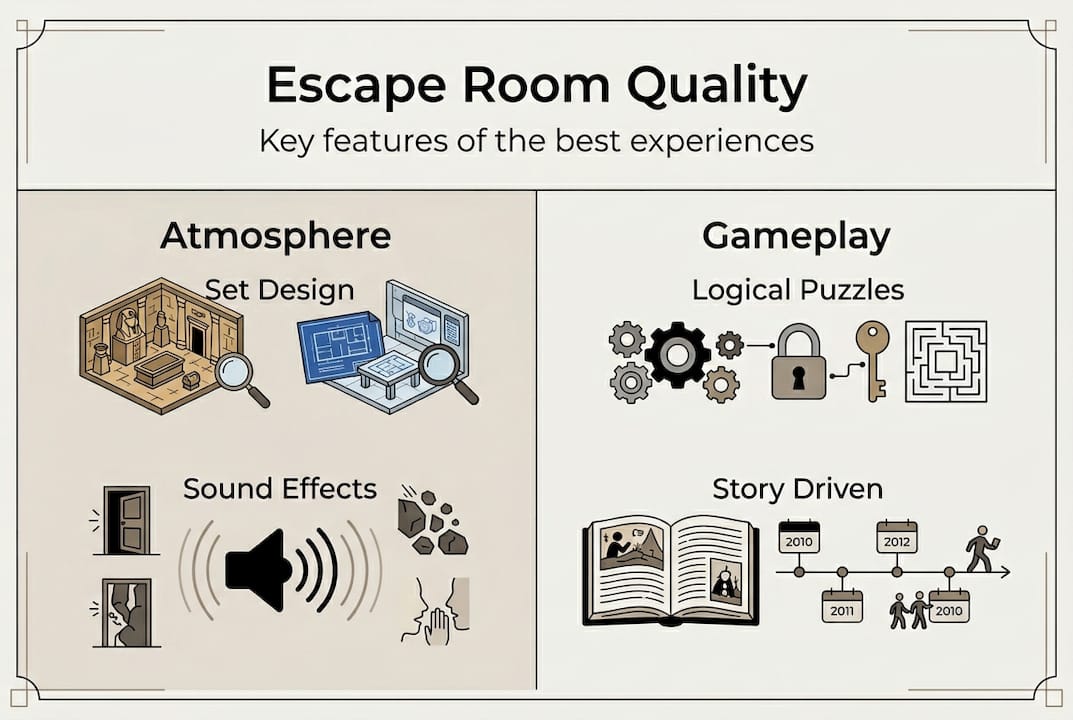
The traits of award-winning escape rooms all point to the same foundation: strong design, high production value, and a story that pulls you in from the first moment. TERPECA-awarded rooms are set apart by high production values and emotional, in-world onboarding that makes players feel like they belong in the world before they solve a single puzzle.
Here is how the key elements stack up:
| Element | Low-quality room | High-quality room |
|—|—|—|
| Puzzle design | Random, disconnected | Logical, story-integrated |
| Set production | Basic props, flat walls | Detailed sets, lighting, effects |
| Narrative | Thin or absent | Rich backstory, emotional stakes |
| Player onboarding | Text dump or video clip | In-world, immersive introduction |
| Flow | Stop-and-start, uneven | Smooth escalation, satisfying arc |
The TERPECA literacy overview breaks down how industry experts evaluate rooms, and the criteria go far beyond puzzle count. What matters is whether the room creates a world you believe in.
Key design factors that define quality include:
- Puzzle logic: Every puzzle should feel like it belongs in the story, not dropped in from another game
- Scene transitions: Moving between spaces or phases should feel natural and earned
- Sensory detail: Sound design, lighting, and smell all contribute to immersion
- Game master integration: A skilled game master can enhance the story without breaking the experience
Pro Tip: Before booking, ask the venue how players are introduced to the story. If the answer is “you watch a video,” that room may be skipping one of the most powerful tools in immersive design.
Why story and emotion matter more than difficulty
Now that we understand the components, let’s look deeper at how story and feelings transform the experience. Difficulty is easy to measure. Emotion is harder to design. But emotion is what makes people talk about a room for weeks afterward.
TERPECA rooms focus on evoking emotion and providing story-driven journeys. That is not an accident. Designers who understand player psychology know that engagement comes from caring about the outcome, not just solving the next lock.

Consider how escape room narrative experiences work at their best. You are not just finding a key. You are rescuing someone, uncovering a mystery, or preventing a disaster. The stakes feel real because the story makes them real.
Here is how emotional design compares to pure difficulty design:
| Design focus | Player experience | Outcome |
|---|---|---|
| Difficulty-first | Frustration, then relief | Satisfaction without connection |
| Story-first | Tension, curiosity, investment | Memorable, emotional payoff |
| Balanced approach | Engaged, challenged, rewarded | Best overall experience |
The 5 fundamental principles of escape room design highlight that rooms which front-load difficulty risk disengaging players before the story even begins. If your group hits a wall in the first ten minutes, the narrative never gets a chance to land.
Here is how great designers build emotional momentum:
- Establish clear stakes early so players know why they are there
- Use environmental storytelling, objects and details that reveal the world without exposition
- Build toward a meaningful climax that feels earned, not arbitrary
- Give players a moment of triumph that connects back to the opening story
- End with an emotional beat, not just a door opening
“The best escape rooms don’t just challenge your brain. They make you feel something. That feeling is what you remember.”
When a room gets this right, even players who don’t escape still leave satisfied. That is the power of story over difficulty.
Balancing challenge and accessibility: The science of fun
Difficulty plays a role, but only when it’s balanced and purposeful. Let’s examine the science behind it. The concept of the Zone of Proximal Development, originally from education theory, describes the sweet spot where a challenge is hard enough to engage but not so hard it causes frustration. Zone of Proximal Development is key to engaging room design, and the best escape room designers apply it deliberately.
Think about your group. You might have one person who has done twenty escape rooms and another who has never tried one. A well-designed room accounts for both. It offers puzzles that reward experience while remaining solvable for newcomers.
Here is how gradual escalation works in practice:
- Start with one or two simple puzzles that teach the game’s logic without overwhelming players
- Introduce mid-level challenges once the group has found their rhythm
- Layer in complexity as confidence builds, adding time pressure or multi-step puzzles
- Reserve the hardest challenges for the final third, when players are most engaged
- Always include at least one puzzle that every group member can contribute to
Pro Tip: When booking for a mixed group, ask the venue about escape room challenge balance and whether they offer hints without penalty. A room that punishes hint requests often prioritizes ego over enjoyment.
Accessibility matters more than most venues admit. Groups include kids, seniors, first-timers, and people with physical limitations. A room that designs only for the experienced player is leaving a large portion of its audience behind. The rooms that get it right feel challenging to everyone without being exclusionary to anyone.
Statistic to know: Studies in game design suggest that players who experience early wins in a game are significantly more likely to stay engaged through harder challenges later. That early momentum is not a gift. It is a design strategy.
Replayability versus immersion: Which matters most?
Design philosophy impacts whether a room aims for frequent replay or a single, transformative experience. This is one of the most interesting debates in the escape room industry, and where you land depends entirely on what your group wants.
Replayability is popular in quiz-style rooms, but top rooms favor narrative immersion. A replayable room is built so that different groups can run through it repeatedly without the experience feeling stale. Puzzles reset, clues shuffle, and the core challenge remains fresh. These rooms work well for corporate team building events where different departments rotate through.
An immersive room, by contrast, is designed to be experienced once and deeply. The story unfolds in a specific way. The emotional arc is fixed. Once you know the ending, the magic changes. These rooms often feature:
- Linear storytelling with a clear beginning, middle, and end
- Character development that players become emotionally attached to
- Unique set pieces that exist purely for atmosphere and wonder
- Moments of surprise that only land the first time
| Room type | Best for | Replay value | Immersion depth |
|---|---|---|---|
| Replayable | Team events, competitions | High | Moderate |
| Immersive | Special occasions, enthusiasts | Low | Very high |
| Hybrid | Mixed groups, casual players | Moderate | Moderate |
“Choosing between replayability and immersion is like choosing between a great board game and a great movie. Both are valid. The question is what experience you’re after.”
For most groups visiting immersive escape room options in Colorado Springs, the answer is immersion. You want to leave talking about what happened, not just whether you escaped.
Why the best escape rooms aren’t just about puzzles
Here is an uncomfortable truth the industry doesn’t always say out loud: puzzle quality alone has never made a room great. We have seen rooms with genuinely clever puzzles that felt hollow. We have also seen rooms with relatively simple puzzles that left players speechless.
What made the difference? Atmosphere. Story. The feeling that you were somewhere real, doing something that mattered. Top rooms are praised not just for their puzzles, but for immersive environments and emotional impact.
In Colorado Springs, the escape rooms that earn repeat recommendations are the ones where players forget they are in a game. The sets feel lived in. The story feels urgent. The memorable escape room design choices are intentional, not decorative.
Most designers spend the majority of their budget on puzzle mechanics and underinvest in atmosphere. That is backwards. Players remember how a room made them feel long after they forget which lock they opened. If you are evaluating rooms to book, look at the photos of the set, read reviews that mention atmosphere, and ask whether the story is integrated into the gameplay or just a backdrop. That question alone will tell you a lot.
Discover Colorado Springs’ top escape room experiences
Ready to experience a quality escape room firsthand? Here’s where to start your search in Colorado Springs.

If everything you’ve read here resonates, then you already know what to look for: high production value, a story that pulls you in, and challenges that feel fair and fun for your whole group. Codebuster’s Escape Room in Colorado Springs brings all of these elements together across multiple themed rooms, each built with the kind of care that turns a night out into a story you’ll tell for years. Whether you’re planning a date night, a family outing, or a corporate team event, booking one of the best escape rooms in Colorado Springs means choosing an experience designed from the ground up to be memorable.
Frequently asked questions
What features make an escape room stand out?
Immersive environments, strong storytelling, emotional engagement, and balanced challenge are the core features. Scene changes and emotional onboarding are hallmarks of top-rated escape rooms that go beyond basic puzzle design.
How important is the difficulty level in an escape room?
Difficulty matters, but it should be balanced with accessibility so every player stays engaged from start to finish. The best rooms avoid front-loading difficulty and use scaffolding to match challenges to different skill levels.
Can escape rooms be replayed or are they one-time experiences?
Most quality rooms are designed as one-time immersive stories, though some are built specifically for replayability and competition formats. Core quality rooms prioritize immersion over repeat-play mechanics, making the first experience the most powerful.
What should I look for when booking escape rooms in Colorado Springs?
Look for high production values, an engaging story, and strong reviews that mention atmosphere and emotional impact. TERPECA top rooms are recognized for story, emotion, and in-world onboarding, and those same standards apply locally.