What Is Gamified Team Building for Corporate Teams
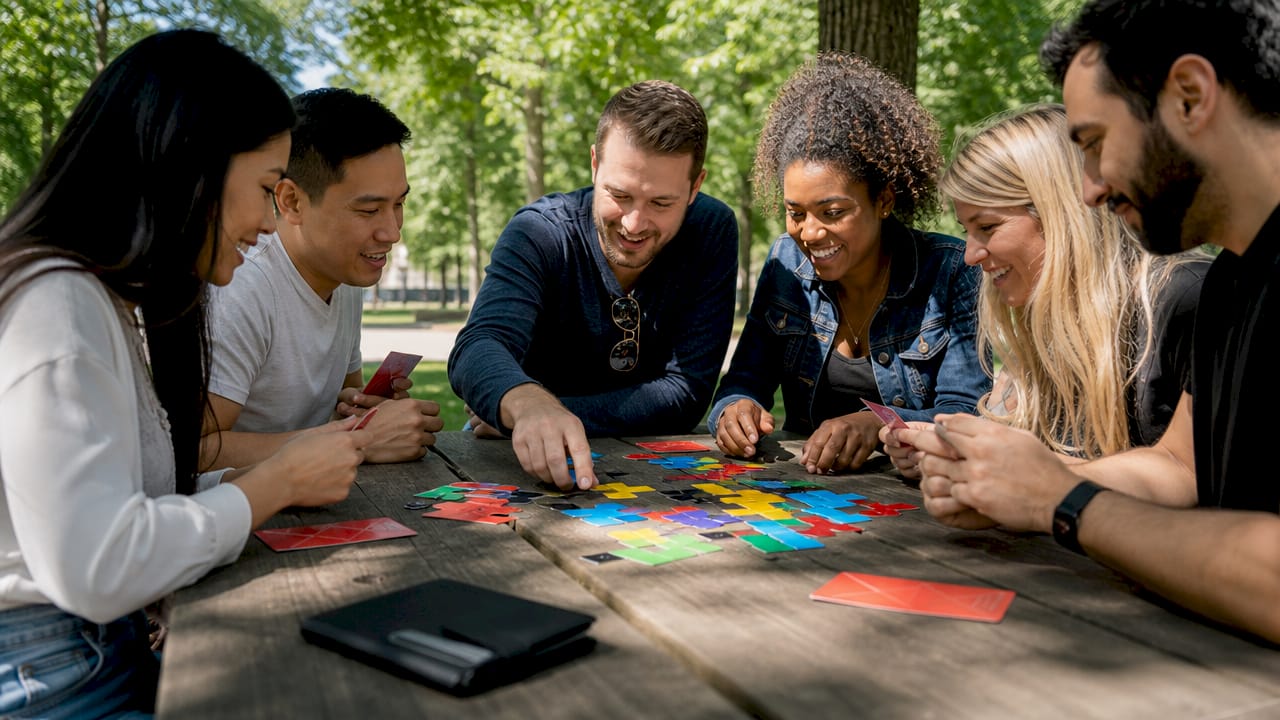
Gamified team building is the practice of embedding game mechanics — points, badges, leaderboards, quests, and narrative challenges — into workplace activities to drive motivation, sharpen collaboration, and strengthen communication. The industry term for this discipline is workplace gamification, and it has moved well beyond novelty. Demand for gamification specialist roles grew 184% year over year in 2025, outpacing traditional HR analyst postings by a factor of nearly seven. That number signals a structural shift: companies are no longer treating game design as a perk. They are treating it as a people strategy. Organizations like Cisco and PwC have deployed simulation-based and virtual quest formats to build cross-functional trust at scale. For HR professionals and team leaders, understanding what gamified team building actually is, and how it works, is now a baseline competency.
What is gamified team building and why does it work?
Gamified team building works because it targets the psychological levers that drive human motivation, not just surface-level fun. Self-determination theory (SDT), developed by researchers Edward Deci and Richard Ryan, identifies three core intrinsic drives: autonomy, competence, and relatedness. Well-designed gamified activities satisfy all three simultaneously. A team solving a timed puzzle challenge exercises autonomy in choosing their approach, builds competence through progressive difficulty, and deepens relatedness by depending on each other to succeed.
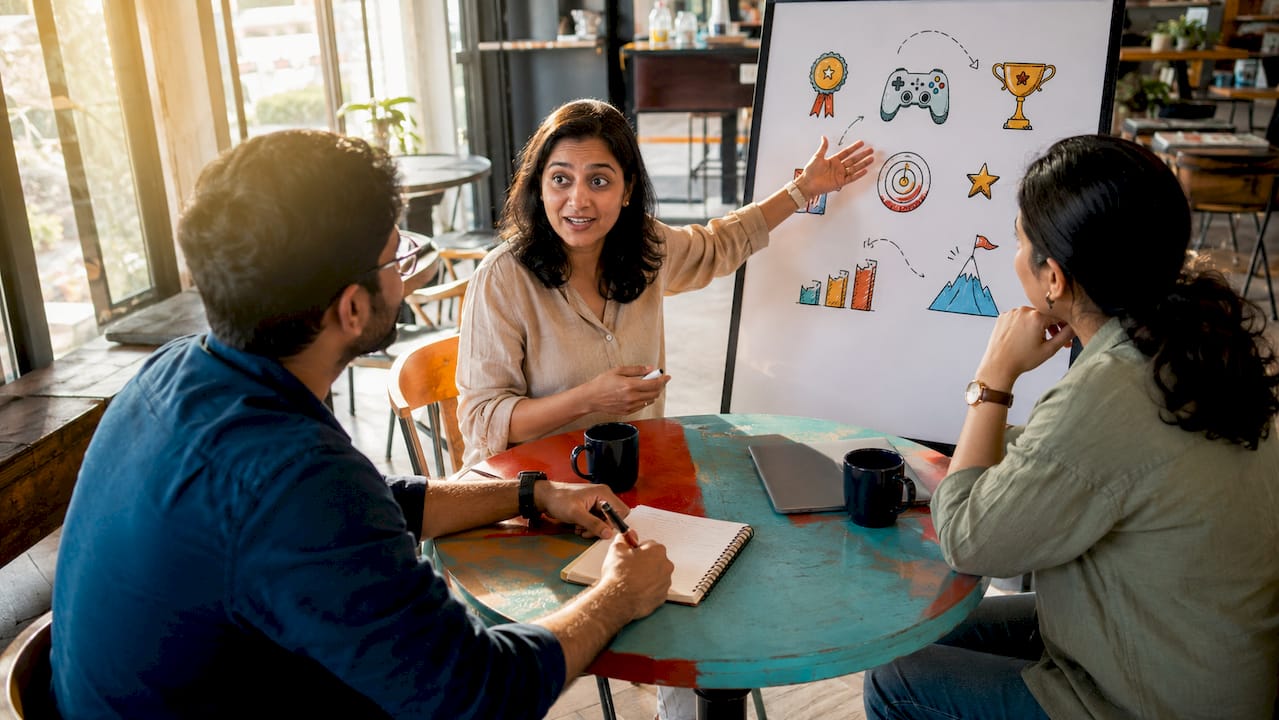
The contrast with traditional formats is stark. Gamified workshops produce stronger knowledge retention and emotional bonding than passive seminars, because active participation creates stronger neural pathways and lasting emotional memories. A two-hour lecture on communication skills rarely changes behavior. A 60-minute collaborative puzzle challenge where miscommunication costs the team a key clue tends to stick.
Gamification in team building also addresses a structural problem in most corporate engagement programs: they are designed for the individual, not the group. When leaderboards rank individuals against each other, you get competition, not cohesion. Properly designed gamified activities shift the reward structure so that one person’s success becomes everyone’s success, building genuine interdependence rather than internal rivalry.
The manager’s role in this equation is larger than most HR programs acknowledge. Managers account for 70% of the variance in team-level employee engagement. That means the most sophisticated gamified program will underperform if the manager does not actively model and reinforce the behaviors the game is designed to build.
What game mechanics and frameworks actually drive engagement?
The mechanics most commonly used in gamified team building fall into two categories: extrinsic and intrinsic motivators. Points, badges, and leaderboards are extrinsic. They are visible, measurable, and easy to implement. Quests, narrative arcs, and branching decision paths are intrinsic. They create meaning, not just measurement.
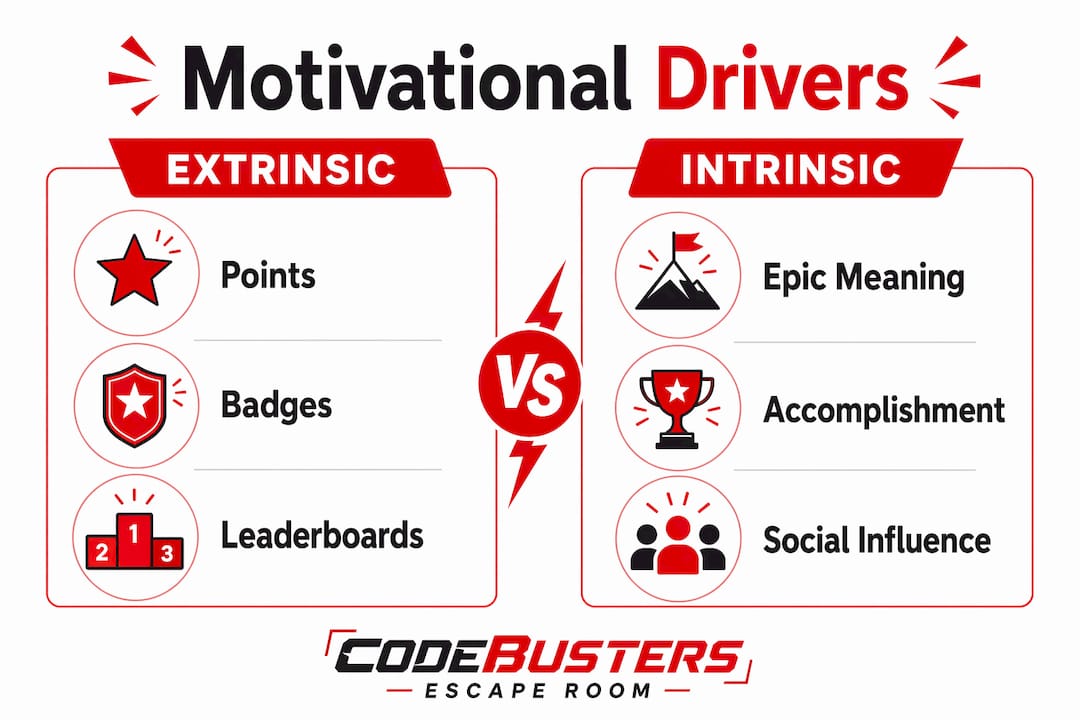
The Octalysis Framework, developed by Yu-kai Chou, maps eight core motivational drives including epic meaning, accomplishment, ownership, social influence, and unpredictability. Frameworks like Octalysis help designers balance these drives so that engagement is sustained beyond the initial novelty of a new program. A system built only on points and badges typically loses its pull within weeks. A system that incorporates narrative ownership and social influence holds attention far longer.
The table below compares the most common game mechanics and their specific applications in corporate team settings.
| Mechanic | Workplace application | Motivational driver |
|---|---|---|
| Points | Track task completion and participation | Competence, progress visibility |
| Badges | Recognize skill milestones and contributions | Accomplishment, identity |
| Leaderboards | Display team (not individual) rankings | Social influence, healthy competition |
| Quests | Structure multi-step collaborative challenges | Autonomy, narrative ownership |
| Narrative scaffolding | Frame activities within a story or mission | Epic meaning, emotional investment |
| Adaptive difficulty | Adjust challenge level in real time | Flow state, sustained engagement |
One finding that should give HR professionals pause: only about 33% of corporate gamified initiatives are fully aligned with cognitive gamification principles. That means the majority of programs are leaving significant engagement potential on the table by relying too heavily on simple point systems without deeper motivational architecture.
Pro Tip: Before selecting any game mechanic, map it to a specific behavioral outcome you want to change. “We want to improve cross-department communication” leads to a very different mechanic choice than “we want to increase participation in retrospectives.”
How to implement gamified team building in your organization
Effective implementation follows a sequence. Start with organizational goals, not game features. The most common mistake HR teams make is selecting a platform or activity first and then trying to retrofit it to a business objective. That approach produces exactly the kind of thin, superficial gamification that fails without narrative or real decision impact.
Here is a practical sequence for launching a gamified team-building initiative:
- Define the behavioral outcome. Identify one specific behavior you want to change or reinforce. Examples include cross-functional collaboration, knowledge sharing, or psychological safety in meetings.
- Choose mechanics that serve the outcome. Use the Octalysis Framework or SDT as a filter. If your goal is relatedness, prioritize collaborative quests over individual leaderboards.
- Design branching narratives. Give participants choices that affect outcomes. When a team’s decision in a simulation leads to a visible consequence, the learning becomes personal and memorable.
- Integrate with existing workflows. Gamified activities that exist in isolation from daily work lose relevance quickly. Tie challenges to real projects, real teams, and real deadlines where possible.
- Equip managers to facilitate. Brief team leaders on the mechanics and expected behaviors before launch. A manager who understands the game’s design can reinforce its lessons in daily interactions.
- Build feedback loops. Use dashboards or debrief sessions to make progress visible. Gamification aligns with organizational goals when it supports continuous improvement rather than functioning as a one-time event.
Pro Tip: Avoid the “points for everything” trap. When every minor action earns a point, the currency loses meaning. Reserve rewards for behaviors that are genuinely difficult or strategically important.
Real-world examples of gamified team building in action
The most instructive examples of gamified team building come from companies that treated game design as a serious organizational investment, not a morale booster.
Cisco built simulation-based learning environments where cross-functional teams navigate realistic business crises together. The simulations use branching decision trees, time pressure, and role-specific information asymmetry to mirror actual workplace dynamics. PwC developed its Virtual Office Quest, a gamified onboarding and team-building experience that uses narrative immersion and collaborative problem-solving to accelerate trust formation among new hires and existing teams.
Physical escape rooms represent one of the most accessible and well-tested formats for gamified team building. They incorporate nearly every core mechanic: time pressure, progressive puzzle difficulty, role interdependence, and a shared narrative goal. Research on escape rooms boosting team collaboration confirms that the format produces measurable improvements in communication and problem-solving under pressure. The key differentiator between a good escape room and a great one is the quality of the narrative and the degree to which each team member’s contribution is genuinely necessary.
Virtual formats have expanded the toolkit considerably. AI-driven adaptive difficulty systems now adjust challenge levels in real time based on team performance, keeping participants in what psychologists call a flow state. Dropout rates fell to 14% in gamified pilots using adaptive difficulty, compared to significantly higher rates in conventional workshops. That gap represents real ROI for HR teams measuring program completion and behavior transfer.
For teams evaluating which format fits their goals, comparing escape rooms vs. other games is a useful starting point. The right format depends on group size, remote vs. in-person logistics, and the specific behavioral outcome you are targeting.
Key takeaways
Gamified team building works when it is built on motivational science, not just game aesthetics. The mechanics must serve a behavioral goal, the narrative must create genuine stakes, and managers must actively reinforce what the game teaches.
| Point | Details |
|---|---|
| Definition matters | Gamified team building embeds game mechanics into workplace activities to drive motivation and collaboration, not just entertainment. |
| Motivational frameworks | Use Octalysis or SDT to select mechanics that address autonomy, competence, and relatedness simultaneously. |
| Collaborative over competitive | Design reward structures around shared team goals so that individual wins benefit the whole group. |
| Manager influence is decisive | Managers drive 70% of team engagement variance, making their facilitation role critical to any gamified initiative. |
| Narrative depth sustains engagement | Programs built only on points and badges lose effectiveness quickly. Branching narratives and real decision impact create lasting behavior change. |
Why most gamified programs underdeliver, and what actually fixes it
From our experience running immersive, narrative-driven challenges at Codebustersescaperoom, the single most common failure mode in corporate gamification is not a lack of budget or technology. It is a lack of stakes. When participants sense that their choices do not actually matter, the game collapses into theater. They go through the motions, collect their points, and return to their desks unchanged.
The programs that produce real behavior change share one design principle: every participant’s contribution is genuinely necessary for the team to succeed. Not symbolically necessary. Actually necessary. In a well-designed escape room, the person who notices the detail on the back of a prop is the reason the team escapes. That moment of recognition, that feeling of being the person who mattered, is what creates the emotional memory that transfers back to the workplace.
The future of gamified team building will be shaped by AI-driven personalization and the growing professionalization of the field. The 184% growth in gamification specialist roles is not a trend. It is a leading indicator that organizations are beginning to treat game design as a core HR competency. The teams that invest in that expertise now will have a measurable advantage in engagement, retention, and cross-functional performance within the next two to three years.
My practical advice: start with one team, one clear behavioral goal, and one well-designed experience. Measure the outcome. Then scale what works.
— CodeBusters
Take your team inside a real gamified challenge
If you want your team to experience gamified team building at its most effective, Codebustersescaperoom in Colorado Springs delivers exactly that.
Our themed escape rooms, including “Past to the Future,” “Stranger 80’s,” and “Flight of Deception,” are built around the same principles that make workplace gamification work: narrative immersion, role interdependence, progressive difficulty, and shared stakes. Every room requires genuine collaboration and communication under pressure, making them one of the most direct ways to practice the skills your team needs in the real world. Private bookings are available for corporate groups of all sizes. Book your team’s experience at Codebustersescaperoom and see what your team is actually capable of.
FAQ
What is gamified team building in simple terms?
Gamified team building is the practice of applying game mechanics like points, challenges, and narrative goals to workplace team activities in order to improve engagement, collaboration, and communication. It differs from traditional team building by making participation intrinsically motivating rather than obligatory.
What are the main benefits of gamified team building?
The core benefits include stronger knowledge retention, deeper emotional bonding between team members, and improved cross-functional collaboration. Gamified workshops consistently outperform passive seminars on these measures because active participation creates stronger neural connections than passive listening.
How do you gamify a team event effectively?
Start by defining one specific behavioral outcome, then select game mechanics that serve that goal using a motivational framework like Octalysis or self-determination theory. Avoid simple point systems without narrative depth, since programs built only on extrinsic rewards lose engagement quickly.
What are examples of gamified team building activities?
Common examples include escape rooms, business crisis simulations, virtual quest programs like PwC’s Virtual Office Quest, and AI-adaptive collaborative challenges. Physical escape rooms are particularly effective because they combine time pressure, puzzle interdependence, and shared narrative goals in a single experience.
How is gamified team building different from regular team building games?
Regular team building games focus on fun and social interaction. Gamified team building uses deliberate game design, including mechanics, feedback loops, and motivational frameworks, to produce specific behavioral outcomes that transfer back to the workplace.