What Is Corporate Team Building? A Manager’s Guide
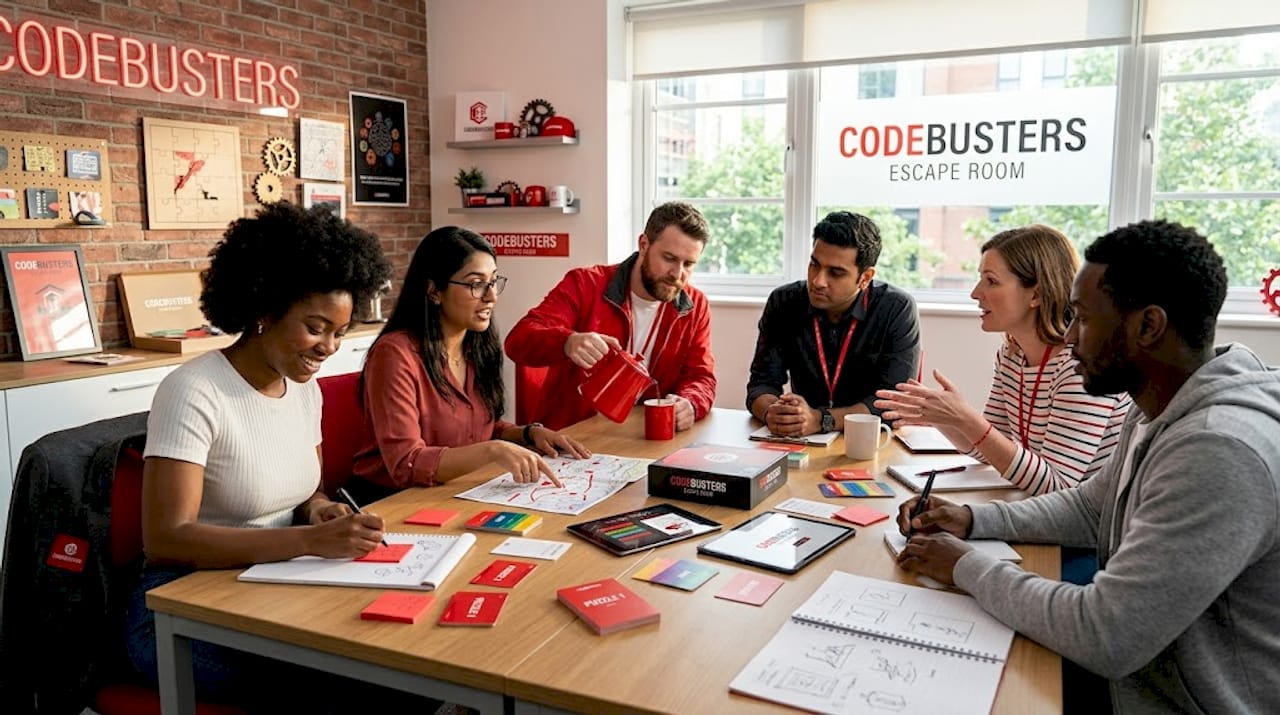
Most corporate managers have sat through at least one team building event that felt like a waste of a Tuesday afternoon. Laser tag with people you barely know, trust falls with colleagues who barely make eye contact in meetings. The experience left everyone counting the hours. That frustration is understandable, but it points to a misunderstanding of what is corporate team building at its best. Done right, team building is not a distraction from work. It is one of the most strategic investments you can make in your people, your culture, and your bottom line.
Table of Contents
- Key takeaways
- What corporate team building really means
- How team building has evolved
- The real business case for team bonding
- How to plan and run team building that actually works
- Choosing the right type of activity
- My honest take on what actually works
- Book a team building experience in Colorado Springs
- FAQ
Key takeaways
| Point | Details |
|---|---|
| Team building is strategic | Purposeful activities improve communication, trust, and collaboration in ways regular meetings cannot replicate. |
| One-off events rarely work | Behavioral changes require ongoing, consistent development rather than isolated events. |
| Debriefing is the difference-maker | Structured reflection after activities transforms games into lasting team insights and changed habits. |
| Remote teams need a different approach | Hybrid and distributed teams require remote-first designs and frequent shorter sessions to stay connected. |
| Experiential activities outperform generic ones | Activities like escape rooms and leadership simulations yield more measurable team growth than purely social events. |
What corporate team building really means
Corporate team building refers to structured activities designed to improve interpersonal relationships, communication, and collaboration among employees. The goal is measurable: increase productivity, reduce friction, and build the kind of trust that helps teams perform under pressure.
It is easy to conflate team building with casual social time, but the two are fundamentally different. A happy hour is fine. It is not team building. True corporate team building has a purpose, a design, and an intended outcome. It asks teams to do something together that reveals how they communicate, where they lead, and where they go quiet.
The range of activities is wide:
- Quick icebreakers at the start of meetings (10 to 15 minutes)
- Monthly collaborative challenges tied to a specific skill like decision-making or listening
- Half-day workshops focused on conflict resolution or cross-functional cooperation
- Multi-day immersive retreats for leadership development
What distinguishes all of these from recreational outings is intentionality. Every activity should map to a team-level goal, whether that is improving how a team hands off projects, reducing miscommunication between departments, or building psychological safety so people speak up honestly.
Pro Tip: Before designing any team building activity, write down one specific behavior you want your team to do differently afterward. If you cannot name it, you are not ready to plan the event.
How team building has evolved
The trust fall is officially retired. Over the past decade, the field has moved decisively away from generic, one-size-fits-all exercises toward experiential learning programs built around specific team goals.
Here is what that shift looks like in practice:
| Old approach | Current best practice |
|---|---|
| Generic trust exercises | Problem-solving simulations with a debrief |
| Annual one-day retreat | Monthly or quarterly shorter sessions |
| Same format for every team | Customized to team goals and composition |
| Focus on fun | Focus on psychological safety and communication |
| In-person only | Remote-first design for hybrid inclusion |
One of the most significant shifts is the focus on psychological safety as a core outcome. Teams where members feel safe admitting mistakes and disagreeing openly are consistently more innovative and resilient. Building that environment does not happen accidentally. It requires structured experiences where people practice vulnerability in low-stakes settings before they need it in high-stakes ones.
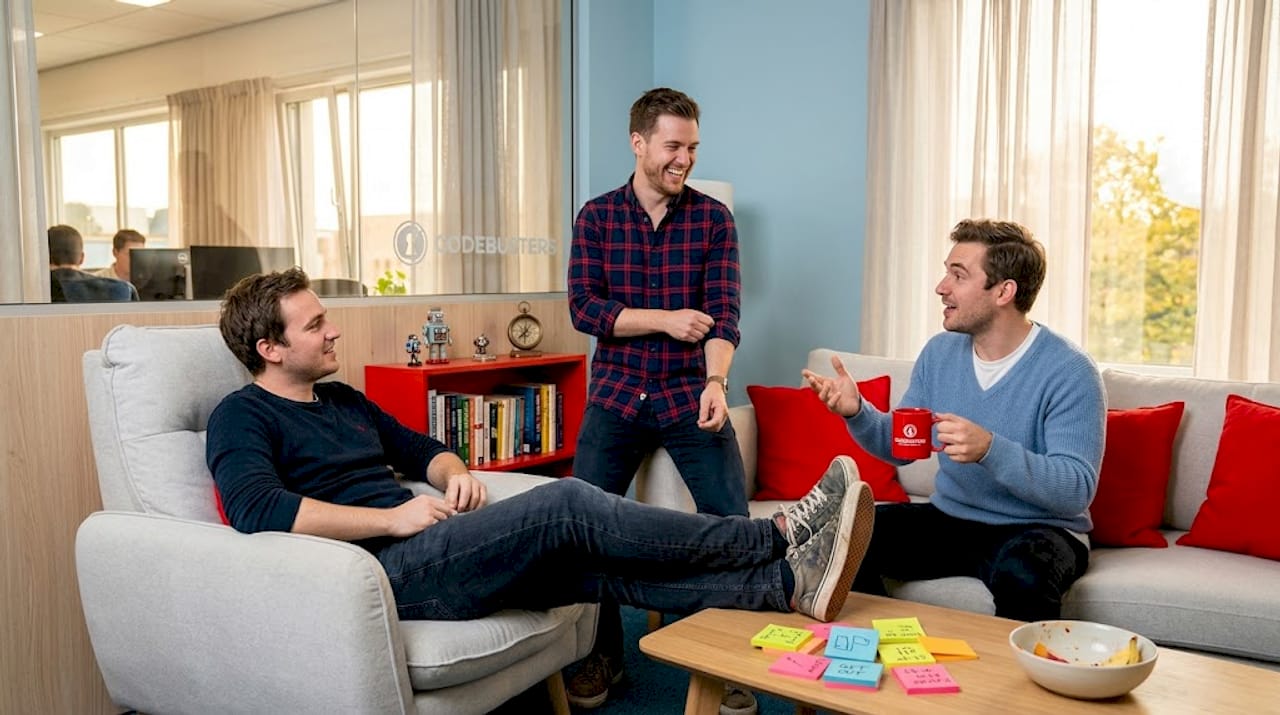
The rise of hybrid and distributed teams has added another layer of complexity. Remote-first team building design is no longer optional. If your hybrid team joins a video call to watch the in-person group do an activity together, you have created two separate experiences. That erodes trust rather than building it. Smart organizations now design for remote participation first, then layer in in-person enhancements.
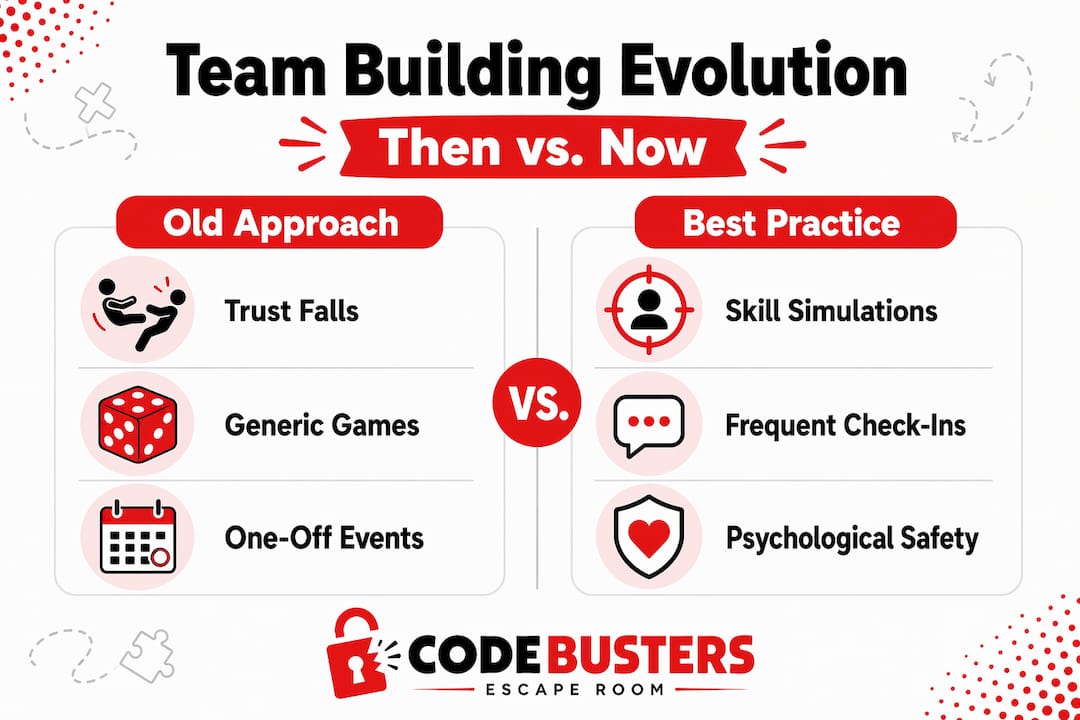
Pro Tip: For distributed teams, replace the annual big event with bi-weekly 20-minute structured check-ins that include one short collaborative challenge. Frequent smaller sessions build habitual communication far more effectively than rare large events.
The real business case for team bonding
The importance of team bonding goes well beyond morale. When organizations treat team building as a strategic investment rather than a perk, the returns show up in ways that matter to leadership.
Consider the direct effects on your workforce:
- Communication improves. Teams with regular structured interaction develop clearer, faster communication patterns. Misunderstandings decrease, and handoffs between functions become smoother.
- Trust accelerates decision-making. When people trust their colleagues’ competence and intentions, they spend less time second-guessing and more time executing.
- Burnout decreases. Engaged teams report lower burnout and stronger job retention compared to teams with low cohesion.
- Innovation goes up. Psychological safety, built through consistent team experiences, is directly correlated with a team’s willingness to propose new ideas and challenge the status quo.
- Turnover drops. Intentional social time correlates with higher job satisfaction and a measurable reduction in voluntary turnover.
The cross-departmental value is often underestimated. When sales, product, and customer success teams participate in a shared challenge, they develop an understanding of each other’s constraints and working styles. That translates into fewer siloed decisions and more collaboration when it counts. This is one reason why cross-functional corporate team activities have become a priority in organizations managing rapid growth or structural change.
How to plan and run team building that actually works
Knowing why team building matters is only half the equation. The other half is knowing how to improve teamwork through a structure that sticks. Here is a practical approach built around the Plan, Brief, Execute, Debrief framework.
- Define your objective first. What specific team behavior do you want to change or strengthen? Be precise. “Better communication” is too broad. “Reducing the time it takes our team to align on project scope” is a goal you can design around.
- Select the right activity for that goal. An escape room tests communication under time pressure. A leadership simulation tests decision-making in ambiguous situations. Match the activity to the outcome, not to what sounds fun.
- Brief the team before you begin. Explain the purpose clearly. Team buy-in and inclusivity are critical for effective team building. When people understand why they are doing something, they engage differently.
- Execute with observation in mind. Watch who leads, who goes quiet, who steps back during conflict. Observing team dynamics during activities gives you diagnostic insights into communication and leadership that regular meetings simply cannot surface.
- Debrief with structure. This is the step most organizations skip, and it is the most important one. Structured debriefing after activities is what converts a game into behavioral change. Use a framework like ORCA (Observe, Reflect, Connect, Apply) to guide the conversation.
- Embed lessons into daily routines. Identify one or two specific changes the team agrees to make in how they work. Revisit those commitments in your next team meeting. Without this step, the insight dies in the debrief room.
Pro Tip: The debrief should take at least as long as the activity itself. If your team spent 45 minutes on a challenge, budget 45 minutes for reflection. Most teams rush this and wonder why nothing changes.
Choosing the right type of activity
Not every team building activity serves every team equally well. Here is how to evaluate your options:
| Activity type | Best for | Watch out for |
|---|---|---|
| Icebreakers | New teams, meeting openers | Too shallow for deep trust-building |
| Escape rooms | Communication, problem-solving, pressure | Requires physical access unless virtual version is available |
| Outdoor adventures | High-energy teams, leadership development | Accessibility and mobility limitations |
| Virtual team challenges | Hybrid and remote teams | Lower energy, needs strong facilitation |
| Leadership simulations | Senior teams, strategic alignment | High cost, requires skilled facilitation |
| Multi-day retreats | Culture resets, major transitions | Expensive and hard to sustain impact without follow-up |
When comparing escape rooms to other team activities, escape rooms stand out for their ability to surface real-time communication under pressure without requiring anyone to abseil down a building. They work across a wide range of team sizes, and the debrief potential is high because the activity generates clear, observable behavior.
A few questions worth asking before you commit to any activity:
- Does this activity reflect the actual dynamics and pressures our team faces at work?
- Can every team member participate fully, regardless of physical ability or location?
- Is there a built-in mechanism for reflection, or will we need to add one?
- Does the provider understand corporate team building goals, or are they purely focused on entertainment?
Providers who ask you questions about your team goals before pitching a package are worth taking seriously. Those who lead with “it’s so much fun!” warrant more scrutiny.
My honest take on what actually works
I have seen teams leave a perfectly designed escape room experience feeling energized, then return to the same communication failures the following Monday. I have also seen a single well-facilitated two-hour session produce a shift in how a team talks to each other that lasted months.
The difference is never the activity. It is always the follow-through.
What I have learned is that one-off events rarely change deep-seated team dynamics. They can create a spark, absolutely. But a spark without fuel goes out. The debrief is the fuel. The commitment to embed one changed behavior into daily work is the fuel. Without that structure, you are paying for a memory, not a transformation.
The hybrid work reality makes this even more urgent. I keep seeing organizations design team building for their in-person employees and then try to patch in the remote members as an afterthought. That communicates something to remote employees. It says their experience matters less. And they feel it.
My advice is to treat team building as an ongoing system, not a calendar event. Shorter, more frequent touchpoints outperform the annual retreat almost every time. And when you do invest in a bigger experiential event, protect the debrief time like it is the most important meeting of the quarter. Because it is.
— CodeBusters
Book a team building experience in Colorado Springs
If you are looking for a corporate team activity that generates genuine behavioral data, gets everyone in the room (or on the screen) engaged, and gives you a real debrief framework to work with, escape rooms are worth serious consideration. They put teams under just enough pressure to reveal how they actually communicate, and that is rare.
At Codebustersescaperoom, we offer themed escape room experiences in Colorado Springs designed specifically for corporate groups of various sizes. Our rooms are built around communication, collaboration, and time-pressured problem-solving — exactly the conditions that surface real team dynamics. We have hosted leadership teams, cross-functional groups, and onboarding cohorts who came in skeptical and left with a clear picture of how their team operates under pressure. Explore how escape rooms build collaboration and find out if it is the right fit for your next team session.
FAQ
What is corporate team building, exactly?
Corporate team building is a set of structured, purposeful activities designed to improve how employees communicate, collaborate, and trust each other. It differs from casual social events because it is tied to specific team or organizational goals.
How often should companies run team building activities?
Research supports frequent shorter sessions over rare large events. Monthly or bi-weekly shorter activities drive more consistent behavioral change than a single annual retreat.
Why does debriefing matter so much?
Structured debriefing is what converts a team activity into lasting behavioral change. Without it, teams gain a shared memory but not necessarily a shared lesson they can apply at work.
How do you run team building for hybrid teams?
Design for remote participation first, then add in-person enhancements rather than the other way around. Remote-first design prevents a two-tier experience that can increase division rather than build cohesion.
Are escape rooms effective for corporate team building?
Yes, particularly because they create time-pressured communication scenarios that mirror real workplace dynamics. They work well for teams that need to improve decision-making speed and cross-functional collaboration.