Top indoor family activities in Colorado Springs
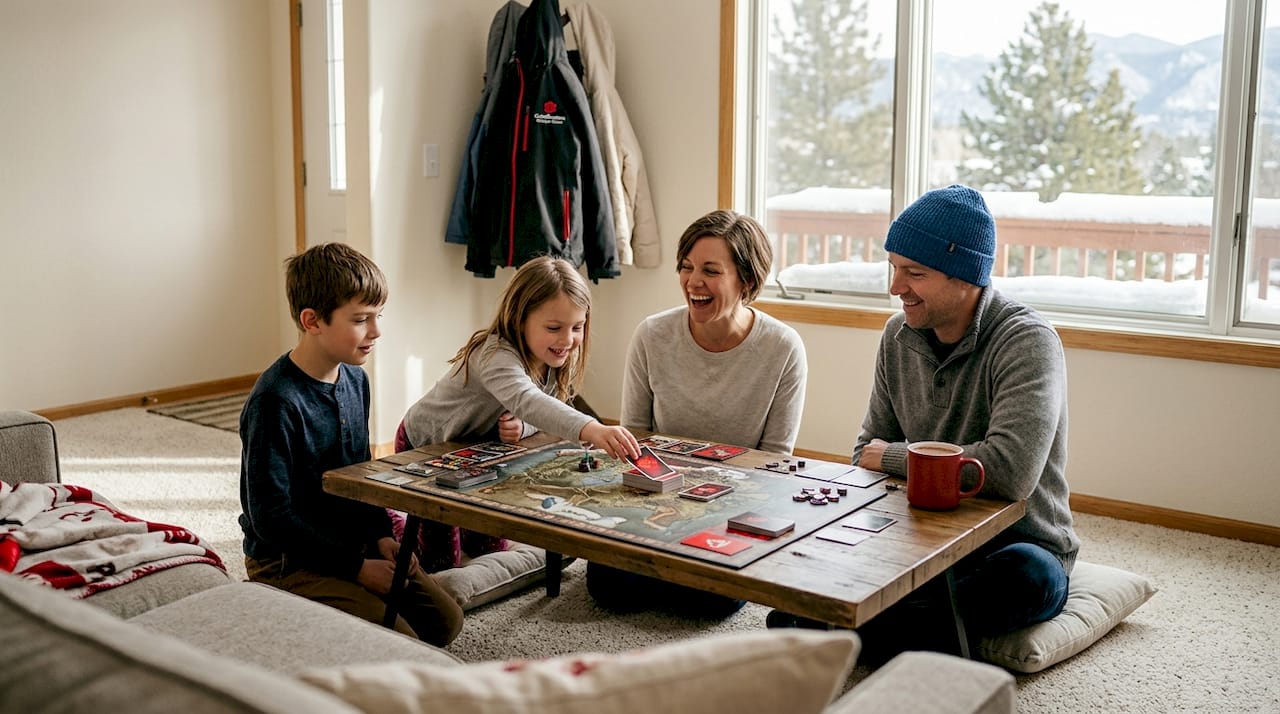
Colorado Springs weather has a way of changing plans fast. One morning you’re thinking about a hike, and by noon there’s snow on the ground or a thunderstorm rolling through. When that happens, you need more than a backup plan — you need a great one. Finding indoor activities that keep every age group happy, burn some energy, and actually bring the family together is a real challenge. This guide breaks down exactly how to choose the right options, which venues to consider, and how to build a full day of indoor fun that nobody complains about.
Table of Contents
- How to choose the best indoor family activities
- Interactive play centers and children’s museums
- Active movement and sports venues
- Museums with interactive and teamwork exhibits
- Escape rooms and collaborative puzzle experiences
- Quick-reference table: Top indoor activity types in Colorado Springs
- Our take: Why mixing activities unlocks the most family fun
- Level up your next family adventure with CodeBusters Escape Room
- Frequently asked questions
Key Takeaways
| Point | Details |
|---|---|
| Mix activity types | Combining movement and collaborative options keeps families engaged all day. |
| Age matters | Younger kids thrive in hands-on play centers; older children enjoy teamwork-focused venues. |
| Interactive museums impress | Museums with hands-on exhibits entertain and unite families of all ages. |
| Teamwork boosts fun | Escape rooms and group puzzles offer unique chances to work together and connect. |
How to choose the best indoor family activities
With the challenge laid out, let’s break down how to choose the right activities to keep everyone engaged.
The single biggest mistake families make when planning an indoor day is choosing one venue and hoping it works for everyone. It rarely does. A five-year-old and a thirteen-year-old have almost nothing in common when it comes to what holds their attention, how long they can sit still, or how competitive they want to be. The fix is simple: build your day around your group, not around a venue’s marketing description.
Start by sorting your group into rough age bands:
- Toddlers and preschoolers (ages 2 to 5): Need sensory input, simple movement, and pretend play. Low frustration tolerance means any activity that feels too hard or too rule-heavy will cause a meltdown fast.
- School-age kids (ages 6 to 12): Can handle structured games, light competition, and moderate physical challenges. This age loves feeling competent and earning some kind of reward.
- Teens (ages 13 and up): Crave challenge, novelty, and social interaction. They disengage quickly when activities feel babyish but light up when something is genuinely difficult or immersive.
Next, think about energy pacing. Families burn through attention and physical energy in waves, not steadily. Indoor play centers and children’s museums that emphasize pretend play and hands-on building can help younger kids stay engaged when outdoor energy burn isn’t possible. The science of attention spans is pretty clear: kids peak early and fade. Starting with high-energy venues, then moving to calmer or more collaborative activities later in the day tends to work better than the reverse.
Pro Tip: To maximize teamwork and fun during bad weather, pick one active venue (trampoline park or climbing gym) plus one collaboration venue (escape room or team puzzle experience). Schedule the family teamwork experiences after the physical activity so kids have already released their wiggles and can focus.
Finally, check each venue for group policies. Some places offer private bookings, family packages, or age-specific sessions that make the experience smoother and more cost-effective.
Interactive play centers and children’s museums
Now that you have a selection strategy, let’s look at the best picks for young families and imaginative play.
For families with younger children, the goal is finding places that feel magical without being overwhelming. Hands-on museum-style play works so well for this age group because it invites kids to drive their own experience. There’s no score, no timer, no right way to do it. That low-stakes format is exactly what toddlers and preschoolers need to stay calm and genuinely curious.
Colorado Springs has solid options in this category. Play Street Museum describes itself as an interactive children’s museum tailored for younger children and emphasizes pretend-play zones, including miniature grocery stores, medical play areas, construction zones, and creative art stations. The entire environment is scaled for small bodies, which matters more than most parents realize. When a four-year-old can actually reach the counter at a pretend kitchen, the play goes deeper and lasts longer.
For younger kids, toddlers, and preschoolers, favor play-museum exhibits designed for pretend play and hands-on exploration rather than fast-paced or heavily rule-based teamwork activities. Escape rooms and competitive puzzle experiences tend to skew to older ages and can frustrate very young children.
What makes these venues especially effective is adult involvement. Research consistently shows that guided play, where a parent or caregiver participates actively rather than just supervising from a bench, significantly extends engagement time and builds language skills in young children. When you join the pretend grocery store checkout line or help build the block tower, your presence multiplies the value of the visit.
Other indoor play options worth exploring in Colorado Springs include local indoor playground facilities with soft-play equipment, foam pits, and climbing structures designed for mixed age groups. Many of these facilities have separated zones for different age groups, which helps prevent the frustrating scenario where a toddler gets knocked over by an enthusiastic eight-year-old.
Pro Tip: Call ahead and ask about quiet hours or slower time slots. Weekday mornings are often significantly less crowded at play museums, which makes for a more relaxed experience for both kids and parents.
Active movement and sports venues
While creative play works for younger kids, older children and energetic families may crave more movement.
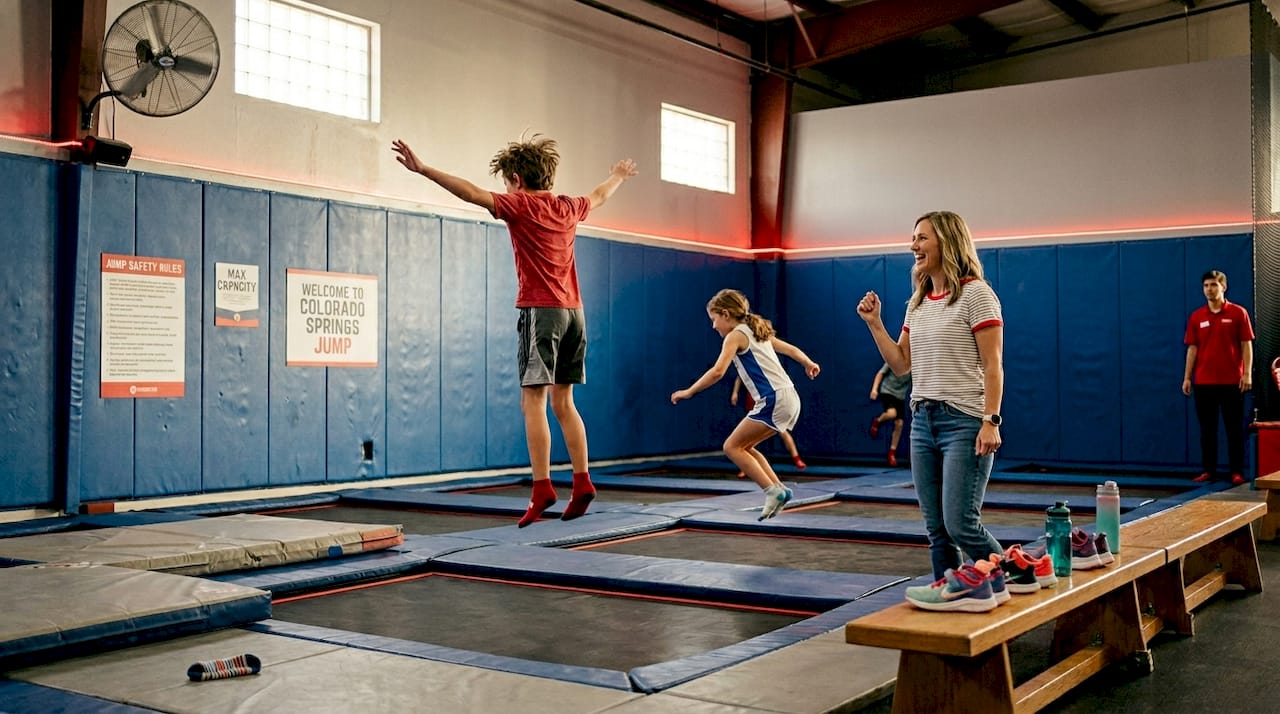
Once kids hit school age and especially through the tween and teen years, they need to move. Sitting at a pretend play station for two hours is not going to cut it for a twelve-year-old. The good news is that Colorado Springs family attractions include a strong lineup of movement-based indoor venues that serve exactly this need.
Here’s what the active venue landscape looks like in Colorado Springs:
- Trampoline parks: Multiple jump zones, foam pits, dodgeball courts, and slam dunk lanes. Great for all ages above toddler level. Look for parks with dedicated toddler zones if your group has a mix.
- Indoor climbing gyms: Both bouldering (no ropes, lower walls) and top-rope climbing options exist in the area. Climbing is a surprisingly social activity — spotting, cheering, and problem-solving routes together builds real camaraderie.
- Roller skating rinks: A classic for a reason. Skating combines light athleticism with music and socializing, and it’s genuinely inclusive. Even first-timers can skate at a beginner pace while more confident skaters pick up speed.
- Indoor laser tag and arcade-style facilities: Lower physical intensity but high on competitive fun. Good for groups where ages vary widely.
Indoor playgrounds, gyms, roller skating, and trampoline parks are recommended as major indoor options in Colorado Springs, and they share one key feature: they’re flexible. You don’t have to structure every minute. Kids can move at their own pace, try different stations, and naturally find their own groove.
| Venue type | Best ages | Movement level | Avg. group cost |
|---|---|---|---|
| Trampoline park | 5 and up | High | $15 to $25 per person |
| Indoor climbing gym | 7 and up | High | $20 to $35 per person |
| Roller rink | 4 and up | Moderate | $10 to $18 per person |
| Laser tag | 6 and up | Moderate | $8 to $15 per round |
One smart tip for families: look for group or party packages. Even if you’re not celebrating a birthday, many venues will honor a group rate for five or more people. It can cut total costs by 20 to 30 percent.
Museums with interactive and teamwork exhibits
If you want an adventure that’s both educational and fun for the whole group, Colorado Springs’ museums deliver.
Colorado Springs punches well above its weight when it comes to large-scale interactive museums. These aren’t the dusty, don’t-touch kind. Large, interactive museums in the sports, space, and history categories provide a low-friction indoor option that still feels like an adventure and supports whole-family participation.
Two standouts worth putting on any family’s list:
- U.S. Olympic & Paralympic Museum: Easily one of the most immersive museum experiences in the state. The technology built into this facility lets visitors personalize their experience by selecting a sport or athlete at the beginning, and the exhibits respond to those choices throughout the visit. There are simulated sport stations, interactive timelines, and plenty of content that resonates with both kids and adults.
- Space Foundation Discovery Center: Combines real space science with hands-on activities. Kids can handle models of spacecraft components, explore rover simulators, and participate in structured programs. The center also runs youth STEM programs, which makes it a strong choice for families with curious, science-minded kids.
What makes these venues particularly powerful for family outings is that they naturally generate shared conversation. When your teenager is watching a video of an Olympic gymnast and your eight-year-old is trying a reaction time station nearby, you have built-in connection points that don’t require forced interaction. That organic, interest-led engagement is hard to manufacture and genuinely valuable.
A key benefit of these larger museums is multi-age appeal. Unlike venues designed purely for one age group, interactive museums offer enough variety that everyone can find their moment. A scavenger hunt or family challenge card, available at many of these facilities, adds a light teamwork layer that keeps the group moving together rather than splitting up entirely.
Escape rooms and collaborative puzzle experiences
For families ready for full-on teamwork and adventure, it’s tough to beat the experience of a collaborative escape room.
Escape rooms work differently from every other activity on this list. Instead of independent fun happening in parallel, an escape room puts the whole group in a shared challenge where everyone’s contribution matters. The format is straightforward:
- Your group enters a themed room with a specific mission and a time limit, typically 60 minutes.
- You search for clues, solve puzzles, and piece together a narrative or sequence to “escape” or complete the objective.
- A game master monitors your progress and can provide hints if your group gets genuinely stuck.
- At the end, you debrief together, talking through what worked, who spotted what, and how you communicated under pressure.
That last step is underrated. The debrief after an escape room experience is where real teamwork reflection happens. Kids who didn’t think they contributed often realize their clue spotted twenty minutes ago was actually the key that unlocked the final puzzle. That moment of recognition builds genuine confidence.
To maximize teamwork and fun during bad weather, an escape room works best as the second activity of the day after kids have burned off physical energy. A child who’s been jumping on trampolines for an hour is far more likely to sit still and focus on a cipher puzzle than one who came straight from a car ride.
Pro Tip: Book age-appropriate rooms. Many escape room venues offer rooms at varying difficulty levels. Look for family-themed storylines that don’t require advanced reading skills or abstract reasoning so younger members of the group can contribute meaningfully.
Quick-reference table: Top indoor activity types in Colorado Springs
To help you decide, see how the top types stack up across key family criteria.
| Activity type | Best age range | Movement level | Teamwork intensity | Typical group size | Relative cost |
|---|---|---|---|---|---|
| Pretend play museum | 2 to 7 | Low | Low | 2 to 6 | Low to medium |
| Trampoline/active sports | 5 to 16 | High | Moderate | 2 to 10 | Medium |
| Interactive museum | 6 and up | Low to moderate | Moderate | 2 to 10 | Medium |
| Escape room | 10 and up | Low | High | 2 to 8 | Medium to high |
Our take: Why mixing activities unlocks the most family fun
Here’s a perspective that most family activity guides miss entirely: the goal isn’t to find the single best venue. The goal is to build a day that works as a whole experience.
Think about it from an energy standpoint. Families don’t arrive somewhere fully energized and stay that way for three hours. Energy peaks, dips, and cycles. Kids who are bored will manufacture drama. Teens who are overstimulated will mentally check out. Planning one activity at a time without thinking about the arc of the whole day is why many family outings feel exhausting rather than fun.
The most effective indoor days we’ve seen follow a simple pattern: start active, go collaborative. The indoor activity research supports picking one active venue plus one collaboration venue like an escape room and scheduling around kid attention spans, starting with high-energy and moving to calmer puzzle time.
Here’s the insight that surprises most people: the transition between activities is actually a bonding moment. Walking from a trampoline park to your next stop, grabbing a snack, and asking each other “which puzzle in that escape room was the hardest?” is low-key, unstructured time that families undervalue. It lets kids process, decompress, and share their experience without a screen in their hand.
We also recommend rotating who gets to pick the next activity. When a child has ownership over part of the day, their investment in making it work rises dramatically. Even a seven-year-old can choose between a museum and an active venue if you give them real information about both options. That small act of autonomy shapes the whole group’s energy for the better.
The uncomfortable truth is that no single venue, no matter how highly rated, can carry an entire family day on its own. Two thoughtfully chosen activities will almost always outperform one perfect one. Pairing escape room strategies with movement-based activities isn’t just a scheduling trick. It’s a better model for how families actually enjoy themselves together.
Level up your next family adventure with CodeBusters Escape Room
Ready to put your family’s teamwork to the real test? CodeBusters Escape Room in Colorado Springs is a veteran and family-owned business with award-winning rooms designed for exactly the kind of meaningful, collaborative adventure this article is all about. From the nostalgic “Stranger 80’s” room to the high-stakes “Flight of Deception,” there’s a theme and difficulty level suited to your group’s age range and experience.

All rooms are booked privately, meaning your group gets the full experience without strangers joining mid-puzzle. Gift vouchers are available if you want to give the gift of a great day out. Whether you’re planning a family outing, a group birthday, or simply looking for something genuinely different on a rainy Colorado Springs afternoon, this is the kind of experience people talk about for weeks. Go ahead and book your family escape room and find out what your family is capable of when you work together under pressure.
Frequently asked questions
What age groups are best served by indoor play centers versus escape rooms?
Indoor play centers are ideal for toddlers and younger kids, while escape rooms suit families with older children and teens who can handle puzzles, sustained focus, and group problem-solving.
Which Colorado Springs museums have hands-on activities for kids?
The U.S. Olympic & Paralympic Museum and Space Foundation Discovery Center both offer interactive exhibits, and large interactive museums like these provide immersive, whole-family learning experiences that work across age groups.
Are there budget-friendly indoor activities for families in Colorado Springs?
Yes. Many play museums offer affordable admission, and VisitCOS highlights multiple family-friendly options under $10 per person, with family day discounts available at several venues throughout the year.
How can I ensure activities keep all family members engaged?
Combine an active venue with a collaborative or calm activity later in the day. Pairing one movement venue with one teamwork-focused activity and scheduling breaks between them consistently leads to better overall energy and engagement for every age group in your party.