Themed escape rooms: how they work and why they’re popular
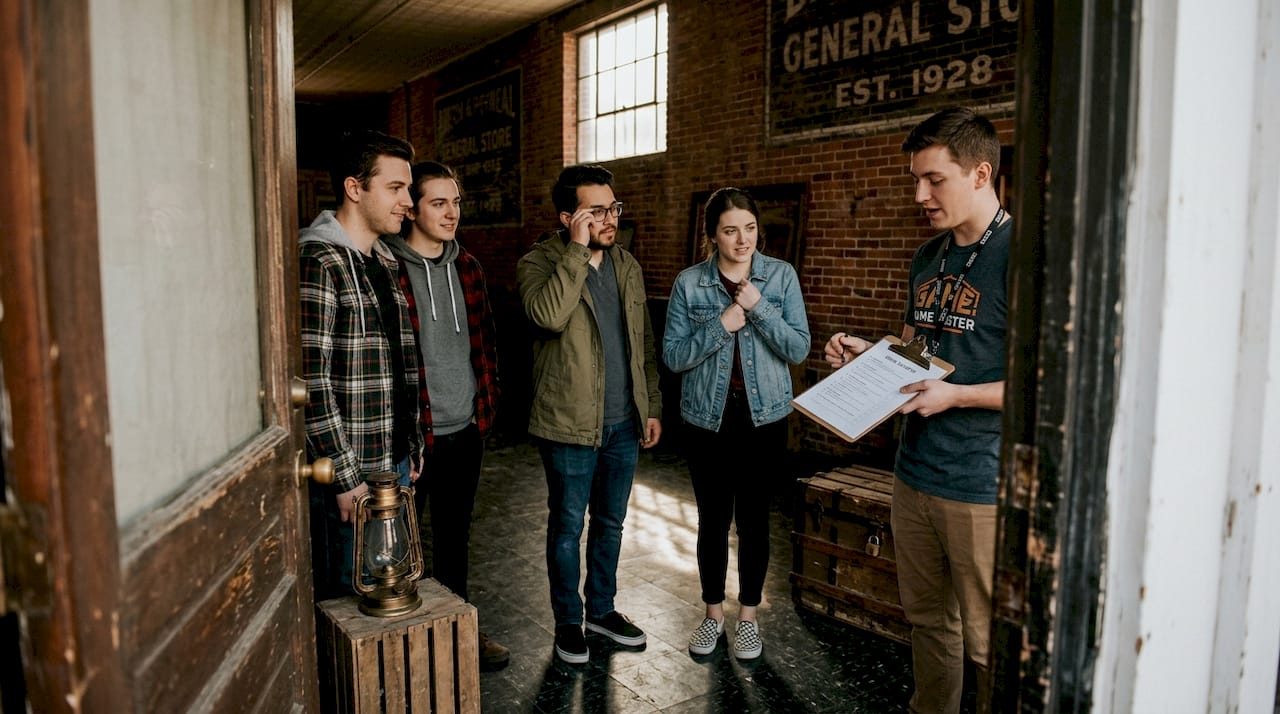
Escape rooms have a reputation for being the territory of hardcore puzzle fans and trivia night regulars. That picture is completely wrong. 28% of Americans have played an escape room, and the crowd walking through those doors includes families with young kids, corporate teams looking for a fresh outing, couples on dates, and tourists wanting something memorable. Themed escape rooms have grown into a mainstream entertainment option that works for almost any group. In this guide, you’ll learn exactly what a themed escape room is, how the experience flows from start to finish, which themes resonate with which audiences, and why these rooms keep pulling people back.
Table of Contents
- What is a themed escape room?
- Inside the experience: How themed escape rooms work
- Popular escape room themes and who enjoys them
- Why themed escape rooms are so popular
- Our perspective: What most guides don’t tell you about themed escape rooms
- Ready to try a themed escape room in Colorado Springs?
- Frequently asked questions
Key Takeaways
| Point | Details |
|---|---|
| What sets themed rooms apart | They immerse players in story-driven worlds, making each challenge part of an adventure. |
| Fun for all groups | Escape rooms are designed for friends, families, companies, and tourists of all backgrounds. |
| Diverse themes and experiences | Popular themes range from adventure to horror and mystery, tailored to every taste. |
| Reasons for popularity | High satisfaction, replay value, and team connection drive repeat visits and industry growth. |
What is a themed escape room?
A themed escape room is an interactive, story-driven experience where a group of players works together to solve a series of challenges and achieve a goal, usually within a set time limit. The word “themed” is the key distinction here. Generic puzzle rooms give you locks and clues in a plain space. Themed rooms wrap every puzzle inside a fully realized world, complete with matching décor, sound design, lighting, and a narrative that gives your actions meaning.
Think of it this way: solving a combination lock in a bare room is a brain exercise. Solving that same lock inside a 1980s science lab while a countdown timer ticks and an eerie soundtrack plays is an experience. The story context transforms the activity.
Every quality themed escape room is built around a few core components:
- Immersive setting: Walls, props, costumes, and lighting that match the story world
- Clear objective: A mission your group understands before the clock starts
- Timed gameplay: Usually 60 minutes, which creates natural urgency
- Teamwork: Puzzles designed so no single person can solve everything alone
- Progressive challenge: Early puzzles unlock later ones, building momentum
“The best themed rooms make you forget you’re in a game. You’re not solving puzzles anymore. You’re living the story.”
The industry has grown significantly to support this demand. The US has about 2,000 escape room facilities offering an average of 3.8 games each, which means players have real variety to choose from. Whether you’re exploring escape rooms in Colorado Springs or anywhere else, the themed format is now the standard, not the exception.
The narrative layer also makes themed rooms far more replayable. Because each room tells a different story, returning players aren’t repeating an experience. They’re stepping into an entirely new world.
Inside the experience: How themed escape rooms work
With a clear understanding of what these themed rooms are, let’s walk through what a typical visit looks like, step by step.
Step 1: Booking and arrival You choose your theme online, pick a time slot, and confirm your group size. Most venues ask you to arrive 10 to 15 minutes early. This buffer matters because late arrivals eat into your game time.
Step 2: The briefing A game master, the staff member running your session, walks your group through the story setup, the rules, and the objective. This is where you learn what you’re trying to accomplish and what’s off-limits (don’t unscrew the vents, don’t force anything, and so on).
Step 3: Entering the room The door closes, the timer starts, and the story begins. Your group explores the space, finds clues, and starts connecting pieces. Early puzzles tend to be more accessible, which helps groups warm up before the difficulty increases.
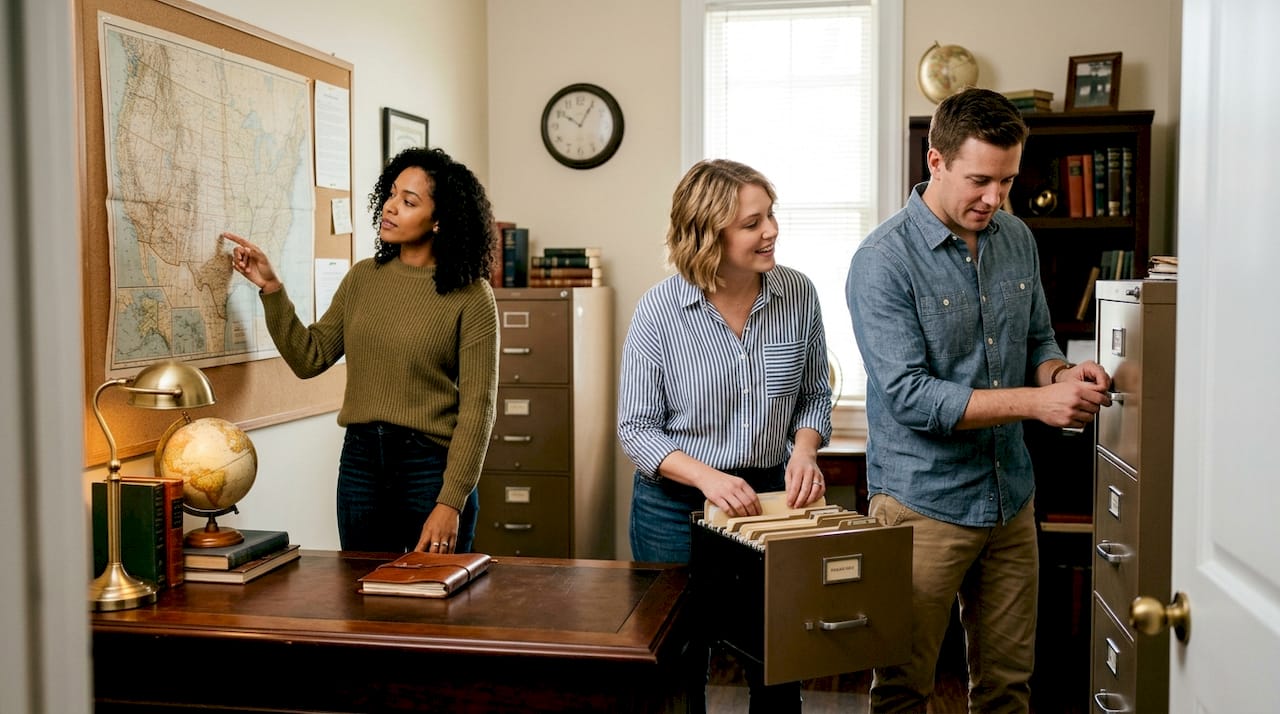
Step 4: Hints and time pressure Most rooms allow a limited number of hints, delivered by the game master through a speaker or screen. Using a hint isn’t failure. It keeps the game moving and prevents frustration from derailing the fun. The average escape room runs 60 minutes with group revenue around $120, so operators design the pacing carefully to maximize enjoyment within that window.
Step 5: The conclusion Your group either escapes or runs out of time. Either way, the game master debriefs you, walks through any puzzles you missed, and gives you a chance to take photos. Many venues post completion times on leaderboards, which adds a fun competitive layer for groups who want to return and beat their score.
Pro Tip: Assign roles early. Designate one person to manage found items and another to call out connections between clues. Groups that communicate clearly outperform groups that work in silence, even when the quiet team has more puzzle experience.
For groups considering team-building escape rooms, this structured flow is exactly what makes the format so effective. The shared pressure and collaborative problem-solving reveal how people naturally communicate and lead.
Popular escape room themes and who enjoys them
You’ve seen how the process works. Now let’s explore the exciting variety of theme options and who gets the most out of each.
Adventure and horror dominate the market, with adventure holding over 30% of theme share and horror commanding around 40%. But mystery, sci-fi, historical, and pop-culture themes are all growing fast. The range means there’s a genuine fit for nearly every personality and group dynamic.
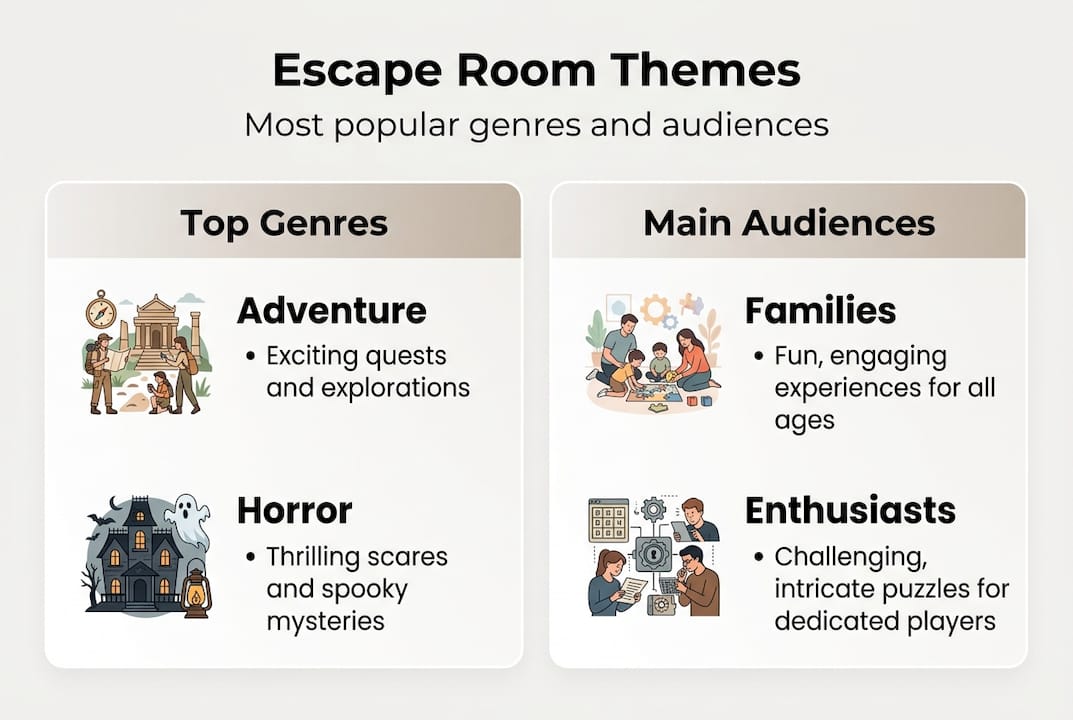
| Theme type | Main audience | Best group fit | Key appeal |
|---|---|---|---|
| Adventure | Families, mixed groups | 4 to 8 players | Exploration, discovery |
| Horror | Teens, young adults | 3 to 6 players | Adrenaline, challenge |
| Mystery | Couples, coworkers | 2 to 6 players | Deduction, story depth |
| Sci-fi | Enthusiasts, corporate | 4 to 8 players | Tech puzzles, narrative |
| Historical | Families, tourists | 4 to 8 players | Education, immersion |
Millennials and Gen Z drove the early wave of escape room popularity, but the audience has broadened considerably. Families now book rooms for birthday parties and weekend outings. Corporate teams use them for off-site events. Couples treat them as an alternative to dinner and a movie. Tourists seek them out as a uniquely local activity.
Want to book an adventure escape room with your group? Here’s what makes themed rooms worth returning to:
- Problem-solving: Every session sharpens lateral thinking and pattern recognition
- Full immersion: High-quality theming pulls you out of everyday stress
- Replay value: Different themes mean every visit feels genuinely new
- Group bonding: Shared wins and near-misses create lasting memories
- Accessible challenge: Difficulty scales across beginner, intermediate, and expert rooms
Satisfaction rates back this up. Around 80% of players report positive experiences, and a significant portion of operator revenue comes from repeat visitors who return to try new themes.
Why themed escape rooms are so popular
Having seen the types of themes and audiences, it’s important to understand why so many people keep coming back to themed escape rooms.
The social dimension is huge. Escape rooms are one of the few entertainment formats that genuinely require cooperation. You can’t scroll your phone while playing. You can’t zone out. Everyone in the room has to contribute, which creates a shared focus that’s rare in most social activities.
Accessibility is another major factor. You don’t need to be athletic, tech-savvy, or a puzzle expert. You just need to show up curious and willing to work with your group. This makes escape rooms viable for a remarkably wide range of occasions: first dates, anniversary outings, family reunions, corporate retreats, tourist itineraries, and birthday celebrations.
| Group type | Primary draw | Typical occasion |
|---|---|---|
| Families | Shared fun, bonding | Weekends, birthdays |
| Corporate teams | Team-building, communication | Off-sites, retreats |
| Couples | Unique shared experience | Dates, anniversaries |
| Tourists | Local, memorable activity | Vacations, city visits |
| Friend groups | Competition, laughter | Casual outings |
High satisfaction rates of 80% and average ratings of 4.7 out of 5 reflect how consistently these experiences deliver. That’s not accidental. Room designers obsess over pacing, puzzle logic, and narrative payoff to make sure players leave feeling accomplished.
“Escape rooms tap into something primal: the satisfaction of solving a problem under pressure, together.”
Post-pandemic, family and urban bookings surged as people sought out activities that felt genuinely interactive after years of screen-heavy entertainment. That trend has held. Local escape room bookings in cities like Colorado Springs reflect this appetite for real, in-person adventure.
Pro Tip: If you’re organizing a group outing, book a private room. Most venues offer this option, and it removes any awkwardness of playing alongside strangers. Your group gets the full experience without interruption.
The psychological payoff is real too. Solving a puzzle under a ticking clock triggers a genuine rush of dopamine. When your whole group celebrates cracking the final code together, that shared emotional peak creates a bond that outlasts the game itself.
Our perspective: What most guides don’t tell you about themed escape rooms
Statistics tell part of the story. Popularity metrics and satisfaction scores confirm that themed escape rooms work. But the deeper truth is harder to quantify.
Themes don’t just set the mood. They fundamentally change how people interact. A horror room pushes quieter team members to speak up under pressure. An adventure room rewards the person who thinks spatially, not just the one who reads fastest. The theme acts as a social equalizer, surfacing strengths that normal group settings never reveal.
Repeat players are often misread as simply loyal customers. They’re actually the engine behind room innovation. Their feedback and evolving expectations push designers to raise the bar constantly. Without them, rooms would stagnate.
Many groups walk out of real escape room experiences surprised by what they learned about each other. A colleague who seemed reserved turns out to be the one who cracks the hardest puzzle. A family member who “isn’t good at games” spots the clue everyone else missed. These moments carry real weight.
Behind every great room is a design team that obsesses over surprise, challenge, and delight in equal measure. That craft is what separates a memorable experience from a forgettable one.
Ready to try a themed escape room in Colorado Springs?
All the research and reading in the world won’t match the feeling of stepping into a fully realized story world and racing the clock with people you care about.
CodeBusters Escape Room in Colorado Springs offers a lineup of immersive themed rooms built for groups of all sizes, from families and couples to corporate teams. Whether you’re drawn to time-travel adventures, retro mysteries, or high-stakes missions, there’s a room designed with your group in mind. Booking is straightforward, private room options are available, and gift vouchers make it easy to share the experience. Your next great group memory is one booking away.
Frequently asked questions
How long does a themed escape room experience last?
Most themed escape rooms run about 60 minutes per game, but you should plan to arrive 10 to 15 minutes early for the briefing and stay a few minutes after for the debrief.
Are themed escape rooms suitable for kids, families, or seniors?
Yes, escape rooms serve diverse group types including families and seniors, and many venues offer family-friendly themes with age-appropriate puzzles and accessible difficulty levels.
Do I need experience or special skills to enjoy an escape room?
No prior experience is needed. Themed escape rooms are designed for all skill levels, and the only real requirements are teamwork and a willingness to think creatively.
What makes a themed escape room different from a regular puzzle room?
A themed room uses décor and narrative to wrap every puzzle inside a story, creating a cinematic experience that a bare puzzle room simply cannot replicate.
How popular are escape rooms in the US?
28% of Americans have played an escape room, and the market continues to expand as new themes and formats attract broader audiences each year.