The Role of Themed Rooms in Guest Experience Design
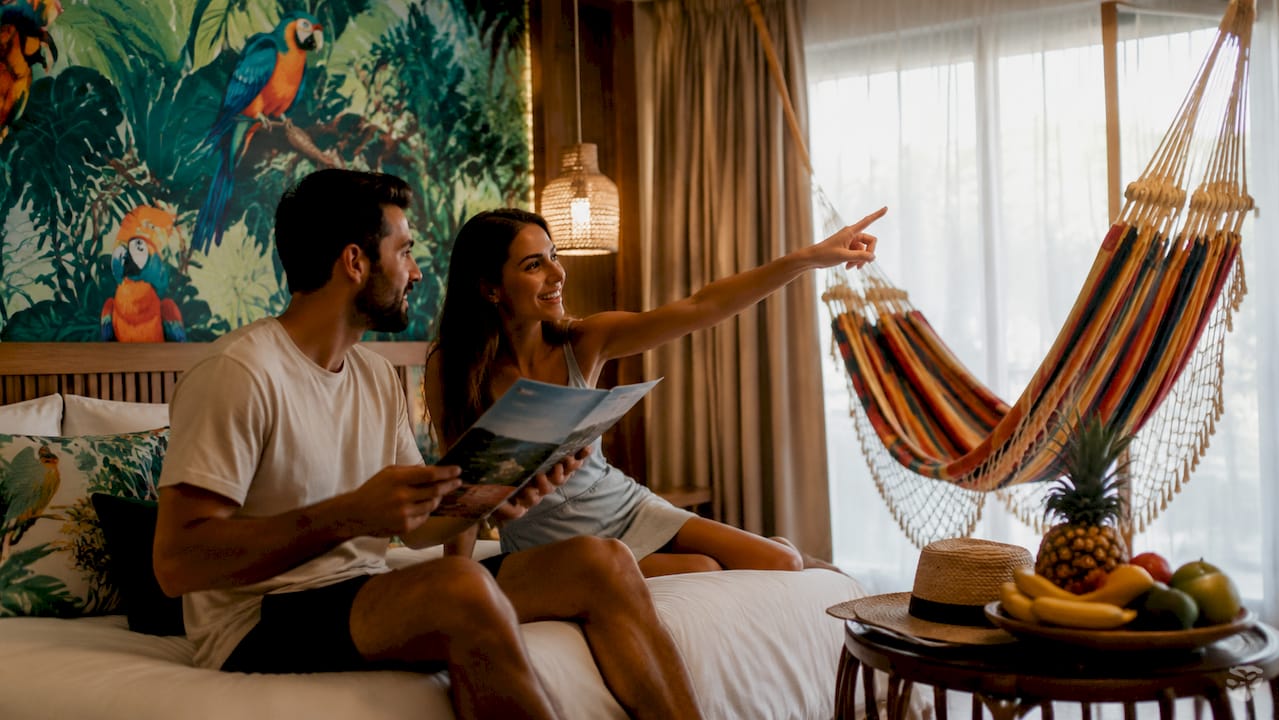
Themed rooms are defined as purpose-built environments where every design element, from lighting to materials to sound, works together to place guests inside a specific narrative or world. The role of themed rooms extends far beyond decoration. These spaces function as psychological tools that shape mood, guide behavior, and create memories that outlast the visit itself. Venues like LEGOLAND, Disney resorts, and Alton Towers have proven that immersive themed environments command both emotional loyalty and measurable business returns. Understanding how they work gives you a real advantage, whether you design them or simply want to appreciate why they hit so differently than ordinary spaces.
How do themed rooms use design and storytelling?
Storytelling is the structural backbone of every effective themed room. The narrative comes first, and every physical element serves that story. A room themed around deep-sea exploration does not just hang fish on the wall. It uses curved walls, blue-green ambient lighting, muffled sound design, and textured surfaces that feel like weathered hull panels. Every detail reinforces the same fiction.

Sensory integration is more effective than superficial props for creating immersive coherence. This means lighting, sound, material textures, and even aromas are embedded into the architecture rather than added as afterthoughts. When these elements align, guests navigate the space intuitively without needing signs or instructions. The environment itself tells them where to look, where to move, and how to feel.
Designers at Wacky World Studios point out that environmental cues guide visitor engagement, creating stronger emotional memories than passive observation. This is the shift from a guest who looks at a room to one who exists inside it. That shift is the entire goal of experience design.
Disney and LEGOLAND demonstrate the gold standard here. Both brands use integrated architecture and lighting alongside dedicated play zones to reinforce a single coherent story across every surface. Nothing in a LEGOLAND room breaks the fiction. That consistency is not accidental. It is the result of deliberate, layered design decisions made at every scale, from the ceiling height to the door handle shape.
Pro Tip: Avoid the temptation to theme every surface. The secret to timeless themed rooms is restraint in motifs: use textures, materials, and lighting to carry the narrative, and reserve character-specific elements for one or two focal points.
What are the psychological benefits of themed rooms?
Themed rooms produce measurable psychological effects on guests, not just aesthetic pleasure. Nostalgia is one of the most powerful mechanisms at work. Nostalgic themed environments improve mood, increase self-esteem, and promote optimism and social connection. This is why retro-themed spaces, from 1980s arcade rooms to mid-century lounge designs, generate such strong emotional responses. The design triggers positive memory, and positive memory reframes the present experience.
Nature-linked palettes carry their own clinical weight. Forest, ocean, and night-sky tones reduce stress and improve attention in children, supporting cognitive recovery after high-stimulus environments. For family travelers arriving from crowded theme parks or long travel days, a room with a calming biophilic palette does real restorative work. This is Attention Restoration Theory applied directly to hospitality design.
“Theming has functional wellness effects beyond aesthetics.” — Global Zen Spa
That observation reflects a growing body of evidence. Multisensory stimulation in themed wellness rooms, combining aroma, calibrated lighting, and sound, reduces cortisol and improves mood in measurable ways. The implication is significant: a well-designed themed room is not just more enjoyable. It is physiologically different from a standard room.
For escape room venues specifically, these psychological effects translate directly into engagement quality. When guests feel genuinely transported, their problem-solving focus sharpens and their emotional investment in the outcome rises. The role of interactivity in family attractions reinforces this point: spaces that respond to guests and surround them with coherent sensory input produce deeper participation than passive environments.
Do themed rooms deliver real business returns?
Themed accommodation commands a market premium of 10–35% over standard rooms due to higher occupancy and stronger destination appeal. That range is not trivial. At the upper end, a venue is generating more than a third of additional revenue per room simply because the design creates a reason to choose it over a competitor.
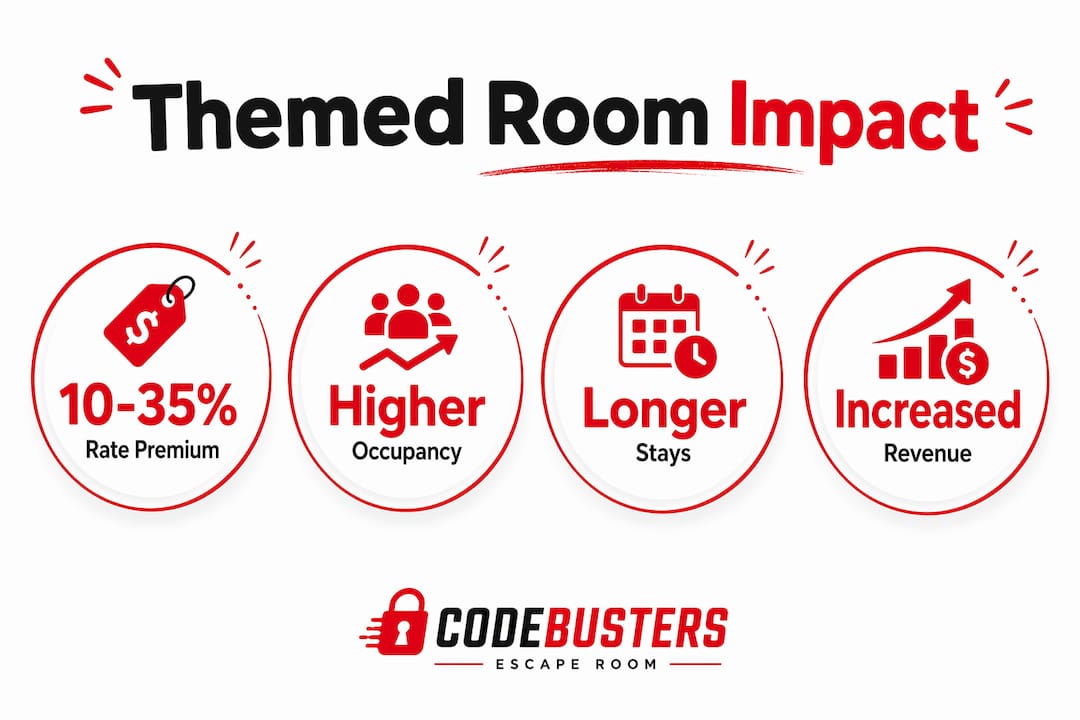
The business case extends beyond room rate. Themed rooms support ancillary revenue by promoting longer stays, higher per-visit spending, and repeat visits. Guests who feel genuinely immersed in an experience are more likely to extend their stay, purchase merchandise, book additional sessions, and return with new groups.
| Business Metric | Impact of Strong Theming |
|---|---|
| Room rate premium | 10–35% above standard pricing |
| Occupancy rate | Higher due to destination appeal |
| Ancillary spending | Increased through longer stays and repeat visits |
| Customer loyalty | Stronger emotional connection drives return bookings |
| Market differentiation | Theming creates a competitive barrier that price alone cannot replicate |
For entertainment venues like escape rooms, the economics are especially direct. A themed room is the product. The quality of the narrative environment determines whether guests recommend the experience, return for a different room, or book private events. Venues that invest in coherent, high-quality theming build a reputation that generic competitors cannot easily copy.
How do you design themed rooms that last?
Longevity in themed room design depends on separating what is permanent from what is replaceable. The best practice is a theme-agnostic architectural shell with replaceable decorative layers. The walls, flooring, and built-in lighting infrastructure stay neutral. The thematic identity lives in furniture, textiles, props, and wall treatments that can be swapped without structural renovation.
This approach supports refresh cycles every 2–4 years without major capital expenditure. Tastes shift, trends move, and what felt fresh in one year can feel dated in the next. A room built on a flexible shell can respond to those shifts without a full rebuild.
The comparison below shows how two design philosophies perform over time:
| Design Approach | Short-Term Impact | Long-Term Viability |
|---|---|---|
| Fixed character-specific theming | High initial novelty | Rapid obsolescence, costly updates |
| Neutral shell with layered decor | Strong coherence | Cost-effective refresh every 2–4 years |
Overt character-specific accessories create visual chaos and quick obsolescence. Professionals recommend anchoring rooms with large-scale neutral pieces and limiting thematic elements to 2–3 swappable items. This is not a compromise on immersion. It is the design discipline that keeps a room feeling intentional rather than cluttered.
Operational factors matter just as much as aesthetics. Well-designed themed rooms must balance narrative richness with safety, durability, and ease of housekeeping. Materials need to withstand heavy use. Surfaces need to be cleanable. Lighting fixtures need to be accessible for maintenance. A room that looks extraordinary but breaks down under daily operation is a liability, not an asset.
Pro Tip: When planning a themed space, choose one dominant material or color family as your neutral anchor. Build the thematic identity on top of that foundation using flexible design layers that can evolve without touching the base.
Key takeaways
Themed rooms succeed when design, psychology, and operational discipline work together to create experiences that guests remember and return for.
| Point | Details |
|---|---|
| Storytelling drives design | Every physical element should serve the room’s narrative, not decorate around it. |
| Psychology is measurable | Nostalgic and biophilic themes produce real mood and stress effects, not just aesthetic appeal. |
| Business returns are significant | Themed rooms command 10–35% pricing premiums and drive ancillary revenue through repeat visits. |
| Flexibility extends lifespan | A theme-agnostic shell with swappable decor layers supports cost-effective updates every 2–4 years. |
| Restraint improves immersion | Limiting thematic accessories to 2–3 focal elements prevents visual chaos and improves coherence. |
What experience design gets wrong about theming
Most venues treat theming as a visual problem. They ask what the room should look like, then fill it with props that answer that question. The result is a room that reads as themed but does not feel immersive. Guests recognize the effort but stay emotionally outside it.
The venues that get it right, including the best escape rooms I have seen and the ones we have built at Codebustersescaperoom, treat theming as a behavioral problem first. The question is not what the room looks like. The question is what the guest does, feels, and remembers. That reframe changes every design decision that follows.
Technology is starting to shift what is possible here. Dynamic lighting systems, spatial audio, and scent diffusion can now respond to guest actions in real time. A room can literally change around you as the story progresses. That capability raises the ceiling on immersion significantly. But it also raises the risk of over-engineering. The most memorable themed spaces I have experienced were not the most technically complex. They were the most coherent. Every element pointed in the same direction.
The future of themed room design belongs to venues that understand this distinction. More technology is not automatically more immersive. More coherence always is. For escape rooms and family entertainment venues, that means investing in narrative clarity before investing in gadgets.
— CodeBusters
Experience immersive themed rooms at Codebustersescaperoom
Codebustersescaperoom in Colorado Springs builds every room around the design principles this article covers: coherent narrative, sensory integration, and environments that shift guests from observers to participants.
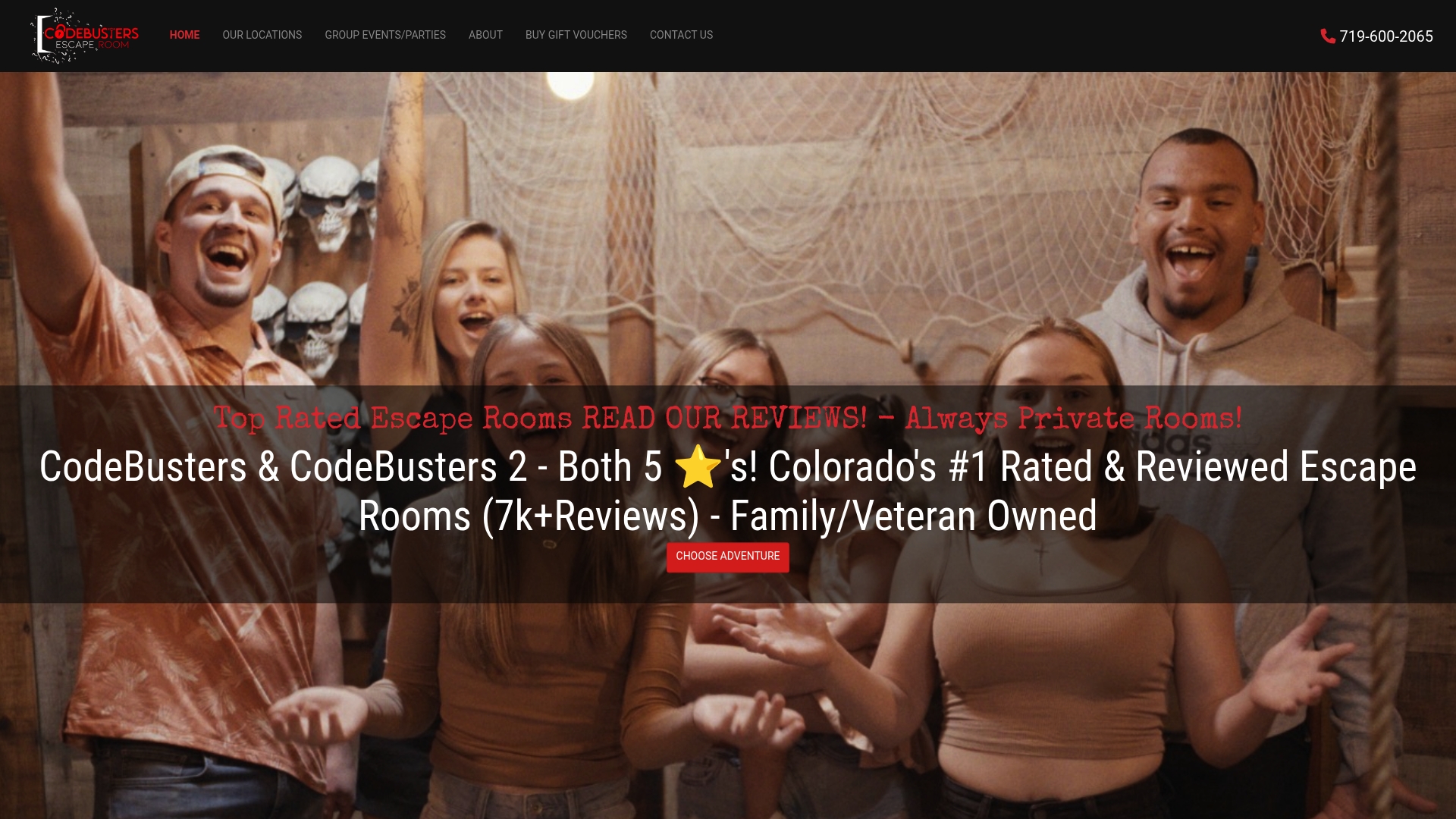
Rooms like “Stranger 80’s,” “Past to the Future,” and “Flight of Deception” each deliver a distinct world with its own lighting, sound design, and puzzle logic built into the environment itself. Whether you are booking for a family outing, a corporate team, or a group of friends, the themed escape rooms at Codebustersescaperoom offer the kind of immersive experience this article describes in practice. Private room bookings are available, and the venue holds award-winning status as a veteran and family owned business. Check out the escape room selection guide to find the right room for your group.
FAQ
What is the role of themed rooms in entertainment venues?
Themed rooms create immersive environments that shift guests from passive observers to active participants, increasing emotional engagement and memory formation. Their role covers experience design, psychological impact, and direct business performance through premium pricing and repeat visits.
How do themed rooms affect guest psychology?
Nostalgic and nature-linked themed environments improve mood, reduce stress, and support cognitive recovery. Clinical research confirms that multisensory stimulation in themed spaces reduces cortisol and increases feelings of optimism and social connection.
What is the economic impact of themed rooms?
Themed accommodation commands a market premium of 10–35% over standard rooms and drives ancillary revenue through longer stays and repeat bookings. Strong theming creates a competitive barrier that price-based competitors cannot easily replicate.
How do you keep a themed room relevant over time?
Use a theme-agnostic architectural shell and limit thematic accessories to 2–3 swappable elements. This approach supports cost-effective refresh cycles every 2–4 years without structural renovation.
Are themed rooms worth the investment for escape room venues?
Yes. For escape room venues, the themed environment is the core product. Coherent, high-quality theming directly drives recommendations, return bookings, and private event revenue, making it the highest-return design investment available.