The Role of Puzzles in Team Building: A Leader’s Guide
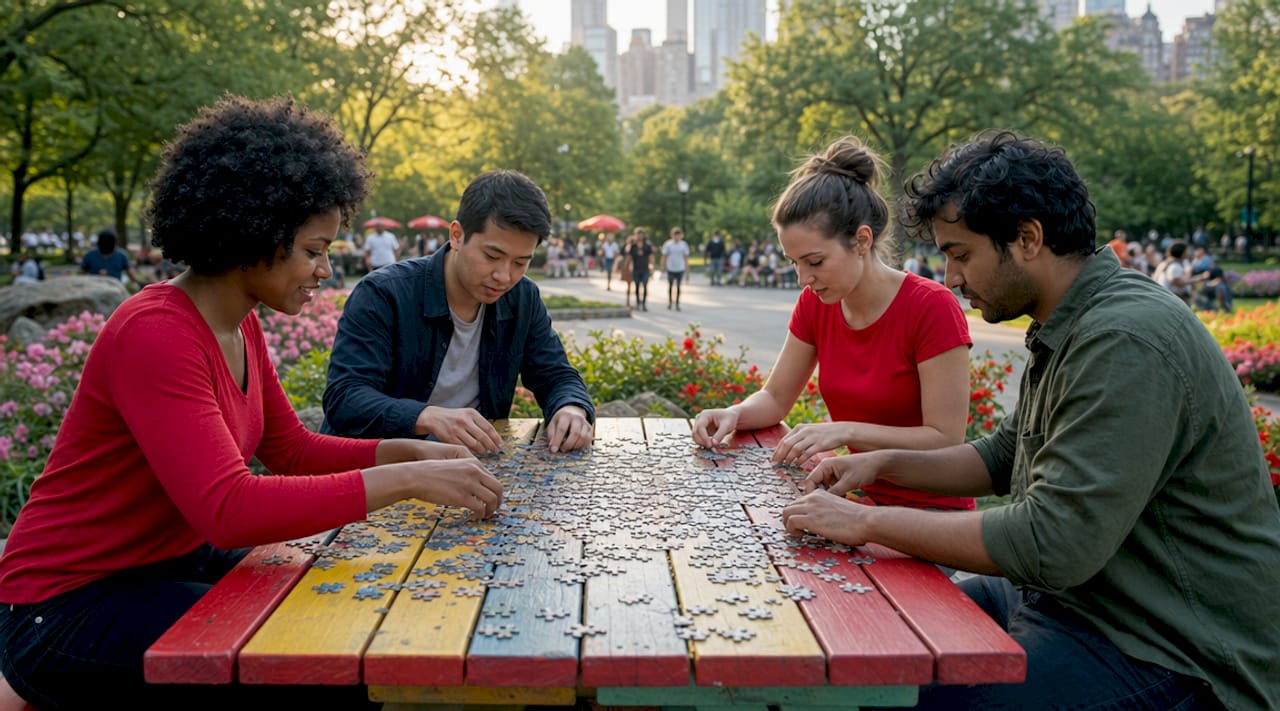
Puzzles are defined as structured, shared challenges that require teams to coordinate attention, divide tasks, and communicate in real time to reach a single objective. The role of puzzles in team building goes well beyond entertainment. Research from Indeed, Adventure Games Inc, and Hatch Tribe confirms that puzzle formats improve communication, build trust, and sharpen critical thinking in ways that standard meetings and workshops rarely achieve. Whether you use jigsaw puzzles as five-minute meeting warmups or book a full escape room session for your department, the mechanism is the same: a shared constraint forces people to work together or fail together.
How puzzles enhance collaboration and communication in teams
Puzzles create a focused, shared problem that requires teams to coordinate attention, communicate observations, and divide the search space to achieve a goal. That structure is what makes them effective. A team working a jigsaw puzzle cannot succeed if one person hoards all the pieces. A group inside an escape room cannot progress if no one shares what they have found. The format itself enforces collaboration in a way that a team meeting agenda never does.
The communication benefits are specific and measurable. Teams must verbalize partial information, listen for connections, and update each other as conditions change. These are exactly the skills that break down in high-pressure workplace situations. Puzzle challenges for groups replicate that pressure in a low-stakes setting, giving people a chance to practice without career consequences on the line.
Three communication behaviors improve most visibly during puzzle activities:
- Active listening: Team members must absorb information from multiple people simultaneously and synthesize it into a working strategy.
- Concise reporting: Under time pressure, people learn to share only what is relevant, cutting the verbal noise that slows real meetings.
- Distributed decision-making: No single person can solve the puzzle alone, so authority naturally spreads across the group.
Pro Tip: Assign explicit roles before the puzzle begins. Designate one person as the coordinator who tracks progress, one as the communicator who relays findings, and rotate these roles across sessions. Role clarity reduces coordination costs and keeps every participant engaged.
What types of puzzles work best for team bonding?
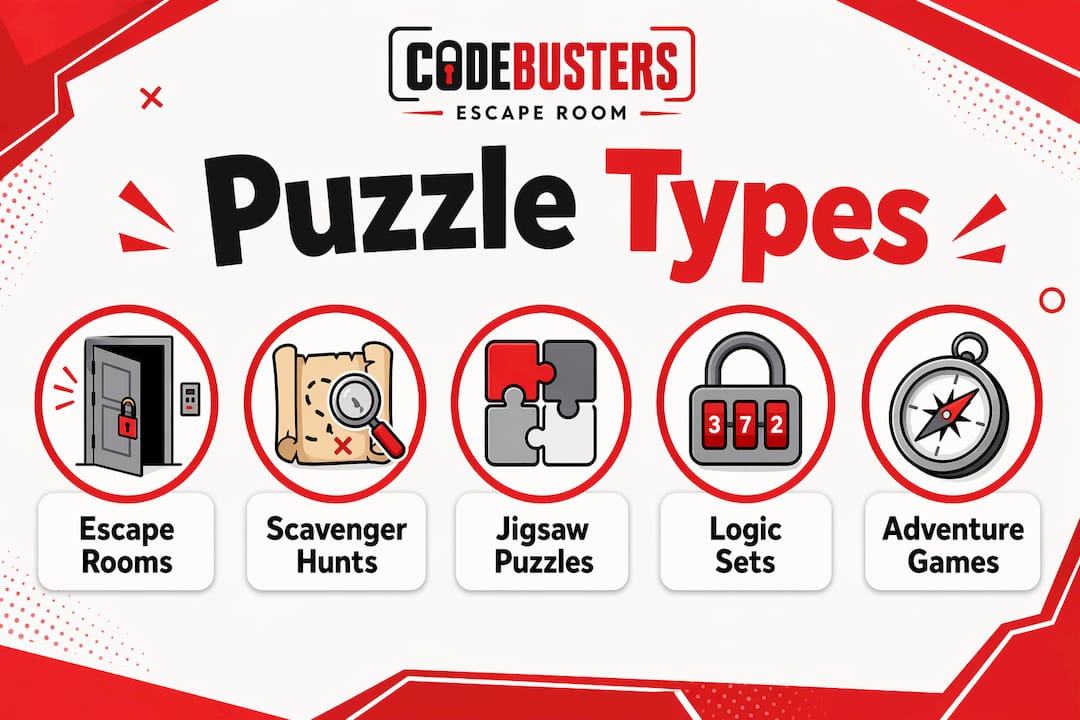
Different puzzle formats target different skills, and choosing the wrong format for your team’s goals wastes time and goodwill. The table below compares the four most common puzzle types used in corporate settings.
| Puzzle type | Duration | Ideal group size | Primary skills developed |
|---|---|---|---|
| Jigsaw puzzles | 10 to 30 minutes | 4 to 8 people | Patience, pattern recognition, quiet collaboration |
| Escape rooms | 60 minutes plus debrief | 6 to 12 people | Communication, leadership, decision-making under pressure |
| Scavenger hunts | 45 to 90 minutes | 8 to 20 people | Coordination, creativity, cross-functional trust |
| Logic and riddle sets | 5 to 20 minutes | 2 to 6 people | Critical thinking, lateral reasoning, concise communication |
Escape rooms are the most structurally demanding format. Adventure Games Inc designs office escape formats to train real-time team interaction under pressure within a one-hour session plus a structured debrief. That combination of time constraint, interdependent puzzles, and immediate feedback makes escape rooms the strongest format for teams that need to improve communication speed and leadership clarity.
Jigsaw puzzles and logic sets work better as recurring, low-pressure warmups. Hatch Tribe recommends short puzzles of roughly five minutes at the start of meetings to reduce stress, build momentum, and ease teams into collaborative thinking without disrupting the schedule. This approach works especially well for remote or hybrid teams that need a shared ritual to signal the shift from individual work to group work.
Scavenger hunts fill the gap for large departments where escape rooms are impractical. They require cross-functional coordination and reward teams that communicate across subgroups, making them ideal for organizations that have recently merged teams or restructured reporting lines.
Pro Tip: Match puzzle complexity to your session length. A puzzle that takes 45 minutes to solve in a 30-minute slot creates frustration, not bonding. Test your chosen format with a small pilot group before rolling it out to the full team.
How puzzles build psychological safety and trust
Psychological safety, defined by Harvard Business School researcher Amy Edmondson as the belief that one will not be punished for speaking up, is the single strongest predictor of team performance. Puzzle formats build it faster than most structured interventions because they lower the social risk of contributing an idea.
When a team member suggests a wrong approach to a puzzle, the cost is a few lost seconds, not a damaged reputation. That low-stakes environment teaches people that partial ideas are worth sharing. Over time, that habit transfers to the workplace. Teams that puzzle regularly see measurable improvements in communication, mood, and patience for uncertain problems.
Non-verbal behavior matters as much as what people say. A study published in the Governance journal found that nodding frequency links to idea originality and classifies types of silence as key for building trust in hybrid teams. Deliberative silence, the pause a person takes to think before responding, signals respect and psychological safety. Facilitators who treat silence as a problem and rush to fill it undermine the very dynamic they are trying to build.
“Managing thinking silences as constructive breaks rather than engagement failures fosters psychological safety and better collaboration in puzzle-based team activities.” — Research insight from the Governance teamwork science study
Facilitators can create psychologically safe puzzle environments by setting three ground rules before any session begins: no mocking of wrong guesses, no single person taking over the lead without group agreement, and no pressure to speak constantly. These rules cost nothing to implement and change the entire character of the activity.
Practical strategies for implementing puzzle activities in your team
Knowing that puzzles work is only half the job. Implementing them well requires planning, facilitation skill, and a clear link between the activity and your team’s actual goals. Here is a sequence that works for most corporate teams:
-
Define the skill gap first. Identify whether your team struggles with communication speed, trust, decision-making, or cross-functional coordination. Choose a puzzle format that targets that specific gap rather than defaulting to whatever is most popular.
-
Start small with meeting warmups. Introduce puzzles as five-minute openers before weekly team meetings. This builds familiarity with the format and reduces resistance before you invest in a longer session.
-
Assign a facilitator, not just a host. A host runs the clock. A facilitator watches team behavior, notes who goes quiet, who dominates, and who makes the connection that unlocks progress. That observation feeds the debrief.
-
Run a structured debrief immediately after. Adventure Games Inc stresses that tightly timed debriefs post-activity translate puzzle session learning into concrete behavioral change. Ask three questions: What worked? What slowed us down? What would we do differently at work?
-
Track communication metrics over time. After three to four puzzle sessions, survey participants on whether they feel more comfortable sharing incomplete ideas in meetings. Use a simple one-to-five scale before and after a series of sessions to measure progress.
-
Make participation optional, at least initially. Mandatory fun is not fun. Employees who join voluntarily engage more deeply and model the behavior for skeptical colleagues. Once the format proves its value, participation tends to become self-sustaining.
Effective puzzle-based team building requires clear problem framing, role assignment, and structured timelines to minimize coordination costs and maximize engagement. Skipping any of these three elements reduces the activity to a distraction rather than a development tool.
The role of games in team building more broadly follows the same logic. Whether you use puzzles, simulations, or structured games, the format only works when the debrief connects what happened in the room to what needs to change at the desk.
Key takeaways
Puzzles build teamwork because they create shared constraints that force real communication, distributed leadership, and psychological safety in a low-risk setting.
| Point | Details |
|---|---|
| Shared constraints drive collaboration | Puzzles force teams to coordinate and communicate in ways that voluntary meetings do not. |
| Format selection determines outcomes | Match puzzle type to your team’s specific skill gap: escape rooms for communication speed, jigsaws for quiet cohesion. |
| Psychological safety is the mechanism | Low-stakes puzzle environments teach teams that partial ideas are worth sharing, a habit that transfers to work. |
| Debrief converts activity into behavior change | A structured debrief immediately after the session is what separates a team-building activity from a team-building investment. |
| Recurring short sessions outperform one-off events | Five-minute puzzle warmups before meetings build sustained attention and communication habits over time. |
Why I think most teams underuse puzzles as a development tool
At Codebustersescaperoom, we have worked with corporate groups ranging from five-person startups to departments of 40 people, and the pattern is consistent. Teams that treat a puzzle session as a one-time event walk away entertained. Teams that treat it as the first session in a recurring series walk away changed.
The mistake most HR professionals make is booking a single escape room experience and expecting lasting behavioral change. One session surfaces the dynamics. It shows you who leads under pressure, who goes quiet, and who makes the lateral connection no one else saw. But it takes three or four sessions before those observations translate into new habits.
The other underrated advantage is cost. A well-facilitated puzzle session costs a fraction of an off-site retreat and can be run in a conference room or at a venue like ours in Colorado Springs. The escape room logic puzzles we design are built specifically to surface communication breakdowns and leadership gaps, not just to entertain. The debrief is where the real work happens, and it takes 20 minutes, not two days.
My honest recommendation: start with a five-minute puzzle warmup at your next three team meetings. Observe who speaks, who listens, and who connects ideas across the group. Then book a structured session with a professional facilitator. The data you collect from watching your team solve a puzzle under pressure is more useful than any personality assessment.
— CodeBusters
Take your team’s collaboration to the next level with Codebustersescaperoom
Codebustersescaperoom, located in Colorado Springs, designs corporate escape room experiences built specifically to improve team communication, surface leadership dynamics, and build trust through collaborative problem solving. Themed rooms like “Flight of Deception” and “Stranger 80’s” are engineered with interconnected puzzles that require every team member to contribute. Private room bookings mean your team works without distraction, and each session includes a structured debrief that connects in-room behavior to workplace habits. If you are an HR professional or team leader looking for a puzzle-based team building activity that delivers measurable results, Codebustersescaperoom is the place to start. Book your session and see what your team is capable of.
FAQ
What is the role of puzzles in team building?
Puzzles create structured, shared challenges that require teams to communicate, coordinate, and make decisions together under time pressure. This mirrors real workplace dynamics and builds the habits that improve day-to-day collaboration.
How do escape rooms improve teamwork?
Escape rooms force real-time interaction through interdependent puzzles and a strict time limit, training teams to communicate efficiently and distribute leadership under pressure. A structured debrief after the session converts those behaviors into workplace habits.
How often should teams do puzzle activities?
Short puzzle warmups of five minutes work well before weekly meetings, while a full escape room or scavenger hunt session every quarter gives teams a deeper challenge. Recurring sessions produce more lasting behavior change than a single event.
What puzzle format works best for large corporate teams?
Scavenger hunts work best for groups of eight to twenty people because they require coordination across subgroups and reward cross-functional communication. Escape rooms are more effective for smaller groups of six to twelve where individual contributions are visible.
How do puzzles build psychological safety?
Puzzles lower the social risk of contributing an idea because wrong guesses cost seconds, not credibility. Research published in the Governance journal links deliberative silence and nodding to higher trust and idea originality in team settings, both of which puzzle formats naturally produce.