The Role of Leadership in Escape Rooms Explained
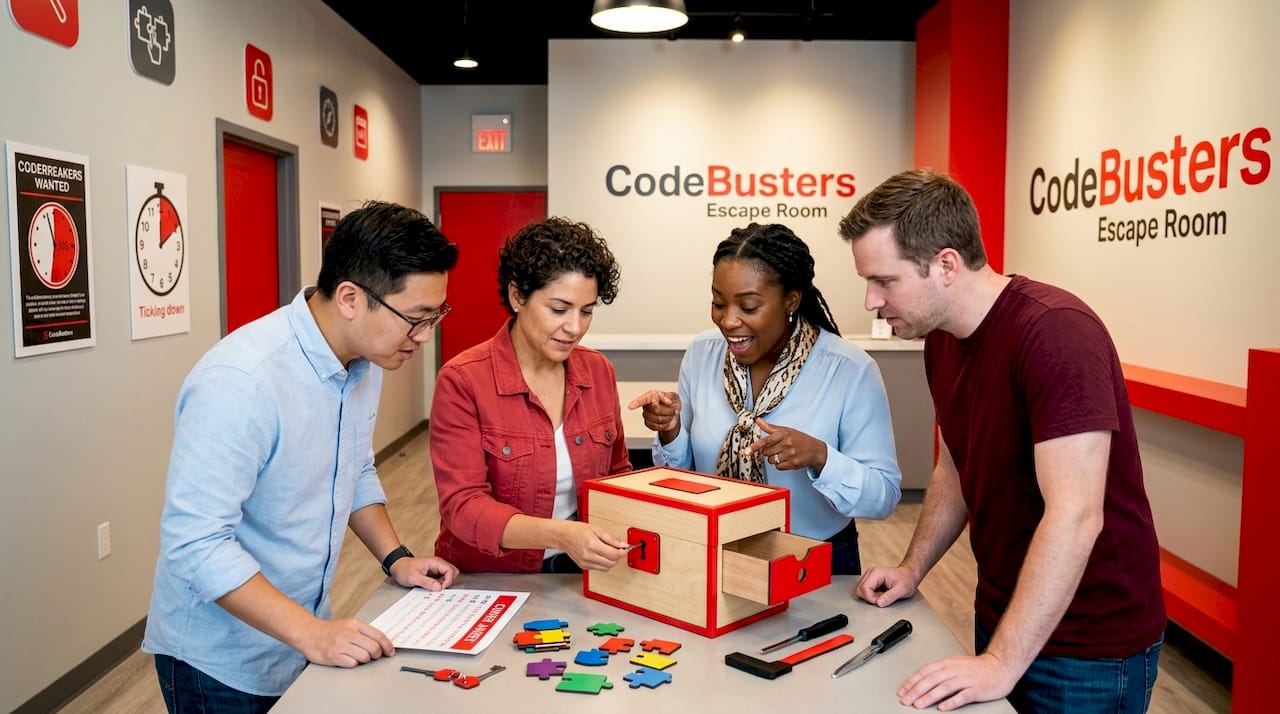
Leadership in escape rooms is defined by the ability to synthesize team input, maintain calm under pressure, and empower every member to contribute to the solution. This is not the loudest voice in the room taking charge. It is the person who listens, delegates, and keeps the group focused when the clock is running down. The role of leadership in escape rooms mirrors the most demanding moments of real organizational life, which is exactly why forward-thinking managers are booking sessions not just for fun, but as a genuine development tool.
How does leadership emerge in escape room settings?
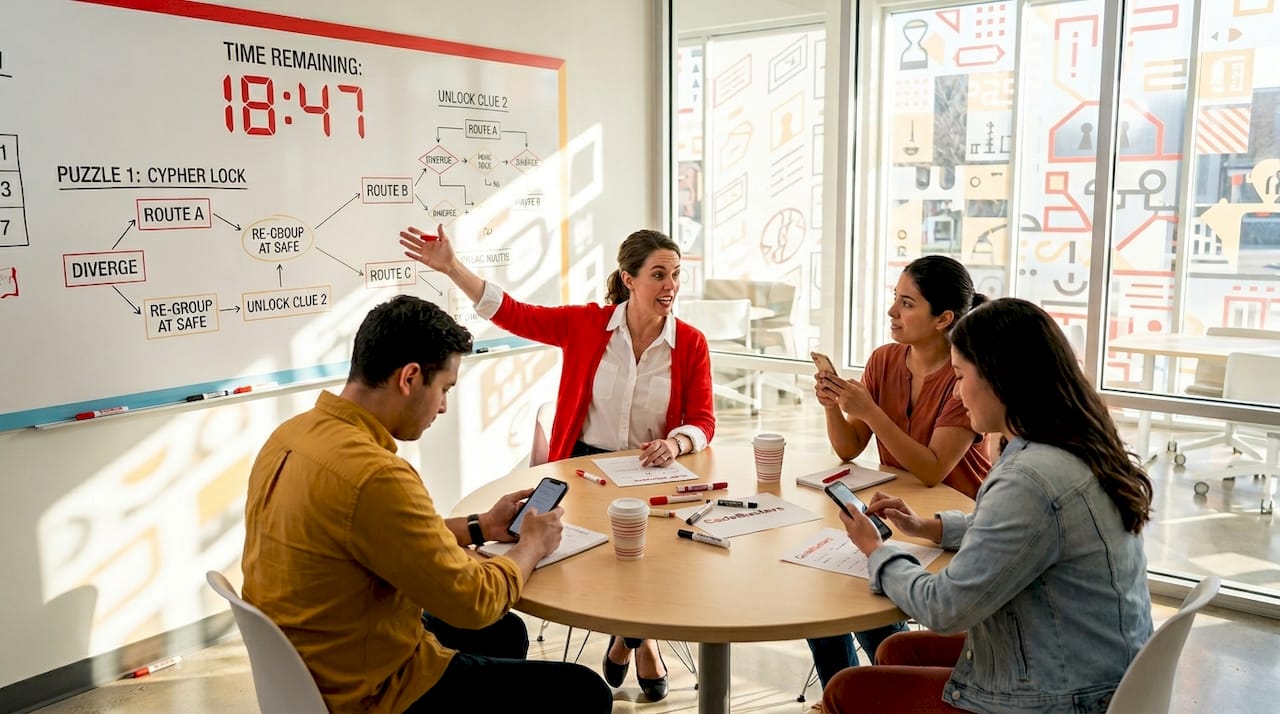
Escape rooms function as miniature laboratories of organizational life, surfacing leadership behaviors within minutes that might take months to observe in a traditional office environment. The conditions are deliberately uncomfortable: ambiguous puzzles, a ticking clock, and a group of people with different strengths and communication styles. That combination forces authentic behavior fast.
What makes leadership emergence in escape rooms distinct is that it rewards synthesis over volume. The person who steps up effectively is not the one barking orders. It is the one tracking what each teammate has found, connecting information across the room, and deciding what to prioritize next. Adaptive communication and real-time delegation are the core mechanics of effective leadership here.
Emotional regulation matters just as much as strategy. When a team hits a wall on a puzzle, panic spreads quickly. The leader who can name the frustration, redirect attention, and keep morale intact is the one who actually moves the group forward. This is a skill that transfers directly to managing a team through a product launch or a budget crisis.
- Synthesis over dominance: Effective leaders track all incoming information and connect it, rather than controlling who speaks.
- Adaptive delegation: Tasks shift as puzzles evolve. Strong leaders reassign roles without ego or friction.
- Emotional regulation: Keeping the team calm during a stuck moment is as valuable as solving the puzzle itself.
- Equitable participation: Without active facilitation, the loudest voice absorbs all the airtime and the quietest contributors, often the most analytical ones, go unheard.
Pro Tip: Before your team enters the room, designate a “role keeper” whose job is to notice when someone has gone quiet and bring them back into the conversation. This single move dramatically changes who contributes and how.
What leadership skills matter most in escape rooms?
The leadership competencies that drive success in escape rooms are the same ones that Asana’s research identifies as core to effective team leadership: direction, delegation, coaching, communication, and monitoring progress. The difference is that escape rooms compress the timeline, making every skill visible within 60 minutes.
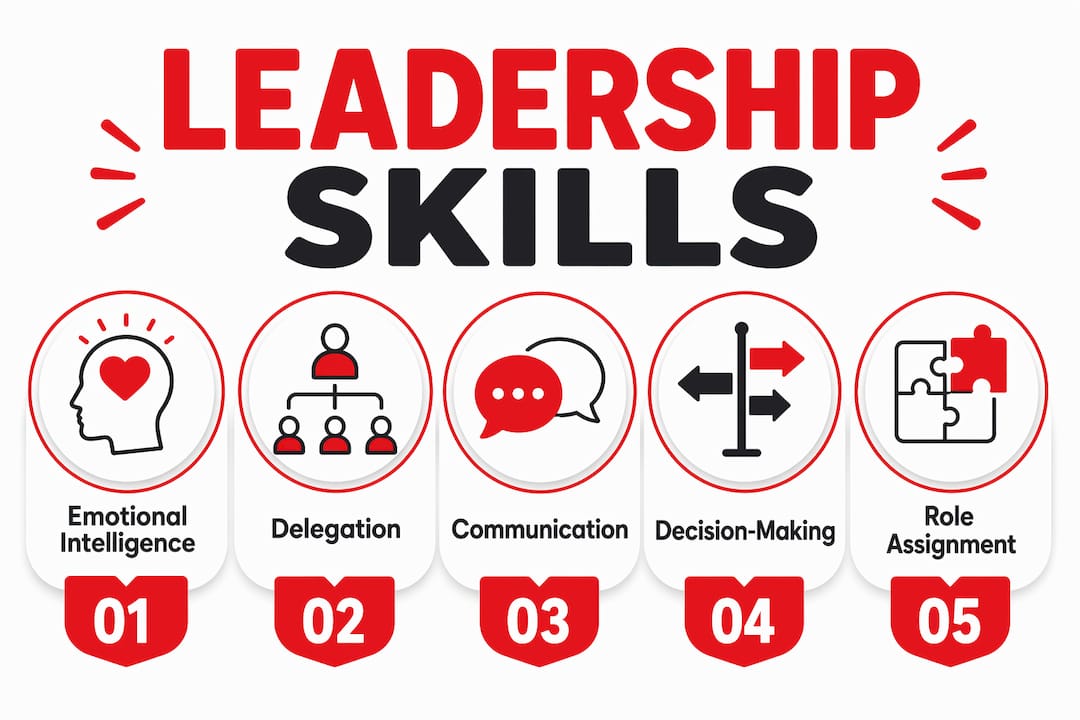
Emotional intelligence sits at the top of the list. Empirical research confirms that emotional intelligence and transformational leadership are positively interrelated and directly linked to team effectiveness. In practical terms, this means a leader who reads the room, notices when a teammate is frustrated or disengaged, and adjusts their approach accordingly will outperform a leader who simply knows the most answers.
Transformational leadership is the second major competency. In escape rooms, this looks like a leader who reframes a failed puzzle attempt as useful data rather than a failure. They keep the team motivated by connecting each small win to the larger goal of escaping. This behavior builds collective problem-solving momentum rather than individual heroics.
Here is how the core leadership skills map to specific escape room behaviors:
- Emotional intelligence: Reading teammate frustration and redirecting energy before it becomes conflict.
- Clear communication: Calling out findings verbally so the whole team shares the same situational picture.
- Delegation: Assigning puzzles based on individual strengths rather than proximity or seniority.
- Coaching: Asking guiding questions instead of giving answers, which builds team confidence and capability.
- Progress monitoring: Keeping track of solved and unsolved puzzles to prioritize where the team’s attention goes next.
“The best leaders in escape rooms elevate teammates, enabling everyone to contribute to the solution rather than dominating the process. Leadership is measured by facilitation and inclusion, not by who holds the key or takes control.” — Security Magazine
Escape rooms work as real-time leadership labs because the feedback loop is immediate. A poor delegation decision shows up in wasted minutes. A communication breakdown shows up in duplicated effort. There is no waiting for a quarterly review to understand what went wrong.
How can managers maximize leadership development through escape rooms?
The escape room experience itself is only half the value. The other half lives in how you frame it before and debrief it after. Treating the session as an operating system, with a structured pre-brief, active observation during play, and a focused debrief, converts a fun activity into a real leadership development tool.
The pre-brief sets the lens. Before the team enters the room, tell them explicitly that you are observing leadership behaviors, not just puzzle-solving speed. Assign roles: a designated leader, a note-taker who tracks what has been tried, and a role keeper who monitors participation. This framing shifts the team’s mindset from entertainment to deliberate practice.
Active observation during gameplay is where managers collect the data that makes debriefs meaningful. Watch for who synthesizes information, who goes quiet, who escalates conflict, and who de-escalates it. These moments are the raw material for the conversation that follows.
| Approach | What it produces |
|---|---|
| No pre-brief, no roles | Team defaults to loudest voice; debrief has no specific moments to analyze |
| Pre-brief with leadership focus | Team enters with intentional behaviors; debrief has concrete examples |
| Active observation during play | Manager collects specific behavioral data for targeted feedback |
| Debrief within 30 minutes | Memories are vivid; team connects behaviors to outcomes accurately |
| Reframe success metric | Team evaluates communication quality, not just whether they escaped |
The debrief is the most critical step. Structured debriefing within 30 minutes of completing the room captures the sharpest memories and the most honest reactions. Ask the team: Who made the key decisions? How did information flow? Where did communication break down? These questions shift the conversation from “Did we escape?” to “How did we lead?”
Pro Tip: Reframe the success metric before the session starts. Tell your team that escaping is a bonus. The real goal is to observe how the group communicates and makes decisions under pressure. This removes the ego from the outcome and opens up richer reflection.
What are the most common leadership pitfalls in escape rooms?
The most predictable failure mode in escape rooms is defaulting to whoever speaks the loudest when no designated leader exists. This is not a personality flaw. It is a structural problem. Without a clear leadership framework, groups under pressure revert to the path of least resistance, which is volume.
A second common pitfall is confusing charisma with capability. Escape-room dynamics can reward the most confident-sounding person, even when their instincts are wrong. Managers observing the session should score leaders on behaviors like calming the team, synthesizing information from multiple sources, and drawing out quieter contributors. Volume of speech is not a leadership metric.
Here are the most frequent challenges and how to address each one:
- Dominance by one personality: Assign a designated leader before play begins and give them an explicit mandate to distribute tasks, not to solve everything themselves.
- Unclear roles under stress: Brief the team on specific responsibilities before entering the room. Ambiguity under a time constraint produces paralysis, not creativity.
- Overlooking quiet contributors: Coach leaders to actively solicit input from team members who have gone silent. The quietest person in the room often holds the piece that unlocks the next puzzle.
- Mistaking control for leadership: Remind leaders that their job is to create conditions for the team to succeed, not to personally hold every solution.
- Poor emotional management: When frustration spikes, the leader’s job is to name it and redirect. Ignoring tension does not make it disappear. It compounds it.
Addressing these pitfalls requires more than awareness. It requires deliberate practice, which is exactly what a well-facilitated escape room provides. You can learn more about how escape rooms build collaboration through structured group challenges.
Key takeaways
Effective leadership in escape rooms requires emotional intelligence, deliberate role assignment, and structured reflection to convert the experience into lasting team development.
| Point | Details |
|---|---|
| Leadership is synthesis, not volume | The most effective escape room leaders integrate team input and manage emotions, not dominate conversation. |
| Emotional intelligence drives results | EI and transformational leadership are directly linked to team effectiveness in high-pressure environments. |
| Pre-brief and debrief are non-negotiable | Framing the session with leadership goals and debriefing within 30 minutes extracts the real development value. |
| Role assignment prevents default dynamics | Designating a leader before play prevents the group from defaulting to the loudest voice. |
| Reframe the success metric | Measuring communication quality rather than escape rate produces more transferable leadership lessons. |
What escape rooms taught us about leadership that boardrooms never could
At Codebustersescaperoom, we have watched hundreds of teams walk through our doors in Colorado Springs, and the pattern is consistent. The person who looked like the natural leader in the lobby is rarely the one who actually leads inside the room. The real leader is usually the one who quietly maps the room in the first two minutes, starts connecting puzzle pieces others have dismissed, and checks in on the teammate who has gone silent in the corner.
That observation changed how we think about leadership development entirely. Traditional workplaces reward visibility. Escape rooms reward effectiveness. The two are not the same thing, and the gap between them is where most leadership development programs fail.
The uncomfortable truth is that most managers have never seen their team operate without the social scripts that an office provides. Titles, meeting agendas, and reporting structures all shape behavior before anyone says a word. Strip those away, and you see who people actually are under pressure. That is the data that makes escape rooms genuinely useful, not as entertainment, but as a diagnostic tool.
We also believe strongly that the debrief is where the real work happens. The 60 minutes inside the room surfaces the behaviors. The 30 minutes after the room is where leaders make sense of what they saw and commit to changing something specific. Skip the debrief and you have had a fun afternoon. Run it well and you have changed how your team communicates for months.
If you are comparing escape rooms to other group activities for leadership development, the difference is immediacy. No other format puts a team under genuine time pressure, with real ambiguity, and produces observable leadership behavior that fast.
— CodeBusters
Experience leadership development at Codebustersescaperoom
Team leaders and managers in Colorado Springs have a direct path to putting these principles into practice. Codebustersescaperoom offers immersive, themed escape room experiences designed for groups who want more than entertainment. Rooms like “Flight of Deception” and “Stranger 80’s” create the exact conditions where leadership behaviors surface naturally: time pressure, ambiguity, and a team that has to communicate or fail.
Book a private session for your team and use the pre-brief and debrief framework outlined in this article to turn the experience into a genuine leadership development session. Codebustersescaperoom’s Colorado Springs escape rooms are also an excellent option for corporate event planners looking for engaging team-building entertainment that goes beyond the typical offsite activity. Private bookings are available, and the format works for teams of all sizes and experience levels.
FAQ
What is the role of leadership in escape rooms?
Leadership in escape rooms means synthesizing team input, delegating tasks based on individual strengths, and maintaining calm under time pressure. It is defined by facilitation and inclusion rather than control or dominance.
How does leadership affect escape room success?
Teams with a designated leader who actively distributes tasks and manages communication consistently outperform groups that default to whoever speaks the loudest. The quality of leadership directly determines how efficiently the team processes information and solves puzzles.
What leadership skills do escape rooms develop?
Escape rooms build emotional intelligence, adaptive communication, delegation, and real-time decision-making. These are the same competencies that research links to transformational leadership and high team effectiveness in workplace settings.
Should you assign a leader before entering an escape room?
Assigning a clear leader before the session begins prevents the group from defaulting to the most dominant personality under stress. A pre-assigned leader with an explicit facilitation mandate produces more equitable participation and better team outcomes.
How should managers debrief an escape room session?
Run the debrief within 30 minutes of completing the room, while memories are specific and vivid. Focus questions on communication patterns, decision-making moments, and how information flowed across the team rather than on whether the group escaped.