How to plan an effective team building event in Colorado Springs
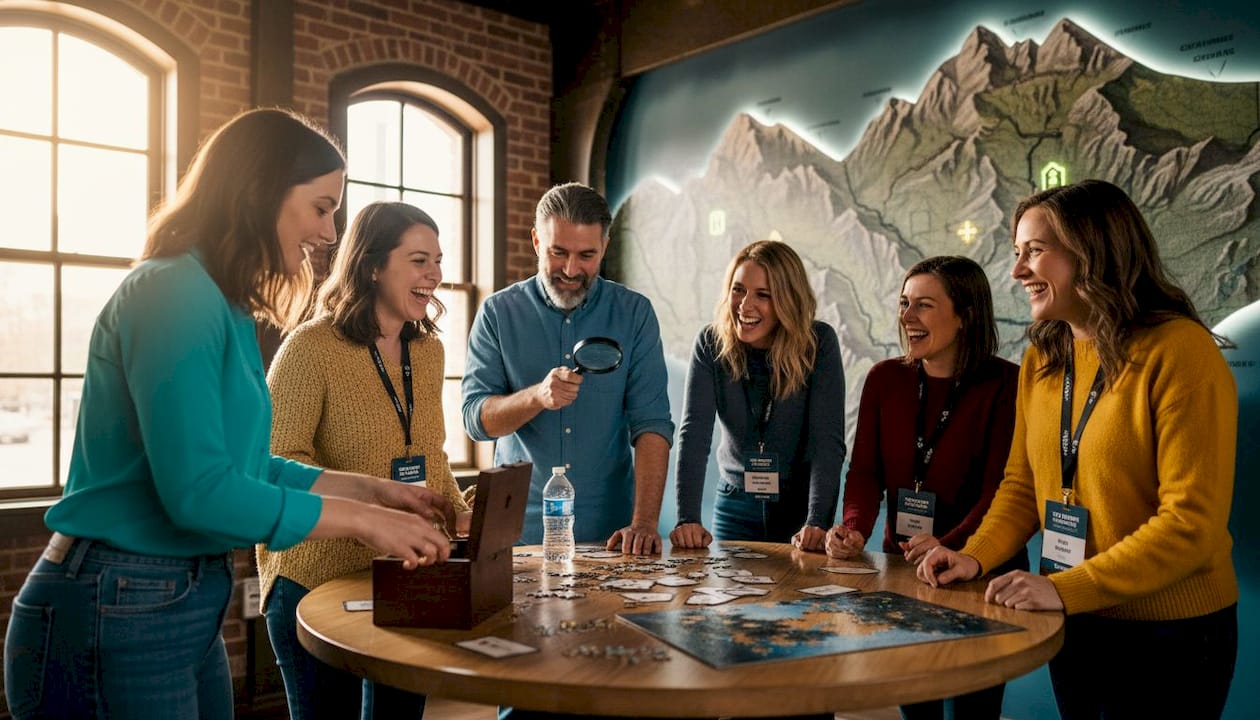
Most corporate team-building events end with polite applause and forgotten takeaways. Teams sit through trust falls or trivia nights, then return to the same communication gaps and siloed habits on Monday morning. Escape rooms break that pattern. Structured programs like escape rooms show up to 250% ROI and 82% improved communication among participants. This guide walks you through every step: setting clear goals, choosing the right Colorado Springs venue, booking logistics, and facilitating the kind of debrief that turns a fun afternoon into lasting workplace change.
Table of Contents
- Defining your team building goals
- Selecting the right escape room venue
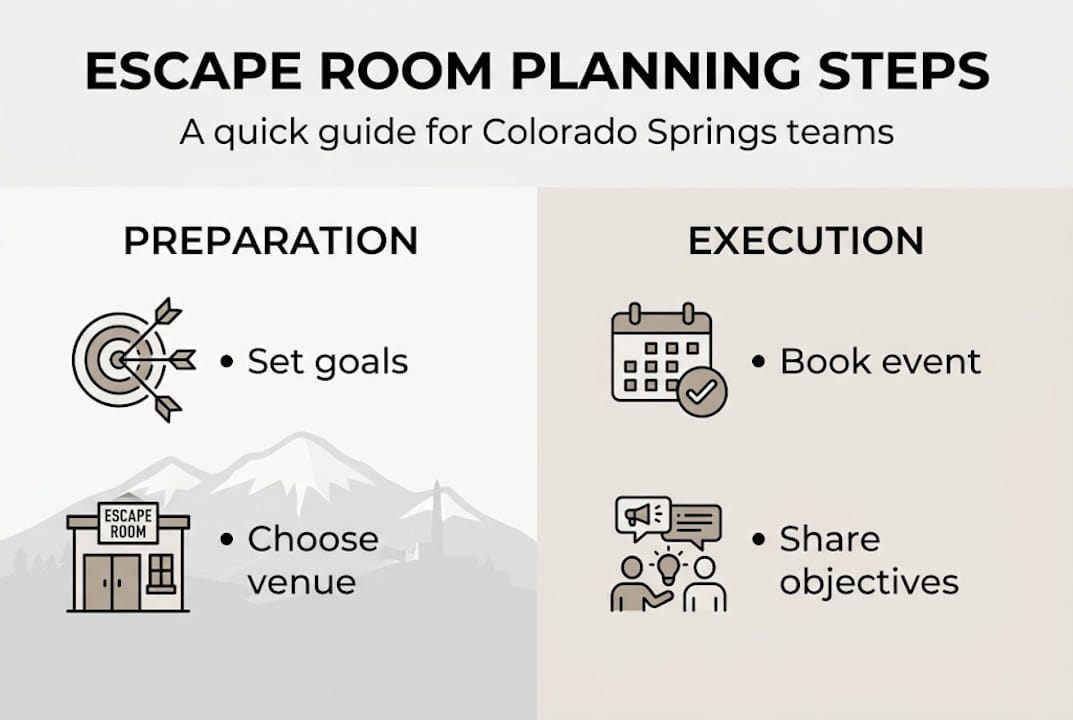
- Step-by-step: Planning and booking your event
- Maximizing the impact: Facilitating your escape room event
- What most companies get wrong (and how to do better)
- Plan your next team-building event with CodeBusters
- Frequently asked questions
Key Takeaways
| Point | Details |
|---|---|
| Set clear goals | Define your team’s desired outcomes before starting any team-building activity. |
| Choose the right venue | Select a Colorado Springs escape room that matches your team size and objectives. |
| Plan logistics carefully | Coordinate schedules, communicate details, and confirm bookings well ahead of time. |
| Facilitate group reflection | Guide your team through debrief and feedback to maximize the event’s impact. |
| Embed teamwork in culture | Combine escape room events with ongoing activities to build lasting collaboration. |
Defining your team building goals
Before you reserve a room or send a calendar invite, you need to know what problem you are actually solving. Vague goals produce vague results. The clearest way to start is by naming the specific friction your team experiences every week.
Common team weaknesses corporate leaders identify include:
- Communication breakdowns between departments or remote and in-office staff
- Low trust after organizational changes, layoffs, or leadership transitions
- Weak collaboration where individuals default to solo work instead of sharing resources
- Limited creative problem-solving when teams face novel challenges
- Leadership gaps where emerging managers lack confidence in group settings
Once you name the weakness, you can match it to an escape room outcome. Teams that struggle with communication benefit from rooms that require constant information sharing under time pressure. Teams with trust issues benefit from physically close, high-stakes puzzles where every person’s contribution matters. Research confirms that escape rooms improve problem-solving and communication in measurable ways, making them a genuinely useful diagnostic tool, not just entertainment.
Write your goal as a single sentence before you book anything. Something like: “We want our project managers and developers to practice asking for help instead of working in isolation.” That sentence will guide every decision that follows, from room selection to the debrief questions you ask afterward.
Pro Tip: Share your goal sentence with the venue coordinator when you call. Experienced escape room hosts can recommend specific rooms or difficulty levels that align with your objective, saving you from picking a room that misses the mark.
Also consider what success looks like after the event. Will you survey participants? Track collaboration metrics over the next quarter? Having a simple measurement plan, even a five-question anonymous survey, gives you data to justify future investment and shows your team that leadership takes the experience seriously.
Selecting the right escape room venue
Colorado Springs has a growing selection of escape room venues, and the differences between them matter when you are planning for a corporate group. The right venue depends on your group size, budget, desired difficulty, and whether you need a private or exclusive experience.
Here is a quick comparison of top-rated options based on Tripadvisor’s Colorado Springs listings:
| Venue | Price | Group capacity | Notable feature |
|---|---|---|---|
| Escape The Place | ~$33/person | Small to medium | Budget-friendly entry point |
| Escapology | Venue buyout available | Up to 100 people | Large corporate events |
| Enter the Enigma | Varies | Medium groups | Themed narrative rooms |
| CodeBusters Escape Room | Varies | Small to large | Award-winning, veteran-owned |
When evaluating venues, prioritize these factors:
- Private room booking: Corporate events benefit from exclusive access so your team is not mixed with strangers
- Multiple rooms running simultaneously: Larger groups can split into competing teams, which raises energy and creates natural debrief material
- Difficulty range: A room that is too easy feels patronizing; one that is too hard creates frustration rather than learning
- Staff support: Look for venues with experienced game masters who can adjust hints based on group dynamics
For teams of 20 or more, venue buyouts are worth the investment. Running multiple rooms at once lets you create internal competition, compare team strategies during the debrief, and keep the event cohesive. Escapology accommodates up to 100 people with buyout options, which suits large department events or company-wide gatherings.
CodeBusters Escape Room stands out for corporate groups because of its themed rooms like Flight of Deception and Stranger 80’s, which are designed with narrative depth that pulls teams into genuine collaboration. The veteran and family-owned background also means the staff understands structured teamwork in a way that generic entertainment venues often do not.
Pro Tip: Read recent reviews specifically from corporate groups, not just families or date-night visitors. Corporate reviewers tend to mention staff responsiveness, group logistics, and whether the experience felt purposeful, which is exactly what you need to know.
Step-by-step: Planning and booking your event
Once you have a venue in mind, the logistics need to move quickly. Popular venues in Colorado Springs book out weeks in advance, especially on Fridays and Saturdays. Here is a clear sequence to follow:
- Confirm your headcount at least three weeks before your target date. Get a firm number, not an estimate.
- Contact the venue directly to ask about corporate group availability, private room options, and deposit requirements.
- Discuss accommodations upfront: accessibility needs, dietary restrictions for any post-event catering, and whether waivers can be signed digitally in advance.
- Secure your booking with a deposit. Most venues require 25 to 50 percent upfront for group reservations.
- Communicate the plan to participants at least one week ahead. Share the venue name, arrival time, dress code if relevant, and a brief note on what to expect.
- Assign a point of contact on your team who handles day-of logistics so you can focus on facilitation.
- Confirm details 48 hours before the event: headcount changes, parking instructions, and any last-minute accessibility needs.
Here is a simple planning timeline to keep you on track:
| Timeline | Task |
|---|---|
| 4 weeks out | Set goals, confirm budget, research venues |
| 3 weeks out | Contact venues, check availability |
| 2 weeks out | Book and pay deposit, collect headcount |
| 1 week out | Communicate event details to participants |
| 48 hours out | Confirm final numbers and logistics |
| Day of | Arrive 15 minutes early, brief your team |
For event booking at CodeBusters, the process is straightforward and the team is responsive to corporate group requests. Reaching out early gives you the best selection of rooms and time slots.

Pro Tip: Send a one-paragraph preview to participants explaining that the event has a specific team goal, not just fun. Teams that arrive knowing there is a purpose engage more seriously and get more out of the debrief.
Maximizing the impact: Facilitating your escape room event
The escape room itself is only half the value. The debrief is where real workplace learning happens. Without it, teams leave with a good memory. With it, they leave with a framework they can apply the next morning.
Start your debrief within 15 minutes of finishing the room, while energy and specific moments are still fresh. Use these guided questions:
- What communication patterns did you notice during the experience?
- Who took the lead, and how did that feel for the rest of the group?
- Where did the team get stuck, and what helped you move forward?
- What would you do differently if you ran the room again?
- How does what happened in that room show up in your daily work?
That last question is the bridge. It connects the experience to real behavior and makes the event feel relevant rather than recreational.
“Experiential learning produces higher knowledge retention compared to traditional training methods, making escape rooms a genuinely effective format for developing team skills.”
After the debrief, give each participant one concrete takeaway: a single behavior they commit to practicing in the next two weeks. Write them down. Share them with the group. Follow up in your next team meeting to ask how it went.
Sustaining momentum matters as much as the event itself. Consider scheduling a 30-minute check-in four weeks later to revisit the commitments. Teams that do this see noticeably stronger results than those who treat the event as a one-time experience.
Pro Tip: Record key debrief themes on a whiteboard or shared document immediately after the session. These notes become valuable input for your next performance review cycle or team retrospective.
What most companies get wrong (and how to do better)
Here is the uncomfortable truth: most corporate team-building events fail not because of bad venues or low budgets, but because leaders treat them as isolated events rather than part of an ongoing culture strategy.
A single escape room session will not fix a team with deep trust issues or a history of poor communication. What it will do is create a shared reference point, a moment your team can point back to and say, “Remember when we all froze at that puzzle until someone finally spoke up?” That moment only becomes useful if you keep referencing it.
The companies that see real results use experiential activities like escape rooms as one chapter in a longer story. They connect the event to a current business challenge, debrief with intention, and follow up consistently. They also choose venues that understand corporate dynamics, not just entertainment.
Colorado Springs teams have a real advantage here. The local escape room scene has matured enough that venues like CodeBusters are built to support corporate groups, not just accommodate them. That distinction matters when you want an experience that actually moves the needle on group dynamics.
Plan your next team-building event with CodeBusters
You now have a clear framework: set specific goals, choose a venue that fits your group, plan the logistics carefully, and facilitate a debrief that turns experience into action.
CodeBusters Escape Room in Colorado Springs offers themed rooms designed for exactly this kind of purposeful team experience. With private room bookings, multiple themed options, and a team that understands corporate group dynamics, it is a strong fit for companies that want more than a fun afternoon. Whether your group is 6 or 60, the booking process is simple and the staff is ready to help you match the right room to your team’s goals. Reach out today to check availability and start building the kind of team that actually works better together.
Frequently asked questions
How many people can join an escape room team-building event in Colorado Springs?
Most venues accommodate groups ranging from 8 to 100 people, with some offering full venue buyouts for larger events. Escapology, for example, supports buyouts for up to 100 participants.
What are the proven benefits of escape room team building?
Studies show 82% report improved communication and 78% better problem-solving after structured escape room activities. These results make escape rooms one of the more evidence-backed formats for corporate team development.
How much does it cost to plan a team-building escape room?
Rates start at around $33 per person at venues like Escape The Place, with full venue buyouts available at higher price points for larger groups.
How can we ensure lasting impact after the event?
Guided debriefs and follow-up activities reinforce lessons learned, and higher knowledge retention from experiential formats means the impact sticks longer than traditional training. Scheduling a follow-up check-in four weeks later significantly strengthens results.