Top skills learned in escape rooms for team success
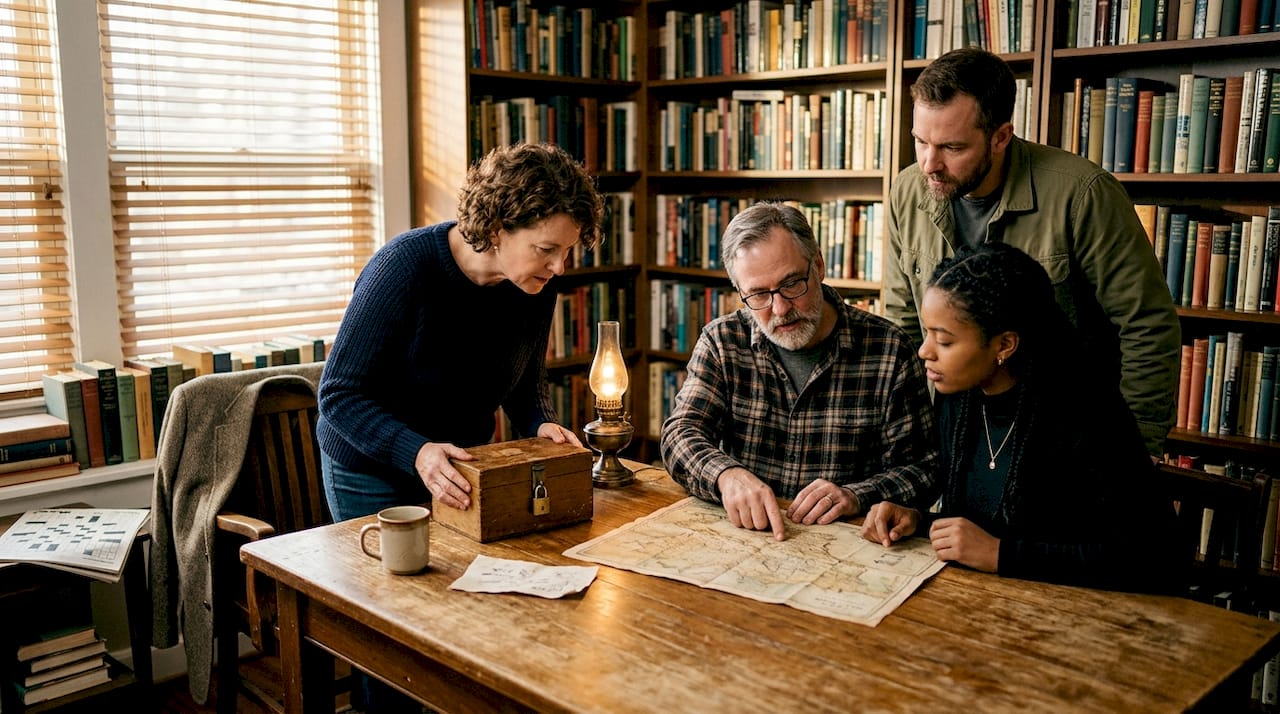
Escape rooms have become one of the most engaging ways for groups to bond while developing critical abilities that extend far beyond the game itself. Whether you’re planning a night out with friends, organizing a family activity, or seeking a fresh approach to corporate team building, these immersive challenges offer something unique: they force participants to collaborate under pressure, think creatively, and communicate effectively to succeed. The best part? While you’re racing against the clock and solving intricate puzzles, you’re actually building valuable skills that translate directly to real-world teamwork and problem-solving scenarios.
Table of Contents
- Key takeaways
- Key skills learned in escape rooms
- Comparing skills: which escape room challenges develop what?
- How escape rooms foster soft skills for corporate and family teams
- Choosing the right escape room for your team’s skill goals
- Enhance your team’s skills with escape rooms in Colorado Springs
- FAQ
Key Takeaways
| Point | Details |
|---|---|
| Critical thinking | Escape rooms sharpen active analysis under time constraints, teaching teams to evaluate clues, identify connections, and prioritize tasks. |
| Clear communication | Frequent, concise verbal exchange is essential for sharing findings and aligning on next steps when time is limited. |
| Strategic collaboration | Leverage each member’s strengths by quickly assigning roles and dividing puzzles accordingly to maximize efficiency. |
| Time management | Assign a timekeeper and establish milestones to maintain pacing and prioritize puzzles that drive progress. |
| Adaptability under pressure | If a plan stalls, teams should pivot quickly and try alternative approaches to avoid running out of time. |
Key skills learned in escape rooms
When you step into an escape room, you’re entering an environment specifically designed to challenge multiple cognitive and interpersonal abilities simultaneously. The most valuable skill you’ll develop is critical thinking, which manifests as you examine each clue, identify connections between seemingly unrelated objects, and determine which puzzles to tackle first. This isn’t passive observation; it’s active analysis under time constraints that mirrors real-world decision-making scenarios.
Communication becomes absolutely essential the moment your team discovers their first clue. Escape rooms encourage teamwork, critical thinking, and effective communication by creating situations where information must flow freely between all participants. One person might find a key while another discovers the lock it opens, but without clear verbal exchange, that connection never happens. This constant dialogue builds habits of concise, purposeful communication that carry over into everyday interactions.
Collaboration goes deeper than simply working together. It involves recognizing each team member’s unique strengths and assigning roles accordingly. Some people excel at physical puzzles requiring dexterity, while others shine at mathematical riddles or pattern recognition. Successful teams quickly identify these talents and delegate tasks to maximize efficiency. This organic role assignment teaches groups how to leverage diversity for better outcomes.
Adaptability emerges when your initial strategy hits a wall. Perhaps you’ve spent ten minutes convinced a puzzle works one way, only to realize you’ve been approaching it incorrectly. The ability to abandon unproductive paths and pivot quickly separates successful teams from those who run out of time. This flexibility under pressure translates directly to workplace scenarios where plans change and quick thinking saves projects.
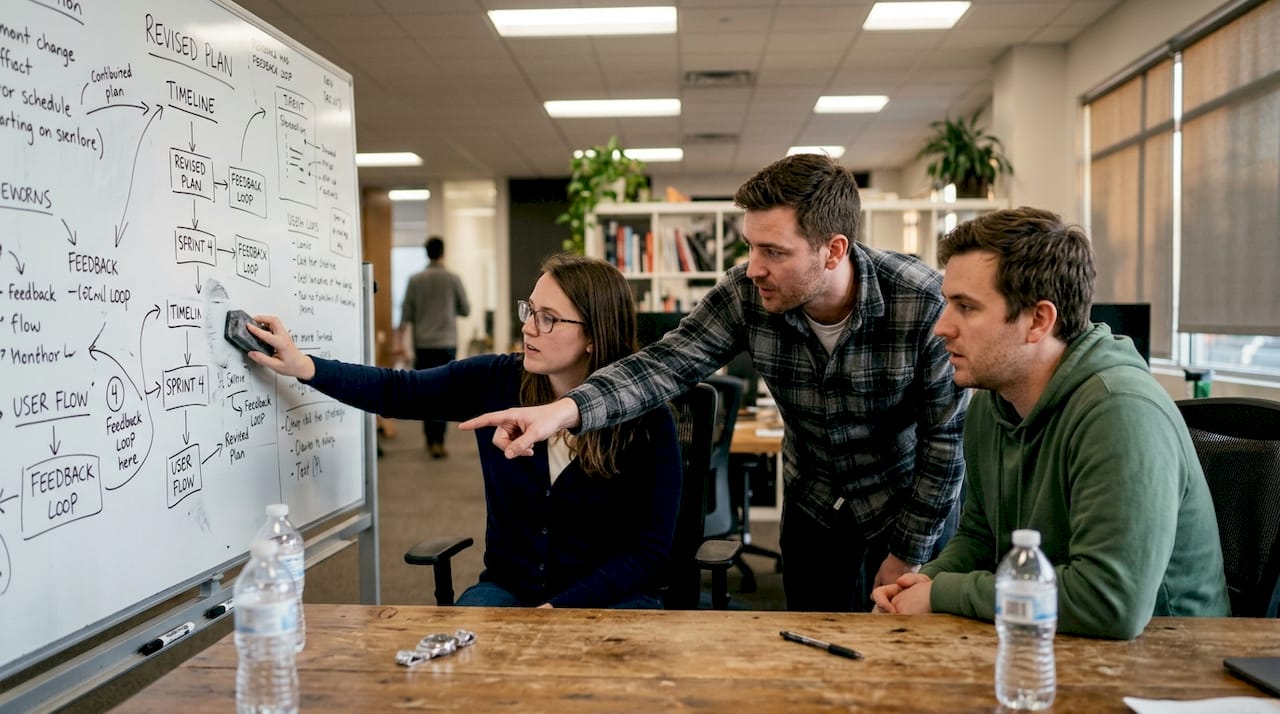
Time management becomes visceral when you can see the clock counting down. Teams must constantly evaluate which puzzles are critical path items versus which can wait. This prioritization skill, practiced in the high-stakes environment of an escape room, develops instincts for resource allocation that prove invaluable in professional settings.
Pro Tip: Assign one team member as the timekeeper who announces milestones like “20 minutes left” to keep everyone aware of pacing without constantly checking the clock themselves.
Comparing skills: which escape room challenges develop what?
Not all escape room puzzles target the same skill sets. Understanding which challenge types emphasize particular abilities helps teams select experiences aligned with their development goals. Different escape room themes and puzzles emphasize distinct skill sets, making it worthwhile to examine how various escape room challenge types map to specific competencies.
| Challenge Type | Primary Skills Developed | Secondary Skills | Best For |
|---|---|---|---|
| Physical puzzles | Manual dexterity, spatial reasoning | Teamwork, patience | Kinesthetic learners, active groups |
| Logic puzzles | Critical thinking, pattern recognition | Persistence, analytical reasoning | Detail-oriented teams, problem-solvers |
| Riddles and wordplay | Creative thinking, communication | Lateral thinking, vocabulary | Verbal processors, creative minds |
| Role-play scenarios | Leadership, collaboration | Improvisation, empathy | Corporate teams, social groups |
| Technology-based | Technical aptitude, innovation | Adaptability, digital literacy | Tech-savvy groups, younger teams |
Physical puzzles that require manipulating objects, arranging items, or navigating spaces develop fine motor coordination alongside teamwork. These challenges often need multiple people working in tandem, like one person holding something while another adjusts a mechanism. The collaborative nature builds trust and synchronization between team members.
Logic puzzles featuring sequences, mathematical operations, or code-breaking strengthen analytical capabilities and pattern recognition. These exercises reward methodical thinking and attention to detail. Teams learn to break complex problems into manageable components, a skill that applies to everything from project planning to troubleshooting technical issues.
Riddles and language-based challenges boost creative problem-solving by requiring lateral thinking. When the answer isn’t obvious, teams must brainstorm multiple interpretations and test unconventional ideas. This creative flexibility helps groups overcome mental blocks and approach challenges from fresh angles.
Role-play scenarios where participants must act out parts or make character-driven decisions develop leadership and interpersonal skills. Someone naturally steps into a coordinator role while others contribute specialized knowledge. These dynamics mirror workplace hierarchies and teach participants how to lead and follow effectively.
- Mixed challenge rooms offer the most balanced skill development by incorporating multiple puzzle types
- Themed experiences with narrative elements add memory and storytelling skills to the mix
- Progressive difficulty designs teach teams to build confidence through incremental successes
How escape rooms foster soft skills for corporate and family teams
Soft skills represent the interpersonal and emotional intelligence capabilities that determine how effectively people work together. Escape rooms are effective training tools for corporate soft skills development because they create authentic pressure situations requiring immediate application of these abilities without the consequences of real-world failure.
Communication skills sharpen dramatically when success depends entirely on information sharing. Unlike typical social situations where miscommunication might cause minor inconvenience, escape rooms make the cost of poor communication immediately visible. When someone fails to mention finding a clue, the entire team wastes precious minutes. This direct feedback loop trains participants to speak up promptly and listen actively to others.
Leadership emerges organically in escape room settings. Without assigned managers, someone usually steps forward to coordinate efforts, delegate tasks, and maintain team morale. This natural selection process reveals leadership potential in individuals who might not hold formal authority positions. For corporate team building, this can uncover hidden talent and give emerging leaders low-risk practice opportunities.
Adaptability and stress management develop as teams face setbacks and time pressure. The controlled environment allows participants to experience frustration, overcome it, and continue working productively. This emotional regulation practice builds resilience that transfers to workplace challenges and personal obstacles.
Family groups and friend circles gain relationship-strengthening benefits alongside skill development. Seeing loved ones tackle challenges reveals new dimensions of their personalities and capabilities. Parents might discover their teenager’s exceptional logical reasoning, while siblings learn to appreciate each other’s different problem-solving approaches. These insights deepen mutual respect and understanding.
- Trust-building occurs naturally when team members must rely on each other’s contributions
- Conflict resolution skills develop when disagreements about puzzle solutions arise
- Empathy grows as participants recognize different thinking styles and communication preferences
- Celebration of small wins creates positive reinforcement patterns for team achievements
Pro Tip: Schedule a 15-minute debrief session immediately after completing your escape room to discuss what worked, what didn’t, and how the experience relates to real-life team challenges. This reflection solidifies learning and helps transfer skills to other contexts.
Choosing the right escape room for your team’s skill goals
Selecting an escape room experience that aligns with your team’s development objectives maximizes the value of the activity. Selecting an escape room aligned with your desired skill outcomes boosts team benefits by ensuring the challenges target the specific areas where your group needs growth.
Start by identifying your team’s current skill gaps and development priorities. Corporate teams might need stronger cross-departmental communication, while family groups might want to improve collaborative decision-making. Friend groups could be seeking better conflict resolution skills or simply want to challenge their collective problem-solving abilities. Clarifying these goals upfront guides your escape room selection.
| Room Focus | Skill Emphasis | Difficulty Level | Ideal Team Size | Best For |
|---|---|---|---|---|
| Mystery/Detective | Critical thinking, attention to detail | Medium to Hard | 4-8 people | Analytical teams, detail-oriented groups |
| Adventure/Action | Physical coordination, quick decisions | Easy to Medium | 6-10 people | Active groups, mixed-skill teams |
| Horror/Suspense | Stress management, courage | Medium | 4-6 people | Building resilience, overcoming fears together |
| Sci-Fi/Technology | Innovation, technical thinking | Hard | 3-6 people | Tech teams, puzzle enthusiasts |
| Historical/Educational | Research skills, knowledge application | Medium | 4-8 people | Learning-focused groups, families |
Consider difficulty level carefully. Rooms that are too easy won’t challenge your team sufficiently to drive skill growth, while overly difficult experiences can frustrate and discourage participants. Most escape room facilities provide difficulty ratings, and first-time groups should start at beginner or intermediate levels.
Team size matters significantly for skill development. Smaller groups of three to five people ensure everyone stays actively engaged and contributes meaningfully. Larger groups of eight to ten work better for rooms specifically designed with multiple simultaneous puzzles, preventing anyone from becoming a passive observer.
- Assess your team’s current skill baseline through honest discussion or informal evaluation
- Identify the top two or three skills you want to develop or strengthen
- Research escape room themes and read detailed descriptions of puzzle types included
- Match room characteristics to your skill goals using comparison criteria
- Consider logistics like location, scheduling, and budget constraints
- Book an appropriately difficult room that accommodates your exact group size
- Brief your team beforehand on the learning objectives beyond just escaping
Theme selection influences which skills get emphasized most. Detective mysteries heavy on clue analysis develop critical thinking and attention to detail. Action-adventure rooms with physical challenges build coordination and quick decision-making. Historical or educational themes that require applying outside knowledge strengthen research skills and information synthesis.
Don’t overlook the value of repeat experiences. Trying multiple rooms with different themes and difficulty levels provides varied skill-building opportunities and prevents your team from plateauing. Each new environment presents fresh challenges that test abilities in novel ways.
Enhance your team’s skills with escape rooms in Colorado Springs
Ready to transform your team’s capabilities while having an unforgettable experience? CodeBusters Escape Room offers diverse, professionally designed challenges that develop the exact skills your group needs to excel. Whether you’re coordinating a corporate team-building session, planning a memorable family outing, or organizing an adventure with friends, our Colorado Springs escape rooms provide the perfect environment for growth and entertainment.
Our themed rooms like Past to the Future, Stranger 80’s, and Flight of Deception each emphasize different skill combinations, letting you select experiences tailored to your development goals. Private bookings ensure your team works together without outside distractions, maximizing learning and bonding opportunities.
As a veteran and family-owned business, we understand the importance of teamwork, clear communication, and problem-solving under pressure. Our award-winning team building escape rooms have helped countless groups strengthen their collaboration skills while creating lasting memories. Booking is simple, and our experienced staff can help you choose the ideal room based on your team’s size, experience level, and skill development priorities.
FAQ
What skills do you learn in an escape room?
Escape rooms develop multiple valuable skills simultaneously, including critical thinking, effective communication, collaborative problem-solving, adaptability, and time management. These competencies transfer directly to both professional environments and personal relationships, making participants more effective team members and decision-makers.
How do escape rooms improve team communication?
Participants must constantly share discoveries, ideas, and observations to solve puzzles successfully within the time limit. This necessity creates practice in clear, concise, and timely information exchange. Teams quickly learn that withholding information or communicating unclearly directly impacts their chances of success.
Can escape rooms help with corporate team building?
Absolutely. Escape rooms simulate high-pressure collaborative scenarios that require leadership, delegation, and coordinated effort to succeed. Many companies use these experiences specifically to strengthen workplace dynamics, reveal hidden leadership potential, and improve cross-functional communication in an engaging, low-stakes environment.
What should I look for when choosing an escape room for skill development?
Start by identifying which skills your team needs to strengthen, then match those goals to escape room puzzle types and themes. Consider whether you need communication practice, critical thinking challenges, or physical coordination tasks. Select appropriate difficulty levels and room capacities that keep everyone actively engaged throughout the experience.