Role of collaboration in escape rooms: a guide for groups
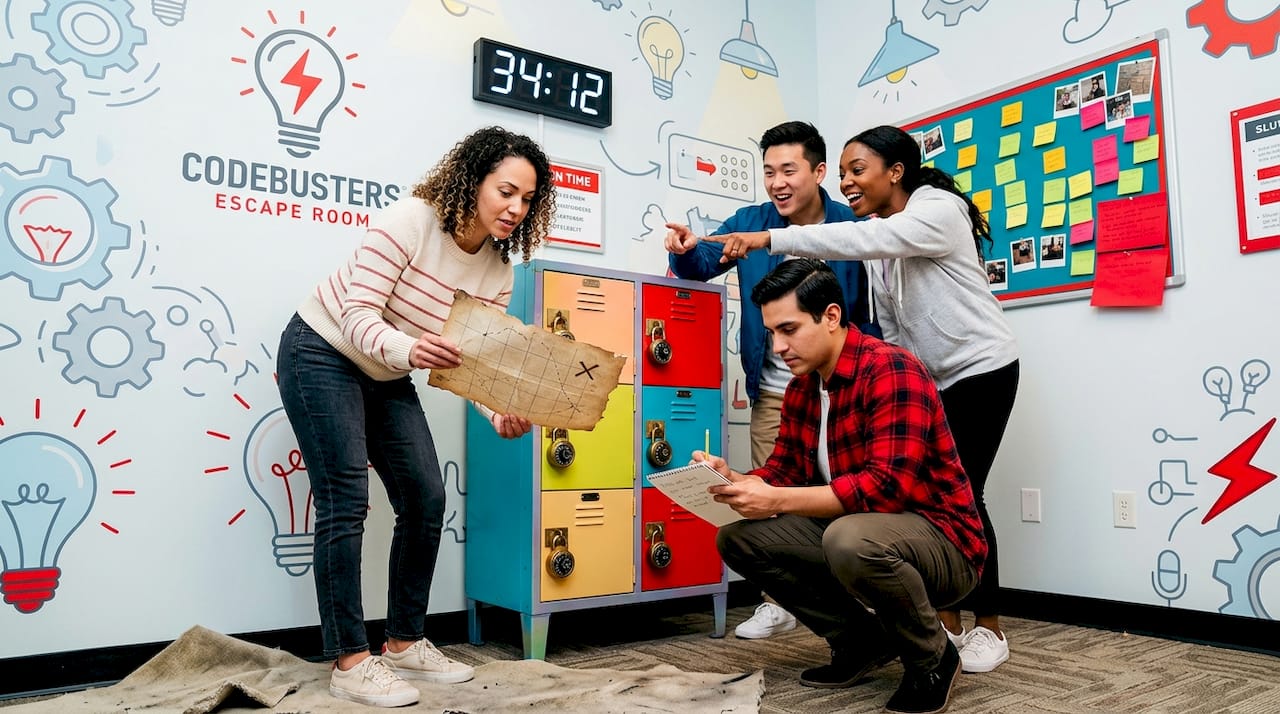
Walk into an escape room expecting a fun puzzle night, and you might walk out having learned more about your group than any meeting or workshop ever revealed. The role of collaboration in escape rooms goes far beyond cracking codes together. These experiences compress real teamwork dynamics into 60 high-pressure minutes, making visible the things that stay hidden in everyday life: who leads when stakes are real, who hoards information, who shuts down under pressure. This guide breaks down exactly how escape rooms develop genuine collaboration skills for corporate teams, families, and friend groups planning their next shared experience in Colorado Springs.
Table of Contents
- How escape rooms expose teamwork dynamics under pressure
- The mechanisms by which escape room collaboration improves teamwork skills
- Evidence from studies showing escape rooms enhance collaboration and learning
- Choosing and planning escape rooms for your group in Colorado Springs
- Maximizing collaboration: tips for facilitation and debriefing after the escape room
- Why most groups miss the real value of escape room collaboration and how to unlock it
- Experience collaborative escape rooms in Colorado Springs with CodeBusters
- Frequently asked questions
How escape rooms expose teamwork dynamics under pressure
Most teams think they communicate well. Escape rooms prove otherwise, and they do it fast. The 60-minute timeframe creates urgency that strips away the polished behavior people perform in meetings and replaces it with instinct. That is when you see who actually listens, who interrupts, and who goes quiet when things get complicated.
Escape rooms and group dynamics interact in a way no other activity quite replicates. When a team is stuck on a puzzle with 20 minutes left, the social niceties disappear. Someone takes charge. Someone else ignores a clue because they are convinced of a wrong answer. These patterns mirror exactly what happens in high-stakes workplace moments, except here there are no consequences beyond a failed escape.
What makes this valuable is the visibility. Every collaboration breakdown happens in real time, in a shared physical space, witnessed by everyone. There is no email thread to blame, no meeting structure to hide behind. The dynamics are right there in the room.
Key behaviors escape rooms expose:
- Information hoarding: Team members who find clues and work them independently instead of sharing.
- Premature closure: Groups that commit to a solution before testing it fully, especially under time pressure.
- Leadership vacuum: Moments when no one takes initiative and the group stalls.
- Parallel processing failure: Teams that crowd around one puzzle while three others go untouched.
- Communication bottlenecks: One or two people filtering all information, slowing the whole group down.
Pro Tip: Before your group enters the room, designate one person as the “central communicator” for the first 15 minutes, then rotate the role. You will immediately see how information flow changes and who naturally steps up when the structure shifts.
Understanding these patterns is the first step. A structured debrief after the game translates what happened in the room into actionable teamwork insights that groups can actually apply going forward.
The mechanisms by which escape room collaboration improves teamwork skills
Understanding how escape rooms improve collaboration is not complicated once you see the three core mechanisms at work. These are compressed decisions, visible communication, and leadership under pressure, and each one targets a different teamwork skill set.
-
Compressed decision-making. In most workplaces, decisions stretch across days of emails, meetings, and approvals. In an escape room, your group has seconds to decide whether a clue matters and minutes to act on it. This trains fast, confident group choices and forces teams to build quick consensus without perfect information. It is uncomfortable. That discomfort is the point.
-
Visible communication patterns. Every conversation in an escape room happens out loud, in a small space, with everyone present. There is nowhere for a communication gap to hide. Groups can literally watch each other’s information-sharing behavior in real time. When one person is doing all the talking and three others are disengaged, the pattern is unmistakable. That recognition alone shifts behavior in future interactions.
-
Leadership under constraint. Escape rooms are not won by whoever has the highest title. They are won by whoever can read the puzzle, rally the group, and redirect effort when something is not working. Quiet team members often emerge as sharp leaders in this environment. Conversely, dominant personalities sometimes learn that control without collaboration actually slows the group down.
Team dynamics in escape games create a kind of behavioral stress test. Skills that look strong in low-pressure settings get genuinely tested here. That is not a criticism of your group. It is exactly the feedback that makes the experience worth having.
Pro Tip: Set one specific teamwork goal before entering the room. “We want to practice letting go of wrong answers faster” or “We want every person to lead at least one puzzle.” Focused intention produces far more measurable improvement than going in blind.
Evidence from studies showing escape rooms enhance collaboration and learning
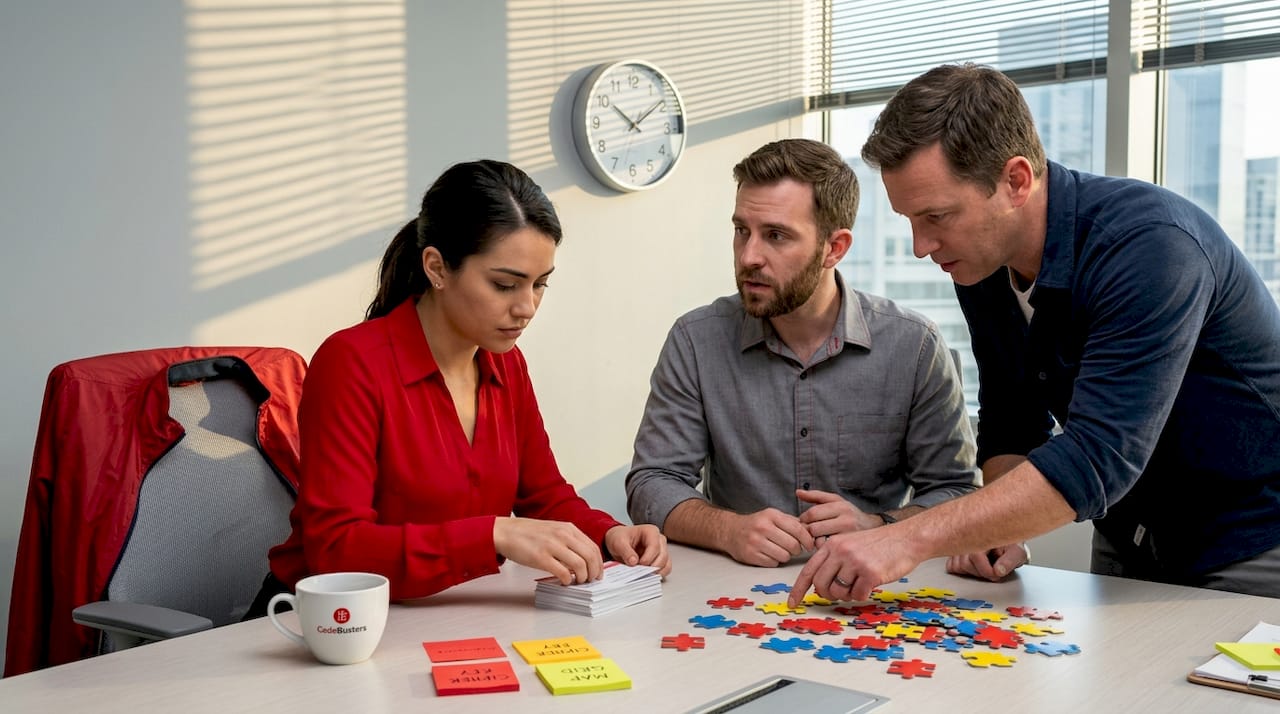
The research behind escape room learning is stronger than most people realize. A 2026 peer-reviewed study found significant knowledge retention improvement and positive teamwork perceptions among participants who used an interprofessional escape room compared to traditional training formats. The escape room group did not just perform better on knowledge tests. They reported higher engagement and stronger perceptions of collaborative learning.
That finding matters for any group planning a collaborative activity. It means the experience is not just memorable in the way a fun night out is memorable. The learning actually sticks.
“The escape room format produced both cognitive and social benefits, with participants reporting significantly more positive perceptions of teamwork and communication than control groups.”
Here is how escape room outcomes compare to other common team activities:
| Activity | Knowledge retention | Teamwork skill visibility | Engagement level | Debrief potential |
|---|---|---|---|---|
| Traditional workshop | Moderate | Low | Moderate | High |
| Escape room | High | Very high | Very high | High |
| Ropes course | Low | Moderate | High | Moderate |
| Lecture-based training | Low | Very low | Low | Low |
The data supports what experienced facilitators already know: structured debriefs are what convert a great escape room experience into a genuine teamwork development session. Without one, the insights stay in the room. With one, they become the starting point for real behavioral change.
The impact of communication in escape rooms also shows up in how quickly groups adapt. Teams that discuss puzzle approaches out loud before committing solve faster and recover from wrong attempts more efficiently. That mirrors what research on high-performing teams consistently shows: communication cadence matters more than individual brilliance.
Choosing and planning escape rooms for your group in Colorado Springs
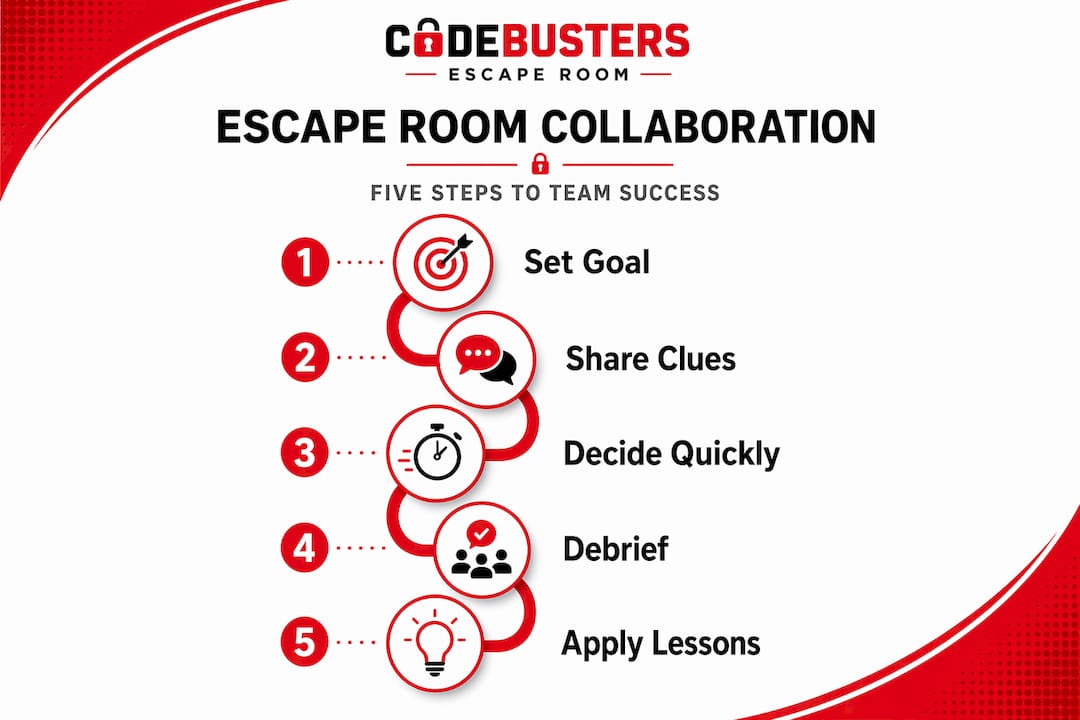
Choosing the right escape room is not just about finding one with good reviews. It is about matching the experience to your group’s collaboration goals. The escape room selection process should start with three questions: What size is your group? What teamwork behaviors do you want to surface? What difficulty level keeps the experience challenging without becoming frustrating?
Rooms with diverse puzzle types are more effective for collaboration development because they naturally distribute ownership. When one puzzle requires spatial reasoning, another requires pattern recognition, and a third requires physical coordination, different team members step into different leadership roles. A room built around a single puzzle type tends to favor whoever is strongest in that area, limiting what the rest of the group contributes.
What to look for when choosing a collaboration-focused escape room:
- Varied puzzle complexity: Look for rooms that mix logic, observation, and physical tasks.
- Group size capacity: Choose rooms that comfortably fit your whole team without requiring splits.
- Difficulty rating: Mid-range difficulty produces the most useful collaboration moments. Too easy, and the group coasts. Too hard, and frustration overtakes learning.
- Private booking availability: Private sessions remove the social pressure of strangers and let your group focus entirely on its own dynamics.
- Narrative depth: Rooms with strong storylines engage emotional investment, which increases the pressure and makes behavior patterns more authentic.
For team building activities that go beyond simple fun, pairing your escape room with a 30-minute facilitated debrief is essential. Plan for a 90-minute block total: 60 minutes in the room, 30 minutes of structured reflection immediately after.
| Room feature | Good for corporate teams | Good for families | Good for friend groups |
|---|---|---|---|
| Logic-heavy puzzles | Yes | Moderate | Yes |
| Physical/hands-on tasks | Yes | Yes | Yes |
| Narrative-driven rooms | Moderate | Yes | Yes |
| High difficulty rating | Yes | No | Moderate |
| Private booking | Essential | Recommended | Recommended |
Pro Tip: Book a private session for any group whose primary goal is collaboration development. A shared room with strangers changes behavior dramatically because people perform rather than collaborate authentically.
Maximizing collaboration: tips for facilitation and debriefing after the escape room
The escape room is the raw material. Facilitation and debriefing are what turn it into real development. Skilled facilitators treat escape rooms as behavior labs rather than entertainment, using what they observe during the game to guide a structured conversation afterward.
Here is a practical facilitation framework your group can follow:
-
Pre-game briefing (10 minutes). Before entering, connect the puzzles to a real challenge your team faces. “Today, pay attention to how we decide when to abandon an approach that is not working.” This primes the group to observe itself rather than just play.
-
In-game observation. If someone in your group is serving as a facilitator rather than a player, their job is to watch and note specific moments: who redirected a stuck conversation, who found a critical clue and immediately shared it, who kept working alone. These become the raw material for debrief.
-
Immediate debrief (30 minutes, within 30 minutes of finishing). The debrief conversation should move through three questions: What did you notice about how we communicated? Where did leadership shift, and why? What is one thing we would do differently in a real work situation based on what just happened?
-
Actionable commitments. Close the debrief with one specific behavioral change each person commits to. Not “communicate better” but “when I find information, I will announce it to the group before working it alone.”
Group problem-solving in escape rooms generates exactly the kind of concrete, shared experience that makes debrief conversations productive. Everyone saw the same events. No one can claim the communication breakdown did not happen.
Pro Tip: Focus debrief questions on three themes: information sharing, leadership transitions, and how the group handled being wrong. Those three areas cover the majority of team collaboration failures in real-world settings.
Why most groups miss the real value of escape room collaboration and how to unlock it
Here is the uncomfortable reality: most groups that book escape rooms for team building walk out having had a great time and learned almost nothing transferable. Not because escape rooms do not work. Because the debrief never happens.
Groups finish the room, everyone is buzzing on adrenaline, someone suggests grabbing food, and the moment passes. Without a structured debrief, the escape room stays as entertainment rather than becoming an effective teamwork intervention. All those visible behavior patterns, the information hoarding, the leadership vacuum, the premature commitment to wrong answers, get filed away as “funny things that happened” rather than “real things we need to address.”
Treating the room as a behavior lab requires intentionality before you even book. It means designating a facilitator, planning the debrief structure, and going in with specific questions you want the experience to answer about your group’s collaboration style.
What separates groups that genuinely improve from groups that just have fun is simple: they treat the escape room experience as the beginning of a conversation, not the end of one. The 60 minutes inside the room generates data. The 30 minutes outside it generates growth.
Collaboration strategies for escape rooms are not complicated. But they require commitment to reflection, and that is where most groups fall short. The groups that walk out of escape rooms with real teamwork insights are the ones that walked in with a plan for what to do with what they discover.
Experience collaborative escape rooms in Colorado Springs with CodeBusters
Now that you understand the role of collaboration in escape rooms, the next step is finding the right environment to put it into practice.
CodeBusters Escape Room in Colorado Springs offers immersive, themed experiences built for exactly this kind of group work. Whether you are a corporate team looking to surface real dynamics, a family wanting to build communication skills together, or a group of friends ready for a genuine challenge, CodeBusters has rooms designed to deliver the pressure, variety, and narrative depth that makes collaboration visible. Their private room bookings mean your group gets the full experience without distractions, and their puzzle designs naturally require the kind of diverse thinking and role rotation that maximizes teamwork development. Book your session, plan your debrief, and walk in with a purpose.
Frequently asked questions
What makes escape rooms effective for improving teamwork?
Escape rooms force groups to communicate and decide quickly under real pressure, making collaboration patterns visible in ways that meetings and workshops cannot replicate. That visibility is the foundation for genuine skill development.
How important is the post-game debrief in escape room team building?
A structured debrief within 30 minutes of playing is what converts the experience from entertainment into actionable teamwork learning. Without it, the behavioral insights stay in the room.
Can families and friends gain collaboration benefits from escape rooms?
Yes. Escape rooms foster communication and teamwork across all group types. Families and friend groups gain the same benefits as corporate teams because the pressure and puzzle mechanics apply equally regardless of relationship type.
Are there scientific studies supporting learning through escape rooms?
Yes. A 2026 study found significant knowledge retention improvement and stronger positive perceptions of teamwork and communication among escape room participants compared to traditional training formats.
How should groups plan their escape room experience for maximum teamwork benefits?
Choose rooms with varied puzzle types, plan 90 minutes total including a 30-minute debrief, and consider designating a facilitator before the session to observe and guide the post-game reflection.