Why private escape rooms matter: connection, fun, and real results
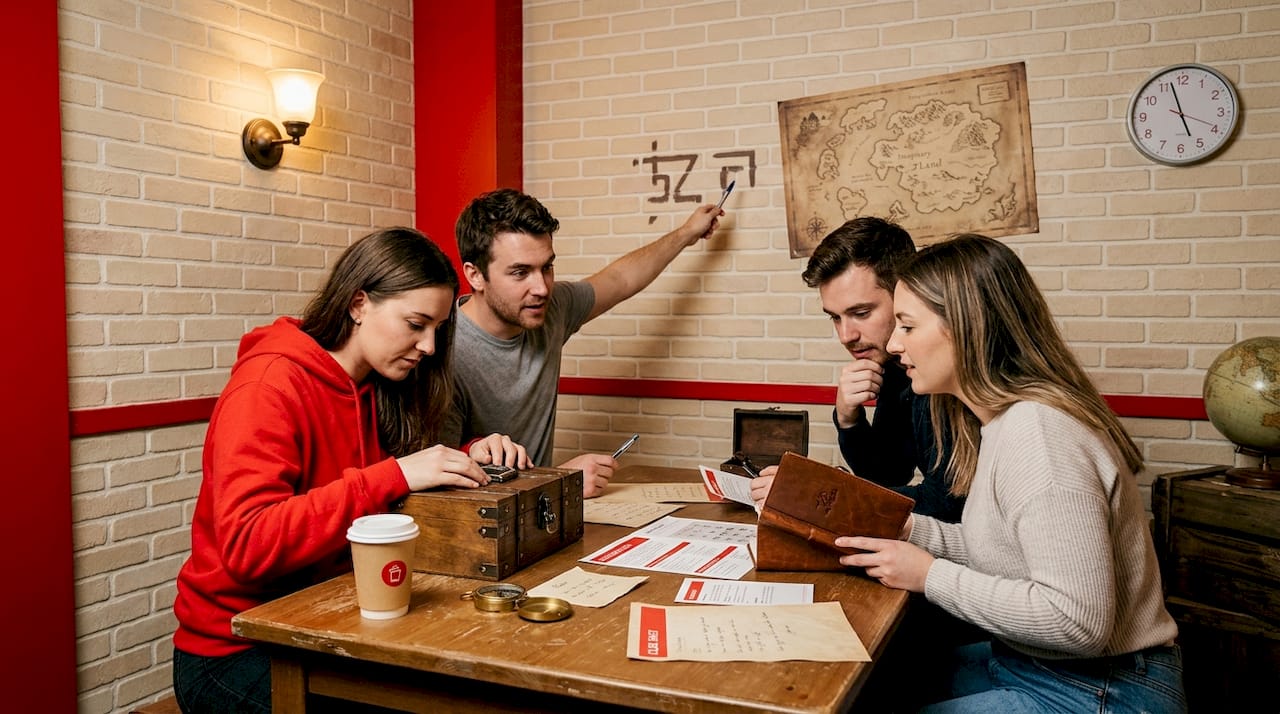
Most people assume that an escape room is an escape room, regardless of how you book it. Show up, solve puzzles, leave. But that assumption misses something important. The format you choose, specifically whether your group has the space entirely to yourselves, changes the entire social and emotional quality of the experience. Private escape rooms aren’t just a booking preference. They’re a fundamentally different kind of shared adventure that can genuinely strengthen relationships, improve how teams work together, and create the kind of memory that people bring up for years. If you’re planning a gathering in Colorado Springs, understanding why private matters could be the most useful thing you read today.
Table of Contents
- What makes private escape rooms unique?
- The science: Why group engagement and connection matter
- Real-world scenarios: When private escape rooms shine
- Considerations and common misconceptions
- Why the real magic of private escape rooms is personal connection
- Book your unforgettable private escape room in Colorado Springs
- Frequently asked questions
Key Takeaways
| Point | Details |
|---|---|
| Exclusive group experience | Private escape rooms guarantee only your group is present for stronger comfort and connection. |
| Proven team-building benefits | Studies show escape rooms boost communication, enjoyment, and group problem-solving. |
| Not all groups escape | Around two-thirds of groups finish in time depending on room design, so difficulty and hint policies matter. |
| Perfect for special occasions | Private booking is especially valuable for events like birthdays, reunions, and team building where group focus is important. |
What makes private escape rooms unique?
Let’s pin down exactly what sets private escape rooms apart from public experiences.
In a public or shared escape room, the operator fills available spots with whoever has booked. Your group of six might find themselves sharing a room with two strangers, which can feel awkward, disruptive to your group’s rhythm, and uncomfortable when personal jokes or team dynamics are involved. In a private escape room, your group gets the entire space. Nobody else joins. The game master is focused entirely on your experience, and the social chemistry is completely within your control.
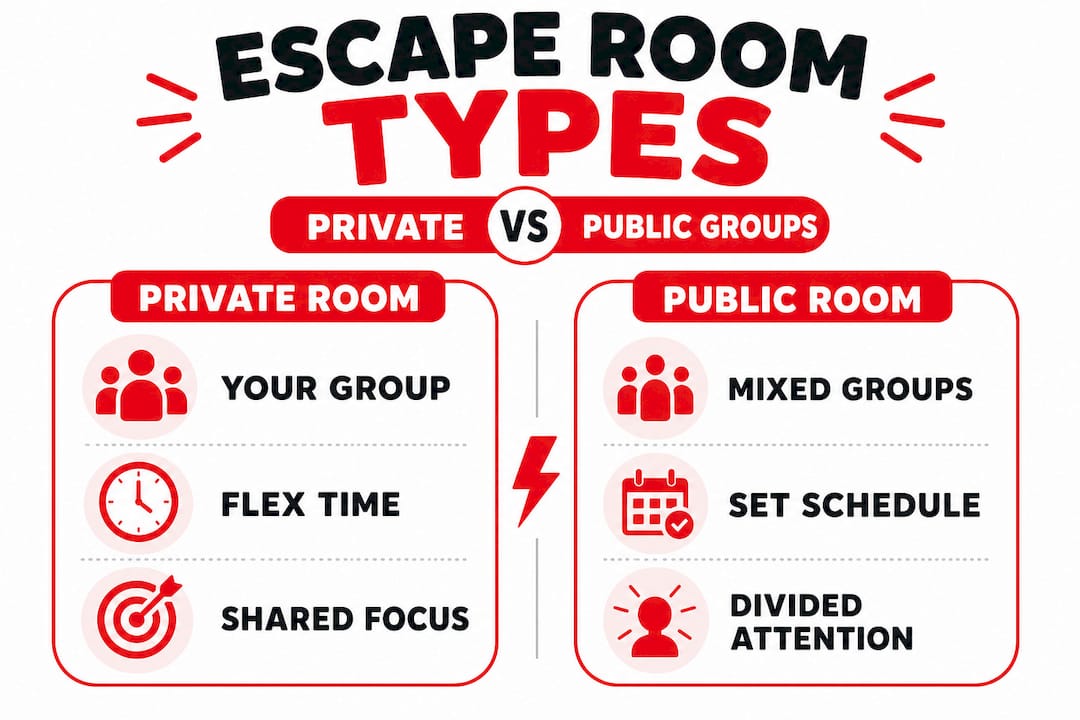
The differences go beyond just who’s in the room with you.
| Feature | Private escape room | Public/shared escape room |
|---|---|---|
| Group exclusivity | Your group only | Mixed with strangers |
| Booking flexibility | Reserve entire room | Fill remaining spots |
| Atmosphere control | Fully within your group | Depends on other players |
| Ideal for special occasions | Yes, highly recommended | Less suitable |
| Group pacing | Set by your team | Must match strangers’ pace |
| Communication comfort | Open and familiar | Guarded with unknowns |
Private bookings work especially well for:
- Birthday celebrations and anniversaries where the atmosphere needs to feel personal and celebratory
- Corporate team building where real communication between colleagues matters
- Family outings with players of different ages who need to feel comfortable making mistakes
- Friend reunions where inside jokes and group energy shouldn’t be diluted by outsiders
Empirical research supports escape rooms as a genuinely effective experiential format for boosting engagement and team skills. The environment you create around that format, specifically a private one, amplifies those effects dramatically. If you’re exploring private escape rooms in Colorado Springs, the distinction between private and public booking is worth understanding before you commit.
The science: Why group engagement and connection matter
Understanding these unique dynamics is even more powerful once you look at what science reveals about group experiences.
Escape rooms have attracted serious academic attention over the last several years, particularly in healthcare education and corporate training. Researchers have found that the combination of time pressure, collaborative problem-solving, and shared stakes creates a measurable boost in how groups communicate and function together. This isn’t just anecdotal. Controlled studies have tracked real outcomes.
The numbers are striking. In one well-documented study examining escape room team outcomes:
98% of participants agreed the activity improved their communication, 100% said it helped develop teamwork skills, and 84.9% rated their enjoyment as strongly positive.
Those aren’t soft, feel-good metrics. They’re the kind of numbers that explain why organizations keep coming back to this format for training and bonding activities. When your group is locked in a private room and has to rely entirely on each other, no one can sit back and watch. Everyone contributes. Everyone experiences the same pressure and the same breakthroughs.
Here are the top three outcomes groups consistently report after a private escape room experience:
- Improved communication. Players have to speak clearly and listen actively under time pressure. That habit carries over.
- Stronger sense of shared achievement. Whether you escape or not, you attempted something challenging together. That creates a powerful emotional bond.
- Better understanding of each other’s strengths. Private groups discover who leads under pressure, who thinks laterally, and who notices details. These insights are genuinely useful long after the hour is over.
If you’re looking at escape rooms for team engagement, the research case is solid. These aren’t novelty activities. They’re structured experiences that produce real social and professional results.
Real-world scenarios: When private escape rooms shine
Armed with research, let’s see what these findings mean for real-life occasions and group types.
Birthdays and anniversaries are the most obvious wins. When a birthday person walks into a room filled with their closest friends and family, the energy is focused entirely on them and the shared challenge ahead. There are no strangers to navigate, no awkward introductions, and no disrupted chemistry. The laughter, the teamwork, and the story that comes out of that hour belong entirely to your group. Studies confirm that escape rooms create memorable shared group experiences, and for milestone occasions, that memory formation is exactly what you’re paying for.
Corporate team building benefits enormously from the private format because psychological safety matters. When employees know they’re only with their own colleagues, they’re more willing to take risks, voice ideas, and even fail visibly. That openness is where real communication development happens. In a public room with strangers, people often hold back. In a private room, they lean in.
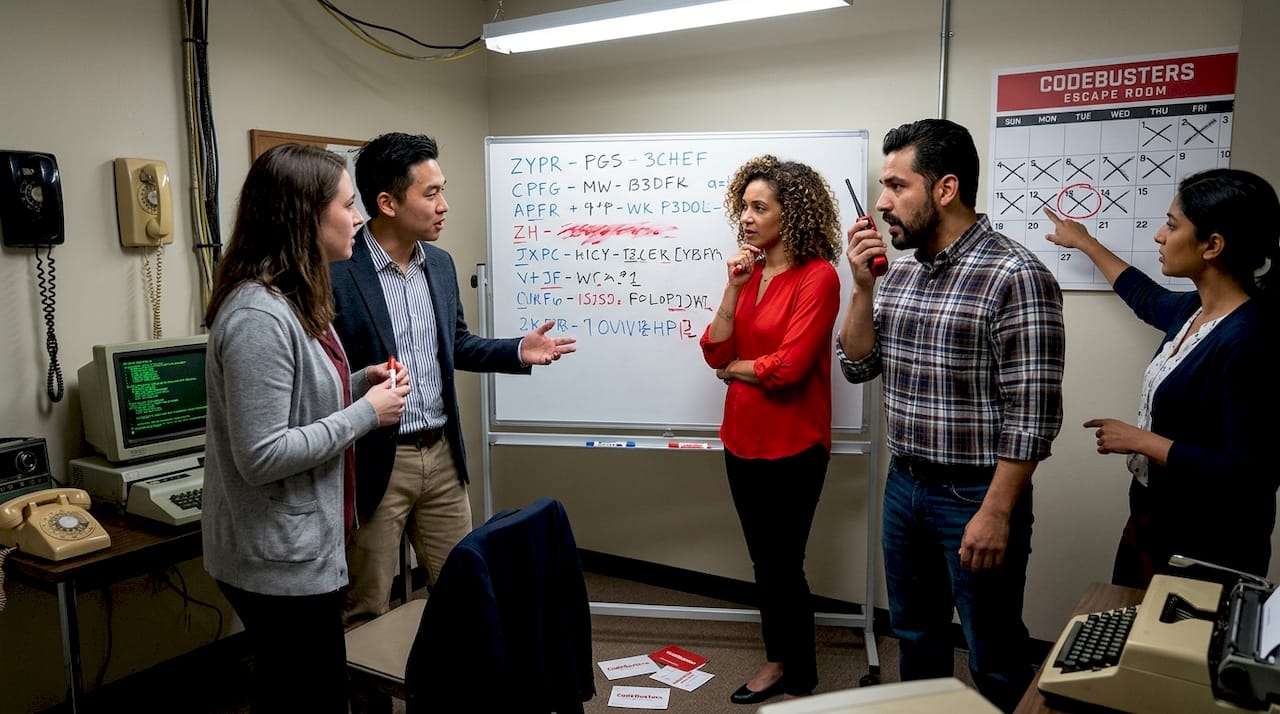
Family gatherings present a slightly different dynamic, but private booking is equally valuable. With a private room, the difficulty level can be matched to the youngest capable player, the hints can be used freely without judgment, and everyone from kids to grandparents can engage at their own pace. The family works through the challenge together without feeling pressure from outsiders watching or competing.
Here are the key scenarios where private escape rooms consistently deliver:
- Groups celebrating milestone events where every moment needs to feel personal
- Teams that need to build real trust and communication, not just have fun
- Mixed-age family groups that need a flexible, pressure-free environment
- Friend groups returning for a repeat experience who want their dynamic preserved
Pro Tip: Always clarify the hint and difficulty policy when booking. Some rooms offer unlimited hints, others limit them. Knowing this in advance sets realistic expectations and keeps the experience fun rather than frustrating, especially for first-time players.
Considerations and common misconceptions
Before you run off to book, let’s debunk a few myths and uncover essentials for a top-tier escape experience.
Myth #1: Everyone escapes. This is probably the most common misconception about escape rooms. The reality is that completion rates vary significantly depending on room design, difficulty, and the specific dynamics of your group. In research settings, roughly two-thirds of groups complete their room within the time limit. That means a meaningful percentage of groups do not escape, and that’s completely fine. The value of the experience doesn’t hinge on finishing. Most private groups report that their best moments and most vivid memories come from the process, not the outcome.
Myth #2: Private rooms are only for seasoned enthusiasts. Private rooms are actually more beginner-friendly than public ones. With no strangers to impress, first-timers feel free to ask questions, use hints, and figure things out at their own pace.
Myth #3: All rooms are equally appropriate for all groups. Difficulty levels, themes, and group size recommendations vary quite a bit. Booking a highly challenging room for a group of beginners, or an easy room for a team of veterans, will diminish the experience for everyone.
| Factor | How it affects completion |
|---|---|
| Difficulty level | Higher difficulty = lower average completion rate |
| Group size | Too small or too large reduces effectiveness |
| Prior experience | First-timers complete less often |
| Hint usage | Strategic hints improve rates |
| Room design | Narrative-based rooms often feel easier to navigate |
Here’s a simple numbered process for making sure your booking goes smoothly:
- Choose the right difficulty level. Ask the venue to recommend a room based on your group’s experience. Most staff will give honest guidance.
- Clarify the hint policy. Know how many hints you get, how to ask for them, and whether there’s a penalty for using them.
- Book for the correct group size. Check the room’s minimum and maximum player count. Going outside that range hurts the experience.
- Plan a debrief after the game. Whether you escape or not, talking through what happened together deepens the bonding effect and makes the experience genuinely memorable.
Pro Tip: Book your session well in advance, especially for weekend evenings and holidays. Private rooms in Colorado Springs fill up quickly, and last-minute availability is rare for the most popular themes.
Why the real magic of private escape rooms is personal connection
Now that you’ve seen the facts, here’s our take on why private escape rooms truly stand out.
The research is compelling, and the practical benefits are real. But after watching hundreds of groups walk through these rooms, we’ve noticed something that doesn’t show up cleanly in study data. The most powerful moments aren’t when someone cracks the final code or the door swings open. They’re the moments in between. The bad idea that somehow works. The completely wrong theory someone defends for ten minutes before laughing at themselves. The look two people exchange when they realize they’ve been overthinking a puzzle for five minutes. Those moments create inside jokes that last years.
Most articles about escape rooms focus on the productivity angle, the measurable teamwork improvements and the skill-building outcomes. Those things are real. But they’re not why repeat guests keep coming back. People return to our escape room experiences not because they want to improve their communication metrics. They return because they want to feel that specific kind of connected again. The kind that only happens when you’re under pressure with people you care about, working toward something ridiculous and genuinely fun.
There’s something worth saying about what private booking protects. When a stranger enters your group, the social temperature drops. People become a little more careful, a little less themselves. The group chemistry that makes an escape room experience feel alive gets diluted. Private booking isn’t a luxury add-on. It’s what preserves the social conditions that make the whole thing worthwhile in the first place.
We’ve watched corporate groups transform their workplace dynamics in a single hour. We’ve seen families who hadn’t laughed together in months walk out of a room unable to stop. Those outcomes happen because the private format lets the group be fully themselves. That’s not something you can manufacture. It’s something you protect by choosing the right experience format from the start.
Book your unforgettable private escape room in Colorado Springs
If you’re ready to experience these benefits firsthand, booking is simple.
Whether you’re planning a birthday, a corporate event, a family reunion, or just a memorable night out with friends, CodeBusters Escape Room in Colorado Springs has a private room and a themed experience that fits your group. With rooms designed for a range of difficulty levels and group sizes, and a veteran and family owned team that takes every booking seriously, the experience is built from the ground up to deliver something genuinely worth talking about.
CodeBusters Escape Room offers exclusive private bookings for all group types and occasions, with themed rooms that include everything from time-traveling adventures to cinematic mysteries. Gift vouchers are available too, making private escape experiences one of the most unique and thoughtful gifts you can give someone in Colorado Springs. Reserve your room, bring the people you care about, and let the puzzles take care of the rest.
Frequently asked questions
What’s the difference between private and public escape rooms?
Private escape rooms give your group exclusive access to the entire room, while public rooms may pair you with strangers who have booked individual spots. Private bookings protect your group’s chemistry and are strongly recommended for special occasions.
Do all groups successfully escape in time?
No, and that’s normal. Research shows that roughly 66.7% of groups complete their room within the time limit, meaning about one in three groups does not finish, depending on difficulty and group dynamics.
Are private escape rooms suitable for families?
Yes, private rooms are an excellent choice for families because every player is someone you already know, and venues can help you select a room with an appropriate difficulty and theme for your group’s age range.
Can private escape rooms be used for corporate team building?
Absolutely. Research demonstrates that escape rooms improve communication and teamwork among participants in measurable ways, making them one of the most effective and enjoyable team building formats available for corporate groups.