Explore popular escape room themes for every group
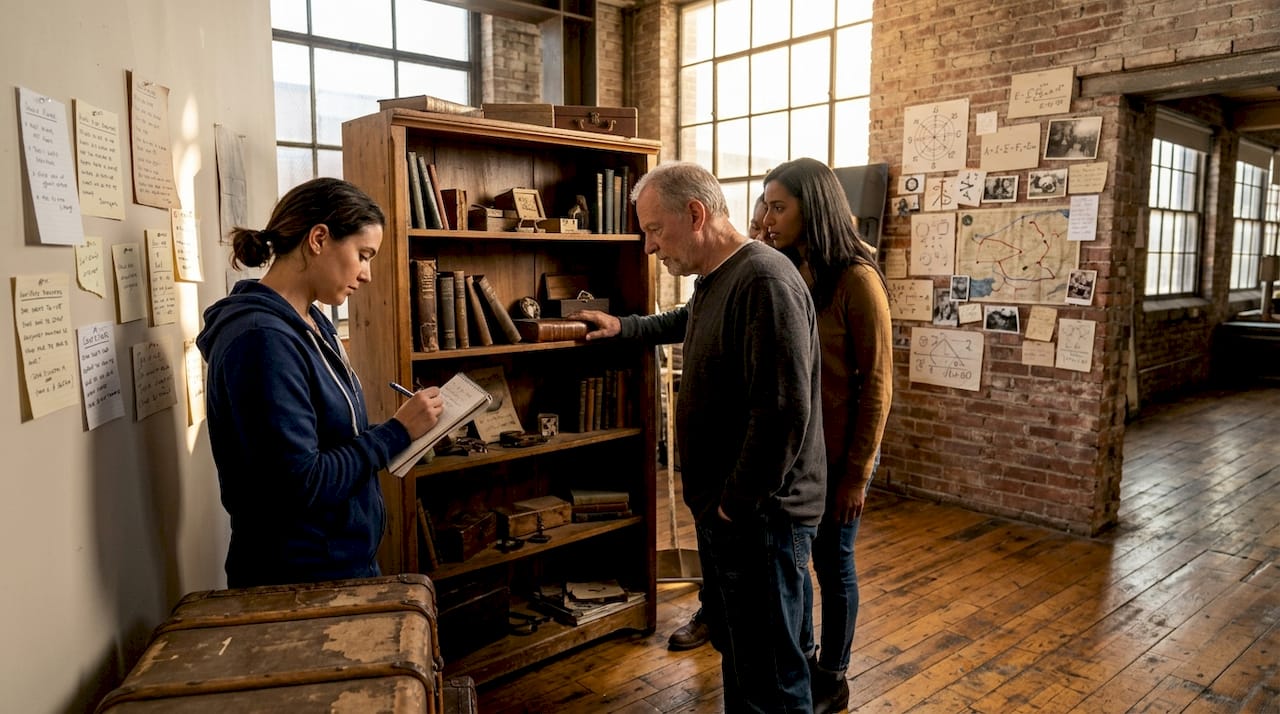
Most people assume escape rooms are either spooky haunted houses or straightforward mystery puzzles. That assumption leaves a lot of incredible experiences on the table. The reality is that modern escape rooms span an enormous range of themes, from time-traveling sci-fi adventures to family-friendly treasure hunts, each designed to pull you into a completely different world. Whether you’re planning a birthday outing, a corporate team-building event, or just a fun afternoon in Colorado Springs, knowing the theme landscape helps you pick the experience your group will talk about for weeks.
Table of Contents
- What makes a great escape room theme?
- The most popular escape room theme categories
- How to match themes to your group’s experience
- Secrets to immersive storytelling in escape rooms
- Why most escape room decisions miss the mark (our take)
- Experience top-rated escape rooms in Colorado Springs
- Frequently asked questions
Key Takeaways
| Point | Details |
|---|---|
| Theme integration is crucial | Escape rooms that avoid ‘theme breaks’ and use environmental storytelling provide the most immersive experiences. |
| Match themes to your group | Choose a theme and difficulty level based on your group’s size, experience, and interests for maximum enjoyment. |
| Puzzle variety matters | The best rooms balance puzzle types, making everyone in your group feel involved and challenged. |
| Local options are diverse | Colorado Springs offers escape room themes from family adventures to high-stakes thrillers, ensuring something for every group. |
What makes a great escape room theme?
To appreciate the world of escape rooms, it’s essential to know what elevates a theme beyond mere decoration. A great theme is not just a coat of paint on the walls. It’s a fully realized environment where every element, from the lighting to the lock mechanisms, supports the story you’re living inside.
Designers call this thematic integration, and it’s the gold standard of escape room craft. Thematic integration explained means every puzzle, prop, and visual cue belongs to the world you’re in. A medieval dungeon room should not have a digital keypad on the wall. That kind of mismatch, often called a “theme break,” pulls players out of the story and reduces enjoyment.
Environmental storytelling goes hand in hand with this. The best rooms tell their story through the space itself. You read the narrative through scattered notes, worn furniture, and ambient sound, not through a narrator explaining the plot.
Here’s what separates good themes from forgettable ones:
- Puzzle variety: Word puzzles, visual challenges, physical tasks, and logic problems keep every player engaged regardless of their strengths
- Narrative pacing: The story should build tension and reward curiosity, not dump all information at once
- Atmospheric consistency: Lighting, sound, and props must all agree on the same world
- Collaborative design: Puzzles should require teamwork, not just one person solving everything alone
“Great themes achieve thematic integration and balance puzzle types for multiple intelligences, ensuring every player finds their moment to contribute.”
Pro Tip: Before booking, ask the venue if their rooms use environmental storytelling or rely mostly on padlocks and combination codes. The answer tells you a lot about the quality of the experience.
If you’re looking for Colorado Springs escape rooms that genuinely commit to thematic integration, you’ll notice the difference the moment you walk through the door.
The most popular escape room theme categories
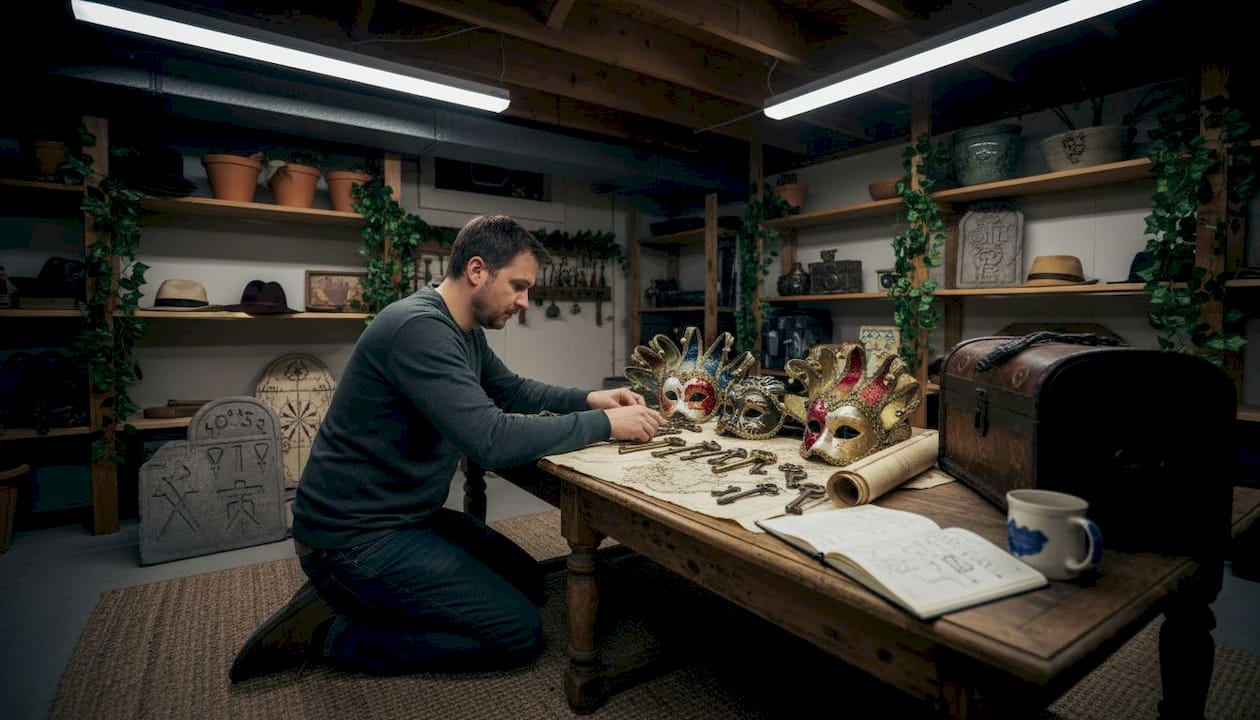
Once you understand the ingredients of a memorable theme, it’s time to explore the main categories you’ll likely encounter. Escape rooms are typically designed for 2 to 8 players and 60-minute experiences, with themes varying widely in style and difficulty. Knowing these categories helps your group set the right expectations before you book.
| Theme category | Best for | Typical difficulty | Mood |
|---|---|---|---|
| Mystery/Detective | Adults, mixed groups | Medium | Tense, intellectual |
| Adventure/Treasure Hunt | Families, beginners | Easy to medium | Exciting, playful |
| Horror/Thriller | Thrill-seekers, experienced players | Hard | Scary, intense |
| Historical | History buffs, corporate teams | Medium to hard | Immersive, educational |
| Fantasy/Sci-fi | Enthusiasts, pop culture fans | Medium to hard | Creative, imaginative |
| Family/Kids-friendly | Children, first-timers | Easy | Fun, lighthearted |
Here’s a quick breakdown of what makes each category tick:
- Mystery/Detective: You’re solving a crime or uncovering a secret. These rooms reward logical thinking and attention to detail. They’re consistently the most popular category across escape room theme styles.
- Adventure/Treasure Hunt: Think Indiana Jones energy. You’re racing against the clock to find something valuable. Great for groups who want excitement without heavy narrative.
- Horror/Thriller: These rooms use darkness, jump scares, and unsettling props. Not for the faint of heart, but incredibly memorable for the right group.
- Historical: Set in specific eras like World War II or ancient Egypt. These rooms often feel like living history lessons with puzzles woven into real events.
- Fantasy/Sci-fi: Portals, alien technology, and magic spells. These rooms reward creative thinking and often feature the most elaborate set designs.
- Family/Kids-friendly: Bright colors, straightforward puzzles, and encouraging narratives. Perfect for introducing younger players to the format.
Exploring local escape rooms that span multiple categories gives your group the chance to find the style that clicks best.
How to match themes to your group’s experience
After knowing the themes available, how do you choose the one that best fits your group? The answer depends on four key factors: age range, experience level, group size, and your primary goal for the outing.
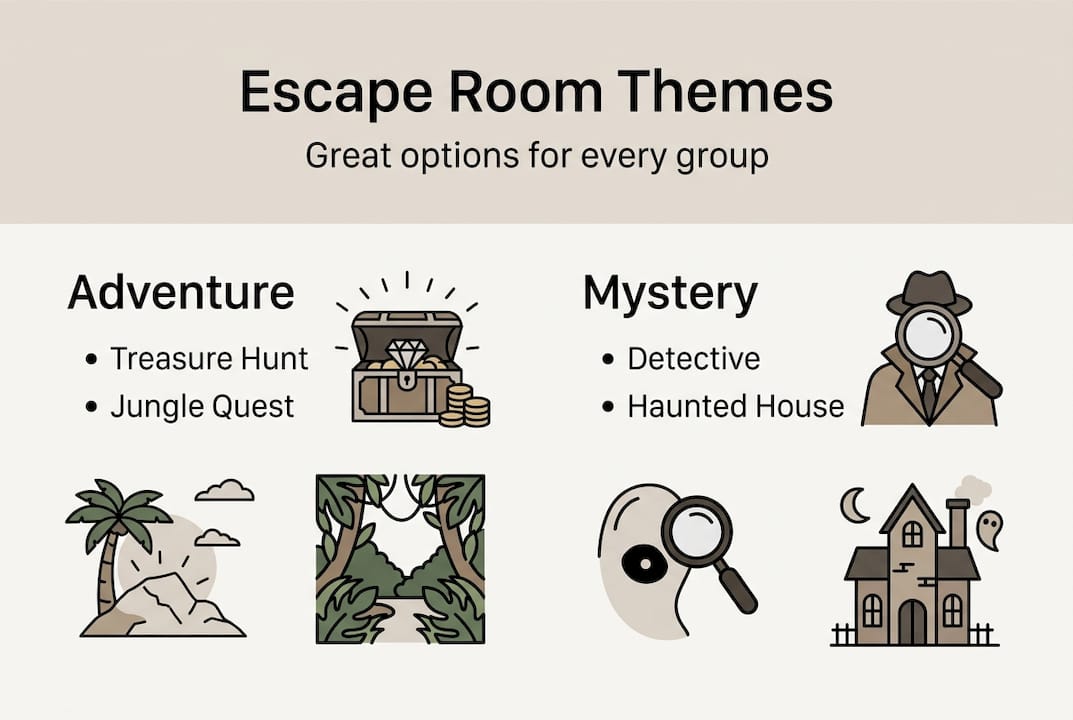
Family themes tend to be easier for beginners, while horror and thriller rooms can be more challenging and are better suited to experienced players who want a serious test.
Here’s a simple framework for matching your group to the right theme:
- Identify your experience level. First-timers should start with adventure or family themes. Veteran players can push into horror or complex sci-fi rooms.
- Consider your age range. Groups with kids under 12 should prioritize family-friendly options. Teen and adult groups have the full menu available.
- Define your goal. Is this pure fun, a competitive challenge, or a team-building exercise? Each goal points to a different category.
- Check group size. Most rooms work best with 3 to 6 players. Going with 2 or 8 can feel either too sparse or too crowded depending on the room layout.
| Group type | Recommended theme | Avoid |
|---|---|---|
| First-timers | Adventure, Family | Horror, Complex Sci-fi |
| Corporate teams | Mystery, Historical | Horror (unless everyone agrees) |
| Thrill-seekers | Horror, Thriller | Family/Kids |
| Mixed ages | Adventure, Fantasy | Extreme Horror |
Pro Tip: If your group includes people with anxiety or sensory sensitivities, call ahead and ask about the room’s intensity level. Most venues are happy to guide you toward the right fit.
For group escape room options that serve everyone from beginners to seasoned players, look for venues that offer multiple difficulty levels across different themes. You can also check out Colorado Springs family escape rooms to compare local offerings before you decide.
Secrets to immersive storytelling in escape rooms
With your chosen theme in mind, understanding the behind-the-scenes magic helps you appreciate the experience even more. The best escape rooms are not just puzzle collections. They’re carefully engineered stories that unfold around you.
Lighting is one of the most powerful tools designers use. A dim, flickering bulb in a horror room creates dread. Warm amber tones in a historical room signal comfort and nostalgia. Sound design works the same way. Ambient noise, whether it’s dripping water, distant thunder, or a ticking clock, keeps your nervous system engaged without a single word being spoken.
Environmental storytelling and avoidance of theme breaks create deeper immersion, which is why the best rooms feel like you’ve stepped into a movie set rather than a game.
Here’s what top designers focus on to create unforgettable rooms:
- Layered narrative: The story reveals itself gradually as you solve puzzles, rewarding curiosity and exploration
- Surprise elements: A hidden compartment or an unexpected twist mid-game resets your energy and keeps engagement high
- Balanced difficulty curves: Rooms that start easier and build toward harder puzzles feel satisfying rather than frustrating
- Prop authenticity: Real or realistic-looking objects make the world feel lived-in and credible
Local designers at immersive local escape rooms understand that a room’s story needs to breathe. Rushing players through puzzles without narrative payoff leaves them feeling like they ran an obstacle course, not lived an adventure.
For a deeper look at how these techniques vary by theme style, escape room design tips offer a useful breakdown of what separates average rooms from truly memorable ones.
Why most escape room decisions miss the mark (our take)
Here’s the uncomfortable truth most booking guides won’t tell you: people almost always choose an escape room based on the coolest-sounding storyline, and that’s usually the wrong reason.
A gripping story description on a website means very little if the puzzles inside are repetitive or only challenge one type of thinker. We’ve seen groups walk out of visually stunning rooms feeling flat because every puzzle required the same logic-heavy approach. Meanwhile, a simpler-looking room with varied puzzle types often produces the loudest cheers.
Balancing puzzle types for multiple intelligences leads to a more engaging and satisfying experience for all players. That’s not just design theory. It’s what we observe every time a group finishes a room where everyone had a moment to shine.
Thematic consistency also matters more than technology. High-tech digital screens in a room can impress for thirty seconds, but a perfectly placed handwritten letter in a historical room can hold your attention for five minutes. Authenticity beats spectacle almost every time.
For team-building specifically, the rooms that generate the most genuine collaboration are not the hardest ones. They’re the ones where no single person can solve everything alone. That’s the design principle worth prioritizing above all others when you’re booking for a group.
Experience top-rated escape rooms in Colorado Springs
Ready to experience these escape room themes for yourself? CodeBusters Escape Room in Colorado Springs offers a lineup of themed rooms built around exactly the principles covered in this guide. From the retro energy of Stranger 80’s to the time-bending puzzles of Past to the Future, every room is designed with thematic integration, varied puzzle types, and genuine storytelling at its core.
CodeBusters is veteran and family owned, award-winning, and built for groups of all sizes and experience levels. Whether you’re booking a private session for your corporate team or bringing the whole family for a weekend adventure, you’ll find a theme that fits. Booking online is quick and secure, and gift vouchers are available for anyone who wants to share the experience. Come see why locals and visitors keep coming back.
Frequently asked questions
What is the most common type of escape room theme?
Mystery and detective themes are the most commonly found in escape rooms, appealing to a wide range of players because they reward logical thinking and attention to detail.
Which escape room theme is best for families?
Family-friendly and adventure themes are ideal for beginners and groups with children, offering accessible puzzles and a fun, low-pressure atmosphere. Family themes are typically easier and suitable for all ages.
How long does an escape room session last?
Most escape rooms are 60 minutes long and designed for 2 to 8 players, regardless of the chosen theme or difficulty level.
Can escape rooms be used for team-building activities?
Absolutely. Escape rooms are popular for team-building because they foster communication and collaboration in a fun, low-stakes environment where every team member can contribute.