Maximize escape room fun in Colorado Springs: 5 tips
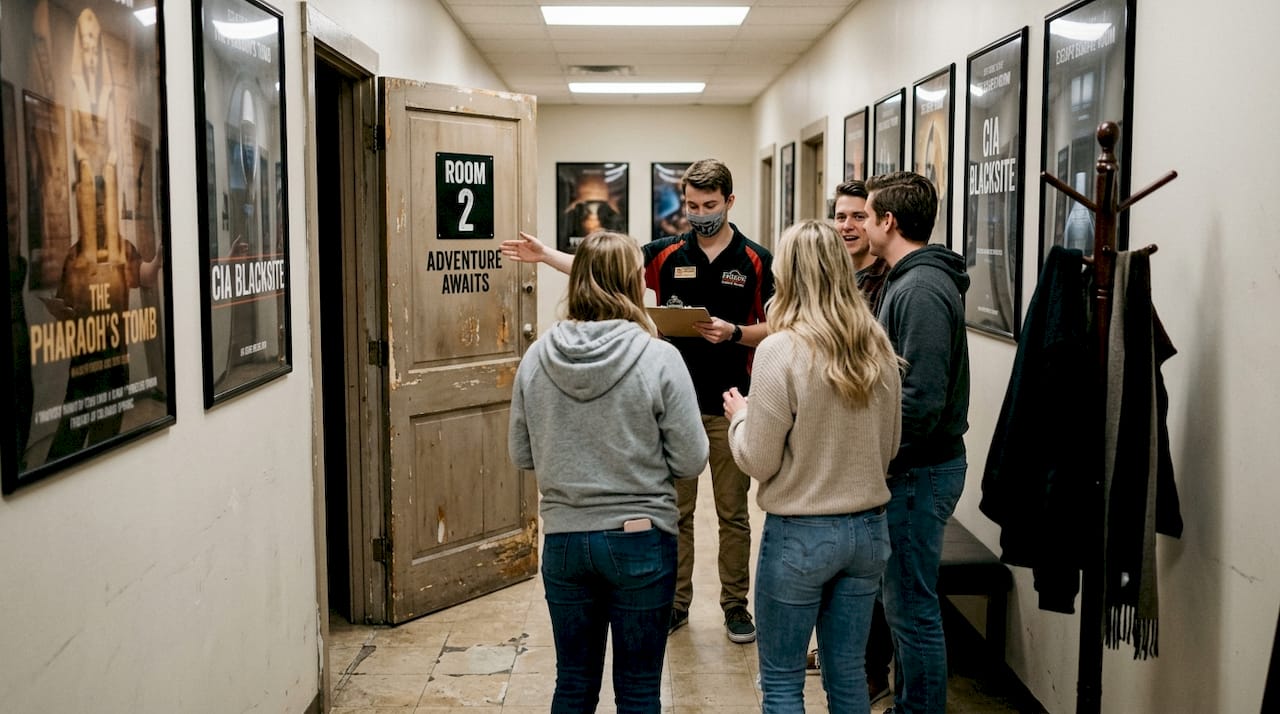
Many groups walk out of an escape room feeling let down. The puzzles were too hard, one person dominated the whole session, or the room just didn’t click for the group. That’s a real shame, because a well-chosen escape room experience can be one of the most memorable outings your family, friend group, or corporate team ever shares. This guide covers everything you need to know to make your next Colorado Springs escape room adventure genuinely fun, from picking the right venue to using smart teamwork strategies that keep everyone involved and energized.
Table of Contents
- Choose the right escape room for your group
- Prepare for success: planning your outing
- Collaborate and communicate: teamwork strategies
- Common pitfalls and how to avoid them
- What most guides miss about escape room fun
- Ready to level up your escape room experience?
- Frequently asked questions
Key Takeaways
| Point | Details |
|---|---|
| Pick the right venue | Top Colorado Springs escape rooms offer immersive themes tailored to your group type. |
| Prepare groups for fun | Planning ahead with breaks, snacks, and age-appropriate room choices keeps energy high. |
| Use teamwork strategies | Clear communication and role assignments help everyone participate and enjoy the experience. |
| Avoid common mistakes | Focus on enjoyment, not just solving puzzles, and manage group fatigue for best results. |
Choose the right escape room for your group
Matching your group to the right escape room is the single most important decision you’ll make. Get it right, and everyone leaves buzzing. Get it wrong, and you’re stuck in a room that’s either too easy, too scary, or just not designed for your crowd.
Colorado Springs has a strong lineup of escape room venues. Colorado Springs escape rooms like CodeBusters, Locked In Escapes, Aha! Escape Rooms, and Enter The Enigma are consistently praised for their immersion, puzzle quality, and suitability for both families and corporate teams. Each venue has its own personality, so it’s worth doing a quick comparison before booking.
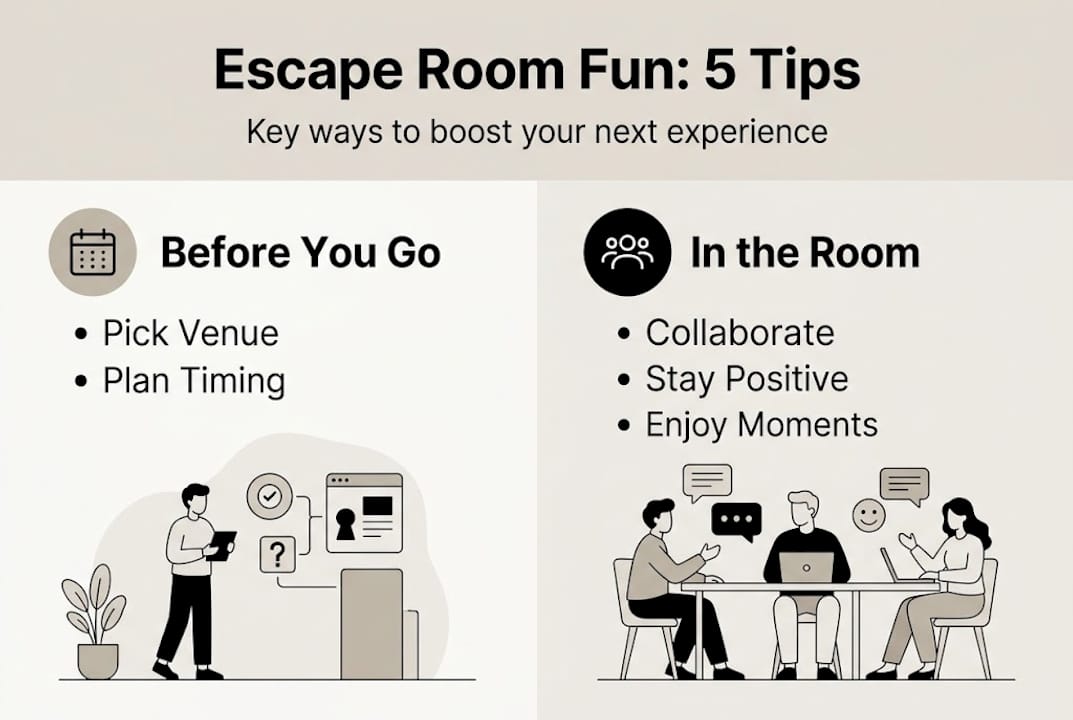
CodeBusters Escape Room stands out for its themed rooms like “Stranger 80’s,” “Past to the Future,” and “Flight of Deception.” These aren’t generic puzzle boxes. They’re fully built-out narrative experiences with different difficulty levels and group size recommendations. That range makes CodeBusters a strong choice whether you’re bringing a curious 10-year-old or a skeptical executive.
Here’s a quick breakdown of what to look for based on group type:
- Families with young kids: Look for rooms rated beginner or intermediate, with story-driven themes and no horror elements.
- Friend groups: Mid-to-high difficulty rooms with clever puzzles and strong immersion are usually the sweet spot.
- Corporate teams: Private room bookings with collaborative puzzles that require multiple people working simultaneously are ideal.
- Mixed groups: Choose a venue that offers a range of rooms so different experience levels aren’t left behind.
| Group type | Recommended difficulty | Key feature to prioritize |
|---|---|---|
| Families | Beginner to intermediate | Age-appropriate themes |
| Friend groups | Intermediate to advanced | Puzzle variety and immersion |
| Corporate teams | Intermediate | Private booking, teamwork focus |
| Mixed groups | Beginner to intermediate | Range of rooms available |
Pro Tip: Always book a private session rather than joining a public group. Private rooms allow your group to move at your own pace, communicate freely, and actually bond with each other instead of strategizing around strangers.
Immersion ratings and puzzle complexity scores are often listed on venue websites. Read them. A room rated 9 out of 10 for difficulty is not the place to bring first-timers or kids under 12.
Prepare for success: planning your outing
Selecting an escape room is just the first step. Next comes preparation to ensure everyone is energized and ready for action. A little planning before you walk through that door makes a massive difference in how much fun your group actually has.
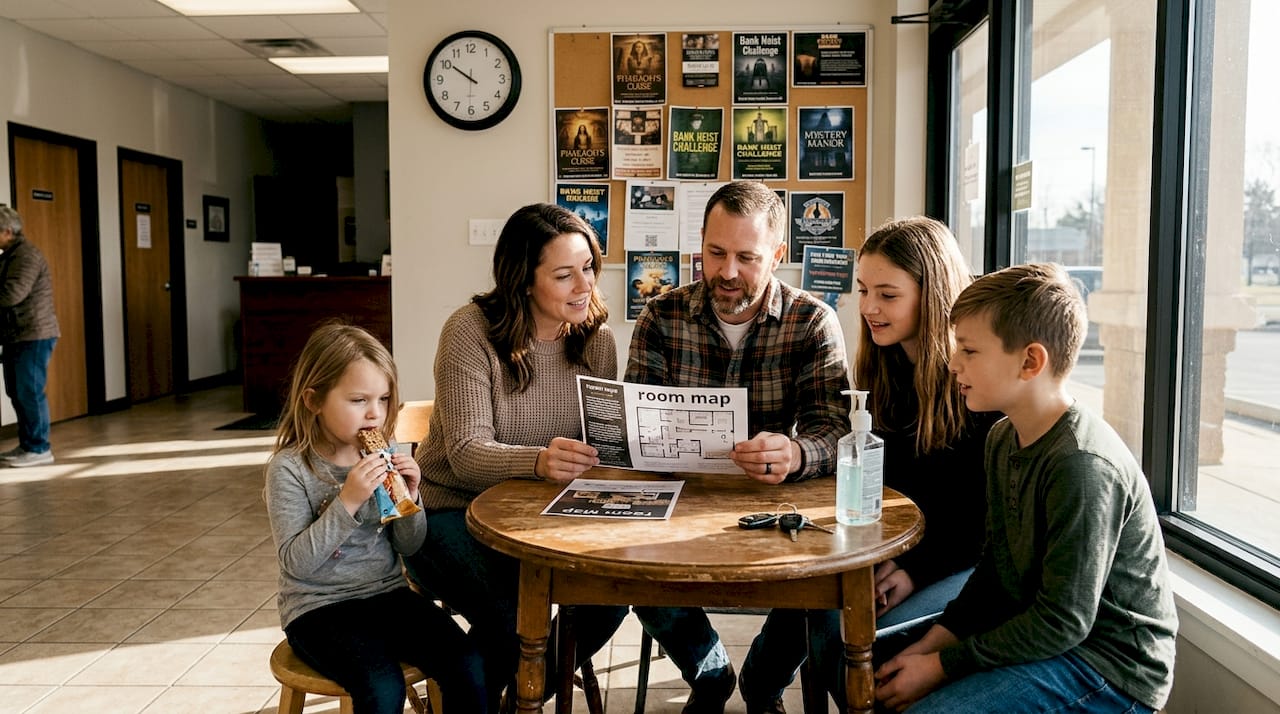
Timing matters more than most people realize. Escape rooms require focus, creativity, and communication. If your group is tired, hungry, or distracted, performance drops fast. Schedule your session during a time when everyone is naturally alert, typically mid-morning or early afternoon for families, and late afternoon for corporate groups wrapping up a workday.
For families specifically, family escape room tips recommend testing kids’ stamina with back-to-back activities beforehand, building in meal breaks, and prioritizing fun over finishing. That’s smart advice. A child who skipped lunch and is running on empty will not enjoy decoding a cipher, no matter how cool the theme is.
Here’s a practical pre-outing checklist:
- Eat a real meal at least 60 to 90 minutes before your session
- Wear comfortable clothing and closed-toe shoes (some rooms involve movement)
- Leave large bags and bulky items in the car
- Arrive 10 to 15 minutes early to review the rules and get settled
- Turn phones to silent before entering
| Group type | Best time slot | Pre-session recommendation |
|---|---|---|
| Families | 10 a.m. to 1 p.m. | Eat first, plan a snack after |
| Friend groups | 2 p.m. to 6 p.m. | Hydrate, keep energy light |
| Corporate teams | 3 p.m. to 5 p.m. | Brief team intro beforehand |
Pro Tip: For Colorado escape room tips that match your specific group, check venue websites for room-specific recommendations. Some rooms explicitly note age minimums or physical requirements that could affect your planning.
One often-overlooked step is setting expectations with your group before you arrive. Let everyone know the goal isn’t necessarily to escape. It’s to have a great time together. That small mindset shift removes a lot of pressure and opens the door to genuine enjoyment.
Collaborate and communicate: teamwork strategies
Once your group is prepared, you’ll want to use smart teamwork to keep everyone engaged. The escape room isn’t a solo sport. The groups that have the most fun are the ones that communicate constantly and make sure every person feels useful.
Here’s a step-by-step approach to effective in-room teamwork:
- Do a quick scan together. When you enter, spend the first two minutes exploring the room as a group before splitting up. Call out anything unusual or interesting.
- Divide and conquer. Once you have a sense of the space, split into pairs or small clusters to work on different puzzles simultaneously.
- Announce everything. Found a key? Say it out loud. Solved a lock? Tell the group. Information hoarding is the fastest way to kill momentum.
- Rotate stuck puzzles. If one person has been staring at the same clue for more than three minutes, swap them out. Fresh eyes solve things faster.
- Celebrate small wins. Every solved puzzle deserves a moment of acknowledgment. It keeps energy high and makes the experience feel rewarding.
“The best escape room sessions aren’t the ones where everyone escapes. They’re the ones where everyone feels like they contributed.”
For corporate groups, team-building escape rooms are particularly effective when you assign informal roles before entering. Designate one person as the communicator who tracks what’s been found, and another as the timekeeper. This mirrors real workplace dynamics and gives quieter team members a defined space to contribute.
The biggest mistake groups make is letting one or two people take over. It’s easy to let the most enthusiastic person run the show, but this leaves others disengaged. Team-focused escape rooms at venues like CodeBusters are designed with multiple simultaneous puzzles specifically to prevent this. Use that design to your advantage.
Pro Tip: If a child or quieter team member finds a clue, let them present it to the group. Ownership of a discovery builds confidence and keeps everyone emotionally invested in the outcome.
Common pitfalls and how to avoid them
Even with the best preparation, groups sometimes face frustration. Here’s how to avoid the most common escape room mistakes before they derail your fun.
Overemphasizing competition. Escape rooms are not a race against other groups. They’re a shared experience. When the focus shifts to beating a time record, people stop enjoying the journey. As escape room mistakes research consistently shows, focusing on fun over winning is the key to a satisfying session, especially for families.
Choosing the wrong difficulty. A room rated as “expert” level will frustrate beginners and bore no one, but it will exhaust everyone. Match the room to the least experienced person in your group, not the most experienced. You can always level up on your next visit.
Skipping hints. Every venue offers hints for a reason. Using them isn’t cheating. It’s smart resource management. Groups that refuse hints out of pride often spend 20 minutes on a single puzzle and miss the rest of the room entirely.
- Don’t ignore the game master’s introduction. It often contains subtle clues.
- Don’t assume every item in the room is a puzzle piece. Some are just set dressing.
- Don’t forget to check items you’ve already used. Some clues require revisiting.
- Do ask for a hint if you’ve been stuck for more than five minutes.
- Do keep track of what’s been solved so you’re not doubling up.
Neglecting group energy. Fatigue is real. A 60-minute room can feel like two hours if your group is running low on fuel. If you notice energy dropping, it’s okay to pause, take a breath, and regroup. The escape room troubleshooting approach is simple: check in with your group, redistribute tasks, and ask for a hint to get momentum back.
One practical recovery move: if the group is stuck and frustrated, have everyone step back, look at the room from the doorway, and describe what they see. Distance creates perspective, and perspective breaks logjams.
What most guides miss about escape room fun
Most escape room guides focus on strategy: how to solve puzzles faster, how to organize clues, how to beat the clock. That’s useful, but it misses the point entirely.
The real value of an escape room isn’t the escape. It’s what happens between the puzzles. It’s the moment your 8-year-old figures out a combination lock before any adult does. It’s the coworker who never speaks in meetings suddenly leading the group through a cipher. Those moments don’t happen because you followed the right strategy. They happen because the environment created space for them.
Colorado Springs escape room experiences at venues like CodeBusters are built around narrative and atmosphere precisely because immersion creates those unexpected moments. The themed rooms aren’t just decoration. They’re a psychological invitation to step outside your normal role and engage differently.
Our honest take: stop measuring escape room success by whether you escaped. Start measuring it by how many times someone in your group said something surprising, laughed unexpectedly, or stepped up in a way they normally wouldn’t. That’s the metric that actually matters, and it’s the one no timer can capture.
Ready to level up your escape room experience?
You now have a clear roadmap for turning any Colorado Springs escape room outing into something genuinely memorable. From choosing the right room to communicating like a team, these strategies work for families, friend groups, and corporate teams alike.
CodeBusters Escape Room offers private bookings across multiple immersive themed rooms, each designed to challenge and delight different group types. Whether you’re planning a family night out, a birthday celebration, or a corporate team-building event, the experience is built to deliver real moments worth talking about. Book your escape room session today and put these tips to work in one of Colorado Springs’ most highly rated venues. Your best escape room memory is one booking away.
Frequently asked questions
What makes an escape room fun for kids and families?
Age-appropriate themes, scheduled breaks, and a focus on fun rather than finishing keep kids engaged and families enjoying the experience together. Choosing beginner-level rooms with story-driven narratives also helps younger participants stay connected to the adventure.
Are there escape rooms suitable for corporate team building in Colorado Springs?
Yes, several venues including CodeBusters offer immersive rooms and private booking options that are well-suited for team-building sessions. These rooms are designed with collaborative puzzles that naturally encourage communication and shared problem-solving.
How can groups avoid escape room frustration?
Choose rooms with appropriate difficulty for your group’s experience level, manage energy by scheduling the session at a high-energy time of day, and use hints freely when your group gets stuck. Frustration usually comes from avoidable mismatches between the room and the group.
Should we book a private escape room session?
Absolutely. Private room bookings allow your group to move at your own pace, communicate without restraint, and focus entirely on bonding rather than coordinating around strangers. It’s the single easiest upgrade you can make to your escape room experience.