Master your escape room strategy workflow for success
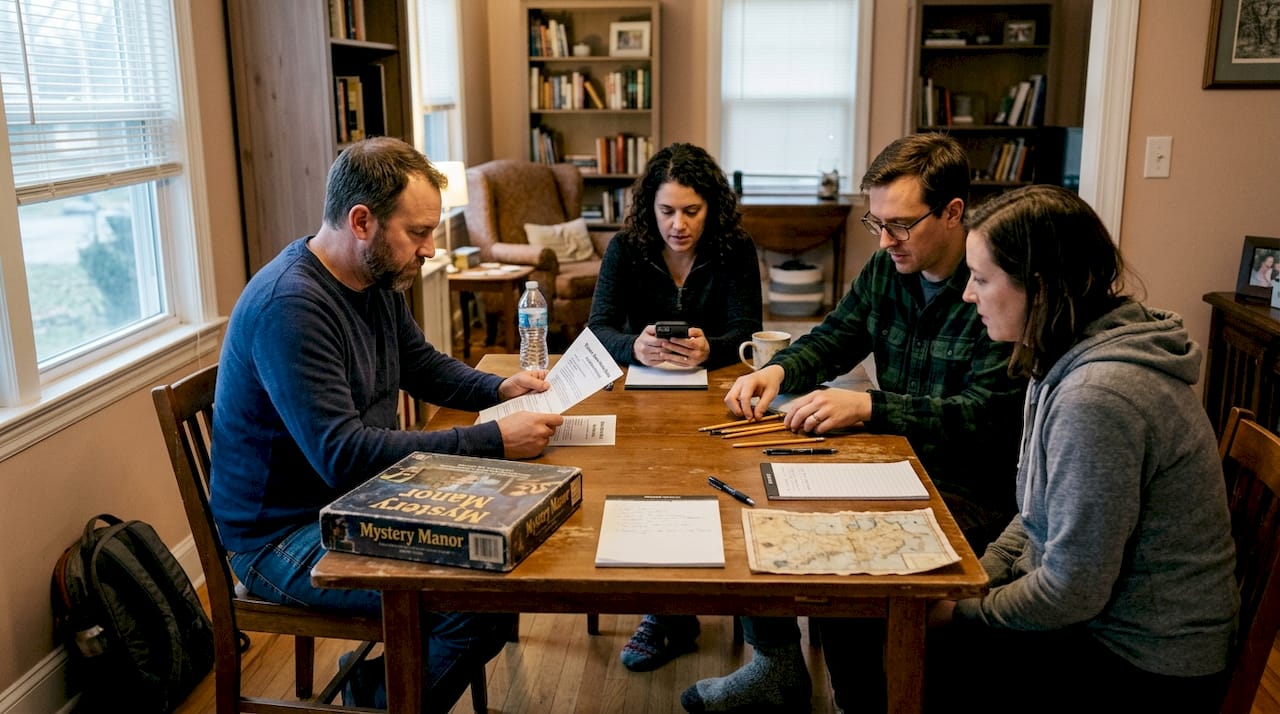
You’ve booked an escape room with friends, gathered your team, and arrived ready to solve puzzles. But within minutes, chaos erupts. Someone hoards clues without sharing, another teammate fixates on one puzzle for 20 minutes, and no one tracks what’s been tried. Sound familiar? Without a clear strategy workflow, even the smartest groups struggle to escape. This guide walks you through a proven step-by-step approach to prepare, execute, and verify your escape room strategy, transforming confusion into coordinated success and maximizing your enjoyment in Colorado Springs’ most immersive puzzle experiences.
Table of Contents
- Key takeaways
- Understanding the prerequisites: what you need before starting
- Step-by-step execution: applying the workflow during the game
- Common pitfalls and how to avoid them effectively
- Verifying your success: reviewing and adapting your strategy
- Improve your Colorado Springs escape room experience with CodeBusters Escape Room
- FAQ
Key Takeaways
| Point | Details |
|---|---|
| Clear workflow boosts efficiency | Establish a clear workflow at the start to coordinate actions, assign roles, and track progress during the game. |
| Role assignment matters | Assign roles before entering, including a team leader, a note taker, searchers, and a verifier, to create immediate structure. |
| Understand scenario upfront | Know the room theme and expected challenges ahead of time to tailor tactics and avoid surprises. |
| Time management discipline | Scan the room quickly, document discoveries, and assign puzzles to teammates based on strengths to maintain momentum. |
Understanding the prerequisites: what you need before starting
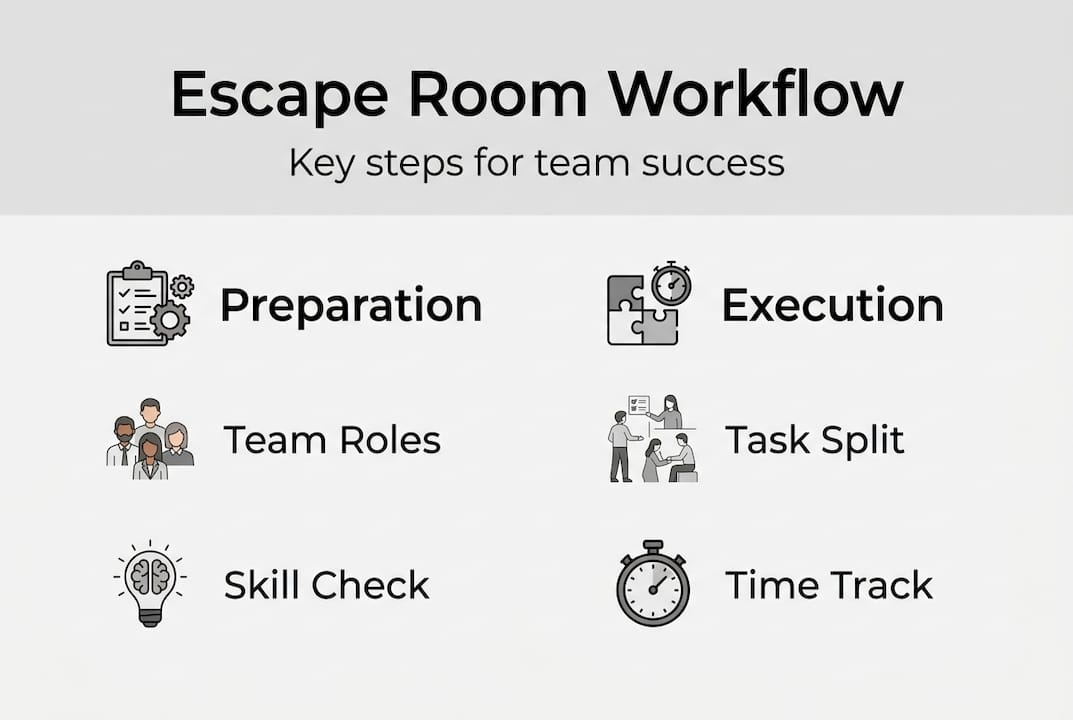
Successful escape room teams don’t just show up and hope for the best. They prepare strategically before entering the room. Your first step involves gathering essential information about your chosen experience. Knowing the escape room scenario and theme beforehand enhances team readiness and puzzle approach, allowing you to mentally prepare for the types of challenges you’ll face. Research whether you’re entering a sci-fi adventure, a mystery investigation, or a historical puzzle scenario.
Team composition matters more than most groups realize. Look at your roster and identify complementary skills. Who excels at pattern recognition? Who has strong spatial reasoning? Who stays calm under pressure? Who communicates clearly? Mix these strengths deliberately rather than grouping friends randomly. A balanced team with diverse cognitive approaches solves puzzles faster than a group of similar thinkers.
Role assignment before entry prevents the chaotic scramble that derails many attempts. Designate a team leader who makes final decisions when debates stall progress. Assign a dedicated note-taker to document every clue, combination attempt, and puzzle connection on paper or a provided whiteboard. Identify two or three searchers who will systematically examine the room for hidden elements. Establish a communicator who verifies everyone hears important discoveries. These roles can rotate during gameplay, but starting with clear responsibilities creates immediate structure.
Mental preparation separates good teams from great ones. Discuss your collaborative approach beforehand. Agree that every voice matters and no idea gets dismissed without consideration. Acknowledge the time pressure without letting it create panic. Commit to sharing every discovery immediately rather than working in isolation. This psychological foundation prevents the interpersonal friction that wastes precious minutes.
Pro Tip: Arrive 10 minutes early to review the specific escape room scenarios in Colorado Springs you’ve chosen and ask your game master about any unique rules or safety protocols that might affect your strategy.
Step-by-step execution: applying the workflow during the game
Once the clock starts, your preparation transforms into coordinated action. Effective communication and task division significantly increase escape room success rates, making your first five minutes critical for establishing workflow patterns. Begin with a rapid but thorough room scan. Your searchers should systematically examine every visible surface, drawer, and object while calling out discoveries immediately. The note-taker captures everything: numbers, symbols, locked items, unusual objects, and potential clue locations.
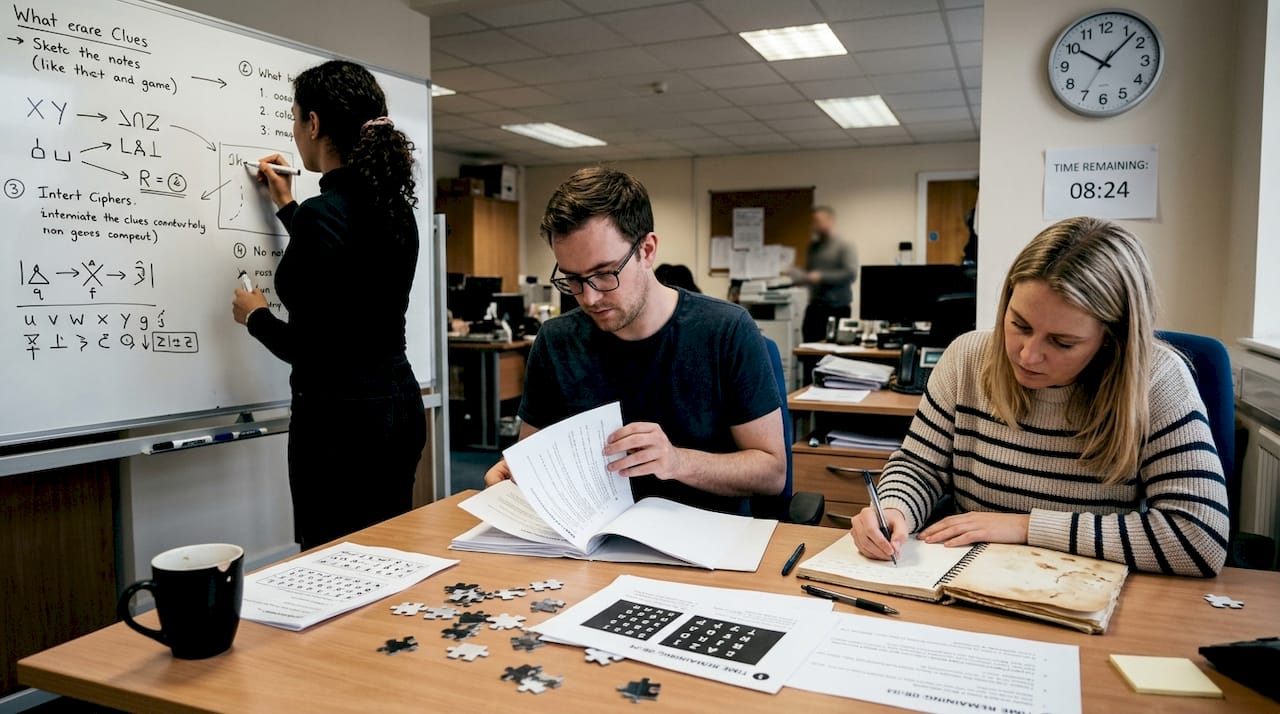
Task division accelerates progress exponentially. When you encounter multiple puzzles simultaneously, resist the urge to crowd around one challenge. Your team leader should quickly assess puzzle types and assign members based on their strengths. Send your pattern recognition expert to the symbol sequence, your math-minded teammate to the numerical lock, and your detail-oriented member to search for hidden compartments. This parallel processing approach solves puzzles faster than sequential attempts.
Time management requires active monitoring, not passive awareness. Designate someone to announce elapsed time at 15-minute intervals. If anyone spends more than 5 minutes on a single puzzle without progress, the leader should mandate a switch. Fresh eyes often spot solutions that eluded the original solver. This rotation prevents the common trap of stubborn persistence on unsolvable puzzles with missing clues.
Documentation prevents redundant work and reveals connections. Your note-taker should maintain a running list with three columns: discovered clues, attempted solutions, and solved puzzles. When someone tries a combination that fails, record it immediately. This visible tracking helps the team spot patterns across seemingly unrelated puzzles and prevents teammates from repeating failed attempts.
Here’s how effective versus ineffective execution workflows compare:
| Workflow Element | Effective Approach | Ineffective Approach |
|---|---|---|
| Communication | Immediate verbal sharing of all discoveries | Silent individual work with delayed updates |
| Task Assignment | Strategic division based on skills and puzzle types | Everyone crowds around the same puzzle |
| Time Monitoring | Regular announcements and mandatory rotation | Ignoring clock until final minutes |
| Progress Tracking | Visible documentation of attempts and solutions | Mental tracking with no written record |
| Hint Usage | Strategic requests when genuinely stuck | Either never asking or asking too early |
Pro Tip: When applying escape room team strategies, establish a hand signal for urgent discoveries that need immediate team attention, preventing important breakthroughs from getting lost in general chatter.
Common pitfalls and how to avoid them effectively
Even well-prepared teams fall into predictable traps that sabotage their escape attempts. The most damaging mistake involves communication breakdowns. Teams often fail due to poor time management and lack of communication, particularly when members discover clues but don’t immediately share them with the group. Some players hoard puzzle pieces, thinking they’ll solve challenges independently and impress their teammates. This isolation destroys the collaborative advantage that makes group escape rooms solvable.
Role rigidity creates another common failure pattern. Teams assign roles during preparation but then treat those assignments as permanent, even when someone struggles with their designated task. Your initial searcher might excel at logical puzzles once the discovery phase ends. Your note-taker might have the spatial reasoning needed for a complex mechanical challenge. Flexibility matters more than consistency. Rotate responsibilities when progress stalls or when someone shows particular aptitude for an emerging puzzle type.
Time mismanagement manifests in two opposite extremes. Some teams rush frantically, trying every combination without systematic thinking, creating chaos and missed connections. Others overthink simple puzzles, debating theoretical solutions for 10 minutes when a quick trial would confirm or eliminate options. Balance comes from setting strict time limits per puzzle attempt. If you haven’t made progress in 5 minutes, switch team members or move to a different challenge.
Instruction blindness wastes more time than most teams realize. Game masters provide crucial information during the pre-game briefing, but excited players often tune out these details. They ignore posted rules about what can and cannot be moved, disassembled, or opened. They miss hints about puzzle sequencing or thematic clues embedded in the room’s story. This inattention leads to broken props, wasted effort on red herrings, and missed shortcuts.
“The difference between teams that escape and teams that don’t often comes down to emotional regulation. Frustration spreads like wildfire in confined spaces under time pressure. One person’s visible stress triggers anxiety in others, creating a negative feedback loop that clouds judgment and stifles creative thinking.”
Maintaining positive energy requires conscious effort. When frustration builds, take a collective 30-second breath. Acknowledge the challenge without catastrophizing. Remind each other that escape rooms are designed to be difficult and that struggle is part of the experience. This emotional reset often unlocks solutions that stress had blocked.
Pro Tip: Before entering any room, agree on a team code word that anyone can use to pause action for 10 seconds of silence, allowing everyone to reset mentally and refocus without the pressure of constant activity. Apply these escape room tips and tricks to maintain team cohesion under pressure.
Verifying your success: reviewing and adapting your strategy
Verification transforms good teams into consistently successful ones. Rather than waiting until the final buzzer to assess your performance, build periodic check-ins directly into your workflow. At the 15, 30, and 45-minute marks, your team leader should call a 60-second huddle. These structured pauses feel counterintuitive when the clock is ticking, but they prevent the costly mistakes that come from unfocused rushing.
During each checkpoint, compare your actual progress against expected pace. Regular verification checkpoints enhance team adaptability and final success rates by allowing real-time strategy adjustments. If you’re 20 minutes in with only one puzzle solved and three major locks still closed, you’re behind pace and need to request a hint or redistribute team members. If you’ve solved half the room’s challenges in 15 minutes, you’re ahead and should maintain your current approach.
Role rotation during verification prevents bottlenecks. If your designated puzzle solver has been stuck on a lock combination for two check-ins without progress, mandate a complete role swap. Send them to search for additional clues while bringing in someone with fresh perspective. This forced rotation often reveals that the stuck puzzle was actually missing a crucial piece that the new team member immediately identifies.
Adaptive prioritization separates advanced teams from beginners. As you solve puzzles and gather clues, your understanding of the room’s logic evolves. What seemed like the main challenge might actually be a side puzzle. What looked like decoration might be a crucial clue. Use verification moments to reassess which puzzles likely lead to the exit and which are optional branches. Redirect your strongest problem solvers to the critical path.
Here’s a structured verification workflow:
- Call the checkpoint at predetermined intervals regardless of current activity
- Each team member reports their current task and any obstacles in 10 seconds or less
- The note-taker reads the list of solved versus unsolved puzzles
- The leader identifies the biggest bottleneck and reassigns resources to address it
- Everyone confirms the new priorities before resuming action
Post-game reflection builds long-term improvement. After you escape or time expires, spend five minutes discussing what worked and what didn’t. Which communication patterns accelerated progress? Which role assignments proved effective? What type of puzzle stumped your team? This analysis creates institutional knowledge that improves performance in future rooms.
Track your team’s performance metrics across multiple escape room attempts:
| Session | Room Difficulty | Escape Time | Hints Used | Communication Rating | Role Flexibility | Key Learning |
|---|---|---|---|---|---|---|
| First Attempt | Medium | Did not escape | 3 | Poor | Rigid | Need better initial search |
| Second Attempt | Medium | 52 minutes | 2 | Good | Moderate | Improved time awareness |
| Third Attempt | Hard | 48 minutes | 1 | Excellent | High | Mastered verification checkpoints |
This data reveals patterns in your team’s development and highlights areas needing continued focus. You might discover that your group consistently struggles with mechanical puzzles but excels at wordplay, informing future room selections and role assignments.
Pro Tip: Create a shared digital document where your team logs insights from each escape room experience, building a personalized strategy guide that captures your group’s unique strengths, weaknesses, and learned techniques for escape room success strategies.
Improve your Colorado Springs escape room experience with CodeBusters Escape Room
Now that you understand the complete strategy workflow, it’s time to put these techniques into practice. CodeBusters Escape Room Colorado Springs offers the perfect venue to test and refine your approach with immersive themed experiences designed for groups of all skill levels. Their diverse scenarios, from sci-fi adventures to historical mysteries, provide ideal environments for implementing the preparation, execution, and verification strategies you’ve learned.
Each room at CodeBusters features carefully crafted puzzles that reward coordinated teamwork and strategic thinking. Whether you’re planning a family outing, organizing corporate team building, or gathering friends for entertainment, their private bookings ensure your group can focus entirely on perfecting your collaborative workflow. The veteran and family owned business brings award-winning quality to every experience, with game masters who provide just the right level of guidance to keep your strategy on track without removing the challenge.
Pro Tip: Book your CodeBusters experience at least one week in advance to secure your preferred time slot and room theme, giving your team adequate time to research the scenario and assign roles before arrival.
FAQ
What is the best role division for a small escape room team?
Small teams of three to four people should designate one leader to make final decisions, one primary searcher to examine the room systematically, and one note-taker to document all clues and attempts. The fourth member, if present, should float between tasks as needed. These roles should remain flexible, with team members switching responsibilities when someone shows particular aptitude for a specific puzzle type or when progress stalls on a challenge.
How can we manage time efficiently during an escape room?
Set mental checkpoints every 10 to 15 minutes where your team leader calls a brief 60-second huddle to assess progress and redistribute resources. Establish a firm 5-minute rule: if anyone works on a single puzzle for more than 5 minutes without meaningful progress, they must switch to a different challenge or swap with another team member. This prevents the common trap of stubborn persistence on puzzles that might be missing crucial clues. Designate one person to announce elapsed time at regular intervals so everyone maintains time awareness without constantly checking the clock.
What should we do if we get stuck on a puzzle?
Immediately rotate a different team member to the stuck puzzle while the original solver moves to a new challenge. Fresh eyes often spot solutions that eluded someone who has been staring at the same puzzle for several minutes. If the rotation doesn’t produce progress within 3 minutes, ask your game master for a hint rather than wasting additional time. Strategic hint usage is a skill, not a failure. Use your verification checkpoints to identify recurring stuck points and address them through team discussion rather than individual struggle.
How should we handle disagreements about puzzle solutions during gameplay?
Establish a decision protocol during your pre-game preparation: if two team members disagree about an approach, they get 60 seconds each to explain their reasoning, then the team leader makes a binding decision and the team commits fully to that path for 3 minutes. If the chosen approach doesn’t work, immediately switch to the alternative without debate or blame. This structured disagreement process prevents the time-wasting arguments that derail many teams while still allowing diverse perspectives to be heard and tested.
What preparation should we do before arriving at the escape room?
Research your chosen room’s theme and difficulty level so you can mentally prepare for the challenge type. Discuss and assign initial roles based on each team member’s strengths: who will lead, who will take notes, who will search systematically. Agree on communication protocols, such as immediately sharing all discoveries and using a specific phrase to gather everyone’s attention for important breakthroughs. Arrive 10 minutes early to review any specific rules with your game master and ask questions about what can be moved, opened, or manipulated. This preparation creates a foundation for smooth execution once the timer starts.