How to Plan a Group Event: Your Step-by-Step Guide
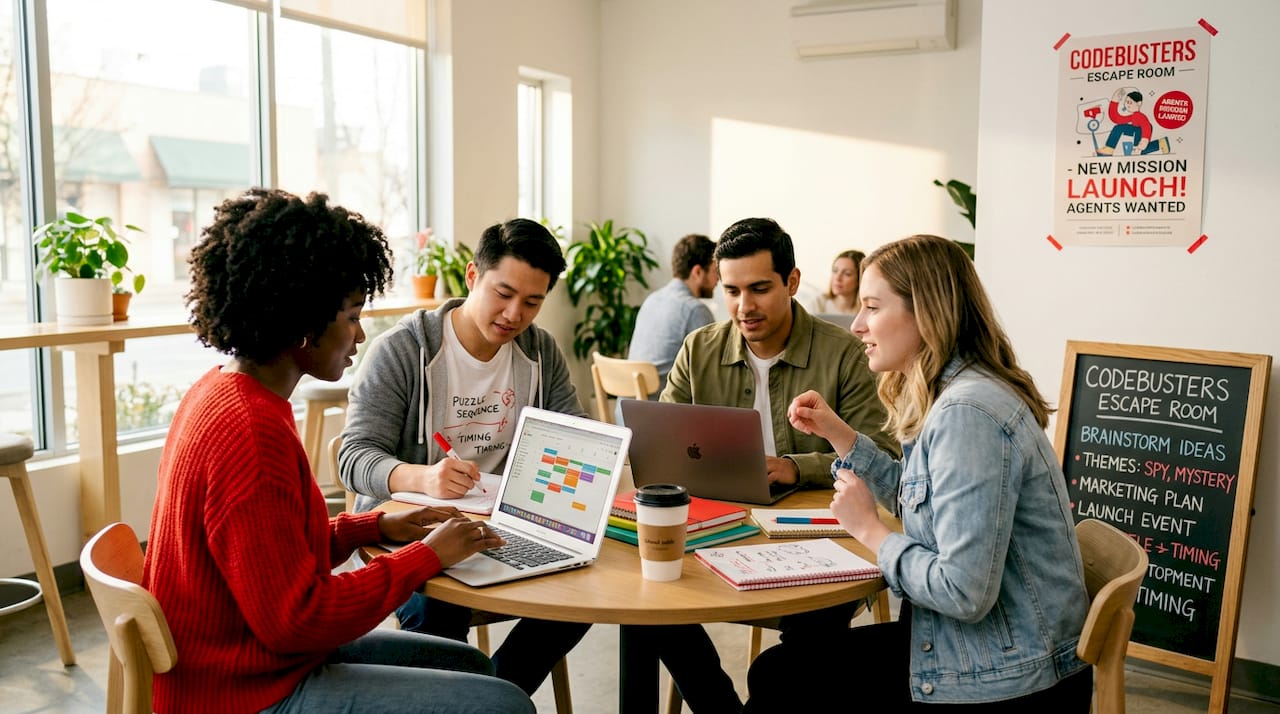
Planning a group event sounds exciting until the spreadsheets, vendor calls, and competing opinions hit at once. Whether you’re organizing a corporate team-building day, a milestone family celebration, or a casual social gathering, the pressure to pull it off without drama is real. Knowing how to plan a group event the right way, from the first decision through the final thank-you note, makes all the difference. This guide walks you through every stage with concrete steps, honest advice, and the kind of detail that actually moves things forward.
Table of Contents
- Key takeaways
- How to plan a group event: the essential first steps
- Budgeting for group events without the guesswork
- Selecting venues and managing vendors
- Designing agendas that actually engage people
- Final prep, day-of execution, and post-event review
- My honest take on what most planners get wrong
- Make your next group event unforgettable
- FAQ
Key takeaways
| Point | Details |
|---|---|
| Start with purpose, not ideas | Define your event goal and SMART objectives before booking anything or brainstorming themes. |
| Budget for the unexpected | Reserve a 15–20% contingency fund tracked separately to prevent financial surprises. |
| Timeline determines everything | Single-day events need at least 3-6 months of prep; larger events require 12 months or more. |
| Attendee experience drives success | Structure your agenda around interaction and connection, not just content delivery. |
| Evaluate after every event | Collect feedback and review key metrics so each event you host gets measurably better. |
How to plan a group event: the essential first steps
Most people jump straight to the fun stuff. They book a venue or brainstorm themes before they’ve answered the most important question: what is this event actually supposed to accomplish? Beginners often err by skipping purpose and diving into logistics. That shortcut creates confusion, conflicting decisions, and an event that feels scattered.
Start by writing a one-sentence purpose statement. “We want to strengthen cross-department relationships after a company merger” is specific enough to drive every decision that follows. A vague goal like “have fun” leaves you guessing at every turn.
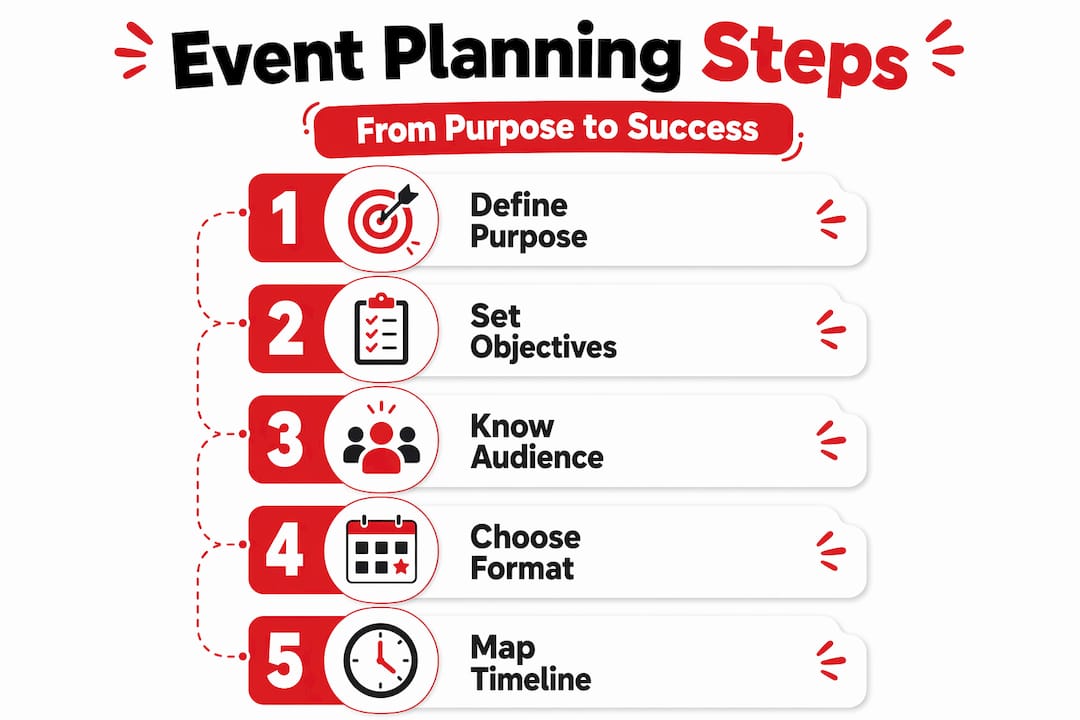
From there, build your SMART objectives. These are goals that are Specific, Measurable, Achievable, Relevant, and Time-bound. A solid example: “Achieve 85% attendee satisfaction scores within six weeks of our 60-person Q3 retreat.” Clear SMART objectives are foundational to preventing confusion and keeping all stakeholders aligned.
Next, think about your audience. A team of 12 engineers has different preferences than a 200-person annual gala crowd. Segment your attendees by age range, relationship to one another, and what they need from this experience. That profile shapes your format choice.
Speaking of format: in-person, virtual, or hybrid? In-person events create stronger connection but demand more logistical muscle. Virtual events are lower-cost and easier to scale, but engagement drops without deliberate design. Hybrid is the most complex of the three and should not be attempted without significant planning resources.
Finally, lock in your timeline early. Single-day events need 3-6 months of preparation; multi-day events require 6-12 months; milestone celebrations often demand 12-24 months of lead time. Most planners underestimate this by half.
Pro Tip: Create a master planning calendar on day one with backward-mapped deadlines from your event date. Work in reverse from the event and assign an owner to each milestone so nothing drifts.
Budgeting for group events without the guesswork
Budget conversations make most people uncomfortable, but avoiding them costs more in the end. The key to budgeting for group events is understanding where money actually goes, then protecting your plan with a financial cushion.
Here is a realistic breakdown of how event budgets typically divide across categories:
| Category | Typical allocation | Notes |
|---|---|---|
| Venue | 30-40% | Rises sharply for premium locations or exclusive buyouts |
| Catering | 20-30% | Catering costs $15-$75 per person depending on format |
| Planning and admin | 10-15% | Includes software, coordination labor, and printing |
| Contingency fund | 15-20% | Should be tracked separately and never pre-allocated |
| Entertainment and decor | 10-20% | Scalable based on event type and goals |
The contingency fund deserves special attention. For complex events, a 15-20% contingency tracked separately prevents budget creep, which is the silent killer of group event finances. When you lump the contingency into the general pool, it gets spent on upgrades before you need it for emergencies.
Cost-effective strategies matter too. Buffet-style catering costs significantly less than plated service and actually encourages more attendee movement and conversation, which is a bonus for engagement. Negotiate vendor packages rather than line items. Many vendors will drop 10-15% off total cost when you bundle services.
Pro Tip: Open a separate tracking sheet exclusively for your contingency fund. Log every dollar you pull from it and why. This habit alone prevents the most common budget surprises in group event planning.
Selecting venues and managing vendors
Venue selection is where space should be strategic, driven by functional needs rather than aesthetics alone. A beautiful ballroom that seats 300 feels cold and disconnected for a 40-person team-building session. Match the space to the group’s size and the event’s energy.

What to look for in a venue
Your venue evaluation checklist should cover four non-negotiables: capacity (with room to breathe, not just stand), accessibility for all attendees, technical support for AV and connectivity, and parking or transit options. Any venue that scores poorly on more than one of these deserves a hard look before you sign.
When comparing venue options, a side-by-side evaluation helps:
| Venue factor | Priority rating | Questions to ask |
|---|---|---|
| Capacity fit | High | Does it work for both your minimum and maximum headcount? |
| Accessibility | High | Is it ADA compliant? How far is it from public transit? |
| Technical infrastructure | Medium-High | What AV equipment is included? What is the Wi-Fi capacity? |
| Catering flexibility | Medium | Can you bring outside vendors, or are you locked in? |
| Cancellation policy | High | What is the refund window if attendance changes? |
Vetting your vendors
Use the 4S Framework when evaluating vendors: Scale, Scope, Skill, and Service. Scale asks whether they can handle your group size. Scope covers whether their offerings match your needs. Skill checks their track record. Service evaluates how they communicate and solve problems. Vendor scale and experience should be vetted with specific questions about recent group events of comparable size.
Risk management belongs here too. Proactive mitigation plans, not reactive scrambling, define a well-run event. Build decision trees for your highest-risk scenarios. If your outdoor venue gets rained out, what triggers the call to move indoors? Who makes that call and at what time? Write it down before the day arrives.
Designing agendas that actually engage people
A great agenda is not just a schedule. It is an experience architecture. Here is a numbered approach to building one that works:
-
Open with intention. The first 15 minutes set the tone for everything that follows. Use a structured icebreaker that connects to your event’s purpose, not a generic “two truths and a lie.” If your event is about cross-functional collaboration, open with a short challenge that requires people from different teams to solve something together.
-
Balance content with breathing room. No block of content delivery should run longer than 45 minutes without a break or shift in format. Attention degrades fast in group settings, and pushing through fatigue produces diminishing returns.
-
Use catering as an engagement tool. Catering is a key engagement tool, not just fuel. Position food stations to encourage mingling across tables. Break-time snacks near conversation zones keep people talking instead of retreating to their phones.
-
Incorporate technology thoughtfully. Event apps, live polling tools, and digital Q&A platforms significantly improve participation. Icebreakers and live polls measurably improve attendee interaction when designed with the group’s communication style in mind. Avoid tech that requires a tutorial, though. If attendees spend five minutes figuring out an app, you have lost the room.
-
Build in a “flex block.” Leave 20-30 minutes somewhere in the middle of your agenda that can absorb overruns or expand into deeper discussion if the group is energized. This single buffer prevents the cascade of delays that plague tightly scheduled events.
For groups where team dynamics matter, consider interactive group activities that build connection through shared problem-solving rather than passive listening.
Final prep, day-of execution, and post-event review
Smooth events are not accidents. They are the product of detailed preparation and disciplined communication on the day itself.
In the final week before your event, confirm every vendor booking in writing, distribute printed run-of-show documents to all staff and key stakeholders, and conduct a venue walkthrough to map floor plans and identify bottlenecks. Check-in processes are where events lose credibility with attendees in the first 10 minutes, so rehearse them.
On event day, these practices separate organized events from chaotic ones:
- Assign a dedicated point person for each operational zone (registration, AV, catering, guest relations) with a clear communication channel to the lead coordinator
- Use 15-minute schedule buffers throughout the run-of-show to absorb delays without derailing the timeline
- Brief all staff on the decision tree for your top three risk scenarios before doors open
- Station someone at the entrance whose only job is greeting and directing arrivals, not managing other tasks simultaneously
Compression and extension decisions during the event day must be made quickly to maintain flow. Empower your team leads to make on-the-spot adjustments within defined parameters, so you are not the bottleneck for every small decision.
After the event, collect feedback within 48 hours while impressions are fresh. Use a short survey (five to eight questions) covering overall satisfaction, specific session ratings, and one open-ended question asking what they would change. Analyze your key performance indicators against the SMART objectives you set at the start, then document your lessons learned before memory fades.
Pro Tip: Schedule a 60-minute debrief with your planning team within three days of the event. The insights that surface in that conversation are worth more than any post-event survey.
My honest take on what most planners get wrong
I’ve watched dozens of group events succeed and fail, and the pattern is almost always the same. The events that struggle are not the ones with the smallest budgets. They are the ones where the planner was so focused on logistics that attendee experience became an afterthought.
What I’ve learned is that proactive communication and run-of-show ownership are the dividing line between a good event and a great one. You can have a flawless checklist and still produce a forgettable experience if no one is paying attention to how the room feels.
My honest advice: plan the logistics thoroughly, then step back and ask, “Would I enjoy this as an attendee?” If the answer is uncertain, redesign the agenda before you finalize anything else. The best group events feel effortless to the people attending them, and that effortlessness is entirely manufactured by the planner behind the scenes.
— CodeBusters
Make your next group event unforgettable
If you are searching for a group activity that handles engagement for you, escape rooms are one of the most underutilized options in the event planning world. They combine problem-solving, communication, and genuine fun in a format that works for corporate teams, families, and social groups alike.
At Codebustersescaperoom in Colorado Springs, you get private room bookings built for groups of varying sizes, themed experiences that range from beginner-friendly to genuinely challenging, and an environment where connection happens naturally. Whether you are planning a team-building event or a family celebration, book your group experience and see why Codebustersescaperoom is one of Colorado Springs’ most awarded escape room destinations. Check out their escape room guide for groups to find the right room for your event.
FAQ
How far in advance should you plan a group event?
Single-day events need 3-6 months of preparation, while multi-day events and milestone celebrations may require 6-24 months depending on complexity and guest count.
What percentage of an event budget should go to contingency?
Experts recommend setting aside 15-20% as a contingency fund, tracked separately from the main budget to prevent unintentional spending before it is needed.
How do you keep large group events on schedule?
Build 15-minute buffers into your run-of-show at key transition points, assign zone leads with decision-making authority, and use a structured checklist to reduce last-minute surprises by up to 65%.
What makes a group event agenda engaging?
Mix content delivery with interactive formats, incorporate purposeful icebreakers, use catering stations to encourage movement, and include a flex block that absorbs overruns without disrupting the overall flow.
How do you evaluate whether a group event was successful?
Measure results against the SMART objectives you defined at the start, collect attendee feedback within 48 hours, and conduct a team debrief within three days to capture lessons while they are still fresh.