How Escape Rooms Elevate Tourism in Colorado Springs
Roughly 25% of escape room bookings in tourist-heavy cities come directly from visitors passing through, and escape rooms now rank among the top experiential activities on TripAdvisor worldwide. Yet most travelers still plan their Colorado Springs itinerary around Pikes Peak and Garden of the Gods while leaving hours of downtime completely unplanned. That’s a missed opportunity. Escape rooms have quietly become one of the most effective ways to bond a travel group, create a shared memory, and experience a destination in a way that no hiking trail or museum exhibit can replicate.
Table of Contents
- The evolution of escape rooms as tourist attractions
- How escape rooms create memorable group travel experiences
- What to expect: The mechanics and themes of escape rooms
- Escape rooms in Colorado Springs: What makes them stand out
- Opportunities and pitfalls in escape room tourism
- Why escape rooms are more than just a trend in travel
- Plan your Colorado Springs escape adventure
- Frequently asked questions
Key Takeaways
| Point | Details |
|---|---|
| Interactive travel highlight | Escape rooms offer immersive group adventures that enrich the tourist experience in Colorado Springs. |
| Fit for all groups | Diverse themes and difficulty levels make escape rooms suitable for families, friends, and corporate travelers alike. |
| Boost to local tourism | Escape rooms attract a broad range of visitors and revitalize local tourism economies. |
| Quality and planning matter | Choosing reputable venues and booking ahead ensures the best possible experience. |
| Sustainable entertainment | Escape rooms help disperse crowds and encourage repeat visits, supporting sustainable tourism. |
The evolution of escape rooms as tourist attractions
Escape rooms started as a niche hobby rooted in point-and-click video games, with the first physical room opening in Kyoto, Japan, around 2007. Within a decade, the concept spread to Europe, North America, and Australia, fueled by a growing appetite for shared, screen-free social experiences. Today they are a recognized segment of the global entertainment and tourism industry, not just a curiosity for puzzle nerds.
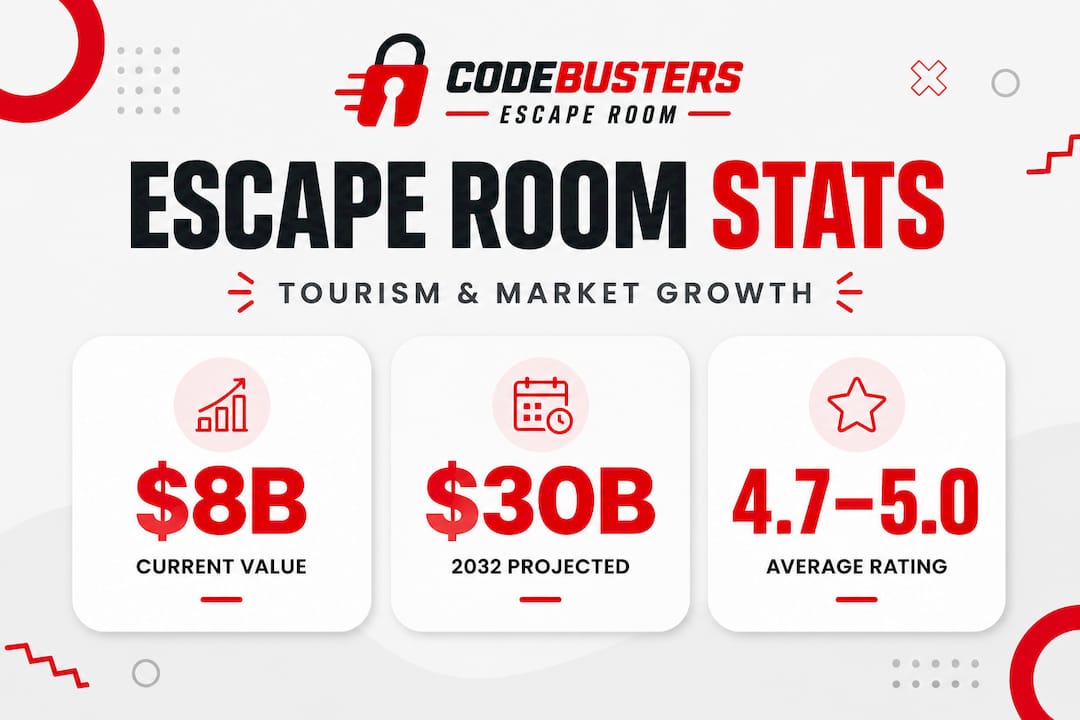
The financial scale of this industry is worth pausing on. The global escape room market is currently valued between $1 billion and $8 billion depending on the methodology used, with U.S. revenues estimated at $300 to $500 million annually and a projected compound annual growth rate of 12% to 15% through 2032. That trajectory puts the global market on track to surpass $30 billion by the early 2030s.
“Escape rooms serve as innovative tourist attractions providing immersive, interactive group entertainment that enhances travel experiences by fostering teamwork, problem-solving, and emotional engagement.” — Innovative Tourist Attractions
This quote captures why the industry has legs. Tourists are not just looking for things to see anymore. They want things to do, things to feel, and experiences to talk about afterward. Escape rooms deliver on all three counts simultaneously.
| Market metric | Current estimate | Projected value |
|---|---|---|
| Global market size | $1B to $8B | $30B+ by 2032 |
| U.S. annual revenue | $300M to $500M | Growing at 12-15% CAGR |
| Tourist share of bookings | ~25% in travel cities | Rising with experiential trend |
| Average group size | 4 to 8 players | Ideal for travel groups |
For travelers landing in Colorado Springs, this global context matters. The city’s escape room experiences sit inside a thriving worldwide movement, not a local fad. Venues here are built to meet international expectations, and the quality reflects it.
How escape rooms create memorable group travel experiences
Walk into an escape room and you immediately understand why it works for tourist groups. The environment is deliberately immersive: set design, lighting, sound effects, and narrative all work together to pull you out of ordinary awareness and drop you into a different world. Your phone stays in your pocket. The clock starts ticking. Everyone in your group suddenly has a shared, urgent goal.
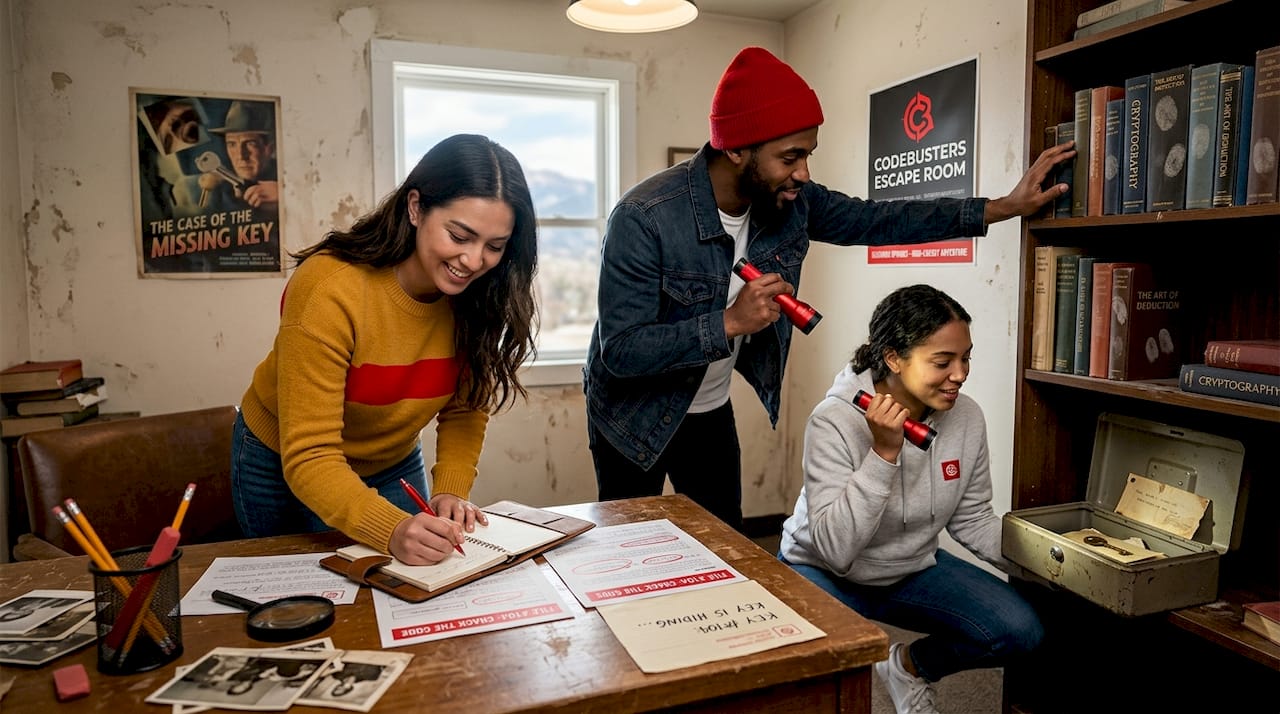
This isn’t coincidental design. Research on immersive group entertainment confirms that escape rooms foster teamwork, problem-solving, and emotional engagement in ways that most passive tourist activities simply cannot match. Psychologists describe the experience as inducing a “flow state,” a condition where challenge and skill align so closely that time distorts and full attention locks in. For travel groups juggling different interests and energy levels, that shared flow state is genuinely valuable.
Here’s what makes escape rooms particularly effective for tourists specifically:
- Communication under pressure. You learn things about your travel companions in 60 minutes that a week of hotel breakfasts won’t reveal. Who leads? Who notices details? Who stays calm?
- Equal participation. Unlike hiking or physical tours, escape rooms are accessible to most fitness levels and age groups, keeping every member of a mixed group equally involved.
- No prior knowledge required. You don’t need to know Colorado Springs history or local culture to play, though themed rooms often weave in local context.
- Replayability. Different rooms offer completely different experiences, so a group can return multiple times over a multi-day trip without any repetition.
- Emotional payoff. Whether you escape or not, the debrief conversation afterward is almost always lively and memorable.
Research into cultural tourism highlights that escape rooms offer themed puzzles that allow travelers to discover local history, identity, and “genius loci” (the spirit of a place) through narrative-driven gameplay. This is especially relevant in Colorado Springs, where venues craft stories inspired by the region’s history, military heritage, and rugged frontier character.
Pro Tip: If your group includes teenagers, let them take the lead on finding clues. They often spot things adults overlook, and giving them ownership of the experience increases everyone’s engagement.
What to expect: The mechanics and themes of escape rooms
First-time players sometimes arrive with unrealistic expectations pulled from movies: laser grids, climbing walls, and physical stunts. The reality is more cerebral and arguably more satisfying. Understanding the actual format helps your group show up ready to perform.
A standard escape room runs 60 minutes, involves 4 to 8 players working as a team, and centers on observation, logical deduction, and creative thinking. Puzzles range from combination locks and hidden messages to pattern recognition and spatial reasoning. A game master monitors your progress via cameras and can offer hints if your group gets stuck for too long.
Here’s a practical breakdown of what a typical session looks like:
- Arrival and briefing (10 to 15 minutes before start time). Staff explains the rules, establishes safety boundaries, and sets up the narrative context for your room.
- Active gameplay (60 minutes). Your group explores the space, finds clues, solves puzzles in sequence, and works toward unlocking the final exit.
- Debrief and photos. Most venues celebrate your result with a photo opportunity and a brief breakdown of any puzzles you didn’t solve.
- Group discussion. This part is informal but genuinely valuable. Most groups spend 20 to 30 minutes after the room replaying moments, debating decisions, and laughing at mistakes.
| Experience level | Recommended difficulty | Expected success rate |
|---|---|---|
| First-timers | Beginner or Moderate | 35% to 50% |
| Occasional players | Moderate or Hard | 25% to 40% |
| Experienced teams | Hard or Expert | 15% to 30% |
| Mixed groups | Beginner or Moderate | 35% to 45% |
Overall escape room success rates hover between 30% and 45% across the industry, meaning most groups don’t finish in time. That’s intentional. The challenge is calibrated to make success feel genuinely earned, not handed over. Even teams that fail frequently describe the experience as a highlight of their trip.
Pro Tip: Book a room rated “moderate” for your first visit rather than jumping straight to the hardest available option. A first-time escape builds confidence and shows your group how to work together, making harder rooms much more rewarding on the second visit.
For travelers exploring top-rated escape rooms in Colorado Springs, themes range from science fiction and 1980s nostalgia to aviation mysteries and time travel. Each theme creates a completely different emotional atmosphere, so choosing carefully based on your group’s interests genuinely pays off.
Escape rooms in Colorado Springs: What makes them stand out
Colorado Springs is already a destination with enormous natural appeal. Pikes Peak, the Broadmoor, Garden of the Gods, and the Air Force Academy draw millions of visitors every year. But the city’s indoor entertainment scene, particularly its escape rooms, has developed a reputation that stands on its own.
Local venues including CodeBusters Escape Room consistently earn ratings between 4.7 and 5.0 stars, with reviewers highlighting immersion, staff quality, and the creative quality of puzzles. That level of consistency across multiple independent venues signals a genuinely mature local market, not a single standout in an otherwise mediocre field.
What specifically sets Colorado Springs escape rooms apart for tourists?
- Themed diversity. Rooms span time periods, genres, and difficulty levels, making it easy to find something that fits any group composition.
- Private bookings. Most venues offer fully private sessions, which means your group won’t share a room with strangers. This is essential for families and corporate teams who want an intimate experience.
- Veteran and family ownership. Several local venues, including CodeBusters, are veteran-owned and family-operated. That background shows up in the level of personal service and pride of operation.
- Integration with Colorado Springs culture. Some rooms incorporate military history, frontier narratives, and local lore into their puzzles, giving tourists a genuinely local flavor alongside the entertainment.
- Accessibility. Central locations in the city make it easy to fit an escape room session into a full-day itinerary without major travel time.
Quick statistic: Colorado Springs escape rooms maintain an average guest rating of 4.7 to 5.0 stars across multiple established venues, a consistency that reflects serious investment in quality design and customer experience.
Travelers increasingly build escape rooms into multi-activity days. A common local itinerary pairs a morning hike at Garden of the Gods with an afternoon escape room session, then dinner downtown. The physical challenge of the hike and the mental challenge of the room create a satisfying contrast that leaves groups feeling genuinely accomplished by evening.
Opportunities and pitfalls in escape room tourism
Escape rooms are not all equal. The industry’s rapid growth has produced an uneven landscape where exceptional experiences exist alongside disappointing ones. Knowing what to look for protects your group’s time and money.
“Escape rooms promote sustainable tourism by dispersing visitor crowds, revitalizing urban areas, and encouraging repeat visits, with 75% of enthusiasts visiting two or more times per year.” — Expert Insights in Escape Room Tourism
That repeat visit figure is striking. It tells you that people who try escape rooms don’t usually treat them as a one-time novelty. They come back. For destination cities like Colorado Springs, this creates genuine long-term tourism value.
At the same time, market vulnerability is real. Poland’s escape room industry saw a 54% decline following a combination of high-profile safety incidents and the COVID-19 shutdown. Even stable markets experience quality variation, with some rooms criticized for linear puzzles, technical glitches, or poor narrative design.
Here’s how to avoid the pitfalls:
- Read recent reviews specifically. Look at reviews from the past 3 months, not just the overall rating. Venues can slip in quality after a change of management or staff.
- Check the venue’s booking flexibility. Quality venues offer clear refund or rescheduling policies. Rigid “no refund” terms are often a sign of a less customer-focused operation.
- Ask about hint policies. Good game masters use hints to enhance your experience, not punish you for needing help. Ask before you book how the hint system works.
- Look for private room options. Shared rooms with strangers disrupt the social dynamic of your travel group and reduce the overall quality of the experience.
- Verify group size fit. Some rooms are designed for 2 to 4 players and feel cramped with 8, while others need 6 or more to balance puzzle loads properly.
Corporate bookings account for roughly 30% of all escape room reservations industry-wide, which tells you something important: businesses trust these experiences to deliver measurable team-building outcomes. That same logic applies to travel groups. The pressure of a timed puzzle in an unfamiliar environment reveals group dynamics and strengthens relationships in ways that a dinner or sightseeing tour simply can’t.
Why escape rooms are more than just a trend in travel
Here’s a perspective that most travel guides won’t offer: escape rooms are not a supplement to a Colorado Springs trip. For the right group, they are the anchor.
Conventional wisdom treats outdoor adventures as the main event and everything else as filler. But a great escape room session does something that standing on a mountaintop cannot: it requires your group to function as a unit and then gives you immediate, unambiguous feedback on how well you did. That’s rare in travel, and it’s deeply satisfying.
We’ve watched groups arrive at CodeBusters as polite strangers who shared a hotel and leave as genuinely bonded teams with inside jokes, a shared language of “remember when you opened the wrong drawer,” and a sense of accomplishment that they built together. That kind of memory doesn’t fade.
For Colorado Springs specifically, the combination of physical outdoor adventures and mentally engaging indoor experiences creates a more complete travel story. You push your body on the trails. You push your mind in the room. Both experiences feed the same underlying desire: to feel genuinely alive and present with the people you traveled with.
The travelers who underrate escape rooms are usually the ones who haven’t tried a well-designed one. One experience in a quality venue changes that perspective immediately. The clock starts, the lights drop, and suddenly everyone in your group is completely and equally present. That’s the real value here. Not the puzzle. Not even the escape. It’s the 60 minutes of full, shared attention in a world that rarely stops asking you to divide it.
Plan your Colorado Springs escape adventure
If you’re planning a trip to Colorado Springs and want an experience your group will still talk about years from now, an escape room session belongs on your itinerary alongside the hiking and sightseeing.

CodeBusters Escape Room offers a range of uniquely themed rooms designed for groups of all sizes and experience levels, from first-timers to seasoned puzzle solvers. As a veteran and family-owned venue with award-winning rooms, private bookings, and a genuine commitment to guest experience, CodeBusters makes it easy to plan a session that fits your schedule and your group’s personality. Booking online takes minutes, gift vouchers are available, and the team is always ready to help you choose the right room. Don’t leave this experience to chance.
Frequently asked questions
Are escape rooms in Colorado Springs suitable for families with children?
Yes, most local escape rooms offer family-friendly themes and are ideal for groups with teens or older children. Colorado Springs venues like CodeBusters maintain high ratings across diverse groups, including families, and staff are experienced at making all players feel included.
How far in advance should I book an escape room during peak tourist season?
It’s best to book at least 1 to 2 weeks ahead, especially during summer and holidays, as slots fill quickly. Private rooms in particular tend to sell out faster than shared session formats.
What if my group has never played an escape room before?
Many venues provide beginner-friendly rooms, clear instructions, and game masters who offer hints throughout the session. The overall success rate of 30% to 45% means even experienced teams don’t always escape, so first-timers are in good company.
Do Colorado Springs escape rooms reflect local history or culture?
Yes, several venues feature puzzles and themes inspired by Colorado Springs’ history and outdoor adventure culture. Research confirms that themed puzzles in escape rooms can help tourists discover the spirit and identity of a place through immersive narrative gameplay.
What’s the typical success rate for escape room teams?
Success rates range from 30% to 45% industry-wide, which means escaping is genuinely challenging and every win feels like a real team achievement worth celebrating.