Group Coordination for Parties: Your Step-by-Step Guide

Group coordination for parties is the process of organizing collaborative logistics, aligning group decisions, and managing communication to deliver a successful event without chaos. Most party disasters trace back to one root cause: no one person owned the plan. When roles are undefined and tools are absent, even a small gathering turns into a series of last-minute scrambles. The fix is not more effort. It is smarter structure. This guide covers every layer of party organization, from setting goals and assigning roles to managing vendors and running a smooth day-of operation, so your next event runs the way you envisioned it.
What is group coordination for parties and why does it matter?
Group coordination for parties is the deliberate practice of dividing planning responsibilities, centralizing information, and keeping every contributor aligned toward a single event goal. Without it, you get duplicated effort, missed vendor confirmations, and guests who show up to the wrong address. The clarity of event purpose acts as the north star that prevents scattered or competing planning priorities. Every decision, from the venue to the playlist, should trace back to that single stated purpose.
The stakes are real. 80% of party success comes from mastering three factors: the guest list, the budget, and the timeline. That means the majority of what makes or breaks your event is entirely within your control before the day arrives. Applying this 80/20 lens early tells you where to spend your coordination energy and where to stop overthinking.
How to set clear goals and define roles for effective group coordination
Every well-run event starts with a single, clear purpose. Is this a birthday celebration for 20 close friends, a corporate team event for 50 colleagues, or a neighborhood block party? The answer shapes every downstream decision. Without a stated purpose, planning committees drift, priorities conflict, and the organizer ends up doing everything alone.
Once the purpose is set, assign roles immediately. Common role types that work across most party sizes include:
- Event Director: Owns the overall vision, timeline, and final decisions
- Logistics Lead: Manages venue, vendors, and equipment
- Guest Liaison: Handles invitations, RSVPs, and day-of guest communications
- Budget Keeper: Tracks spending and flags overruns early
- Activity Coordinator: Plans and runs group activities or entertainment
Defined roles improve team trust and minimize micromanagement. When each person knows exactly what they own, they stop waiting for permission and start executing. This is the single fastest way to reduce organizer burnout in group party planning.
Pro Tip: Keep role assignments to one page and share them in a group chat before planning begins. When everyone sees their name next to a responsibility, accountability becomes automatic.
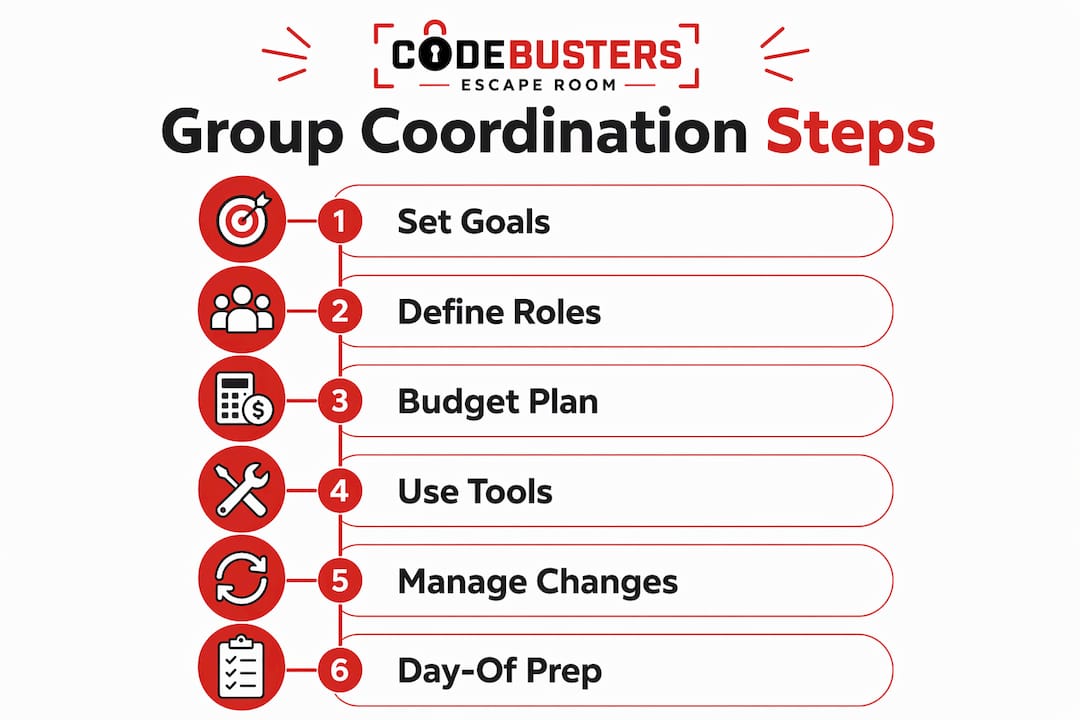
Budgeting belongs in this foundation phase too. 40% of parties experience chaos due to poor budgeting, including the absence of a contingency fund. Build a 10 to 15% buffer into your total budget from day one. That buffer is not waste. It is insurance against the vendor who raises prices at the last minute or the decoration order that arrives damaged.
What tools actually simplify coordinating group activities?
Digital tools are not optional for modern party coordination. Managing vendors through scattered email threads consumes up to 40% of planners’ time. Centralized systems cut that waste significantly and reduce errors that come from information living in multiple places.

Here is how the most commonly used tools compare:
| Tool | Best Use | Limitation |
|---|---|---|
| Google Sheets | Budget tracking, guest lists, vendor contacts | No built-in notifications |
| Trello | Task management, assigning to-dos by role | Requires team adoption |
| Evite | Digital invitations and RSVP tracking | Limited task management |
| SignUpGenius | Volunteer and contribution sign-ups | Not suited for vendor coordination |
| Google Drive | Centralized document storage for all team members | Needs organized folder structure |
The most effective approach is combining two or three of these tools rather than relying on one. Use Evite or a similar platform for guest communications, Google Sheets for budget and vendor tracking, and Trello for task assignments across your planning team. A shared online command center where vendors access only the information relevant to them reduces day-of confusion and keeps your planning professional.
Pro Tip: Create a single shared Google Drive folder labeled with your event name and date. Inside it, place subfolders for Vendors, Budget, Guest List, and Day-Of Documents. Share the top-level folder with your planning team and give vendors access only to their specific subfolder.
For group entertainment specifically, booking platforms that handle group reservations in one transaction save significant coordination time. When you are planning group activities like escape rooms or team experiences, a venue that manages its own booking flow removes an entire layer of logistics from your plate.
How do you coordinate vendors, guests, and activities step by step?
A structured workflow separates parties that run smoothly from those that fall apart at 7 PM. Follow this sequence based on party size and complexity:
- Set your date and lock the venue first. Everything else depends on this. Starting 6 months early is cited by 89% of planners as key to vendor availability and better pricing.
- Build your vendor matrix. Create a spreadsheet listing each vendor, their contact, contract status, deposit paid, balance due, and day-of arrival time. Review it weekly.
- Send invitations 4 to 6 weeks out for casual gatherings and 8 to 12 weeks out for larger events. Set a hard RSVP deadline at least 10 days before the event.
- Plan for a 10 to 20% attendance buffer on RSVPs. Last-minute attendance changes are standard, so build your food, drink, and seating quantities around the upper end of your expected range.
- Build your day-of timeline with 15-minute buffers between activities. Buffers between activities prevent cascading delays that throw off the entire event flow.
- Confirm all vendors 48 hours before the event. Send a single confirmation message with arrival time, parking instructions, and your day-of contact number.
- Assign a point person for each vendor on the day itself. The Event Director should not be the one fielding calls from the caterer and the DJ simultaneously.
Experienced planners also account for a 20 to 30% guest flake rate and slightly over-invite to maintain energy without overcrowding. This is especially relevant for milestone parties where atmosphere depends on a critical mass of guests being present.
How do you manage group decisions and avoid conflict?
Group decision-making is where most coordinating group events break down. When five people have five opinions about the venue, the theme, or the catering, planning stalls. The solution is not consensus on everything. It is deciding in advance which decisions require group input and which ones the Event Director owns outright.
Use these techniques to keep decisions moving:
- Voting for low-stakes choices: Use a quick Google Form or group poll for things like theme color or playlist style. Set a 48-hour deadline and go with the majority.
- Delegated authority for logistics: The Logistics Lead decides vendor selection within the approved budget. No committee vote needed.
- Consensus for high-impact decisions: Venue, date, and major budget allocations warrant full group discussion. Schedule a single call or meeting and make the decision in that session.
Clear, consistent communication and structured voting methods solve group conflicts and decision paralysis. Establishing these norms at the start of planning reduces friction throughout the entire process. Set a rule early: decisions made in the group chat are final unless new information changes the situation.
Last-minute changes are inevitable. A vendor cancels. A key guest cannot make it. The weather turns. Your response to these moments determines the guest experience more than any decoration choice. Build backup plans for your three most critical logistics: venue, catering, and entertainment.
Pro Tip: Keep a “Plan B” document in your shared Drive folder. List one backup option for each critical vendor. When something falls through, you open the document instead of panicking.
What does strong day-of coordination actually look like?
The day of the event is not the time to make decisions. It is the time to execute the plan you already built. Guests decide if a party is good within the first 20 minutes, which means the arrival experience is your highest-priority window.
Here is a numbered sequence for day-of execution:
- Brief your coordination team 30 minutes before guests arrive. Cover the timeline, each person’s responsibilities, and the escalation path if something goes wrong.
- Post a printed run-of-show document in the host area. Laminated, pocket-sized versions improve on-site team readiness and make it easy to adapt timing changes without confusion.
- Assign one person to manage vendor check-ins as they arrive. That person verifies setup, confirms timing, and resolves any issues before guests see them.
- Designate a guest greeter for the first 30 minutes. This role alone dramatically improves the arrival experience and sets the social tone.
- Keep your phone charged and accessible, but stay present with guests. Hosts who delegate day-of tasks report significantly less stress and higher guest satisfaction.
Your day-of emergency kit should include: a portable phone charger, printed vendor contacts, a first aid kit, extra cash for tips, tape and scissors, a stain remover pen, and backup copies of all confirmations. These items take five minutes to pack and have saved countless events from minor disasters becoming major ones.
Key takeaways
Effective group coordination for parties requires a clear event purpose, defined roles, digital tools, and a structured day-of plan working together as a single system.
| Point | Details |
|---|---|
| Define purpose first | A single event goal aligns all planning decisions and prevents competing priorities. |
| Assign roles early | Named roles like Event Director and Logistics Lead eliminate duplicated effort and confusion. |
| Use centralized digital tools | Combining Google Sheets, Trello, and a shared Drive folder cuts coordination errors significantly. |
| Build timeline buffers | Fifteen-minute buffers between activities prevent cascading delays on the day of the event. |
| Delegate day-of tasks | Hosts who hand off execution responsibilities report less stress and better guest experiences. |
What years of watching parties succeed and fail taught me
The most common mistake I see is treating coordination as something you do once and then forget. Planning is not a single meeting. It is a living process that needs weekly check-ins, updated documents, and honest conversations when something is off track.
The second mistake is confusing busyness with progress. I have watched organizers spend three hours debating centerpiece colors while the venue deposit sat unsigned. The 80/20 rule is not just a productivity concept. It is a survival tool for party planners. Lock the guest list, the budget, and the timeline. Everything else is detail.
What actually works, in my experience, is trusting the people you assigned roles to. Micromanaging your Logistics Lead because you are nervous is the fastest way to burn out both of you. Give people real ownership and check in on outcomes, not methods. The parties that feel effortless to guests are the ones where the host is genuinely present, not running around fixing things. That presence only happens when the coordination system is doing its job.
Flexibility matters as much as preparation. The best coordinators I have seen hold their plans loosely. They know the timeline, they know the backup options, and they know when to let something go because the guests are having too much fun to care. Coordination is not about control. It is about creating the conditions for a great experience and then getting out of the way.
— CodeBusters
Make your next group event unforgettable with Codebustersescaperoom
When your group coordination is locked in and you need an activity that runs itself, Codebustersescaperoom in Colorado Springs is built for exactly that. Their themed escape rooms, including “Stranger 80’s,” “Flight of Deception,” and “Past to the Future,” are designed for groups of varying sizes and handle their own booking flow, so you are not managing another vendor from scratch. Private room bookings mean your group gets the full experience without coordinating around strangers. Book your group escape room experience directly through their site and check out their team collaboration rooms to find the right fit for your party size and energy level.
FAQ
What is the most important first step in group coordination for parties?
Define a single, clear event purpose before any other planning begins. This purpose aligns every decision that follows and prevents competing priorities from stalling your team.
How far in advance should you start coordinating a group party?
Starting 6 months early is cited by 89% of planners as key to securing vendor availability and better pricing. For smaller gatherings, 6 to 8 weeks is a workable minimum.
What digital tools work best for coordinating group events?
Google Sheets handles budget and vendor tracking, Trello manages task assignments by role, and Evite covers invitations and RSVPs. Combining two or three tools in a shared Drive folder creates a centralized command center for your entire team.
How do you handle last-minute changes during party coordination?
Build a “Plan B” document listing one backup option for each critical vendor, including venue, catering, and entertainment. When something falls through, you execute the backup instead of improvising under pressure.
How many guests should you invite to account for no-shows?
Experienced planners factor in a 20 to 30% flake rate and slightly over-invite to maintain the energy level the event requires without overcrowding the space.