Family-friendly escape rooms in Colorado Springs: 2026 guide
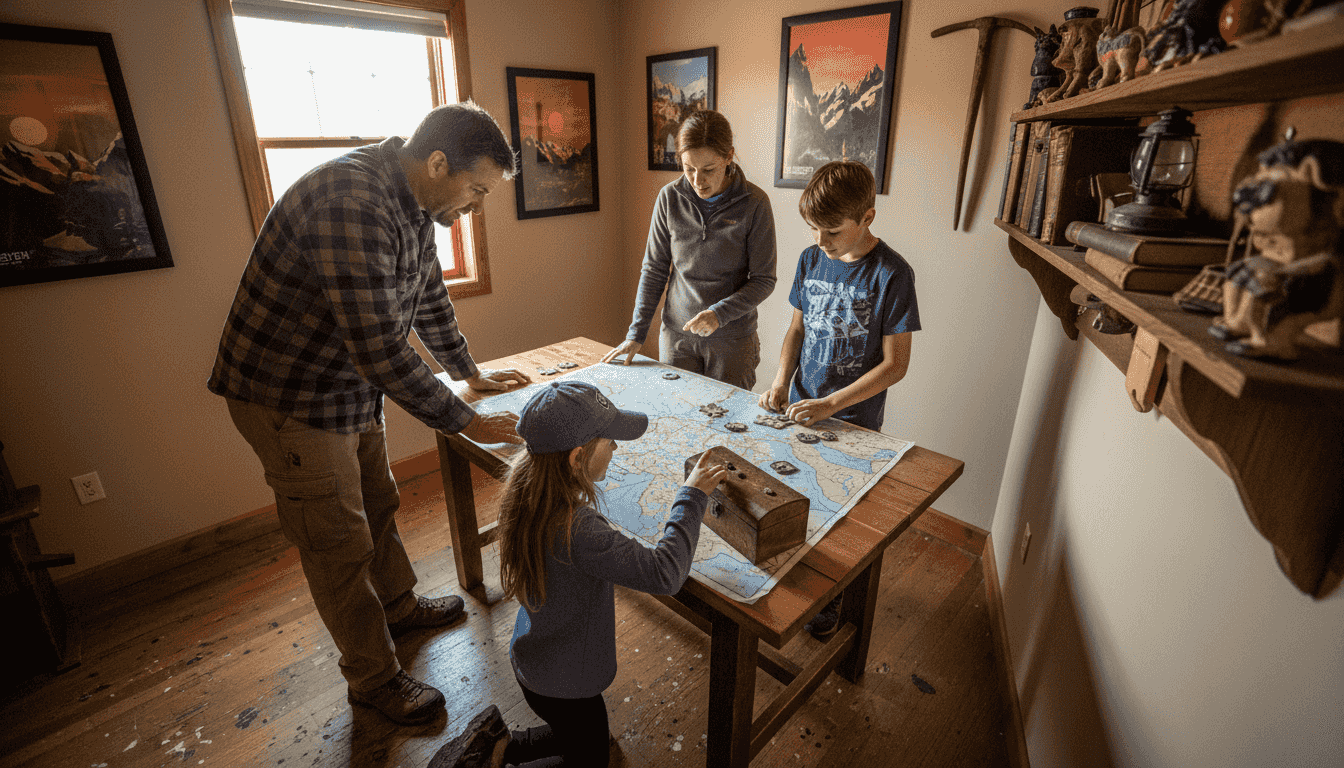
Think escape rooms are just for adults? Families now make up 15% of all escape room groups, proving these interactive adventures work brilliantly for all ages. Colorado Springs families searching for engaging group activities discover escape rooms offer the perfect blend of teamwork, problem solving, and entertainment. This guide reveals what transforms a standard escape room into a family-friendly experience and how to choose the ideal room for your crew.
Table of Contents
- Understanding What Makes An Escape Room Family-Friendly
- The Rise Of Families In The Escape Room Market
- Challenges And Best Practices In Family-Friendly Escape Room Design
Key takeaways
| Point | Details |
|---|---|
| Family participation is significant | Families represent 15% of escape room participants, with 35% of players being parents with children |
| Design matters for mixed ages | Successful family rooms balance puzzle difficulty through adjustable challenges and hint systems |
| Optimal group size fits families | The ideal 4-6 player group size naturally accommodates most family configurations |
| Colorado Springs offers options | Local escape room venues provide themed experiences specifically designed for family engagement |
Understanding what makes an escape room family-friendly
Not every escape room works for families with mixed ages. Family-friendly rooms share specific characteristics that ensure everyone from curious six-year-olds to puzzle-loving grandparents contributes meaningfully.
The average group size of 4-6 players naturally accommodates most family configurations. This size prevents overcrowding while giving each participant space to engage with puzzles and discover clues. Larger families can often book adjacent time slots or split into teams for friendly competition.
Puzzle design represents the critical difference between frustration and fun. Family-friendly rooms incorporate adjustable difficulty through tiered challenges where younger players solve simpler puzzles while adults tackle complex riddles. The best rooms provide multiple puzzle paths so families can divide and conquer based on individual strengths.
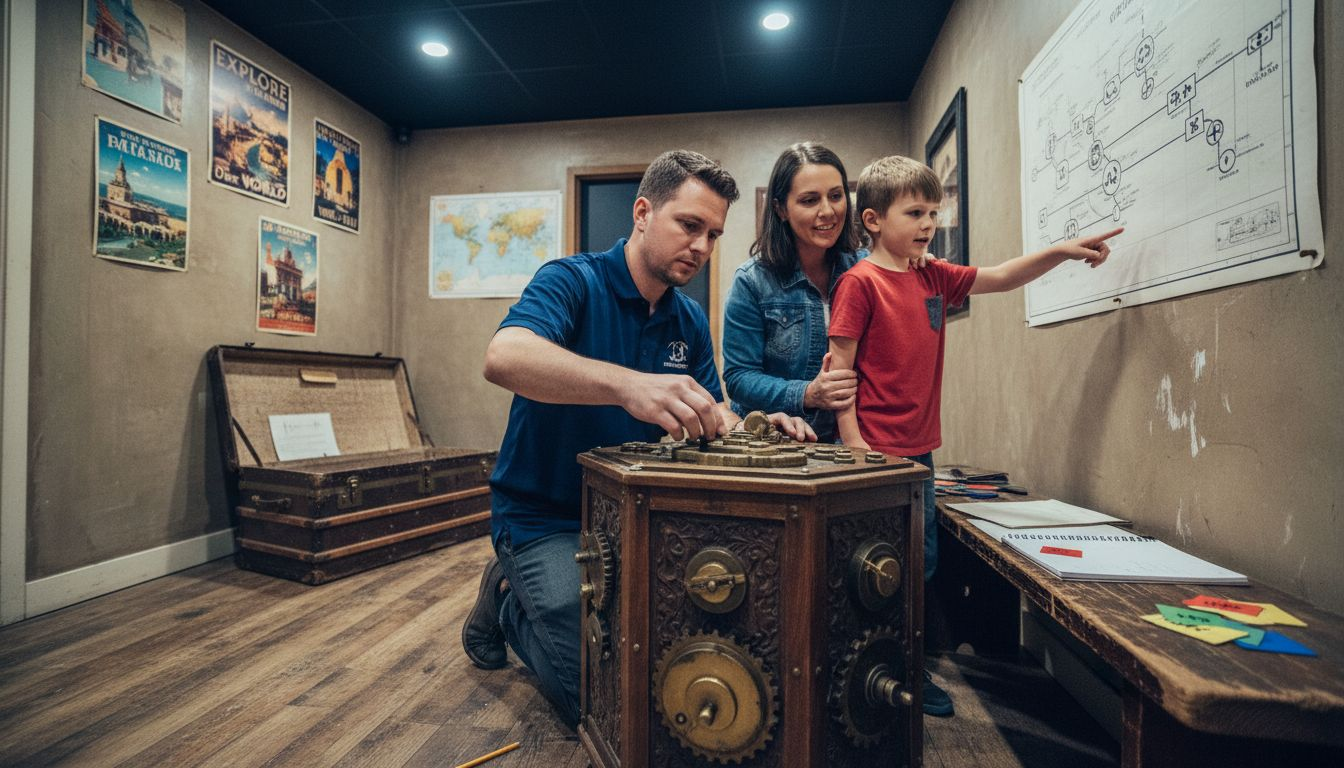
Hint systems become essential tools rather than crutches in family settings. Quality family rooms offer generous, well-timed hints that keep momentum without solving puzzles outright. Game masters monitoring family groups often provide age-appropriate guidance, ensuring kids stay engaged while adults face genuine challenges.
Thematic storytelling bridges age gaps effectively. Rooms featuring recognizable narratives like time travel, treasure hunts, or mystery solving create shared reference points. Abstract or horror-based themes typically miss the mark for families seeking inclusive entertainment.
Colorado Springs families exploring escape rooms for families benefit from venues that explicitly design for mixed-age participation. These rooms balance intellectual challenge with physical interaction, offering puzzles requiring observation, logic, teamwork, and creativity rather than specialized knowledge.
Successful family rooms avoid these common pitfalls:
- Puzzles requiring reading complex instructions that exclude younger children
- Time pressure so intense it creates family stress instead of excitement
- Dark or scary atmospheres inappropriate for sensitive kids
- Single-solution puzzles creating bottlenecks where only one person participates
Pro Tip: Call ahead to discuss your family’s specific age range and ask whether the room offers difficulty adjustments or kid-friendly modes before booking.
The rise of families in the escape room market
Escape room operators increasingly recognize families as a substantial market segment worth designing for intentionally. Understanding this demographic shift helps Colorado Springs families see they’re not outliers but part of a significant trend.
The numbers tell a compelling story about family participation. While friends comprise 50% of escape room groups and couples account for 35%, families represent 15% of participants. This percentage translates to millions of family visits annually across the growing global escape room industry.
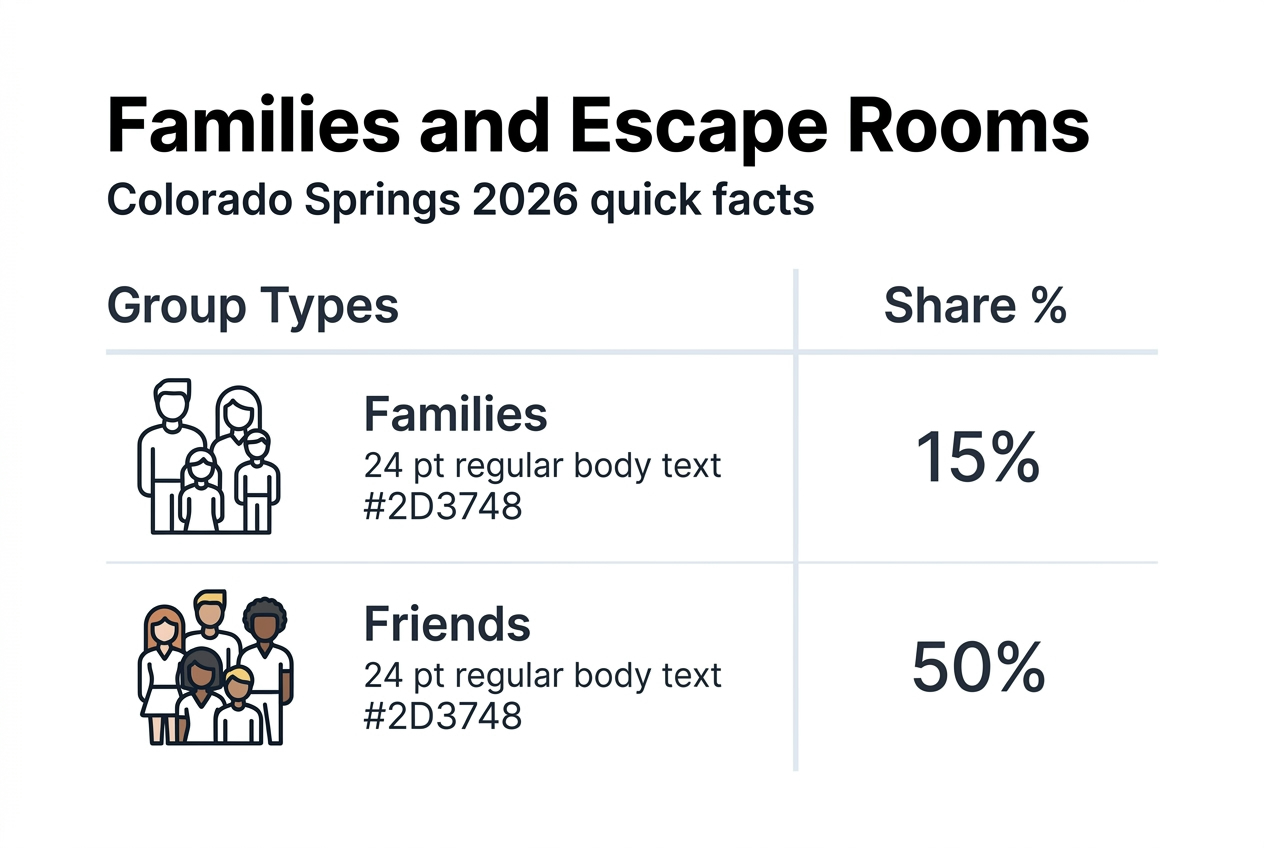
Parental involvement drives much of this family participation. Statistics show 35% of escape room players are parents with children, indicating escape rooms appeal specifically to adults seeking quality time with their kids. These aren’t parents grudgingly attending; they’re actively choosing escape rooms as preferred family entertainment.
| Demographic | Percentage | Average Age |
|---|---|---|
| Millennial players | 45% | 28-42 years |
| Parents with kids | 35% | Varies |
| Friends groups | 50% | 25-35 years |
| Couples | 35% | 25-40 years |
| Families | 15% | Multi-generational |
The average player age of 28 years, with millennials comprising 45% of participants, reveals why family participation surges. Millennial parents grew up with video games and interactive entertainment, making escape rooms feel like natural extensions of their recreational preferences. They seek activities combining screen-free engagement with memorable experiences their children will treasure.
“Escape rooms provide what families crave most: distraction-free time together solving problems as a team. The format naturally encourages communication and celebrates each family member’s unique contributions.”
Colorado Springs mirrors these national trends, with local venues reporting increased family bookings during school breaks, weekends, and holiday periods. Families appreciate that escape rooms deliver entertainment regardless of weather, making them reliable options in Colorado’s variable climate.
The business case for family-friendly escape room options continues strengthening. Venues offering family-appropriate themes and difficulty levels capture market share from traditional entertainment like movies or arcades. Families spend more per visit when booking larger groups and often return to try different rooms, building loyalty.
This growth occurs while the overall escape room industry expands globally, with new venues opening regularly and existing operators refining experiences based on customer feedback. Family-friendly design represents competitive advantage as operators differentiate themselves in increasingly crowded markets.
Challenges and best practices in family-friendly escape room design
Creating escape rooms that genuinely work for families requires solving unique design challenges. Understanding these hurdles helps families recognize quality venues and set appropriate expectations.
The fundamental challenge involves bridging skill gaps across ages and experience levels. A puzzle perfect for a twelve-year-old might bore Dad while Mom’s favorite riddle completely stumps younger siblings. Traditional escape room design assumes relatively uniform participant capability, an assumption family groups demolish.
Difficulty calibration makes or breaks the family experience. Puzzles too challenging leave kids feeling excluded and frustrated while overly simple challenges insult adult intelligence. This balancing act requires deliberate design choices rather than generic