Family-Friendly Activities Checklist for Every Age
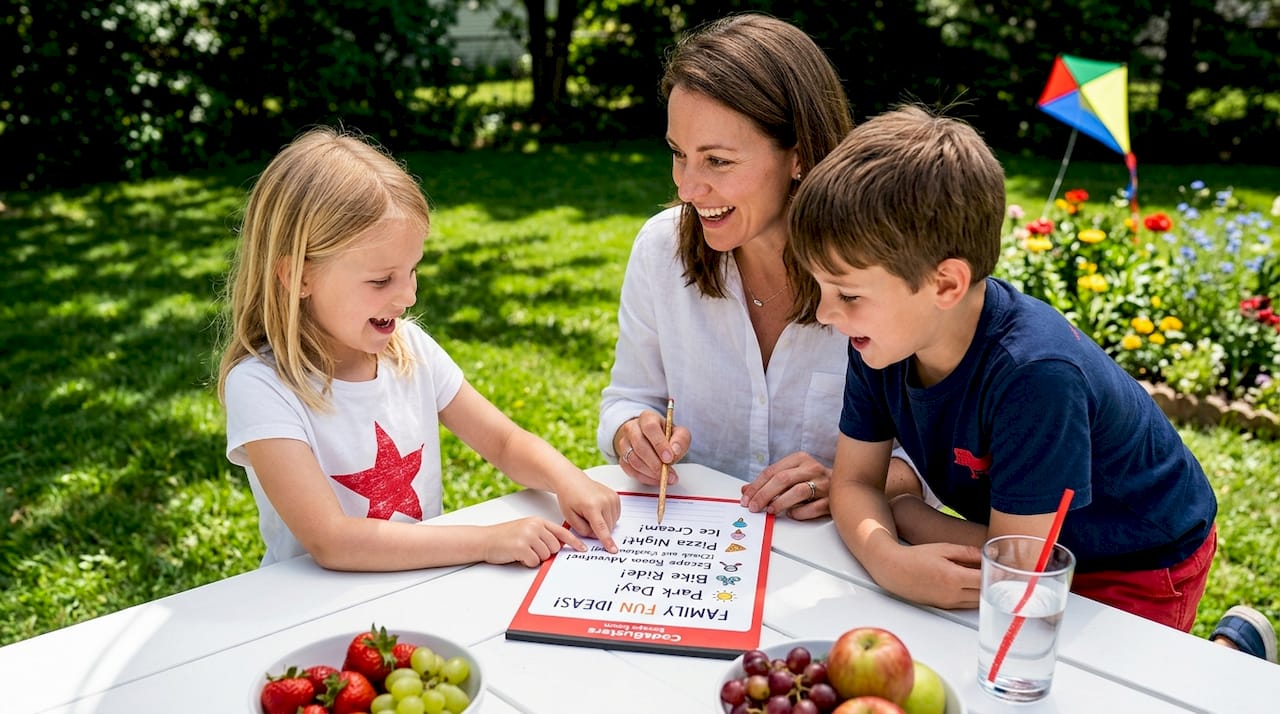
Planning quality family time sounds simple until you’re standing in the living room with three kids of different ages and zero consensus on what to do. A solid family-friendly activities checklist takes the guesswork out of the equation and gives you a flexible, go-to reference for outdoor adventures, indoor bonding, and everything in between. This guide covers activity selection criteria, specific ideas for every age group, a comparison of activity types, and a practical framework for building your own personalized checklist.
Table of Contents
- Key takeaways
- 1. Your family-friendly activities checklist: where to start
- 2. Top outdoor activities for families
- 3. Indoor games and activities for family bonding
- 4. Outdoor vs. indoor: a quick comparison
- 5. How to build your own personalized checklist
- My honest take on family activity planning
- Plan your next family outing at Codebustersescaperoom
- FAQ
Key takeaways
| Point | Details |
|---|---|
| Use selection criteria first | Check age suitability, safety, and budget before committing to any activity. |
| Outdoor time has real benefits | Screen-free outdoor play reduces anxiety and strengthens family bonds across all ages. |
| Indoor options cover every mood | Creative, educational, and active indoor games keep families engaged on any weather day. |
| Balance beats abundance | Stick to 2-3 planned activities per week to prevent burnout and leave room for spontaneous fun. |
| Flexibility is the secret ingredient | Involving the whole family in planning increases excitement and makes every outing more meaningful. |
1. Your family-friendly activities checklist: where to start
Before you pick a single activity, you need a short list of criteria. Without it, you end up with an outing that works for your six-year-old but leaves your teenager checking their phone and your toddler melting down.
Here are the key factors to run every activity idea through:
- Safety: Does the activity match the physical and cognitive abilities of your youngest child? Activities like climbing walls or zip lines have age and height restrictions you should confirm in advance.
- Accessibility: Does the location require special equipment, transportation, or mobility levels your family may not have?
- Variety: Rotate between physical, creative, and educational activities so no one child type gets left out week after week.
- Time and location flexibility: Some activities work in your backyard. Others need a two-hour drive. Know which category you’re dealing with before you commit.
- Budget: Costs add up fast for larger families. Look for free or low-cost options like parks, trails, and community centers as your baseline.
Pro Tip: Research your planned venue at least 24 to 48 hours before your visit. Some family venues require pre-booking and age checks that can derail a spontaneous trip if you skip this step.
Think of this checklist as a filter, not a rulebook. Run your activity ideas through these five criteria and you’ll immediately narrow down what actually makes sense for your family right now.
2. Top outdoor activities for families
Outdoor time is one of the fastest, lowest-cost ways to bond as a family. You don’t need a destination. You need a plan and a willingness to get outside.
Classic games like tag, hide-and-seek, and Red Light Green Light are ideal for kids aged 4 to 12 and require no equipment and no budget. These games work in a backyard, a parking lot, or a local park. For younger kids who need more structure, nature scavenger hunts are a standout option. Programs at wildlife sanctuaries often run 45 to 90 minutes, cover less than two miles, and welcome children as young as two. They combine movement with curiosity, which is a hard combination to beat.
For creative outdoor days, try chalk art murals on the driveway, building forts from fallen branches, or setting up a sprinkler obstacle course. These activities scale beautifully across age gaps because older kids can design the course while younger ones simply run through it.
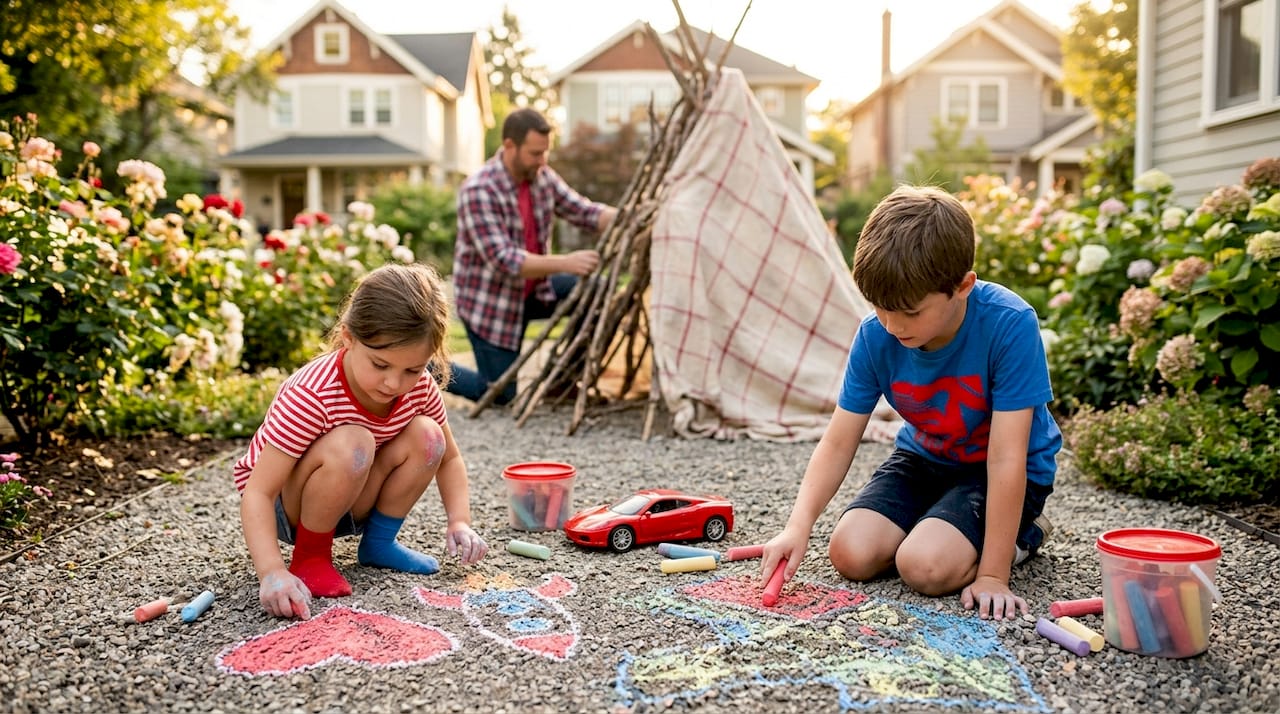
The health case for outdoor family time is strong. Screen-free outdoor adventures reduce children’s anxiety and mood disorders while reinforcing family connection. That’s not a small thing in a world where kids average over seven hours of daily screen time.
When your family includes mixed fitness levels, adapt rather than abandon the activity. Hiking with kids works best when you take frequent breaks and focus on confidence rather than the destination. A one-mile trail done with curiosity and laughter beats a three-mile trail done in tears.
Pro Tip: Pack kid-sized flashlights and rain suits before your next outdoor outing. The right gear keeps weather from canceling plans and turns a drizzly afternoon into an adventure.
3. Indoor games and activities for family bonding
Rain days and cold snaps don’t have to mean screen time by default. The best indoor games for kids and families tap into creativity, learning, and movement without requiring much space or money.
Start with creative projects. Homemade modeling dough made from flour, salt, and water costs almost nothing and entertains kids from age two through ten. Puppet theaters made from a cardboard box keep older kids busy designing characters while younger ones act out stories. For a slightly more structured option, set up a “craft museum” where each child creates three pieces and then gives the others a guided tour.
Educational indoor activities work especially well when they don’t feel like school. At-home science experiments like baking soda volcanoes or color-mixing with water and food dye satisfy curiosity and create natural conversation. Mystery and puzzle-based activities keep children engaged while supporting real cognitive development. Storytelling rounds, where each family member adds one sentence to a shared story, build language skills and produce genuinely funny results.
For active indoor time, freeze dance is a reliable hit across ages three through ten. Set up an indoor obstacle course using couch cushions, pillows, and painter’s tape on the floor. Board games and card games work for evenings when energy is lower but connection is still the goal.
Pro Tip: Rotate who picks the indoor activity each week. Children who feel ownership over the plan show up with more energy and fewer complaints. This one shift makes a bigger difference than any specific activity.
4. Outdoor vs. indoor: a quick comparison
Choosing between outdoor activities for families and indoor options often comes down to the day’s conditions, your family’s energy level, and what you have on hand. This comparison cuts through the guesswork.
| Factor | Outdoor activities | Indoor activities |
|---|---|---|
| Cost | Low to free (parks, backyard) | Low to free (crafts, games) |
| Equipment needed | Minimal (balls, chalk, gear) | Minimal (supplies at home) |
| Best age range | 2 and up, scales well | All ages, easy to adapt |
| Weather dependent | Yes | No |
| Physical engagement | High | Low to moderate |
| Educational value | Moderate to high | High (crafts, experiments) |
A few situational notes worth keeping in mind:
- Small spaces: Indoor obstacle courses, craft stations, and card games work in apartments just as well as large homes.
- Large families: Outdoor games like tag and scavenger hunts scale to any group size without extra cost.
- Budget-conscious households: Both categories offer free and near-free options. Prioritize activities that use what you already own.
The real mistake most families make is treating these two categories as either-or. The best family event planning checklist mixes both, rotating based on season, energy, and who needs what that week. Spontaneity matters too. Leave at least one day per week unscheduled. Some of the best family memories come from unplanned afternoons.
5. How to build your own personalized checklist
A good family-friendly activities checklist isn’t something you download and print. It’s something you build with your family, adjust over time, and actually use. Here’s how to put one together that sticks.
- Get family input first. Sit down and ask everyone what they’d like to try this month. Involving everyone in planning increases engagement and turns the checklist from a parent-imposed schedule into something the kids are actually excited about.
- Categorize by type. Sort your ideas into outdoor, indoor, educational, active, and creative. Aim for at least one option in each column so you have go-to ideas regardless of the day.
- Set a realistic frequency. Planning 2 to 3 structured activities per week prevents burnout and protects the unstructured downtime kids also need.
- Check logistics in advance. For any venue-based activity, confirm booking requirements, age restrictions, and operating hours before you commit to anything.
- Build in a wildcard. Add one activity per month that your family has never tried before. New experiences build connection faster than repeated familiar ones. Escape rooms, for example, offer a type of family teamwork and problem-solving that you simply can’t replicate with a board game at home.
- Make the checklist visible. Post it on the fridge or share it in a group chat. Visibility creates accountability and keeps the plan alive past week one.
Pro Tip: Review and update your checklist monthly. What worked for a four-year-old won’t automatically work for a five-year-old. Your checklist should grow with your kids.
My honest take on family activity planning
I’ve watched families come through our escape room doors with very different approaches to how they spend time together. Some have elaborate spreadsheets of kid-friendly adventure ideas. Others show up on a whim. And honestly? Neither approach alone gets it right.
What I’ve found is that the families who have the most fun aren’t the ones with the most activities planned. They’re the ones who manage expectations and stay flexible. A perfect outing on paper can fall apart when a child is tired or someone woke up on the wrong side of the bed. The families who roll with that, pivot to something simpler, and stay emotionally present are the ones who leave saying they had a great day.
My experience has also taught me that screen-free time isn’t just a parenting philosophy. It produces measurable results in how connected families feel. When there’s no device to escape to, everyone stays in the moment longer. That’s where the real bonding happens.
If there’s one thing I’d push back on in the conventional advice, it’s the obsession with variety for variety’s sake. Doing your favorite trail twice a month and adding one new thing quarterly beats an exhausting rotation of 20 different activities. Your family has rhythms. Work with them, not against them. And when you’re ready to try something genuinely different, an escape room puts everyone in the same problem, facing the same puzzle, working toward the same goal. There’s no easier way to see your family show up for each other.
— CodeBusters
Plan your next family outing at Codebustersescaperoom
If you’re looking for a fun family outing idea that goes beyond the usual park visit, Codebustersescaperoom in Colorado Springs delivers something genuinely different. Their themed escape rooms, including “Stranger 80’s,” “Past to the Future,” and “Flight of Deception,” are designed for mixed-age groups and require real teamwork to crack. Kids and adults solve puzzles together, which makes it one of the few activities where everyone is equally engaged at the same time.

As a veteran and family-owned business, Codebustersescaperoom offers private room bookings and gift vouchers, making it easy to plan ahead. Check out their Colorado Springs escape rooms to book your next family session and find the right room for your group’s size and experience level. It’s the kind of activity that belongs on every serious family event planning checklist.
FAQ
What makes an activity truly family-friendly?
A family-friendly activity suits multiple age groups safely, requires no specialized skills to start, and keeps participants engaged without frustration. Safety, accessibility, and fun for everyone in the group are the core criteria.
How many activities should families plan each week?
Sticking to 2 to 3 planned activities per week prevents burnout and leaves room for spontaneous play, which is just as important for kids as structured time.
Are escape rooms suitable for young children?
Many escape rooms, including those at Codebustersescaperoom, offer family-friendly themed rooms designed for mixed-age groups. Check specific age guidelines with the venue before booking.
What are the best free outdoor activities for families?
Classic games like tag and hide-and-seek, nature scavenger hunts, and backyard chalk art cost nothing and work for children as young as two, making them some of the most accessible options on any family checklist.
How do I get kids to stay engaged during family activities?
Involving kids in choosing the activities increases buy-in significantly. Adding mystery elements like scavenger hunts or puzzles also keeps attention longer than passive activities do.