Family Bonding Activities List: 60+ Ideas for Every Family
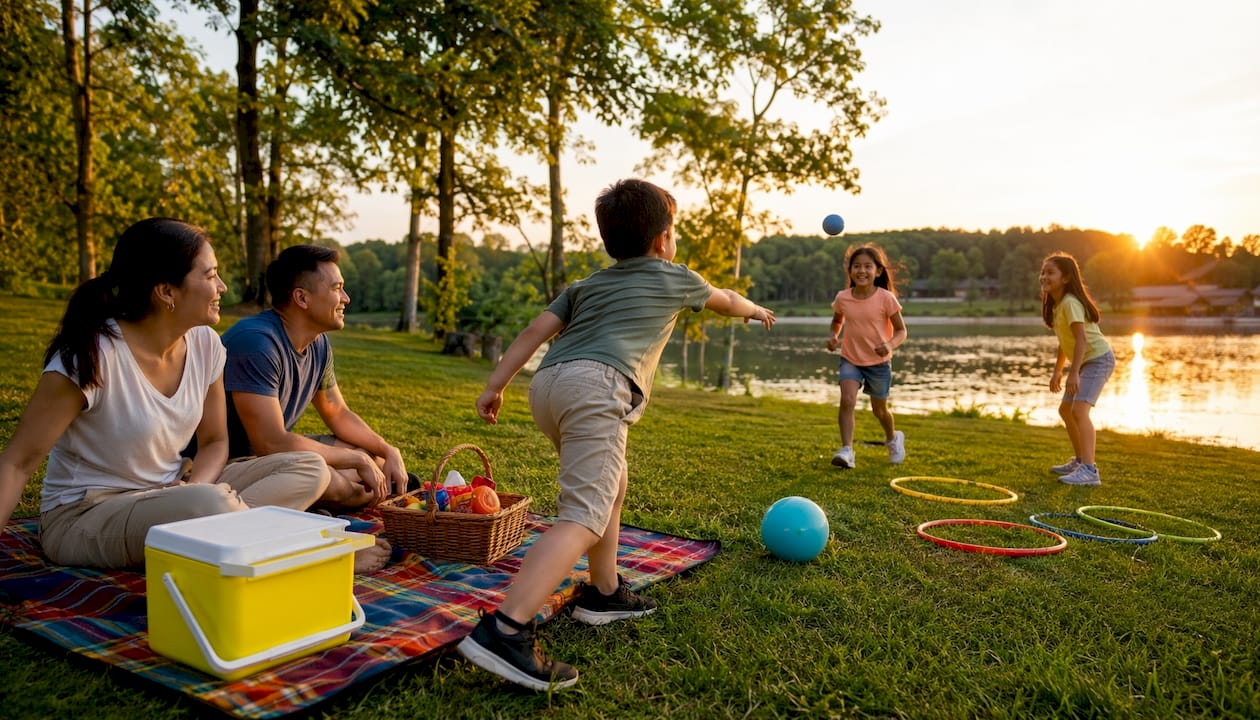
The most effective family bonding activities list covers six core categories: daily rituals, outdoor adventures, games and indoor play, creative projects, volunteering, and one-on-one time. You don’t need elaborate plans or expensive outings. Small, consistent rituals build more lasting connection than occasional big events. Here’s a quick map of what works:
- Daily rituals: Shared meals, bedtime check-ins, car conversations, weekly family meetings
- Outdoor adventures: Hiking, biking, camping, gardening, nature walks
- Games and indoor play: Board games, card games, charades, scavenger hunts, puzzle nights
- Creative projects: Cooking together, crafts, music, photography, storytelling
- Volunteering: Food drives, neighborhood clean-ups, charity walks, community gardens
- One-on-one time: Special outings, shared hobbies, reading together, personalized activities
- Seasonal traditions: Holiday baking, spring planting, summer water play, fall leaf hunts
- Tech-assisted bonding: Family video calls, collaborative playlists, virtual game nights
Each category below goes deeper, with specific ideas, practical tips, and a few surprises worth trying.
1. Daily rituals and routines that actually build connection
Consistency beats complexity every time. A family ritual doesn’t need to be elaborate to matter. A five-minute check-in at dinner, a bedtime question, or a Sunday morning pancake tradition can anchor a child’s sense of security more reliably than a once-a-year vacation.
The key is repetition. When kids know what to expect, they feel safe. When parents show up consistently for small moments, trust builds quietly over time. Parenting researchers point to shared meals and bedtime routines as two of the highest-impact daily habits a family can maintain.
Here are daily and weekly rituals worth building into your routine:
- Dinner table questions: Ask one open-ended question each night (“What made you laugh today?” or “What’s something hard you’re working through?”)
- Bedtime check-ins: A quick “rose, bud, thorn” round where each person shares a highlight, something they’re looking forward to, and a challenge
- Car conversations: Long drives are underrated. No eye contact makes it easier for kids to open up
- Weekly family meetings: Ten minutes on Sunday to plan the week, celebrate wins, and air any frustrations
- Morning rituals: A shared breakfast, a specific goodbye routine, or even a family handshake
Pro Tip: Put phones in a basket during dinner. Even one screen-free meal per day shifts the quality of conversation noticeably, especially for teens who tend to disengage when notifications compete for attention.
2. Outdoor and nature-based activities your family will actually enjoy
Physical activity outdoors does something that indoor activities rarely replicate: it relaxes the body, which relaxes conversation. Kids who won’t talk at the dinner table often open up on a trail. Parents who feel rushed at home slow down when they’re watching a hawk circle overhead.

Age-appropriateness matters here. A toddler’s “hike” is a 20-minute walk with lots of rock-collecting. A teenager’s version might be a half-day trail with elevation gain. Both count. The goal is shared time in motion, not athletic achievement.
For families new to outdoor adventures, starting local is the smartest move. State parks, greenways, and neighborhood nature trails are free and require zero planning. From there, you can scale up to camping trips or multi-day outdoor games in wilderness settings as the family gets comfortable.
Popular outdoor activities for families:
- Hiking and nature walks: Choose trails rated for your youngest member’s ability
- Backyard or community gardening: Planting seeds and watching them grow teaches patience and gives kids ownership
- Bike rides: Even a slow neighborhood loop counts as shared adventure
- Camping: Backyard camping works just as well as a campground for younger kids
- Birdwatching or nature journaling: Bring a field guide and let kids document what they find
- Water play: Sprinklers, water balloons, or a creek walk on a hot day
- Farm experiences: Programs like Family Farm Chores at Appleton Farms in Massachusetts let kids muck stalls, feed animals, and collect eggs alongside adults
Pro Tip: For outdoor water art, plan it early in the morning. Pavement heats up fast, and water silhouettes evaporate before kids finish if you wait until midday.
3. Game nights and indoor play that bring everyone together
Game nights improve communication, reduce screen stress, and create shared memories that families reference for years. The format is flexible enough to work for a rainy Tuesday or a planned Saturday tradition. You don’t need a shelf full of expensive games. Charades, 20 Questions, and story rounds require zero prep and work for ages 5 to 75.
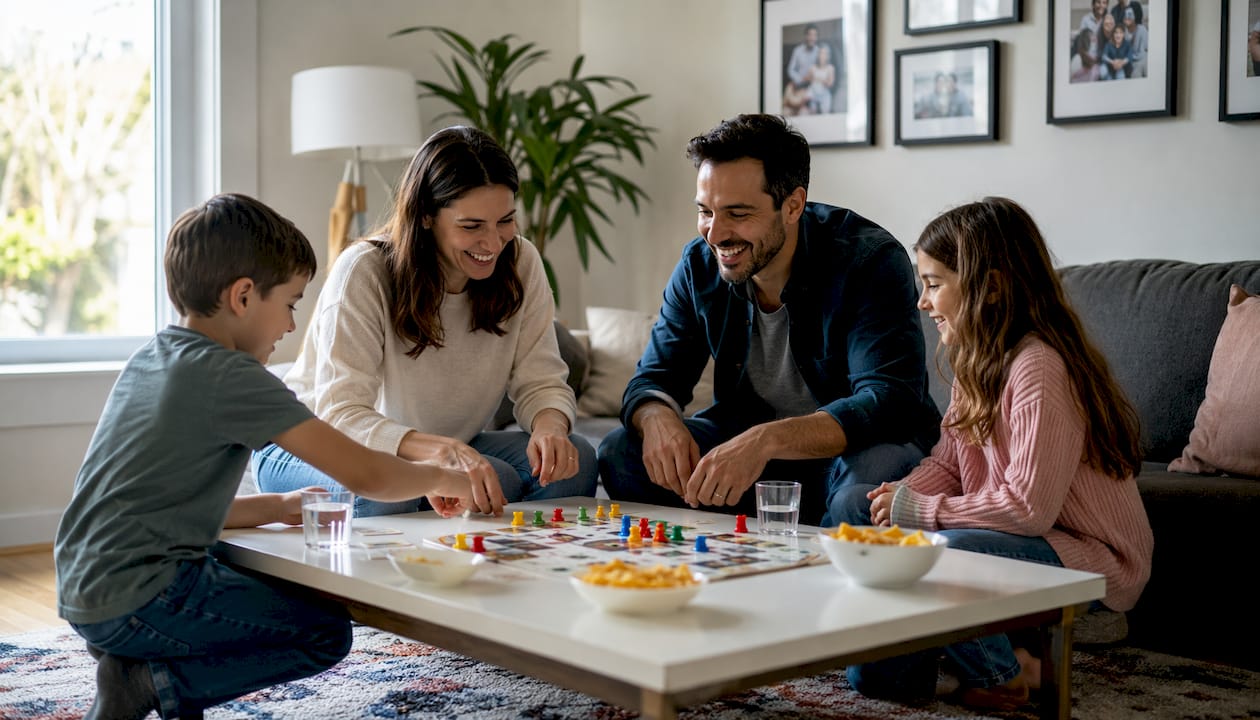
The social benefit is real. Games put everyone on equal footing. A ten-year-old can beat a parent at Uno. A grandparent can dominate at Bingo. That kind of playful competition, where the outcome genuinely doesn’t matter, is where a lot of the best family memories get made.
For mixed-age groups, the trick is choosing games where younger players can participate without feeling lost. Team formats help. So does letting kids take on roles like scorekeeper or timekeeper when they’re waiting for their turn.
Indoor game ideas for all ages:
- Classic board games: Monopoly, Scrabble, Clue, Ticket to Ride, Apples to Apples
- Card games: Uno, Go Fish, Crazy Eights, Old Maid
- No-prep verbal games: Charades, 20 Questions, Two Truths and a Lie, word association chains
- DIY games: Balloon Pop Trivia, Sock Basketball, Family Jeopardy with custom categories
- Collaborative puzzles: Jigsaw races where teams compete to finish sections
- Story-building rounds: Each person adds one sentence to a shared story
For more structured family game night ideas that work across skill levels, the format matters as much as the game itself.
4. Creative and artistic projects that spark real conversation
Shared creative projects do something games don’t: they produce something. A batch of cookies, a painted canvas, a family photo album. That tangible result becomes a memory anchor. Kids remember making it, and the conversation that happened while they were making it.
Cooking together is the most accessible entry point. Even young children can wash vegetables, stir batter, or arrange toppings. Older kids can take on full recipes. The kitchen becomes a natural place for side-by-side conversation, the kind that happens when nobody’s making direct eye contact and the pressure is off.
Creative activities worth trying:
- Cooking and baking: Pick a new recipe each week, or recreate a family heritage dish
- Crafts and DIY projects: Tie-dye, candle making, scrapbooking, building birdhouses
- Music-making: Learn a simple song together, create a family playlist, or have a living room concert
- Photography projects: Give each family member a theme and compare results
- Collaborative drawing: One big sheet of paper, everyone contributes
- Storytelling projects: Write and illustrate a short family book, or record audio stories
The cognitive and social benefits of puzzle games extend naturally into creative collaboration. When families solve or build something together, the problem-solving dynamic strengthens relationships in ways that passive activities simply don’t.
5. Volunteering and community service that bonds families around purpose
Volunteering together builds empathy and shared purpose, which deepens family bonds in a way that entertainment-focused activities can’t replicate. When a family works side by side toward something that helps others, the shared experience carries a different weight. Kids who volunteer with their parents consistently show stronger empathy and a clearer sense of family identity.
Finding local opportunities is easier than most parents expect. Food banks, animal shelters, community gardens, and neighborhood clean-up organizations almost always welcome family volunteers, including young children. Many have specific family-friendly programs on weekends.
Easy family volunteering ideas:
- Food bank sorting: Most food banks have simple tasks suitable for kids as young as five
- Neighborhood clean-up: Grab trash bags and spend an hour improving a local park or street
- Charity walks and runs: Many 5K events welcome walkers and strollers
- Card-making for seniors: Write notes or create artwork for residents at local care facilities
- Community garden work: Planting and harvesting alongside neighbors
- Animal shelter visits: Some shelters allow families to socialize dogs or help with supply drives
- Toy or book drives: Collect and donate items as a family project
The act of choosing a cause together matters too. Let kids weigh in on where the family volunteers. That ownership makes the experience more meaningful for them.
6. One-on-one parent-child bonding ideas
Individual time with each child does something group activities can’t. It tells a child: you specifically matter to me. In busy households with multiple kids, that message can get lost. Carving out even 20 minutes of undivided one-on-one time per week makes a measurable difference in attachment and trust.
The activity itself matters less than the attention. Reading together, taking a walk, cooking a meal, or running an errand can all become bonding moments when the parent is fully present and the child knows the time is theirs. Tailoring the activity to the child’s current interest signals that the parent is paying attention.
One-on-one ideas that work across ages:
- Reading together: Let the child choose the book, even if it’s the same one for the tenth time
- Special outings: A breakfast date, a trip to a bookstore, or a visit to a museum they’ve been curious about
- Shared hobbies: Join them in something they love, whether that’s Legos, drawing, or a video game
- Cooking a meal together: Let them pick the menu and lead as much as they’re able
- Nature walks with a mission: Collect rocks, identify birds, or photograph interesting things
- Interview sessions: Ask them questions about their life, dreams, and opinions. Record it if they’re willing
The family-friendly activities checklist from Codebusters Escape Room breaks down age-appropriate options that translate well to one-on-one settings.
7. Tips to maximize the impact of your family bonding time
The biggest mistake families make is treating bonding activities as events rather than habits. A single memorable outing is great. A weekly ritual that everyone expects and looks forward to is what actually changes the texture of family life.
Consistency is the lever. Parenting experts consistently point to regular shared rituals as more predictive of family closeness than the scale or cost of any individual activity. A Tuesday pizza night that happens every week beats a quarterly theme park trip for building the kind of security kids carry into adulthood.
Practical tips for making bonding activities stick:
- Set a recurring time: Same day, same general format. Predictability is the point
- Let kids lead: Rotate who picks the activity. Ownership increases buy-in
- Put screens away: Intentional unplugged time during family activities shifts the quality of engagement, especially for teens
- Keep it low-pressure: The goal is connection, not performance. Abandon activities that feel like obligations
- Debrief afterward: A quick “what was your favorite part?” closes the loop and reinforces the memory
- Document it: Photos, a shared journal, or even a family group chat thread creates a record kids will value later
Pro Tip: Create a “family activity jar.” Write 20–30 activity ideas on slips of paper and let a different family member draw one each week. It removes the decision fatigue of planning and gives everyone a turn to be surprised.
For science-backed strategies on maximizing shared fun, the research consistently points to presence over production.
8. Seasonal and holiday-themed activities worth making into traditions
Seasons give families a natural rhythm for new activities. The calendar itself becomes a bonding tool when families attach specific rituals to specific times of year. Kids remember these seasonal traditions with unusual clarity, partly because they’re anticipated, and partly because they repeat.
Winter and the holidays offer the most obvious entry points: baking cookies, decorating the tree, watching the same movie every december. But the other seasons are just as rich. Spring is perfect for planting a garden together. Summer opens up water play, outdoor movie nights, and firefly-catching at dusk. Fall brings apple picking, pumpkin carving, and leaf pile jumping.
Seasonal ideas by time of year:
- Winter: Holiday baking, ornament-making, caroling, building snow forts, New Year’s Eve family countdown
- Spring: Planting seeds, spring cleaning as a team, Easter egg hunts, kite flying
- Summer: Water balloon fights, backyard camping, s’mores nights, Fourth of July traditions, magical family traditions tied to summer milestones
- Fall: Apple picking, pumpkin carving, hayrides, gratitude lists before Thanksgiving, leaf-collection art projects
The power of seasonal traditions is that they become part of a family’s identity. “We always do X in october” is a sentence that carries weight for children long into adulthood.
9. Technology-assisted bonding that actually works
Technology gets a bad reputation in family life, and often deservedly so. But used with intention, it can be a genuine bonding tool rather than a distraction. The distinction is whether screens are pulling family members into separate worlds or bringing them into a shared one.
Shared digital playlists, scheduled virtual game nights, and collaborative apps can bridge screen time with real connection, especially for families with members who live apart. A grandparent joining a weekly video call for a virtual game night is a meaningful ritual, not a screen problem.
Technology-assisted bonding ideas:
- Family video calls: Schedule a standing weekly call with extended family, especially grandparents
- Shared music playlists: Each family member adds songs to a collaborative playlist and explains their picks
- Virtual game nights: Platforms like Jackbox Party Packs work well over video calls, with players using their phones as controllers
- Collaborative apps: Apps designed for shared journaling, photo albums, or family calendars keep everyone connected
- Family group chats: A dedicated thread for photos, jokes, and updates creates a low-pressure daily touchpoint
- Watch parties: Stream the same movie simultaneously with distant relatives using synchronized platforms
- Online escape rooms: Cooperative puzzle-solving over video call works surprisingly well for mixed-age groups
The rule of thumb: technology bonds when it’s a shared activity, not a parallel one. Watching separate screens in the same room is not the same as playing a game together on one screen.
10. Family storytelling and sharing traditions that last generations
Storytelling is one of the most powerful bonding tools a family has, and one of the most underused. Research on family rituals, including a major review by Fiese et al. in the Journal of Family Psychology, shows that looking through old photos, cooking heritage recipes, and storytelling are among the strongest predictors of family closeness and children’s emotional health.
The reason is identity. When children hear stories about where their family came from, what their grandparents survived, or what their parents were like as kids, they develop a sense of belonging that extends beyond their immediate household. That “we” feeling is protective.
Storytelling traditions worth starting:
- Family interview nights: Record a grandparent or older relative telling stories about their childhood
- Heritage recipe nights: Cook a dish tied to family history and tell the story behind it
- Photo album sessions: Pull out old albums and let older family members narrate
- Story-round games: Each person adds a sentence to a shared fictional story, building it together
- Family history projects: Build a simple family tree, research a surname’s origin, or map where relatives have lived
- Gratitude storytelling: At dinner or bedtime, share one story from the week that you’re grateful for
The role of storytelling in immersive experiences shows how narrative creates emotional investment and shared memory, a dynamic that applies just as powerfully to family life as it does to entertainment.
11. Physical fitness and sports activities that work for all ages
Active play is one of the easiest ways to bond without it feeling like bonding. Nobody’s sitting across a table trying to have a meaningful conversation. They’re just moving, competing, cheering, and laughing. The connection happens as a byproduct.
The key for mixed-age families is choosing activities where the gap between skill levels doesn’t create frustration. Relay races, swimming, yoga, and walking are naturally inclusive. Team sports like kickball or volleyball can be structured so younger kids participate without feeling outmatched.
Physical activities that work across generations:
- Family yoga: YouTube channels offer free family-friendly sessions that work for all ages
- Relay races: Backyard relays with silly challenges (egg-and-spoon, three-legged race) level the playing field
- Swimming: Community pools and lakes work for every age and ability
- Bike rides: Even slow neighborhood loops count as shared movement
- Kickball or wiffle ball: Low-stakes versions that prioritize fun over competition
- Dance parties: A living room playlist and no rules. Toddlers and grandparents both win
- Family Olympics: Create six mini-events, assign points, and crown a champion at the end
Group fitness as a family habit also models healthy behavior for kids in a way that lectures never do. When parents move, kids move.
12. Travel and exploration activities that create lasting memories
Travel doesn’t have to mean expensive flights or resort hotels. For most families, the most memorable trips are the ones with the most shared problem-solving: the road trip where everyone got lost, the camping weekend where it rained, the day trip to a town nobody had heard of. Friction, handled together, builds closeness.
Day trips are the most accessible form of family exploration. A two-hour drive opens up state parks, small towns, historic sites, museums, and local festivals that most families never visit despite living nearby. The planning itself can be a bonding activity: let kids research the destination, pack their own bags, and navigate with a paper map.
Travel and exploration ideas for families:
- Road trips with kid-chosen stops: Let each family member pick one stop along the route
- Day trips to nearby towns: Explore somewhere within two hours that nobody’s been before
- State and national parks: America’s park system is one of the best free family resources available
- Local festivals and fairs: County fairs, food festivals, and cultural events are low-cost and high-engagement
- Museum days: Natural history, science, and children’s museums offer structured exploration for all ages
- Escape room experiences: Immersive, story-driven puzzle experiences like those at Codebusters Escape Room in Colorado Springs put families in a shared challenge that demands communication and teamwork
The best travel memories rarely come from the most expensive destinations. They come from the moments when something went sideways and the family figured it out together.
Key Takeaways
Consistent, repeated family rituals build stronger bonds than any single elaborate outing, and the best activities are those your family will actually do again next week.
| Point | Details |
|---|---|
| Consistency over complexity | Small daily rituals like shared meals and bedtime check-ins build more lasting connection than occasional big events. |
| Six core categories | Daily rituals, outdoor play, games, creative projects, volunteering, and one-on-one time cover the full range of effective bonding. |
| Storytelling builds identity | Heritage recipes, photo sessions, and family interview nights are among the strongest predictors of children’s emotional health. |
| Technology can bond | Shared playlists, virtual game nights, and family video calls create connection when screens are used as a shared activity, not a parallel one. |
| Let kids lead | Rotating who picks the activity increases buy-in and signals that every family member’s preferences matter. |