How escape rooms support local communities in Colorado Springs
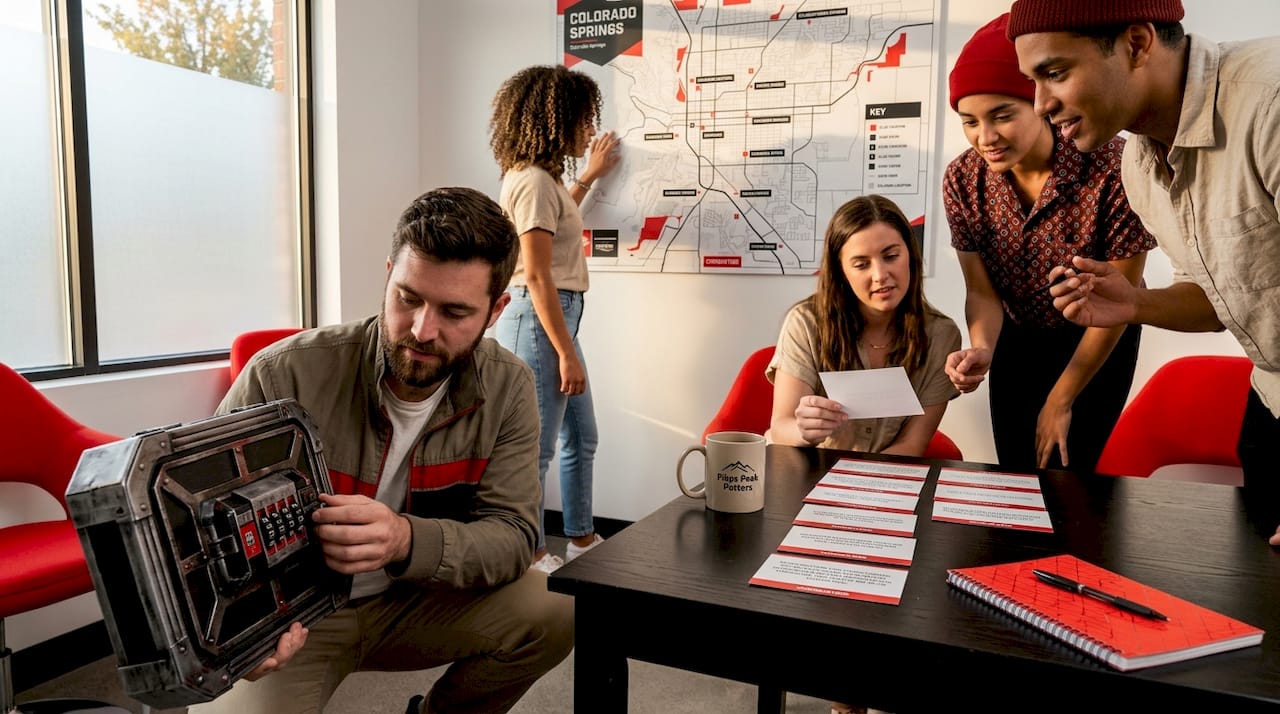
Escape rooms are often dismissed as a novelty, a quick thrill for birthday parties or team outings. But that label seriously undersells what a well-designed escape room can do. Mission-driven escape rooms can measurably build targeted competencies, from privacy awareness to healthcare knowledge, in ways that translate into real community benefit. In Colorado Springs, local organizers and event planners are starting to recognize this potential, and the evidence behind it is stronger than most people expect.
Table of Contents
- The basics: What escape rooms bring to a community
- Education meets entertainment: Proven community skills and learning
- Collaboration, inclusion, and what can go wrong
- How local organizers and groups can maximize the impact
- Why thoughtful design, not just fun, determines community impact
- Bring the benefits of escape rooms to your Colorado Springs community
- Frequently asked questions
Key Takeaways
| Point | Details |
|---|---|
| Beyond entertainment | Escape rooms offer community-building and educational benefits, not just fun. |
| Research-backed impact | Measured outcomes like teamwork and privacy competencies have been achieved with mission-driven escape rooms. |
| Success requires good design | Well-designed group structures and facilitator guidance are crucial for real community value. |
| Local potential | Event organizers can maximize outcomes by aligning escape room experiences with local priorities. |
The basics: What escape rooms bring to a community
Now that we’ve challenged the “just for fun” stereotype, it’s important to clarify what escape rooms actually offer at their core. An escape room is a timed, interactive experience where participants solve a series of puzzles, riddles, and challenges to reach a goal, usually escaping a themed space within 60 minutes. The format is adaptable, and that adaptability is precisely what makes it so valuable for community purposes.
In Colorado Springs, escape rooms range widely in theme and design. You’ll find rooms built around science fiction, historical mystery, horror, and adventure narratives. But the most socially significant formats go further, using storytelling and puzzle mechanics to teach real skills and reflect community values. These mission-driven rooms can measurably build targeted competencies that translate into community benefit when aligned with local priorities like education, health, or public awareness.
Here’s what a well-designed escape room consistently delivers for participants and communities:
- Collaborative problem-solving that mirrors real-world teamwork challenges
- Communication under pressure, building active listening and role-sharing habits
- Critical thinking applied through puzzles that reward logic and lateral thinking
- Inclusive participation, when rooms are designed to offer multiple entry points for different skill sets
- Local connection, especially when room themes reflect regional culture or community priorities
When families and groups in Colorado Springs talk about what they love most about escape rooms, the conversation often goes beyond the thrill of the clock. Parents describe watching their kids take the lead. Coworkers describe finding out who in their group naturally organizes and who thinks laterally. These moments are not accidents. They’re by design.
“The value of an escape room isn’t in whether the group escapes. It’s in what the group learns about itself during the attempt.”
For a side-by-side look at how escape rooms stack up against other types of group experiences, the breakdown of escape rooms vs other games makes clear why the format stands apart. And local families have shared detailed insights in Colorado Springs escape room reviews about how teamwork played out differently for them than they expected.
Education meets entertainment: Proven community skills and learning
With a basic understanding of their core value, let’s look deeper at how escape rooms are delivering measurable learning and growth for communities through educational missions. The research here is specific, and the numbers are meaningful.
A landmark review identified three flagship examples of escape rooms delivering documented community outcomes:
| Educational theme | Participants | Key outcome measured |
|---|---|---|
| Information privacy | 81 adults | Developed 5 distinct privacy competencies |
| Radiology and healthcare | 900+ total | Exit surveys showed improved teamwork and learning |
| Tuberculosis (TB) awareness | 100+ participants | Active learning, stigma reduction potential |
These are not hypothetical outcomes. They reflect structured programs where educational escape rooms built competencies that go far beyond what a traditional lecture or pamphlet could achieve. The TB-themed room, for example, was developed with input from more than 25 TB champions and specifically designed to move knowledge transfer away from passive lecturing toward active, experiential learning.
What makes these outcomes visible? Evaluation design. Programs that produce measurable community impact consistently use pre/post surveys and facilitated debriefs to translate the play experience into documented learning. Without that structure, the community benefit stays anecdotal. With it, organizations can demonstrate real return on investment to funders, stakeholders, and local leadership.
For event organizers in Colorado Springs who want to introduce a learning-focused escape room experience, here’s a practical starting framework:
- Define your learning objective first. What specific knowledge or skill do you want participants to leave with? Frame this before selecting or designing any puzzles.
- Map puzzles to real-world scenarios. The most effective educational rooms connect each challenge directly to a practical situation your audience will recognize.
- Build in reflection time. Schedule a 10 to 15 minute debrief immediately after the room. This is when escape room logic puzzles translate from entertainment into embedded learning.
- Use a simple pre/post survey. Even a five-question paper survey administered before and after the experience gives you data to work with.
- Iterate based on feedback. The radiology programs with 900+ participants didn’t achieve that scale on their first attempt. Evaluation data let them improve.
Colorado Springs organizers exploring this approach can look at how integrating local missions into escape room formats creates experiences with layered value. And the practical side of escape room design for community benefit is a useful reference for anyone in the planning stage.
Collaboration, inclusion, and what can go wrong
While escape rooms can spark real community growth, there are nuances in group experiences that organizers and participants should keep in mind. Not every escape room session produces a positive group dynamic. In fact, escape-room interventions can fail when group dynamics, difficulty calibration, or emotional pressure are not managed carefully.
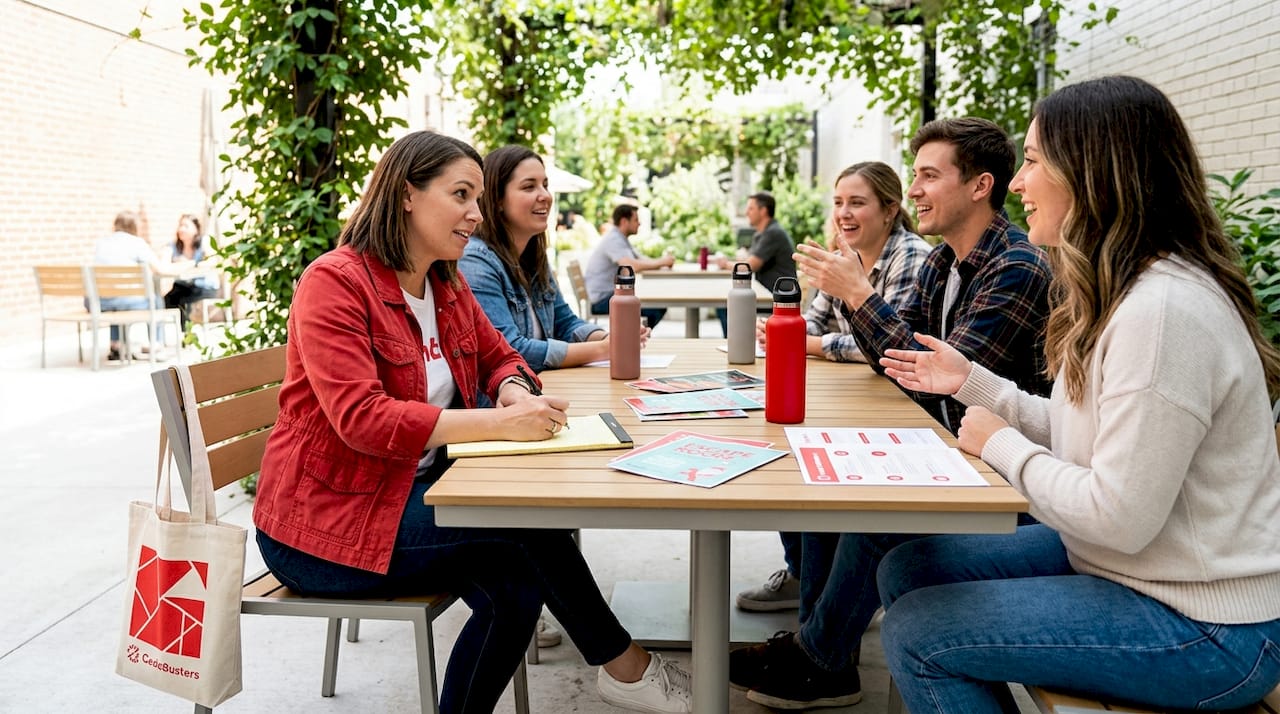
This is one of the most underreported aspects of escape room community programming. The format assumes a degree of psychological safety. When a room is too difficult, participants feel frustrated and shut down. When one person dominates, others disengage. When the theme doesn’t connect to participants’ lives, motivation collapses early.
Here’s a direct comparison to illustrate the difference:
| Factor | Well-structured experience | Poorly structured experience |
|---|---|---|
| Difficulty level | Calibrated to group skill level | Too hard or too easy for the group |
| Role distribution | Puzzles designed for multiple roles | One path that rewards only one skill set |
| Facilitation | Guided debrief included | Group leaves without reflection |
| Group size | Matched to room design | Overcrowded or under-filled |
| Emotional safety | Facilitator monitors stress signals | No intervention when frustration spikes |
The research is clear on this point: positive engagement alone does not guarantee improved outcomes. The structure underneath the experience matters as much as the experience itself.
For local organizers, this means asking harder questions before booking. Is this room designed to give everyone a role? What happens if one group member shuts down? Is the difficulty level matched to our group’s background and experience?
Here are practical ways to address these risks:
- Request a pre-booking consult. Reputable escape room operators will discuss your group’s composition and recommend the right room and format.
- Ask about group size guidelines. Rooms optimized for 4 to 6 players are typically better for equitable participation than those designed for 10 or more.
- Arrange for a facilitator. Either provided by the venue or brought in externally, a skilled facilitator bridges the gap between the experience and the learning objective.
- Communicate expectations in advance. Brief your group about the purpose of the experience so participants arrive ready to engage, not just compete.
The detailed guide to boosting team collaboration through escape rooms covers these dynamics thoroughly. And for groups navigating the selection process, the escape room selection guide offers a structured decision-making framework.
Pro Tip: Before any community-focused escape room event, hold a five-minute group orientation. Explain the learning goal, assign informal roles like “puzzle lead” or “communicator,” and remind participants that the goal is shared progress, not individual glory. This single step significantly reduces the risk of one person dominating while others disengage.
How local organizers and groups can maximize the impact
Armed with an understanding of both the potential benefits and pitfalls, here’s how local groups and leaders in Colorado Springs can make the most of escape rooms for genuine community value.
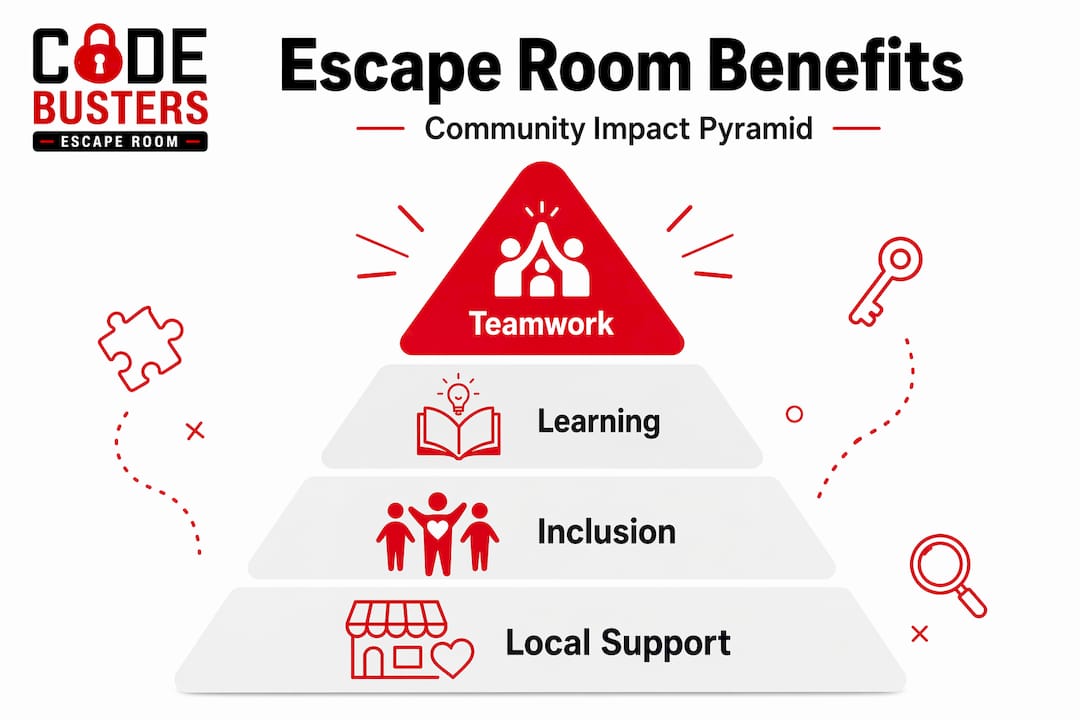
The research is unambiguous on one point: measurable community impact requires evaluation, not just participation. Groups that run escape rooms as a one-off activity with no follow-up generate goodwill. Groups that pair the experience with pre/post surveys and facilitated debriefs generate data they can act on and share.
Follow this step-by-step approach to run a high-impact community escape room event:
- Identify your community priority. Health literacy, civic engagement, youth leadership, diversity and inclusion. Choose one clear focus area so your room selection and messaging are aligned.
- Choose a room that fits the theme. Work with the venue to find a room whose narrative and puzzle structure naturally supports your objective. A room about historical problem-solving, for example, works well for civic engagement programs.
- Design a short pre-survey. Ask three to five questions about what participants already know or believe about the topic. Collect responses before they enter the room.
- Run the experience with a time buffer. Allow extra time after the room for the debrief. Cutting this step to save time is the single most common mistake community organizers make.
- Facilitate a structured debrief. Ask questions like: “What moment in the room required the most teamwork?” and “How does that connect to [your community topic]?” Guide participants from the fictional scenario back to the real-world application.
- Collect post-survey responses. Repeat your pre-survey questions and add reflection items. Compare results to demonstrate learning shifts.
- Share outcomes with stakeholders. A simple one-page summary showing before-and-after responses gives your organization credible evidence of impact for future funding or planning conversations.
For those starting to think about logistics, the guide to booking escape rooms for community events in Colorado Springs walks through the practical booking considerations in detail.
Pro Tip: Partner with the escape room venue early, not just for booking, but for design input. Experienced operators at locally owned venues know which rooms generate the most organic collaboration and can flag potential frustration points before your group encounters them.
Why thoughtful design, not just fun, determines community impact
Here’s what most community program guides won’t tell you plainly: putting a group of people in an escape room and calling it “community building” is not enough. The label doesn’t create the outcome. The design does.
We’ve seen this tension play out consistently. An organization books a room, their group has a blast, and they report “great team cohesion.” But ask them three weeks later what specifically changed in how their team communicates, and the answer is usually vague. The experience felt valuable. Whether it was valuable in a lasting way is a different question.
The research is direct: not every educational escape room improves outcomes unless difficulty and group-work structure are well designed and sensitive to participant stress, frustration, and equitable participation. That’s a high bar. It means the venue matters, the room design matters, the facilitation matters, and the follow-up matters.
What we find compelling about this evidence is that it actually raises the ceiling on what escape rooms can accomplish. When you treat the format seriously, when you design with intent, evaluate honestly, and iterate based on data, the outcomes move from “we had fun” to “we documented a measurable shift in how our community members understand and engage with this issue.”
Colorado Springs has everything it needs to lead on this front. The city has strong community organizations, active local businesses willing to partner, and a growing awareness of experiential learning’s value. The real collaboration that happens in escape rooms when they are designed well is not a metaphor. It’s a skill set being built in real time.
The challenge is moving past the assumption that booking the room is the program. It’s not. The room is the context. The program is everything that surrounds it.
Bring the benefits of escape rooms to your Colorado Springs community
Ready to put these ideas into action? Here’s where to start in Colorado Springs.
Whether you’re planning a corporate wellness day, a youth leadership program, a nonprofit awareness event, or a neighborhood team-building session, a thoughtfully chosen escape room experience can deliver far more than a good time.
CodeBusters Escape Room in Colorado Springs is a veteran and family-owned business with award-winning themed rooms designed for diverse group sizes and objectives. From rooms built for families to experiences that challenge seasoned puzzle solvers, the venue offers the range and flexibility that community organizers need. If you’re looking to pair an immersive group experience with a genuine community learning goal, reach out to the CodeBusters team to discuss how your event objectives can shape your room selection. Private bookings, group customization, and guided experiences are all on the table. Start the conversation and see what’s possible.
Frequently asked questions
How do escape rooms actually benefit local communities?
Escape rooms foster real-world skills like collaboration and problem-solving, and mission-driven rooms build competencies aligned with community priorities in education, health, and civic awareness. When thoughtfully designed, they create structured opportunities for communities to learn together.
Are there measurable outcomes from educational escape rooms?
Yes. Published studies document that educational escape rooms improved competencies in areas like information privacy, radiology teamwork, and TB awareness when programs used pre/post evaluation and structured debriefs. The evidence is based on hundreds of participants across multiple settings.
What should event planners watch out for?
Planners must manage group dynamics, difficulty calibration, and equitable participation because escape-room interventions can underperform when stress, frustration, or dominant participant behavior goes unaddressed. A skilled facilitator and a post-experience debrief are the two most effective safeguards.
Do escape rooms in Colorado Springs offer community-tailored experiences?
Many local businesses, including veteran and family-owned venues, partner with organizations to adapt themes and room formats around regional education, health, or community priorities. Private bookings give organizers the flexibility to shape the experience around a specific group goal.