Escape Room Special Requests: How to Ask and What to Share

You can make a special request for almost any part of an escape room visit: a birthday, a surprise, a mobility or sensory need, a large group or a corporate outing. The best results come from asking at booking, in writing, with specific details. Tell the venue who is coming, what you need and what would make the visit work for your group. We run private-room escape games in Colorado Springs, and this is how we see requests work best.
TL;DR
- Make your request when you book, or as soon after as you can, and put it in writing so the details follow your reservation.
- Be specific: group size, ages, the exact need (for example sensory sensitivity or wheelchair access) and what you want the day to look like.
- Accommodations are decided by the venue, so a short back-and-forth before the visit settles most questions.
- Celebrations and team events are easiest to plan when you share the occasion, the guest of honor and your timing.
- If plans change on the day, contact the venue right away instead of waiting until you arrive.
Table of Contents
- What counts as a special request
- Accessibility and sensory requests
- Birthdays, surprises and family groups
- Corporate and team-building requests
- How early to ask, and whom to contact
- Can a request change the booking, the game or the price?
- When plans change on the day
- Our perspective
- Book your private room
- FAQ
- Sources
What counts as a special request
A special request is anything beyond “book this room at this time for this many people.” Most fall into a few groups:
- Access and comfort: wheelchair or mobility needs, sensory sensitivities, vision support, a player who needs to sit or move more slowly.
- Celebrations: birthdays, surprise parties, anniversaries, bachelorette or graduation outings.
- Group makeup: mixed ages, kids with adults, a large group that needs room for everyone.
- Business and events: team building, client outings, a block of sessions for one company.
- Logistics: arriving late, a player leaving early, rescheduling, or a gift voucher for someone else.
None of these is unusual. Venues hear them every week, and a clear request lets staff prepare instead of improvising. Keep in mind that each venue sets its own policies, so what one place does is not a promise from another. When we describe how we approach things, that is our own approach.
Accessibility and sensory requests
This is the request where details matter most. A room that works well for one person can be hard for another, and the only way staff can help is if they know what you need before you arrive.
What to share
Good organizations ask for a similar set of details. The University of Virginia’s guidance for third parties with disabilities, for example, asks for your name, contact information, the nature of the disability, the accommodation you are requesting and details about the event. It then calls for a conversation to work out what is reasonable. That is a campus policy, not an escape room rule, but the structure is a useful model for any request:
- Who: the name on the booking and the person who needs the accommodation.
- What: the specific need, in plain words. “My son is sensitive to sudden loud sounds” helps more than “he has special needs.”
- What would help: the adjustment you have in mind, such as extra time to look around, a quieter start or a clear path through the space.
- The booking: room, date, time and group size.
- How to reach you: a phone number or email you will actually check.
You only need to share what is relevant to the visit. You decide how much personal detail to give.
Examples of what people ask for
The IBCCES Accessibility Card Program lists common examples of accommodation needs: sensory sensitivities, wheelchair access, physical or mobility restrictions and visual assistance or guidance. The same page explains that the card is a pre-registration document, not a ticket, that it does not guarantee any benefit and that accommodations remain at the attraction’s discretion. If you carry a card like this, mention it when you contact the venue, and still describe your needs in your own words.
For escape rooms, these needs often come down to a few practical questions:
- Is the space step-free, and how wide are the doorways and passages?
- Does the room involve crouching, climbing or standing for long periods?
- Are there dim lights, sudden sounds or flashing effects?
- Can a player step out and take a break?
We cover the physical side of the experience in our guide to escape room physical requirements, and our note on taking a bathroom break during a game answers one of the most common comfort questions.
Why to ask early
The Arts & Culture Accessibility Hub recommends that organizations name a clear point of contact, say how to request accommodations and confirm the details at least 72 hours before an event. As a guest, you can mirror that. Ask when you book, then check in again a few days before your visit so everyone is working from the same plan.
Thinking of a session as something that can be shaped around the people playing is a sound habit for any host. If you like that idea, planning a session around players is a good example of how flexible preparation makes an immersive experience smoother for everyone at the table.
Birthdays, surprises and family groups
Celebrations are the most common reason people write to us. The details that help most are simple:
- The occasion and the guest of honor. Tell the venue whose birthday it is and their age. Staff can then welcome the group in a way that fits.
- Whether it is a surprise. If the guest of honor does not know, say so when you book and again when you arrive, so nobody gives it away at the front desk. Our guide on why escape rooms suit surprise parties walks through how to plan one.
- Ages in the group. A mix of kids and adults changes which room is a good fit. See our notes on escape room age limits and our family escape room planning guide.
- Arrival time. If guests are traveling from different places, build in a little time for everyone to gather before the game starts.
- Budget questions. If you want to know what a birthday outing may cost, start with our article on escape room birthday cost.
Because every game at CodeBusters is a private room, your group plays together without strangers joining. That makes personal touches easier: a birthday group can play at its own pace and share the moment with only the people it chose.
Choosing a room for the occasion
The theme matters as much as the logistics. We have thirteen rooms across two Colorado Springs locations, from the 80s-inspired Stranger 80’s rooms to a pirate ship and a real airplane setting. A group that loves history may enjoy one story, while a group of teens might want something more adventurous. Our escape room selection guide helps you match a room to your group, and you can see every option on our rooms page. When you write to us, mention the vibe you want. Tell us whether your group likes puzzles, story, atmosphere or a challenge, and we can point you toward a fit.
Corporate and team-building requests
Work groups have a different set of needs. The person booking is often handling a budget, a calendar and a mix of personalities, so the request should be organized.
Share these with the venue:
- Headcount, and how firm it is. Say whether the number may change, so you can plan the right room or rooms.
- The goal. Is this a reward, a new-team icebreaker, a client outing or a holiday event? The goal helps decide between one large group and several smaller teams.
- Split teams. If you have more people than one room holds, ask about booking several sessions close together so the team can compare results afterward.
- Timing. Weekday lunch breaks, after-work slots and weekend outings each work differently. Tell us the window you have.
- Accessibility within the team. Ask about needs for any colleague early, quietly and in writing, using the details listed above. That way no one is singled out on the day.
- Paperwork. Ask what the group needs to sign. Our page about the escape room waiver explains what to expect.
For parties and company outings, our group events page is the place to start. Several of our rooms suit larger groups, and we can talk through which arrangement fits your headcount.
How early to ask, and whom to contact
There is no single deadline that applies everywhere, because each venue sets its own. A few habits work almost anywhere:
- Ask when you book. Online booking forms usually have a notes field. Use it for the short version of your request.
- Follow up with a direct message. For anything involving access, health or a surprise, send an email or call so a person reads it and can reply.
- Allow time for a conversation. The UVA guidance asks third parties to reach out at least seven calendar days ahead so there is time for an interactive process. That is that university’s own rule, but it shows why a week is a comfortable lead time for more involved requests.
- Confirm a few days before. A short confirmation message catches mistakes while there is still time to fix them.
- Use the contact on your booking. If you booked online, reply to your confirmation. If you are unsure which location you booked, check the confirmation before you write.
Simple requests, such as noting a birthday, do not need weeks of notice, but earlier is always easier for the team. If you are hoping to book on short notice, see our explanation of walk-in availability first, since popular times can fill up.
Can a request change the booking, the game or the price?
Sometimes, and it helps to know how before you ask.
The booking. Some requests affect which room or time slot is right. A group with a wheelchair user, for example, may need a room with a different layout than another group would. A large group may need a bigger room. Telling us before you book lets us steer you to the right choice rather than moving you later.
The game. Requests rarely change the puzzles themselves, but they can change how your group experiences them: pacing, who takes which role, how the staff introduces the room and how hints are shared. If your group is nervous, say so. Staff can set expectations in the briefing.
The price. Price depends on the room, the group size and the type of booking, and add-ons for celebrations may vary by venue. We do not publish fixed prices on this page, so check the room page or ask us directly when you book. Be wary of assuming a request is free or costs extra until a person confirms it in writing. Ask the question plainly: “Does this change the total?” and keep the reply.
If you are looking for a discount rather than an add-on, we offer discounts for military and veterans. Mention it when you book.

Time extensions
Guests sometimes ask for extra time, especially a group with a mix of ages or abilities. Policies on this differ between venues, so read our time extension policy before you plan around it, and raise the question with us in advance.
When plans change on the day
Things happen: traffic, a sick child, a guest who cannot make it. What to do:
- Call before your start time. A phone call is faster than an email on the day. Staff can tell you right away what is possible.
- Say what changed. “We are down two players” or “we will be fifteen minutes late” lets the team adjust.
- Have your confirmation handy. It shows the room, time and any notes you left earlier.
- Ask about rescheduling honestly. Terms vary by venue, and we encourage you to read the policy attached to your booking.
- Stay flexible about the game. If a player needs a break, tell the gamemaster; a short pause or a quiet moment is a reasonable thing to ask for.
A late arrival can shorten your game, because the schedule runs back to back. That is the main reason we ask guests to contact us as soon as they know.
Our perspective
We have seen thousands of groups walk through our doors, and the visits that go best are the ones where we knew something about the group ahead of time. A birthday boy who loves history, a team with one colleague who is nervous in small spaces, a family with a toddler and a grandparent: none of that is a problem when we hear about it first.
That is one reason every game we run is a private room. Your group plays alone, so we can shape the welcome, the briefing and the pace around the people who actually came. We are family and veteran owned, and we treat requests the way we would want ours treated: seriously, without fuss.
Our advice is simple. Write to us, be specific and tell us what a great day looks like for your group. With thirteen rooms across two Colorado Springs locations, including a real airplane and a pirate ship, we have something for most groups, and we would rather help you find the right fit than have you guess.
CodeBusters
Book your private room
Ready to plan? Pick a room, tell us about your group and send us your request along with your booking. We run private escape rooms at two Colorado Springs locations, and you can browse every theme on our rooms page. Planning a party or a company outing? Visit our group events page.
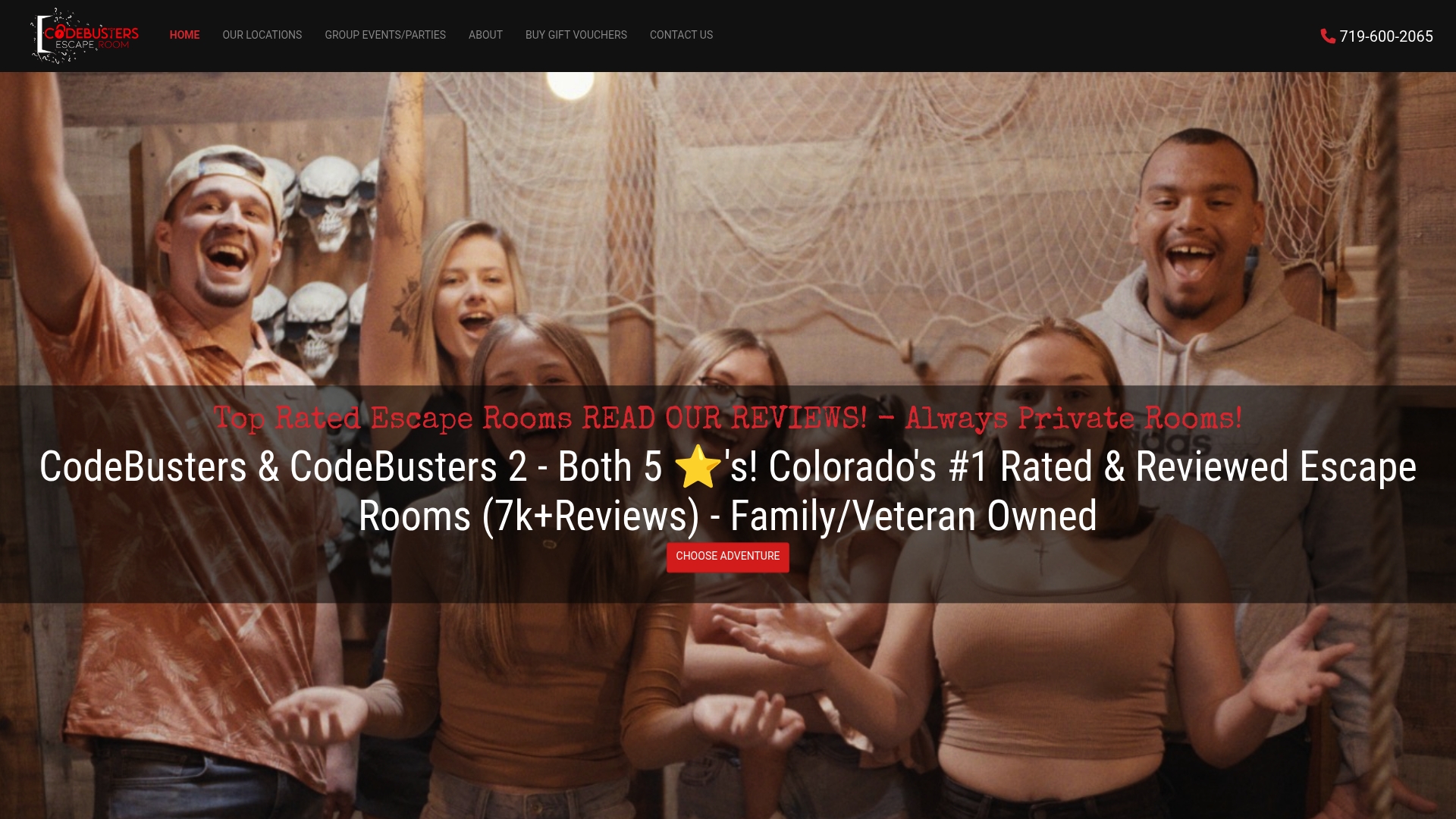
Giving a gift instead? You can buy a gift voucher for the 1520 N Union Blvd location and let the recipient choose a date that suits them.
FAQ
Can I ask for a specific accommodation, like a quieter start or wheelchair access?
Yes. Describe the need and the room you are considering, and ask the venue what is possible. Accommodations are the venue’s decision, so a conversation before your visit lets staff tell you honestly what fits and suggest a better room if needed.
How far ahead should I send a special request?
As soon as you book. For involved requests such as access needs, a week or more is a comfortable lead time, and a quick confirmation a few days before your visit helps. Simple notes, like a birthday, can be added closer to the date.
Can you keep a surprise party a secret from the guest of honor?
Tell us it is a surprise when you book and again when you arrive. Staff can then greet the group without giving it away. Our surprise party guide covers how to plan the timing.
Will a special request cost extra?
It depends on the request and the venue. Many notes cost nothing, while larger arrangements may change the booking. Ask directly whether the request changes the total and get the answer in writing.
What if someone in our group cannot make it on the day?
Contact the venue as soon as you know, by phone if it is close to your start time. Tell them how many players you now have so they can adjust. Rescheduling terms differ by venue, so check the policy on your booking.
Sources
- IBCCES Accessibility Card Program
- University of Virginia: Procedures for Third Parties with Disabilities to Request Reasonable Accommodations
- Arts & Culture Accessibility Hub: Providing Services and Fulfilling Requests
- 1985 Games: Session planning process for immersive gameplay