Escape room puzzle types explained: boost your success rate
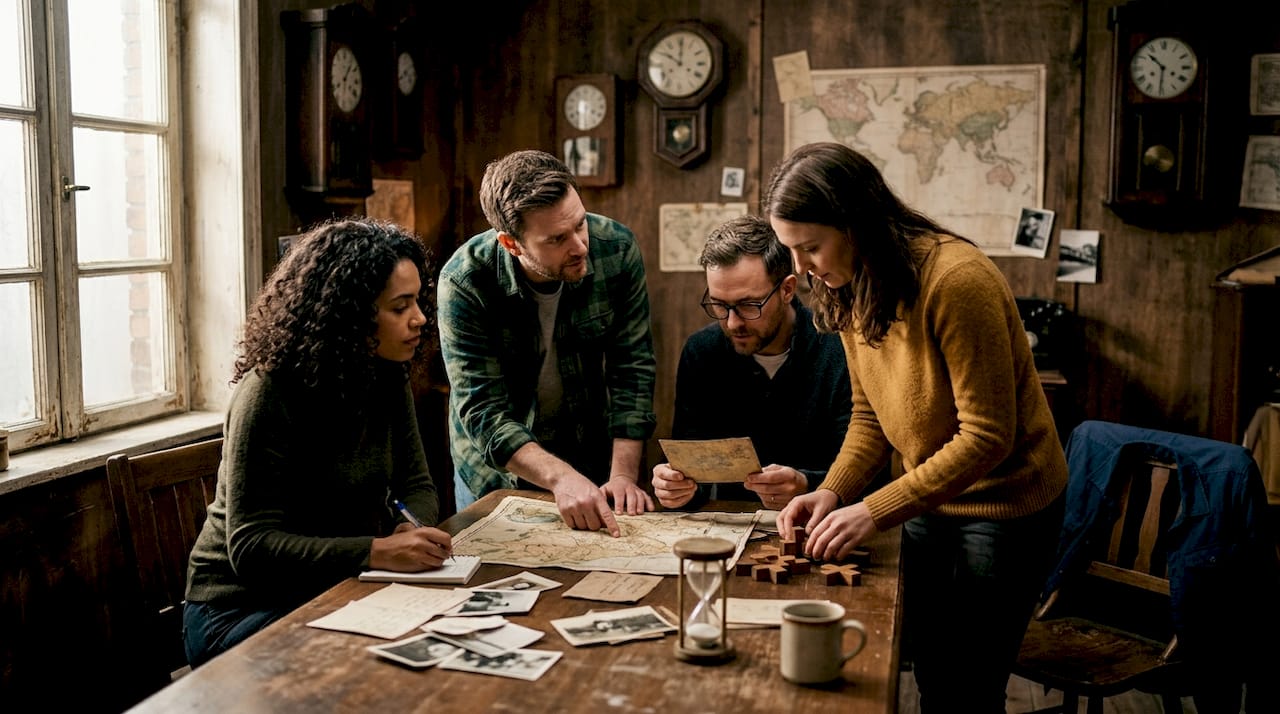
Most people walk into an escape room expecting to hunt for a hidden key, crack one big lock, and sprint out the door. The reality is far more layered. Escape rooms are built around a carefully engineered mix of puzzle types, each targeting a different part of your brain. When you understand what those types are and how they work together, your team stops guessing and starts solving. This guide breaks down every major puzzle category, reveals how designers build rooms around them, and gives you real strategies to raise your escape rate before you ever step inside.
Table of Contents
- Why puzzle variety matters in escape rooms
- The main types of escape room puzzles explained
- How escape room designers craft the experience
- Success rates and strategies: what the data shows
- Common escape room pitfalls (and how to avoid them)
- Experience Colorado’s best puzzle variety at CodeBusters
- Frequently asked questions
Key Takeaways
| Point | Details |
|---|---|
| Puzzle variety is essential | A mix of puzzle types keeps all players engaged and leverages different strengths. |
| Know your puzzle types | Recognizing the main puzzle types helps your team solve them faster and more efficiently. |
| Teamwork boosts success | Assigning roles and communicating well significantly increases your escape room win rate. |
| Hints help, but timing matters | Using hints at the right time can greatly improve your odds of escaping. |
| Avoid common pitfalls | Watch out for red herrings, bottlenecks, and poor team communication to maximize your chances. |
Why puzzle variety matters in escape rooms
A well-designed escape room is not a single challenge. It is a collection of smaller challenges that work together to create a complete experience. The reason designers mix puzzle types is simple: different people think differently. One teammate might be a natural at spotting visual patterns while another excels at math-based codes. A room that only uses one type of puzzle will leave half your group standing around with nothing to do.
Puzzle variety balances skills for different players, controls pacing, and encourages teamwork. Good design scaffolds difficulty, uses parallel engagement, and draws on multiple intelligences. That last point matters more than most players realize. When a room is built around parallel puzzles, meaning multiple challenges that can be solved at the same time, groups of four to six people stay active and engaged throughout the entire session.
The cognitive skills that escape rooms target include:
- Logic and deduction: Working through cause-and-effect relationships
- Observation: Spotting details others miss
- Pattern recognition: Identifying sequences in numbers, colors, or symbols
- Memory: Retaining information from earlier in the room
- Spatial reasoning: Mentally rotating objects or navigating physical props
- Teamwork: Coordinating actions across multiple players simultaneously
“Success isn’t just about skill, but understanding how and when to divide and conquer different puzzle types.”
If you visit Colorado Springs escape rooms with this mindset, you will immediately notice how each room is engineered to keep every player busy and challenged.
The main types of escape room puzzles explained
Once you know why variety matters, recognizing each puzzle type in the moment becomes your biggest competitive advantage. Puzzle variety supports multiple intelligences and player engagement, which is why the best rooms layer several types across a single session.
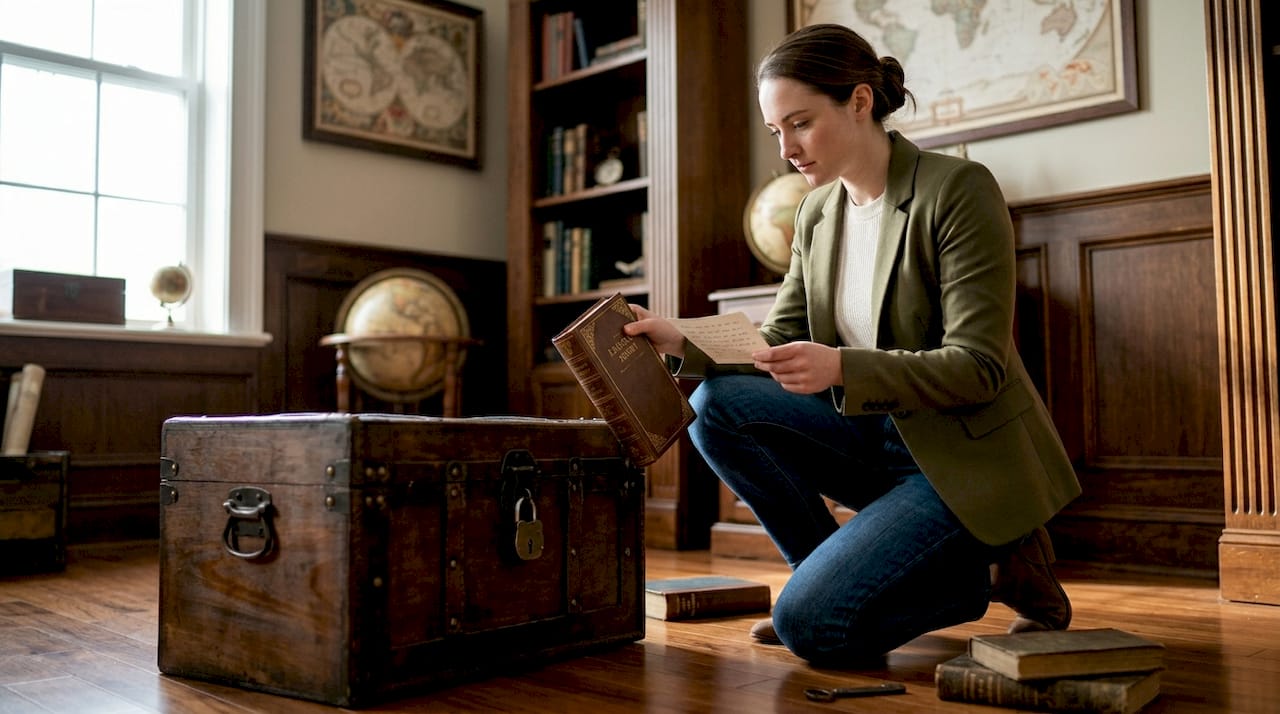
Here is a breakdown of the six core puzzle categories:
| Puzzle type | Skills tested | Example | What makes it tricky |
|---|---|---|---|
| Object puzzles | Observation, memory | Finding a hidden key inside a prop | Objects blend into the environment |
| Logic puzzles | Deduction, math | Solving a number sequence to open a lock | Multiple steps with no obvious starting point |
| Physical puzzles | Coordination, spatial reasoning | Assembling a mechanism or navigating a maze prop | Requires hands-on trial and error |
| Word/number codes | Pattern recognition, language | Decoding a cipher or cracking a combination | Easy to overthink simple solutions |
| Observation puzzles | Attention to detail | Matching symbols on a map to a wall pattern | Details are intentionally subtle |
| Teamwork challenges | Communication, coordination | Two players operating separate controls simultaneously | Requires real-time verbal communication |
Real-world examples you might encounter in Colorado Springs rooms include:
- Decoding a retro-style cipher in a themed 1980s room
- Assembling a flight instrument panel using scattered parts
- Matching timeline clues across different sections of a room
- Using a blacklight to reveal hidden symbols on props
Pro Tip: Assign teammates with different strengths to different puzzle types from the start. The fastest teams divide by skills, not just by who grabs something first.
How escape room designers craft the experience
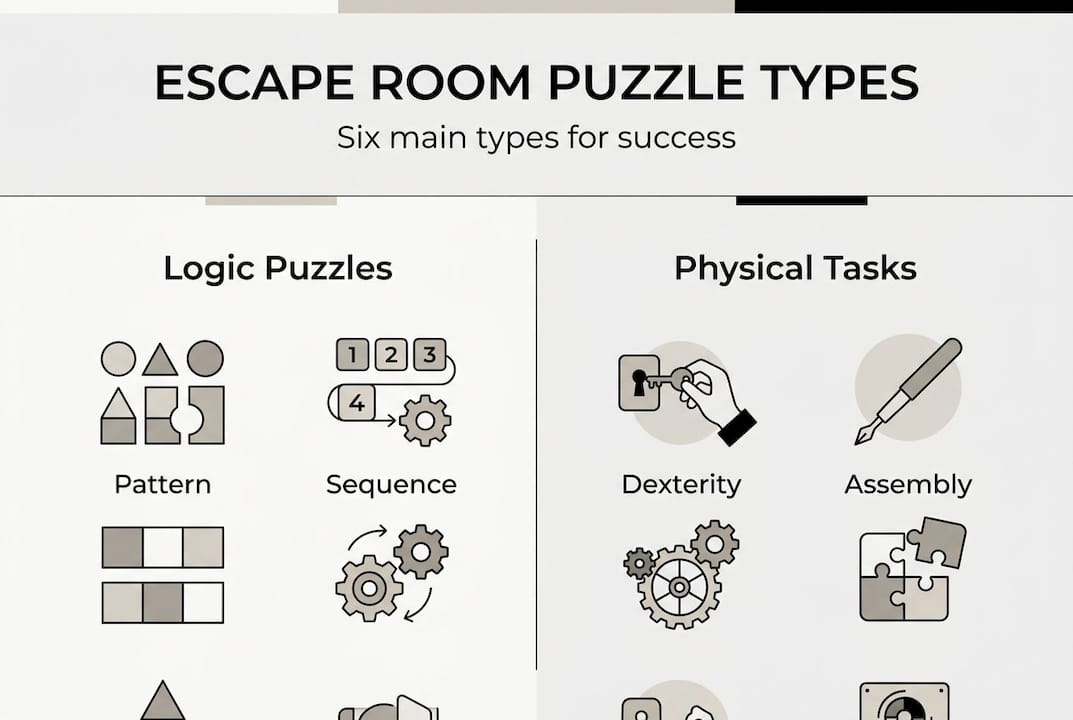
Knowing the puzzle types is one thing. Understanding how designers sequence them is what separates a frustrating run from a satisfying one. Modern escape room design follows a set of core principles that shape every room from start to finish.
A typical room is structured in three phases:
- Introduction phase: Simple, confidence-building puzzles that orient the team and establish the room’s logic system
- Build-up phase: Increasingly complex challenges that require combining earlier discoveries with new information
- Finale phase: A high-stakes, multi-step puzzle that pulls together everything the team has learned
Designers use the 10-team rule as a benchmark: if more than 30% of teams need a hint on a specific puzzle, that puzzle needs redesigning. Parallel puzzle tracks are also essential, especially for groups of four to six, because they prevent the dreaded bottleneck where everyone crowds around one lock.
“The best rooms feel fair even when they’re hard. Players should always feel like the answer was within reach.”
Designers also follow a clear list of things to avoid. Common design pitfalls include using dark lighting as fake difficulty, placing too many identical locks in one room, loading the space with excessive red herrings, creating linear bottlenecks where one stuck player halts the whole team, and writing instructions that are genuinely ambiguous rather than cleverly cryptic. Knowing these pitfalls helps you recognize when a room is well-built versus when you are fighting poor design rather than a real puzzle.
Success rates and strategies: what the data shows
Here is where things get concrete. Understanding how rooms are built is valuable, but turning that knowledge into a higher escape rate is the real goal.
| Difficulty level | Average success rate | Impact of hints | Role assignment boost |
|---|---|---|---|
| Beginner | Over 70% | Moderate | +10 to 15% |
| Intermediate | 50 to 60% | Significant | +15 to 20% |
| Advanced | 30 to 40% | High | +20 to 30% |
Overall escape room success rates sit between 30% and 60% across all difficulty levels. Hints alone can boost your team’s odds by up to 40%, and role assignment and communication increase completion chances by 15 to 30%. Those are not small numbers.
The data on escape room completion rates consistently shows that teams who communicate actively and assign clear roles outperform teams that rely on individual effort alone.
Pro Tip: Designate one person as the communicator before you start. Their job is not to solve puzzles but to track what everyone is working on, call out discoveries, and redirect teammates who get stuck. This single role change can transform a chaotic group into a coordinated team.
When you hit a wall, do not wait until the last five minutes to ask for a hint. Use hints strategically and early. A hint used at the 30-minute mark gives you time to apply the new information. A hint at the 58-minute mark just confirms what you already suspected.
Common escape room pitfalls (and how to avoid them)
Even experienced players fall into the same traps. Knowing what they are ahead of time gives your team a real edge.
The five most common mistakes that derail escape room teams:
- Ignoring team strengths: Letting the loudest person lead instead of the most qualified one for each puzzle type
- Tunnel vision: Spending too long on one puzzle while other parts of the room go unexplored
- Over-focusing: Three people crowding one lock while two teammates stand idle
- Chasing red herrings: Treating every prop as a clue when some are purely decorative
- Poor communication: Solving something and not telling the rest of the team
Common design pitfalls like excessive red herrings and misleading instructions can amplify these player mistakes. When you know a room might include decorative props, you can train yourself to move on faster instead of obsessing over something that leads nowhere.
The fix for most of these pitfalls is the same: talk more. Call out what you find, what you have already tried, and what you think connects to what. A team that narrates its thinking out loud solves puzzles faster than a team of silent individual solvers every single time.
When your group loses focus, a quick reset helps. Have everyone step back, do a verbal inventory of what has been found and what is still unsolved, and then redistribute tasks. Thirty seconds of regrouping can save ten minutes of spinning your wheels.
Experience Colorado’s best puzzle variety at CodeBusters
With a full toolkit for understanding and beating escape rooms, you are ready for the ultimate test. CodeBusters Escape Room in Colorado Springs puts every principle covered in this guide into practice across its lineup of expertly designed rooms. From the retro-coded challenges of Stranger 80’s to the layered logic of Flight of Deception, each room is built to engage every type of thinker on your team.

The friendly staff at CodeBusters keeps the challenge real while making sure every group, from first-timers to seasoned enthusiasts, has the tools to succeed. Whether you want to test your new role-assignment strategy or finally crack an advanced room, book your Colorado Springs escape room adventure and put your puzzle knowledge to work in a real room designed to reward exactly the kind of thinking you just practiced.
Frequently asked questions
What types of puzzles are most common in escape rooms?
The most common are object puzzles, logic challenges, word or number codes, physical manipulatives, observation games, and teamwork-based tasks. Good room design uses all of these to support multiple intelligences and keep every player engaged.
How do hints impact escape room success?
Hints can boost your team’s odds of escaping by up to 40% in advanced rooms, making them a smart tool rather than a sign of failure.
What’s the best way to divide tasks among teammates?
Assign roles based on individual strengths and let everyone tackle different puzzle types in parallel. Role assignment and communication increase success rates by 15 to 30%.
Which escape room mistakes should I avoid for a better chance at success?
Avoid tunnel vision, chasing fake clues, and failing to communicate discoveries with your team. Excessive red herrings and linear bottlenecks are also common frustration points that good rooms minimize.
Are some rooms designed for certain skills or ages?
Yes, many rooms indicate a recommended skill level or age range, and the best rooms scaffold difficulty so that players of all types can contribute meaningfully to the team’s success.