How escape room stories drive immersive play in 2026
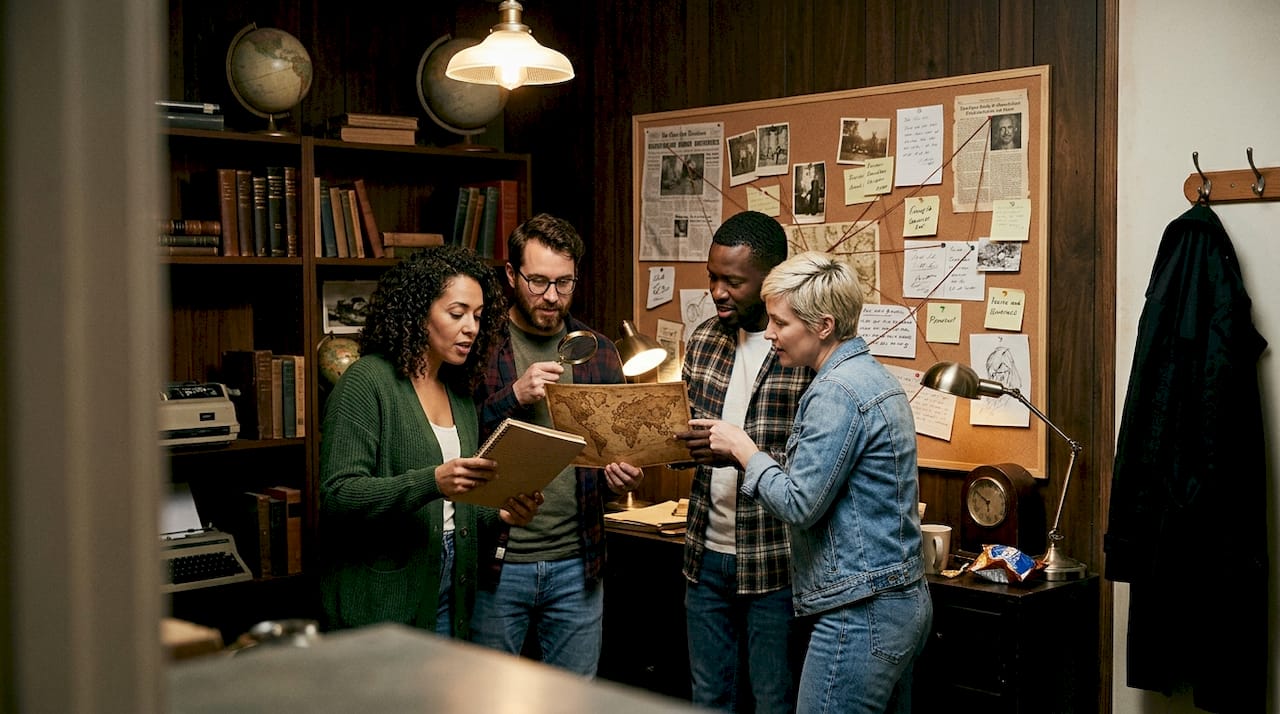
Most people assume escape rooms are puzzle boxes with a timer. Solve the lock, crack the code, get out. But the rooms that players remember for years are not the ones with the cleverest mechanisms. They are the ones where the story made your heart race before you touched a single prop. Narrative is the engine behind every truly great escape room experience, and understanding how it works will change how you choose, play, and appreciate these adventures. Whether you are a first-timer or a seasoned enthusiast, knowing what separates a forgettable room from an unforgettable one starts with the story.
Table of Contents
- Why narrative matters in escape rooms
- The anatomy of an escape room narrative
- Comparing popular escape room narrative styles
- How to evaluate or choose a story-driven escape room
- Why most escape rooms still miss the mark on narrative
- Experience compelling escape room narratives at CodeBusters
- Frequently asked questions
Key Takeaways
| Point | Details |
|---|---|
| Narratives create immersion | A strong story draws players into the escape room, making successes and failures more impactful. |
| High-quality rooms prioritize story | Top-rated rooms focus on narrative, emotional engagement, and thematic coherence over pure puzzles. |
| Styles suit different tastes | Players can choose from mystery, horror, adventure, or comedy narratives to match their preference. |
| Evaluate with expert benchmarks | Awards like TERPECA and community reviews help identify escape rooms with outstanding narrative experiences. |
Why narrative matters in escape rooms
Puzzles give you something to do. Story gives you a reason to care. That distinction sounds simple, but it reshapes everything about how a room feels from the moment you walk in.
When a room opens with a clear premise, say, you are a detective with 60 minutes to stop a heist, every action you take carries weight. You are not just finding a key. You are uncovering evidence. That emotional context transforms mechanical tasks into meaningful choices. Players report higher satisfaction, stronger teamwork, and more vivid memories when a coherent story frames their experience.
The escape room community has noticed. TERPECA top rooms emphasize large sets with scene changes and story-focused design as defining features of elite experiences. TERPECA, which stands for The Escape Room Podcast Enthusiast Choice Awards, is one of the most respected community-driven rankings in the industry. Rooms that consistently appear at the top prioritize narrative immersion over raw puzzle complexity.
That said, not every player weighs story the same way. Some prioritize theme plausibility and get pulled out of the experience when a puzzle does not fit the world being built. Others care more about fun and flow, treating story as a nice backdrop rather than a core requirement. Both views are valid, but the trend is clear: the industry is moving toward narrative depth.
“A great escape room is not a puzzle with a skin on it. It is a world you step into, and the story is the gravity that holds everything together.”
Thematic coherence, meaning every prop, puzzle, and piece of set design reinforcing the same story, is what separates rooms that feel like experiences from rooms that feel like obstacle courses. When themes break, players notice. A sci-fi room with a random medieval lock, a horror room with cheerful background music, these inconsistencies snap players out of the fiction and reduce emotional engagement.
For players who want to go deeper into how TERPECA and escape room storytelling intersect, the community’s evolving standards offer a useful benchmark. Good storytelling guides also highlight how emotional stakes and consistent world-building apply just as powerfully to escape rooms as to any other narrative form.
Key reasons narrative elevates escape rooms:
- It creates emotional investment before the first puzzle is touched
- It gives players a shared goal that goes beyond “escape”
- It makes individual puzzles feel purposeful rather than arbitrary
- It generates memorable moments that players retell afterward
Pro Tip: Before booking a room, read the premise carefully. If the description focuses only on puzzle difficulty and ignores the story setup, that is a signal about where the designer’s priorities lie.
The anatomy of an escape room narrative
Every great escape room story follows a recognizable structure, even if players never consciously notice it. Understanding that structure helps you appreciate what designers are doing and recognize when it is working.
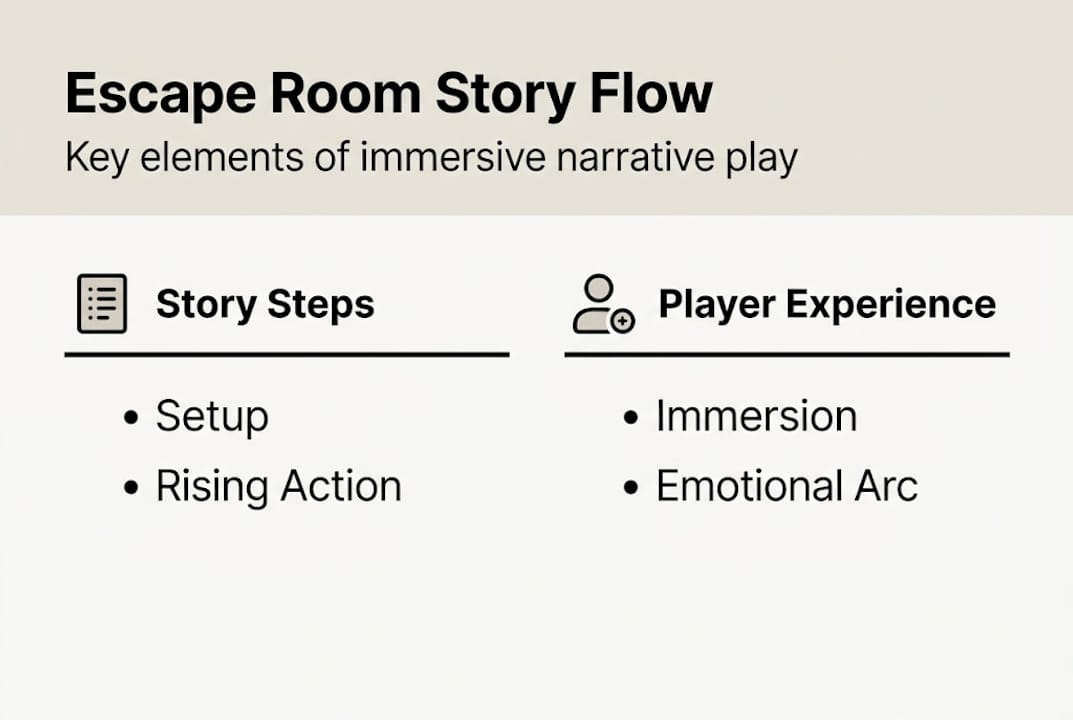
Classic narrative theory maps onto escape rooms remarkably well. The introduction sets the scene and stakes. Rising action builds tension as players uncover clues and face obstacles. The climax is that moment of peak pressure, usually the final puzzle sequence. Resolution delivers the payoff, whether that is escape, revelation, or emotional release.
High production value and scene changes are cited as key contributors to memorable stories in top-rated rooms. Moving from one physical space to another mirrors the act structure of a film or play, giving players a felt sense of narrative progress.
Here is how narrative components typically map to escape room design:
| Narrative element | Escape room equivalent | Emotional effect |
|---|---|---|
| Introduction | Opening video or game master briefing | Curiosity, anticipation |
| Rising action | Early puzzles and environmental clues | Engagement, momentum |
| Climax | Final sequence or timed challenge | Tension, urgency |
| Resolution | Escape or story reveal | Catharsis, satisfaction |
| Character | Live actor or recorded voice | Empathy, stakes |
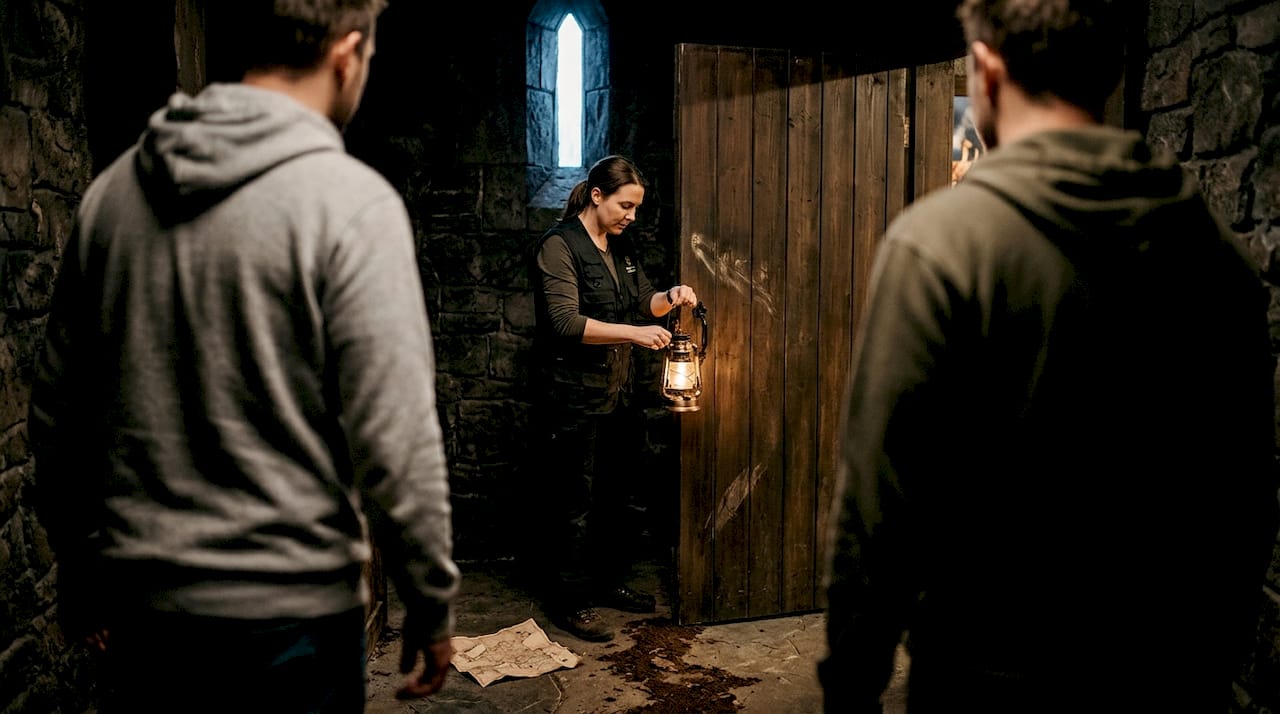
The role of live actors deserves special attention. When a character interacts with players, reacts to their choices, or reveals information through dialogue, the story stops being passive. Players become participants rather than observers. That shift is powerful. It is also one reason why rooms with actor interaction consistently rank among the most memorable.
For designers, crafting suspenseful stories means thinking about emotional beats first, not puzzle mechanics. The best rooms are built backward from the feeling they want players to have at the end.
Common narrative genres in escape rooms:
- Mystery: Players uncover a crime or secret, driving curiosity and deduction
- Adventure: A quest or journey with escalating stakes and discovery
- Horror: Fear and tension built through atmosphere, sound, and surprise
- Heist: Players are the protagonists of a daring plan, fueling confidence and teamwork
- Hybrid: Blending genres, such as comedic horror or sci-fi mystery, for broader appeal
Each genre creates a different emotional arc. Horror rooms build dread and release. Adventure rooms create empowerment. Mystery rooms reward curiosity. Knowing which arc appeals to your group is the first step toward choosing the right experience.
Comparing popular escape room narrative styles
Not all stories hit the same way. Genre shapes the entire emotional texture of a room, and matching the right genre to your group can be the difference between a great night and a frustrating one.
| Genre | Strengths | Potential drawbacks | Best for |
|---|---|---|---|
| Mystery | Rewards deduction, builds intrigue | Can feel slow without tension | Puzzle lovers, detail-oriented groups |
| Adventure | High energy, broad appeal | May sacrifice depth for spectacle | Families, first-timers |
| Horror | Intense immersion, unforgettable moments | Not accessible for all players | Thrill-seekers, experienced groups |
| Comedy | Relaxed, inclusive, low-pressure | May undercut emotional stakes | Corporate teams, casual players |
| Dramatic/Heist | Strong player agency, emotional payoff | Requires strong set design to land | Enthusiasts, competitive groups |
No single narrative benchmark exists, but community-voted awards like TERPECA help define what excellence looks like across genres. The fact that horror and dramatic rooms dominate top rankings suggests that emotional intensity, not comfort, is what players remember most.
That said, comedy rooms serve a real purpose. They lower the barrier to entry, make the experience accessible for nervous first-timers, and work beautifully for corporate team-building where the goal is connection rather than immersion. The key is knowing what your group actually wants.
For players exploring escape room options in Colorado Springs, the variety of available themes means you can match the experience to your group’s personality and comfort level. Themes like “Stranger 80’s” blend nostalgia with adventure, while “Flight of Deception” leans into dramatic tension.
When evaluating genres, consider these factors:
- Thrill tolerance: Horror rooms are not for everyone, and that is fine
- Group size: Some narratives work better with more players contributing to the story
- Replay value: Hybrid genres often offer more surprise on a second visit
- Emotional goals: Do you want to laugh, feel tense, or feel triumphant?
Exploring themes in narrative-driven games reveals that the most resonant stories tap into universal fears, desires, and curiosities, which is exactly what the best escape rooms do.
How to evaluate or choose a story-driven escape room
Knowing that narrative matters is one thing. Knowing how to spot a room that actually delivers on it is another skill entirely.
TERPECA’s 2025 results indicate that community consensus now values emotional narratives and high immersion above all else. That means players have better tools than ever to identify quality before they book.
Steps to evaluate a story-driven escape room:
- Read the room description carefully. Does it emphasize story premise or just puzzle difficulty?
- Check community reviews on TERPECA, enthusiast forums, or Google for mentions of immersion and narrative
- Look for evidence of set design investment, photos, videos, or descriptions of scene changes
- Ask the venue directly whether the room features actor interaction or a narrative arc
- Scan for awards or recognitions that specifically call out storytelling quality
Warning signs of weak narrative include disjointed themes where puzzles feel randomly assembled, a mismatch between the stated premise and the actual room design, and a lack of any emotional hook beyond “solve this and escape.”
For story-driven escape room options, look for venues that describe their rooms in terms of experience and feeling, not just difficulty ratings. Venues that invest in narrative tend to communicate that investment in how they market their rooms.
Pro Tip: Ask the game master before you start whether there is a story payoff at the end. Their answer, and their enthusiasm when giving it, tells you a lot about how much the venue values narrative.
Player emotional engagement in narratives is not just about fun. It builds genuine connection between players and creates the kind of shared memory that makes people want to come back. Rooms that deliver that are rare and worth seeking out.
Why most escape rooms still miss the mark on narrative
Here is the uncomfortable truth: most escape rooms, even well-reviewed ones, treat story as decoration rather than architecture. A printed backstory on the wall is not a narrative. A themed lock is not immersion. Real storytelling requires that every element in the room serves the emotional journey, not just the puzzle sequence.
We have seen rooms with stunning set design that completely abandon their premise by the second puzzle. The story exists in the briefing video and nowhere else. That is a design failure, not a production budget problem.
The rooms that get it right start with an emotional goal. What should players feel at minute 45? Work backward from that. Puzzles become story beats. Props become character details. The narrative standards in escape rooms are rising because players are demanding more, and the venues that understand this are building experiences that outlast the trend.
Player agency matters too. The best rooms let players feel like they are driving the story, not just unlocking it. That distinction is subtle but transformative.
Experience compelling escape room narratives at CodeBusters
If this article has shifted how you think about escape rooms, the best next step is to experience the difference firsthand.

CodeBusters Escape Room in Colorado Springs builds each of its rooms around a genuine narrative arc, not just a collection of puzzles. From the retro tension of “Stranger 80’s” to the high-stakes drama of “Flight of Deception,” every room is designed to take you somewhere emotionally. As a veteran and family owned business with award-winning experiences, CodeBusters brings the kind of care and intention to storytelling that enthusiasts actually notice. Browse available rooms, find the right fit for your group size and thrill level, and book your next story-driven adventure today.
Frequently asked questions
What is a narrative-driven escape room?
A narrative-driven escape room centers its puzzles, sets, and player actions around an immersive, coherent story that guides the entire experience. TERPECA top rooms emphasize story focus over puzzles as a defining quality of elite venues.
How do I know if an escape room has a good story?
Look for strong thematic consistency, emotional hooks, and evidence of player immersion in community reviews or awards like TERPECA. TERPECA awards highlight rooms with emotional narratives and scene changes as standout experiences.
What makes some escape room narratives more immersive than others?
Immersive narratives combine set design, character interaction, and emotional stakes that align with the story, creating a seamless player experience. High production value and actor interactions are consistently cited as key drivers of immersion in top-rated rooms.
Are all escape room players interested in story?
Not all players prioritize story, but narrative-driven rooms are increasingly popular with enthusiasts and raise the overall bar for quality. Contrasting community views show that some players value story deeply while others focus primarily on fun and puzzle flow.