Escape Room Industry Trends 2026: What You Need to Know
The escape room industry is no longer a novelty act. After more than a decade of explosive growth, the sector is entering a phase of maturation that rewards operators who understand where the money is actually moving. Tracking escape room industry trends 2026 has become a strategic necessity for anyone running, building, or investing in experiential entertainment. This article breaks down the market data, diversification shifts, technology investments, and corporate revenue dynamics that will separate thriving businesses from struggling ones over the next few years.
Table of Contents
- Key takeaways
- Escape room industry trends 2026: market growth and size
- Diversification: beyond the single escape room model
- Technology integration and the new design standard
- Corporate and group bookings as a revenue pillar
- Competitive pressure and marketing strategy for 2026
- My take on what actually separates winners from everyone else
- Experience the trends firsthand at Codebustersescaperoom
- FAQ
Key takeaways
| Point | Details |
|---|---|
| Market growth is substantial | The global market is projected to reach $31 billion by 2032, signaling long-term investment viability. |
| Diversification is now required | Single-product escape room businesses face serious revenue risk without ancillary offerings. |
| Corporate bookings drive stability | Corporate clients fill off-peak slots and spend more per booking than typical consumer groups. |
| Technology raises the bar | AR, VR, and dynamic sensory design are no longer optional for venues competing at the top tier. |
| Marketing discipline matters | Performance-driven PPC and email re-engagement are replacing passive word-of-mouth as growth engines. |
Escape room industry trends 2026: market growth and size
The numbers tell a compelling story. The global market was valued at roughly $7.9 to $8.1 billion in 2022. By 2032, that figure is forecast to hit $31 billion, driven by a CAGR of 14.8%. That kind of growth rate, sustained over a decade, is not a fluke. It reflects a structural shift in how people prioritize social and experiential spending over passive entertainment.
Regionally, the picture is nuanced. Asia-Pacific is the dominant growth engine, fueled by large urban populations, rapid disposable income growth, and a cultural appetite for group entertainment formats. Europe shows steady, mature expansion. Latin America, the Middle East, and Africa are accelerating, presenting genuine greenfield opportunities for operators with the capital and risk tolerance to expand internationally.
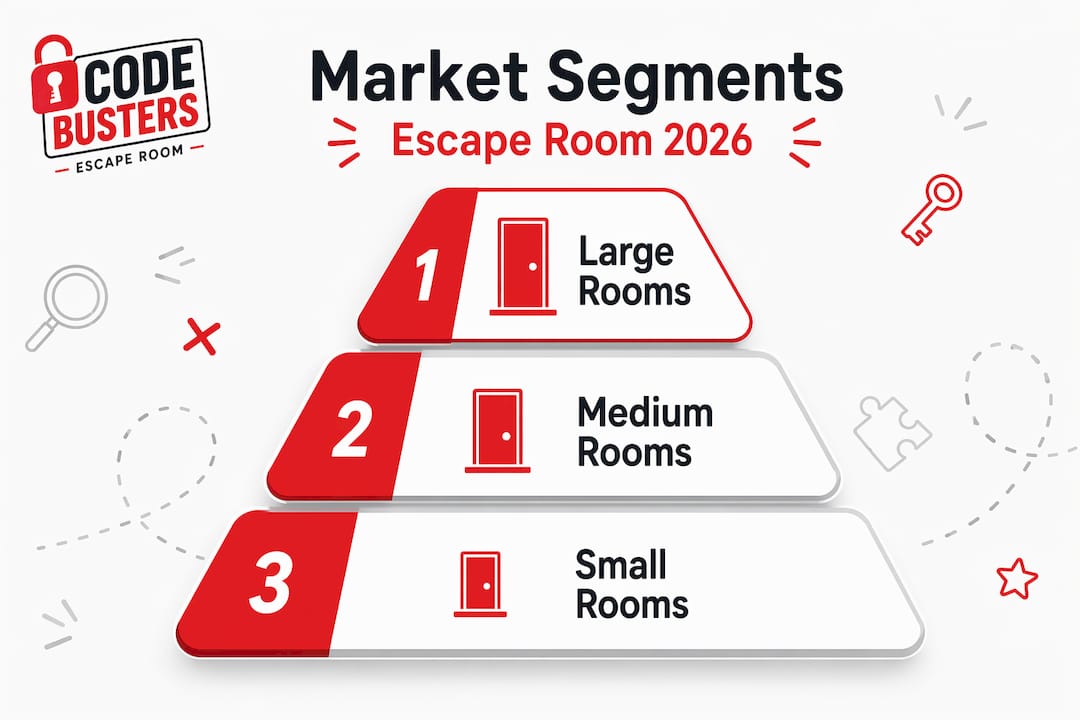
From a segment standpoint, the escape room industry overview breaks down into small, medium, and large theme rooms, each serving different audience demographics. Large immersive venues attract corporate groups and high-spend leisure customers. Smaller boutique rooms capture enthusiast communities and repeat players who prioritize puzzle complexity over spectacle. Understanding which segment you compete in directly determines your pricing, marketing, and capital investment priorities.
| Region | Growth Stage | Key Driver |
|---|---|---|
| Asia-Pacific | High growth | Urban population, disposable income |
| Europe | Steady, mature | Tourism and repeat players |
| North America | Consolidating | Corporate events, experience seekers |
| Latin America / Middle East / Africa | Accelerating | New middle class, limited competition |
Diversification: beyond the single escape room model
Here is the uncomfortable reality most operators are still resisting. Escape rooms are no longer the sole attraction but part of a diversified entertainment ecosystem. Failure to diversify leads to elevated risk, not just slower growth. Consumers in 2026 expect more from a night out, and venues offering only escape rooms are competing against multi-activity destinations that give groups more reasons to stay, spend, and return.
The practical model gaining traction is what industry insiders call the Petal Model. Escape rooms serve as the core of the business, surrounded by ancillary revenue “petals” such as murder mystery experiences, cocktail bars, themed workshops, and live events. Each petal adds a revenue stream that also cross-promotes the others. A customer who comes for a birthday escape room may book the cocktail masterclass next month.
Operators competing with immersive darts venues and activity bar formats are learning that bundled food and beverage offerings do more than raise ticket spend. They extend dwell time, which drives alcohol revenue and group satisfaction scores simultaneously.
Seasonal overlays are another underused lever. Christmas and Halloween themes applied to existing rooms generate repeat visits without requiring full room rebuilds. Smart dressing, targeted email marketing, and limited-run pricing create urgency and emotional engagement that a static room simply cannot replicate year-round.
- Diversify revenue through food, drink, and event-based programming alongside core rooms
- Use seasonal overlays to drive multiple annual touchpoints per customer without full rebuild costs
- Explore adjacent experiences (workshops, murder mysteries, team challenges) that complement escape room skills
- Build the venue layout to allow multipurpose use so the same space generates revenue across formats
Pro Tip: If you are planning a new venue or significant refurbishment, design your floor plan for flexibility from day one. Multi-use spaces that can host both escape room overflow and private events are far more capital-efficient than single-purpose rooms.
Technology integration and the new design standard
The technology conversation in escape rooms has matured past “should we add a screen?” The real question in 2026 is how to integrate physical and digital elements in a way that feels seamless to the player and defensible to competitors. Motion sensors, dynamic lighting, spatial audio, and virtual escape rooms are now the baseline expectation at top-tier venues, not differentiators.
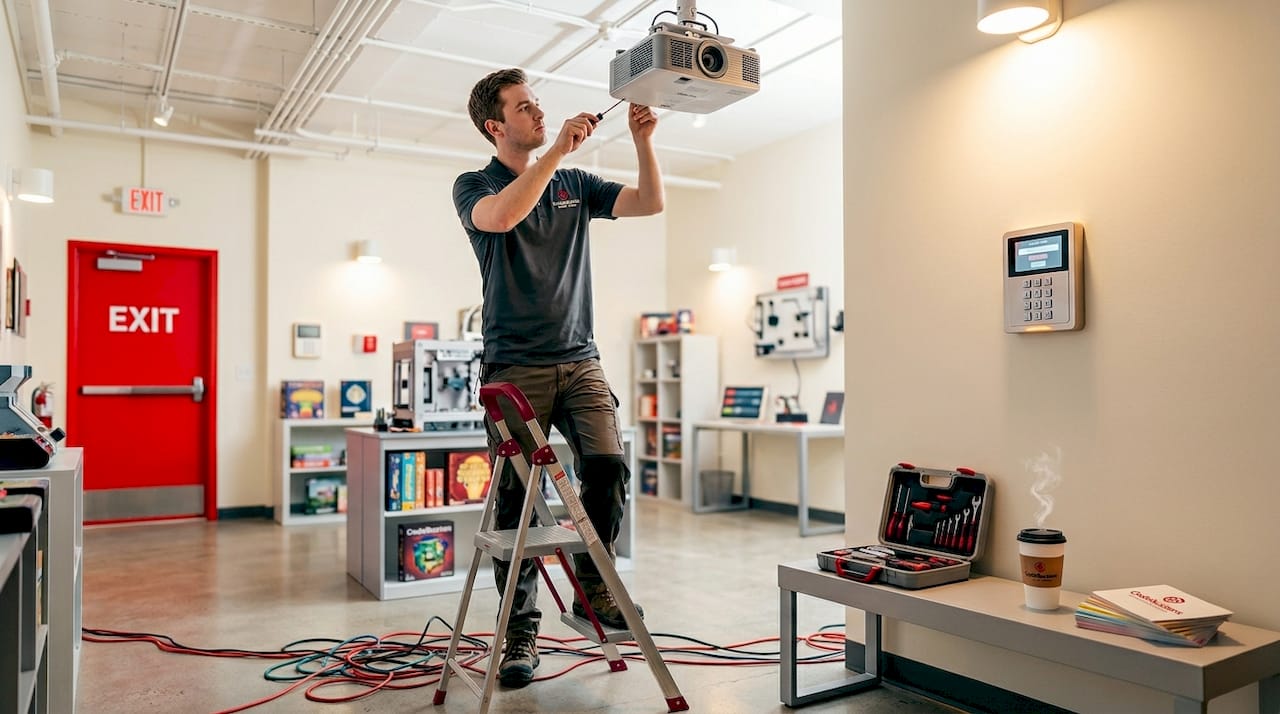
Augmented reality and virtual reality are the more contested territory. AR overlays can add narrative depth without replacing physical props, which keeps the tactile engagement that escape rooms do better than any screen-based game. VR rooms, on the other hand, work exceptionally well for remote corporate events and scalable experiences that do not require physical attendance. Several operators have found that permanent virtual offerings extend their corporate revenue into markets where they have no physical presence.
The ROI case for technology investment is also getting clearer. Research from industry roundtables shows that doubling the production budget on a game’s quality can yield more than 50% higher annual revenue from top-ranked rooms. That is not a marginal return. It suggests that the race to the bottom on room pricing is far less effective than competing on quality. Explore how puzzle design and immersive logic can serve as competitive assets beyond just props and technology.
- Integrate AR for narrative layering without removing physical puzzle elements
- Invest in spatial audio and dynamic lighting as foundational immersion tools before VR
- Build permanent virtual room options to access corporate remote markets
- Use leaderboards and social sharing mechanics to attract millennial and Gen Z demographics
Pro Tip: Do not treat technology as decoration. Every tech element should serve the narrative or the puzzle. Players notice when a screen is just filling space, and it detracts from the experience rather than adding to it.
Corporate and group bookings as a revenue pillar
Corporate bookings are the single most strategic growth area for escape room operators in 2026. Corporate clients drive sales during off-peak hours with custom challenges aligned to organizational goals, which means they solve two problems at once: filling low-utilization time slots and generating higher spend per booking than typical consumer groups.
The mistake many operators make is treating corporate bookings as a premium version of the standard consumer experience. That approach leaves serious money on the table. Corporate bookings must be treated as a core pillar with bespoke content, executive coaching partnerships, and tailored debrief structures that connect the experience to measurable organizational outcomes.
Here is a practical growth sequence for professionalizing your corporate offering:
- Build a dedicated corporate landing page that speaks to HR and L&D decision-makers, not just the person who books parties
- Create tiered corporate packages that map to specific objectives: communication, leadership, problem-solving under pressure
- Add live monitoring and post-game debrief options so facilitators can frame the experience in a business context
- Partner with executive coaching firms or corporate event agencies as referral channels
- Use case studies and testimonials from past corporate clients in all B2B marketing materials
Venue expansion is also part of this equation. Adding flexible party rooms and high-tech spaces to accommodate larger corporate and military groups demonstrates commitment to the segment and unlocks events that standard escape room venues simply cannot host. Check how escape rooms boost team collaboration to understand the business case you can make to corporate clients.
Competitive pressure and marketing strategy for 2026
The threat from digital entertainment is real and structural. E-sports and virtual gaming pose genuine competitive pressure that escape room operators cannot out-run on experience quality alone. The response has to include smarter marketing, stronger community building, and a reputation management strategy that converts satisfied customers into active advocates.
Investing in performance-driven marketing, including targeted PPC, social media retargeting, and email re-engagement sequences, is no longer optional for operators who want predictable revenue. Booking windows are getting shorter, which means last-minute availability campaigns and automated reminder sequences directly impact utilization rates.
| Marketing Tactic | Best Use Case | Expected Outcome |
|---|---|---|
| PPC (Google Ads) | Capturing high-intent local search traffic | Direct bookings from active searchers |
| Email re-engagement | Winning back lapsed customers | Higher ROI than cold acquisition |
| Social media retargeting | Converting site visitors who did not book | Reduced cost per acquisition |
| Review management | Building organic word-of-mouth | Long-term trust and search ranking |
Reputation management deserves its own attention. In a market where escape rooms vs other entertainment options compete for the same discretionary spend, a four-star average on Google outperforms paid advertising in many local markets. Responding to every review, acting on recurring complaints, and proactively requesting reviews from satisfied corporate clients creates compounding returns.
My take on what actually separates winners from everyone else
I have been watching the escape room market closely for years, and what I keep seeing is operators who confuse activity with strategy. They add a new room, run a promotion, maybe try some Google ads, and wonder why growth has plateaued. The businesses that are genuinely pulling away from the pack are doing something different. They are building multi-legged models that do not collapse when one revenue source slows down.
The consolidation happening in this industry right now is not a warning sign. It is a filter. Single-room, single-product operations that relied on novelty demand are struggling. Venues that built corporate pipelines, invested seriously in room quality, and treated diversification as a strategic priority are capturing a larger share of a growing market.
What I find most striking is how predictable the pattern is. Operators who spent double on their best room’s production budget consistently see outsized returns. That is not luck. That is the market rewarding quality and punishing mediocrity, which is exactly how a maturing industry behaves.
The customer sophistication curve is also steeper than most operators realize. Players who did their first escape room in 2015 have done dozens since. They are not impressed by a padlock and a UV flashlight anymore. Continuous innovation in puzzle design, narrative depth, and sensory experience is the only sustainable response to that reality.
— CodeBusters
Experience the trends firsthand at Codebustersescaperoom
If the trends in this article describe where the industry is heading, Codebustersescaperoom in Colorado Springs represents where the best operators already are. The venue offers a range of distinctly themed rooms, including “Past to the Future,” “Stranger 80’s,” and “Flight of Deception,” each built for maximum immersion and group engagement. Corporate event bookings are fully supported with private room options designed for team-building objectives that go beyond the standard experience.
For entrepreneurs and investors evaluating what a well-positioned escape room business looks like in practice, Codebustersescaperoom demonstrates the quality investment and experiential diversity that the market is rewarding. Whether you are bringing a corporate group or planning a social outing, book your experience and see exactly how these industry trends translate into memorable, repeatable entertainment.
FAQ
How big is the escape room market in 2026?
The global escape room market was valued at approximately $8 billion in 2022 and is projected to reach $31 billion by 2032, growing at a CAGR of 14.8%. The market is expanding across all major regions, with Asia-Pacific leading growth.
What are the biggest threats to escape room businesses in 2026?
E-sports, virtual gaming platforms, and multi-activity entertainment venues represent the primary competitive threats. Operators who do not differentiate through quality, diversification, and community engagement face ongoing pressure on bookings and pricing.
Why are corporate bookings so important for escape room operators?
Corporate clients book during off-peak hours, spend more per visit, and provide predictable recurring revenue when operators build bespoke packages aligned to team-building goals. Treating corporate bookings as a core business pillar rather than an add-on significantly improves annual revenue stability.
What is the Petal Model in the escape room industry?
The Petal Model positions escape rooms as the core product surrounded by ancillary revenue streams such as bars, murder mysteries, and workshops. Each additional offering reduces dependence on escape room bookings alone and creates multiple customer touchpoints throughout the year.
How does technology investment affect escape room revenue?
Operators who double their game production budget consistently generate more than 50% higher annual revenue from top-ranked rooms. Investments in AR, spatial audio, and dynamic lighting raise experiential quality in ways that directly translate to better reviews, repeat visits, and higher pricing power.