Escape Room Etiquette Guide: Master Team Play Colorado Springs
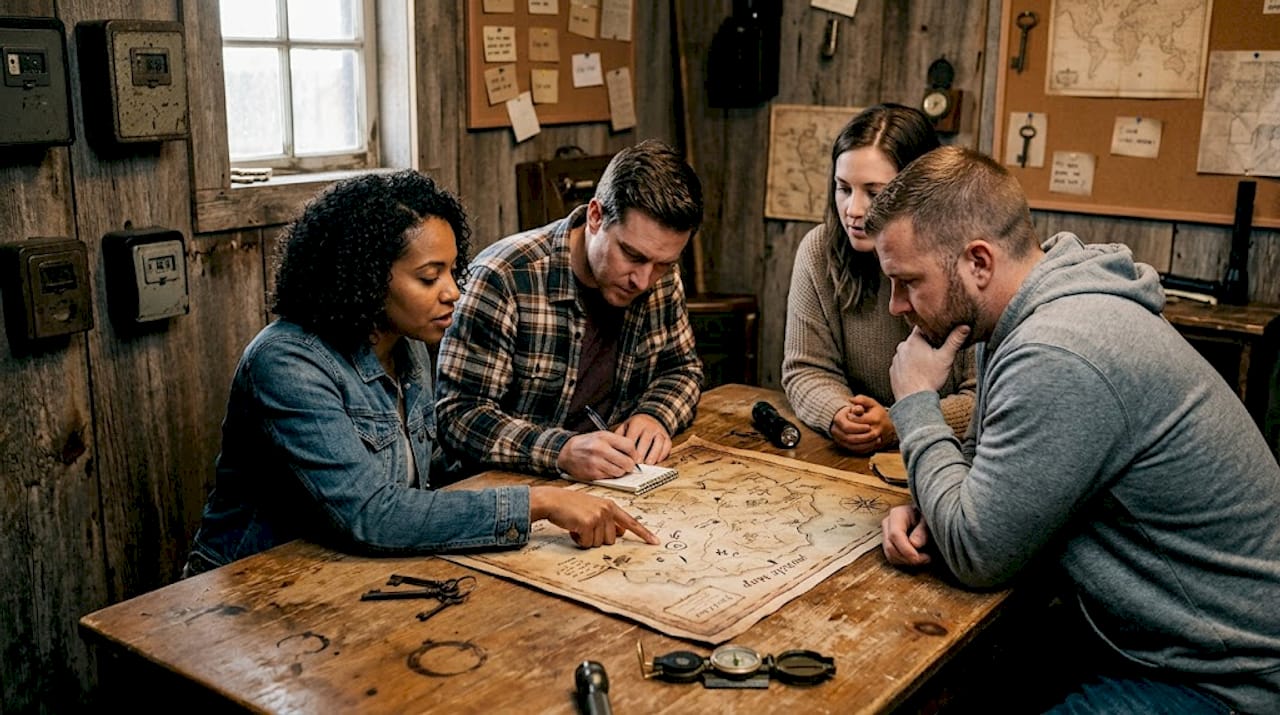
Most escape room teams walk in confident, ready to crack codes and beat the clock. What trips them up isn’t the puzzles. It’s how they treat each other, the props, and the game master. Skipping basic etiquette is the fastest way to turn a thrilling 60-minute adventure into a frustrating experience for everyone in the room. Colorado Springs escape rooms like Codebusters are built around immersive teamwork and respect for the game. This guide gives you the practical knowledge to show up as a great teammate, protect the experience for every player, and genuinely have more fun doing it.
Table of Contents
- Why etiquette matters in escape rooms
- Essential escape room etiquette rules
- Teamwork strategies for a winning escape
- What to do before, during, and after your game
- What most escape room guides miss about etiquette
- Ready for a challenge? Book your Colorado Springs escape
- Frequently asked questions
Key Takeaways
| Point | Details |
|---|---|
| Etiquette shapes enjoyment | Respectful behavior and following rules ensure fun for your whole group in every Colorado Springs escape room. |
| Teamwork is a game changer | Cooperation, sharing clues, and flexible roles help your team escape more successfully. |
| Preparation improves outcomes | Arriving early and reading venue-specific guidelines start your adventure off right. |
| Local rooms prioritize respect | Colorado Springs escape venues emphasize privacy, collaboration, and feedback as their signature touch. |
Why etiquette matters in escape rooms
Escape room etiquette is simply a set of behaviors that shows respect for your teammates, the game master running your session, and the physical space around you. It’s not about following stuffy rules. It’s about creating the conditions where everyone can do their best thinking under pressure.
When etiquette breaks down, the effects are immediate. Someone talks over a teammate who just found a critical clue. Someone else forces a lock that wasn’t meant to open that way, breaking a prop that costs the venue money and ruins immersion for your whole group. A third player hogs every puzzle, leaving others standing around bored and disengaged. None of these players intend to be difficult. They just haven’t thought about how their behavior affects the group.
Here are the most common etiquette issues that game masters see again and again:
- Talking over or interrupting teammates mid-thought
- Forcing, yanking, or physically damaging props and set pieces
- Monopolizing puzzles without inviting others to contribute
- Ignoring a game master’s instructions or safety briefing
- Making the experience competitive within the group instead of cooperative
Colorado Springs venues take cooperation seriously. Private rooms and team-focused play are standard at local escape venues, which means every player’s behavior shapes the entire group’s outcome. There’s no hiding in the back of a large crowd here.
“The best escape room teams aren’t the smartest ones in the room. They’re the ones who listen to each other and treat the experience with respect.”
When etiquette is strong, something remarkable happens. Ideas flow faster, puzzles get solved more efficiently, and the narrative of the room pulls you in completely. Groups that skip the etiquette basics often leave frustrated, even when they technically win. Groups that bring respect and energy to the game walk out buzzing, regardless of the outcome.
Essential escape room etiquette rules
Knowing etiquette matters is one thing. Knowing exactly what to do, and what to avoid, is where most guides fall short. Here is a numbered breakdown of the rules that make the biggest difference.
- Arrive early. Show up at least 10 to 15 minutes before your session. This gives you time to check in, review any posted rules, and get mentally ready before the briefing starts.
- Listen to the full briefing. The game master covers safety, room boundaries, and how to request hints. Missing this information is the single most avoidable mistake groups make.
- Never force props. If something isn’t opening or moving easily, it likely requires a clue you haven’t found yet. Yanking on props damages equipment and breaks immersion fast.
- Share discoveries out loud. When you find something useful, say it clearly so the whole team hears. Keeping clues to yourself by accident is one of the biggest reasons groups run out of time.
- Rotate puzzle solving. If you’ve been working on one puzzle for more than two minutes without progress, hand it off. Fresh eyes solve things faster.
- Keep clues visible and organized. Place found items in a central area so no one wastes time re-searching sections that have already been cleared.
- Support, don’t override. If a teammate is working through a puzzle, encourage them. Don’t grab it away unless they specifically ask for help.
- Put phones away. Most escape rooms, including escape room rules posted at Codebusters, prohibit cell phone use during gameplay unless it’s part of the puzzle itself.
Pro Tip: A well-designed etiquette guide has been adopted by several local venues in Colorado Springs. Read it before your visit and share the highlights with your group during the drive over. Arriving aligned makes a bigger difference than you’d expect.
One overlooked rule is how to handle leadership in the room. Escape rooms bring out strong personalities. Designate a loose coordinator for the session, someone who tracks time and calls out progress updates, but make sure leadership rotates and no single person controls every decision.
Teamwork strategies for a winning escape
Understanding the rules sets a baseline. Bringing real teamwork into the room is what separates groups that barely escape from groups that escape with time to spare and a huge smile.
Research on group performance consistently shows that communication style matters more than raw intelligence when it comes to group problem-solving. Escape rooms test exactly that. Locked In Escapes is known for private team-building sessions where groups practice exactly these collaborative skills under game conditions.
Here is a direct comparison of poor versus excellent teamwork behaviors:
| Behavior | Poor teamwork | Excellent teamwork |
|---|---|---|
| Communication | Silent or reactive | Constant, clear updates |
| Leadership | One person dominates | Shared and flexible |
| Puzzle approach | Random, scattered | Delegated by strength |
| Stuck moments | Frustration, blame | Request a hint calmly |
| Clue handling | Hidden or lost | Centralized and visible |
Effective communication hacks that work in real escape rooms:
- Use short, specific phrases: “North wall, top shelf, red box” beats “over there, that thing.”
- Call out completed tasks: “Lock three is open” keeps everyone updated without shouting.
- Ask before taking: “Can I try this combination?” keeps teammates from duplicating effort.
- Celebrate small wins: A quick “nice work” after a puzzle solved keeps energy high.
Pro Tip: When you’re stuck, ask for a hint from your game master early rather than late. Most team escape experiences at Codebusters include hints as part of the game design. Using one doesn’t mean you failed. Running out of time because you were too proud to ask is the real loss.
Role delegation is another underused strategy. Before you start, assign loose roles: one person manages time, one manages discovered items, one floats between puzzles where help is needed. This structure prevents overlap and keeps everyone contributing.
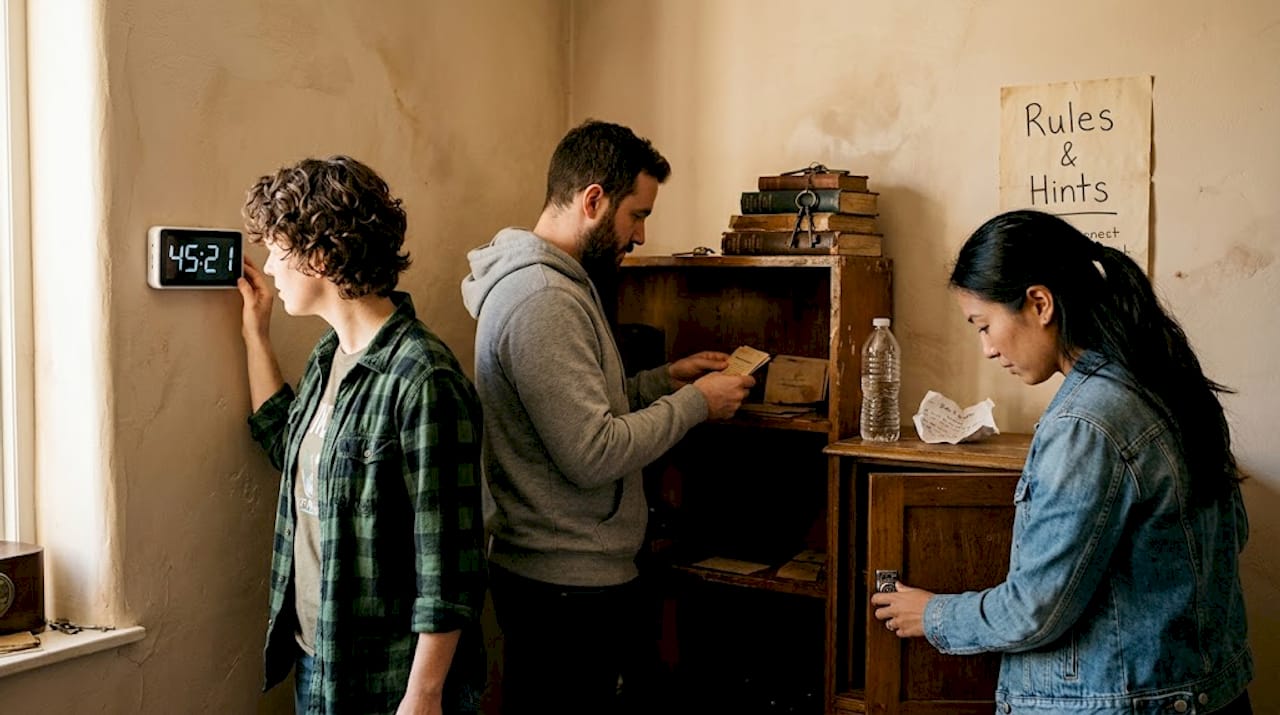
What to do before, during, and after your game
Great etiquette starts long before you step into the room and continues after the final lock clicks open. Here’s how to build good habits across every phase of the experience.
Before your game:
Book your session in advance and confirm your reservation the day before. Discuss basic group expectations with your team so no one is surprised by the rules inside. Talk through any accessibility needs with the venue staff ahead of time.
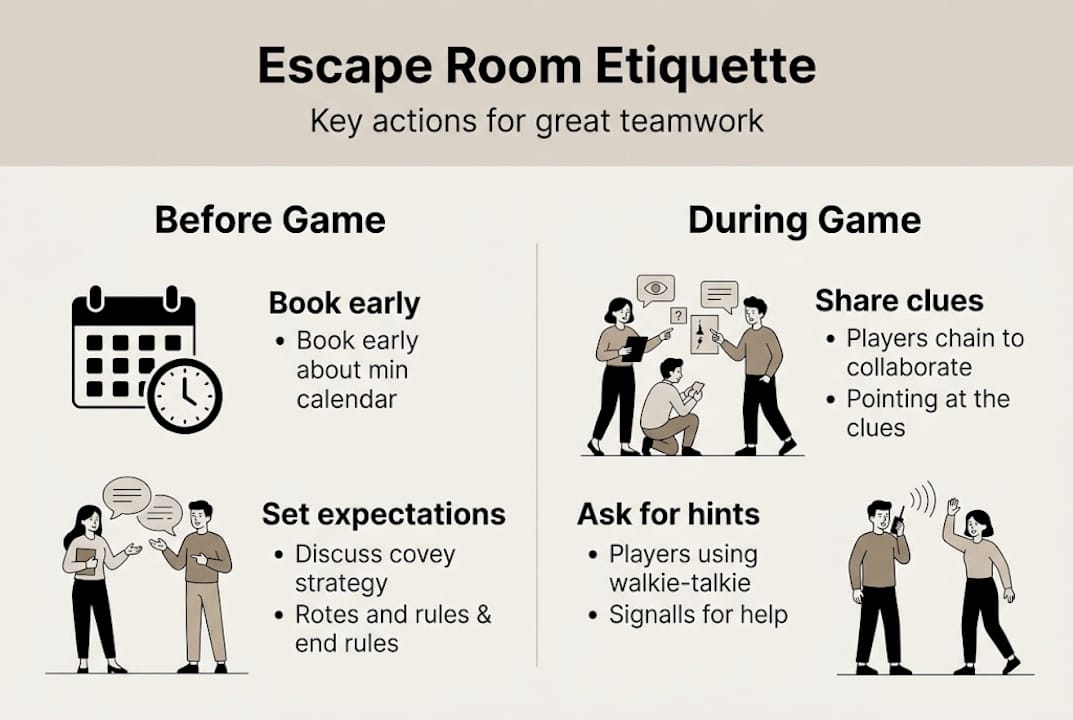
| Phase | Action items |
|---|---|
| Before | Book ahead, confirm attendance, review venue rules, set group expectations |
| During | Listen to briefing, share clues, respect props, ask for hints when stuck |
| After | Thank staff, share honest feedback, restore items, celebrate your team |
During your game:
Once inside, let the briefing guide your first moves. Resist the urge to immediately scatter. Take 30 seconds to do a group scan of the room and then divide up. Keep the communication flowing and remember to enjoy the narrative, not just the puzzles.
After your game:
Here is a numbered debrief process that makes the ending as satisfying as the experience itself:
- Thank your game master sincerely. They built and maintained the experience you just had.
- Gather for a group photo in the room before leaving, most venues encourage this.
- Leave all props and clues exactly where you found them or as directed by staff.
- Share genuine feedback with the venue. Escape The Place and similar venues actively use player feedback to improve rooms and gameplay for future guests.
- Discuss what worked and what didn’t as a team. This debrief builds stronger habits for your next game.
These steps take five minutes and dramatically improve the experience for the next group walking in.
What most escape room guides miss about etiquette
Most guides give you a list of rules and call it done. Rules matter, but they only set the floor. What actually separates a forgettable escape room visit from one your group talks about for months is something harder to put on a checklist: mindset.
Game masters at Colorado Springs venues will tell you that the most rule-compliant groups are not always the most successful or the most fun to host. The groups that stand out are the flexible ones. They adapt when a puzzle stumps them. They laugh when something goes wrong instead of pointing fingers. They stay curious instead of getting rigid.
Team-building at Locked In Escapes is cited specifically as a differentiator because those sessions push groups past rule-following into genuine collaboration. That’s the real skill. Listening to your teammates in real time, adjusting your approach mid-game, and staying calm when the clock ticks under ten minutes requires emotional awareness that no rulebook can manufacture.
The uncomfortable truth is that the player who follows every rule but panics under pressure and stops communicating does more damage than the one who bends a rule and keeps the team energized. Etiquette is the foundation, but escape room team-building success lives in the behavior between the rules. Calm, adaptive, genuinely collaborative teams win more, laugh more, and leave better reviews every single time.
Ready for a challenge? Book your Colorado Springs escape
You now have a complete picture of what great escape room etiquette looks like and why it transforms a good experience into a genuinely great one. The principles here apply whether it’s your first time in a puzzle room or your twentieth. Great behavior makes every minute more valuable.
Comebusters Escape Room in Colorado Springs offers themed private rooms designed for groups who want a real challenge and a great time together. From “Stranger 80’s” to “Flight of Deception,” every room rewards exactly the teamwork and respect this guide covers. Book your Colorado Springs escape room today, gather your best team, and put these etiquette skills to the test in a setting built for unforgettable memories.
Frequently asked questions
What should I avoid doing in an escape room?
Avoid forcing props, ignoring your teammates, or breaking posted rules. These common mistakes can damage the experience for your whole group and may end the game early.
Can I use my phone or tools in the escape room?
Most Colorado Springs escape rooms prohibit outside tools or cell phones during gameplay unless they are specifically part of the puzzle. Always check room-specific guidelines before you arrive.
How early should I arrive for my escape room?
Arrive at least 10 to 15 minutes early to complete check-in and hear the full briefing without rushing. Arriving early is standard etiquette at Colorado Springs escape venues and protects your full puzzle time.
What makes teamwork important in escape rooms?
Good teamwork means more puzzles solved, faster clue sharing, and a far more enjoyable experience overall. Local rooms highlight team building because groups that communicate well consistently outperform those that don’t.