Escape room checklist for beginners: tips for your first game
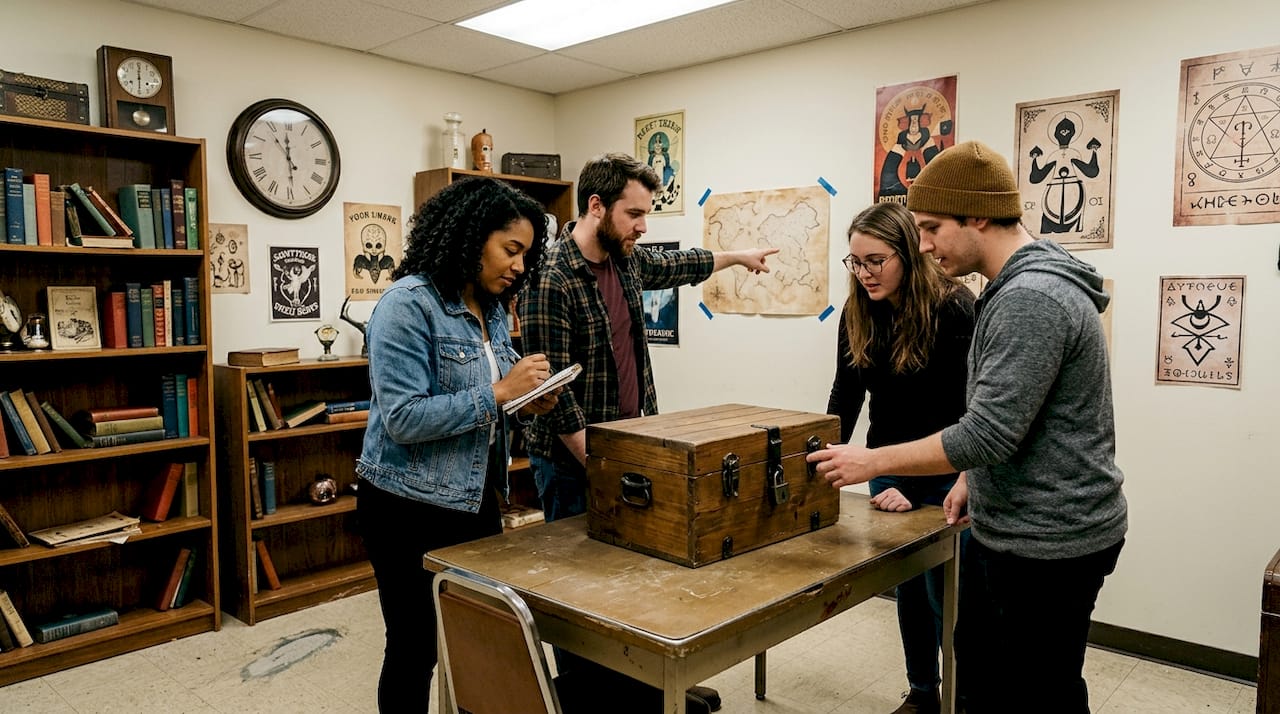
Walking into your first escape room feels like stepping into a movie. The clock starts, the door locks behind you, and suddenly sixty minutes feels very short. It’s thrilling, but it can also feel chaotic if you show up without a plan. Most first-timers leave wishing they had known a few simple things beforehand. The good news is that a little preparation makes a massive difference. This guide gives you a practical, step-by-step checklist so you can walk in confident, solve puzzles with your team, and actually enjoy every minute of the experience.
Table of Contents
- Research and pick the right escape room
- Understand the rules and escape room etiquette
- Arrival and team preparation checklist
- Top in-room strategies for beginners
- Why preparation beats luck: What most beginners overlook
- Ready to book your first escape room?
- Frequently asked questions
Key Takeaways
| Point | Details |
|---|---|
| Choose a beginner room | Picking an appropriate difficulty increases your odds of success and enjoyment. |
| Review rules and etiquette | Knowing the guidelines ensures a fun and respectful experience for all. |
| Arrive with a plan | Advance preparation makes your first escape room visit smooth and stress-free. |
| Focus on teamwork | Communication and sharing clues are crucial for beating the clock. |
| Use hints wisely | Don’t hesitate to ask for help if your team feels stuck. |
Research and pick the right escape room
Not all escape rooms are created equal. Some are designed for seasoned puzzle veterans who want a serious mental workout. Others are built specifically for newcomers who just want a fun, accessible adventure. Choosing the right room from the start is one of the most important decisions you’ll make as a first-timer.
Start by thinking about your group. How many people are joining you? Are they competitive problem-solvers or casual fun-seekers? Your group’s personality should shape which room you pick. A horror-themed room with complex multi-step puzzles might frustrate a group of casual players, while a lighthearted adventure room could feel too easy for a team of puzzle enthusiasts.
Here’s what to look for when comparing your options:
- Difficulty rating: Many beginner escape rooms label their experiences as easy, medium, or hard. Start at the easy end.
- Theme: Pick something your whole group finds interesting. Themes range from sci-fi and mystery to historical adventures.
- Group size: Rooms have minimum and maximum player counts. Cramming too many people in makes coordination harder.
- Time limit: Most rooms give you 60 minutes. Some beginner-friendly options offer slightly more flexibility.
- Storyline complexity: Simpler narratives are easier to follow under pressure.
Difficulty ratings are your best friend as a beginner. Look for rooms tagged as introductory or entry-level to avoid feeling overwhelmed on your first visit.
| Factor | Beginner-friendly option | What to avoid |
|---|---|---|
| Difficulty | Easy or introductory | Expert or advanced |
| Theme | Adventure, mystery | Intense horror |
| Group size | 2 to 6 players | Overly large groups |
| Puzzle type | Logic and observation | Highly technical |
| Time limit | 60 minutes or more | Under 45 minutes |
Pro Tip: Call or message the venue before booking. Ask the staff directly which room they recommend for first-timers. They know their rooms better than any online description, and they’ll steer you toward the best fit for your group.
Understand the rules and escape room etiquette
Once you’ve chosen your room, it’s essential to learn the basic rules and behaviors. Every escape room has house rules, and following them protects both you and the experience. Escape room rules are typically explained before your session begins, either through a video briefing or by a game master in person.
Here are the standard rules you’ll encounter at most venues:
- Never force a lock or prop. If something doesn’t open easily, it’s either not the right time or not the right solution.
- Don’t break or damage anything. Props are expensive and shared with future players.
- Respect the time limit. The clock is part of the challenge. Don’t try to negotiate extra time mid-game.
- Stay in bounds. Some areas of the room are off-limits. Marked zones or covered items are usually decorative, not part of the puzzle.
- Listen to your game master. They can guide you without spoiling the experience.
Beyond the formal rules, etiquette matters just as much. Good teamwork means sharing what you find, not hoarding clues. If you discover a combination of numbers, say it out loud immediately. If someone on your team is working on a puzzle, don’t take it over without asking.
“The teams that escape fastest aren’t always the smartest. They’re the ones who communicate every single thing they find, no matter how small it seems.” This is something game masters see play out every single day.
Pro Tip: Pay close attention during the pre-game briefing. Game masters often drop subtle hints about how the room works during their introduction. Most first-timers are too excited to listen carefully, and they miss valuable context.
Respecting the space and your teammates creates a better experience for everyone. Escape rooms are collaborative by design. The more openly you communicate, the better your chances of solving the puzzles before time runs out.
Arrival and team preparation checklist
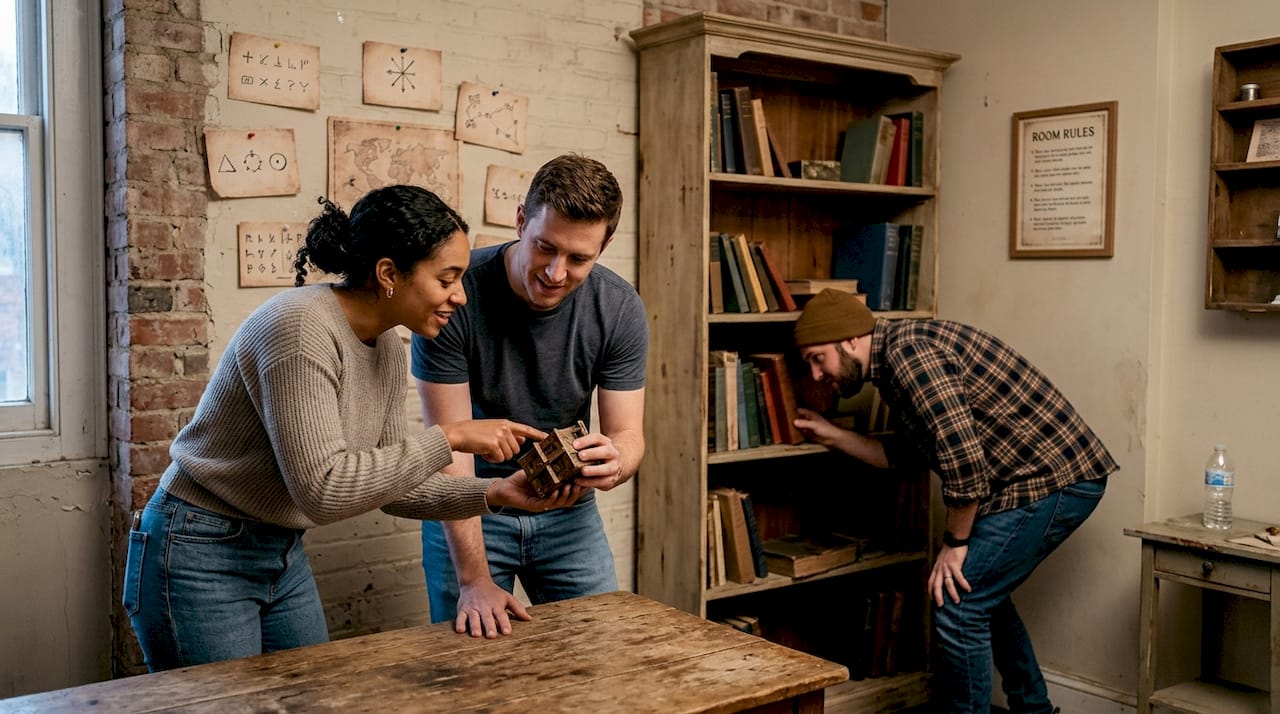
Now that you understand the rules, it’s time to prepare for your visit with this pre-game checklist. What you do before you walk through the door matters just as much as what you do inside the room.
Here’s your essential pre-visit checklist:
- Confirm your booking: Double-check your reservation time, location, and group headcount.
- Plan your travel: Know exactly where the venue is and how long it takes to get there.
- Arrive early: Arriving 10 to 15 minutes early is widely recommended so you can check in, use the restroom, and settle your nerves.
- Discuss roles: Talk with your team beforehand about each person’s strengths. Is someone good at math? Patterns? Spatial thinking?
- Dress comfortably: You’ll be moving around, crouching, and possibly crawling. Skip the heels and tight clothing.
- Leave valuables behind: Most venues ask you to store phones and bags in a locker.
| Item to bring | Why it matters |
|---|---|
| Booking confirmation | Required for check-in |
| Photo ID | Some venues require it |
| Reading glasses | Small text appears on many clues |
| Comfortable shoes | You’ll be on your feet the whole time |
| A positive attitude | Seriously, it changes everything |
Team coordination before the game is often the difference between escaping and not. Groups that talk strategy in advance, even just for five minutes, tend to divide tasks more naturally once the clock starts. Studies on team performance consistently show that pre-task communication improves group outcomes, and escape rooms are no exception.
Top in-room strategies for beginners
With your team ready, let’s focus on practical strategies for tackling the room. Once that timer starts, it’s easy to panic or freeze. These five strategies will keep you moving forward.
- Search the room systematically. Don’t just grab the first thing you see. Work through the space methodically so nothing gets missed.
- Communicate every find. Say everything out loud. A number you found on a painting might connect with a code your teammate found in a drawer.
- Separate solved from unsolved. Create a physical system. Put used clues in one spot so you’re not revisiting them and wasting time.
- Delegate by strength. If someone loves math, point them toward number puzzles. If someone is observant, have them scan the room for hidden details.
- Ask for hints early. Many beginners succeed when they divide tasks and communicate often, and using hints before you’re completely stuck keeps momentum going.
| Common beginner mistake | Better strategy |
|---|---|
| Everyone works on one puzzle | Split up and tackle multiple at once |
| Ignoring the game master | Check in for hints when stuck |
| Hoarding clues | Share every find immediately |
| Panicking at the timer | Focus on the current puzzle, not the clock |
| Skipping the briefing | Listen carefully for hidden context |
Pro Tip: Don’t treat hints as failure. Game masters exist to keep the experience fun. Asking for a hint after being stuck for five minutes is far smarter than spending twenty minutes on one lock. The teamwork benefits for beginners extend well beyond the room itself, building communication habits that carry into everyday life.
Why preparation beats luck: What most beginners overlook
Here’s something most escape room articles won’t tell you. The groups that escape aren’t the ones with the highest IQs or the most puzzle experience. They’re the ones who showed up ready.
There’s a popular myth that escape room success comes down to luck or natural talent. The reality is more straightforward. Two groups can walk into the exact same room. One group talked beforehand, assigned loose roles, and agreed to share every clue out loud. The other group assumed they’d figure it out as they went. The first group almost always does better, even if the second group has smarter individuals.
What trips up most first-timers isn’t puzzle difficulty. It’s panic, ego, and silence. Someone finds a clue but doesn’t speak up because they’re not sure it matters. Someone else spends fifteen minutes on a single lock because they don’t want to ask for help. These are preparation failures, not intelligence failures.
The checklist in this article isn’t just a to-do list. It’s a mindset shift. When you walk in knowing the rules, having talked with your team, and feeling comfortable asking for hints, the whole experience transforms from stressful to genuinely fun.
Ready to book your first escape room?
If you’re ready to put this checklist into action, here’s your next step.
CodeBusters Escape Room in Colorado Springs offers a range of themed rooms designed with different skill levels in mind, including options that are perfect for first-timers. Whether you’re bringing family, friends, or a work team, there’s a room built for your group’s experience level and interests.

The staff at CodeBusters is known for being welcoming and supportive, especially for newcomers. They’ll walk you through everything before the game starts so you never feel lost. Use this checklist as your guide, gather your team, and book your escape room today. Your first escape room experience should be exciting, not stressful, and with the right preparation, it absolutely will be.
Frequently asked questions
What should I bring to my first escape room?
Bring your booking confirmation, a photo ID, and reading glasses if you need them for small text. Arriving prepared ensures a smooth check-in so you can focus on having fun.
Are hints allowed in escape rooms?
Yes, hints are almost always available, and beginners are strongly encouraged to use them when stuck. Hints help teams maintain momentum and avoid the frustration of being stuck on one puzzle for too long.
Can children participate in escape rooms?
Most escape rooms welcome children, but venues specify age guidelines for each room, and younger children typically need adult supervision throughout the game.
How long does an escape room game last?
The typical time limit is 60 minutes, though some venues offer variations depending on the room type or group size.