Educational escape rooms: 5 proven learning benefits
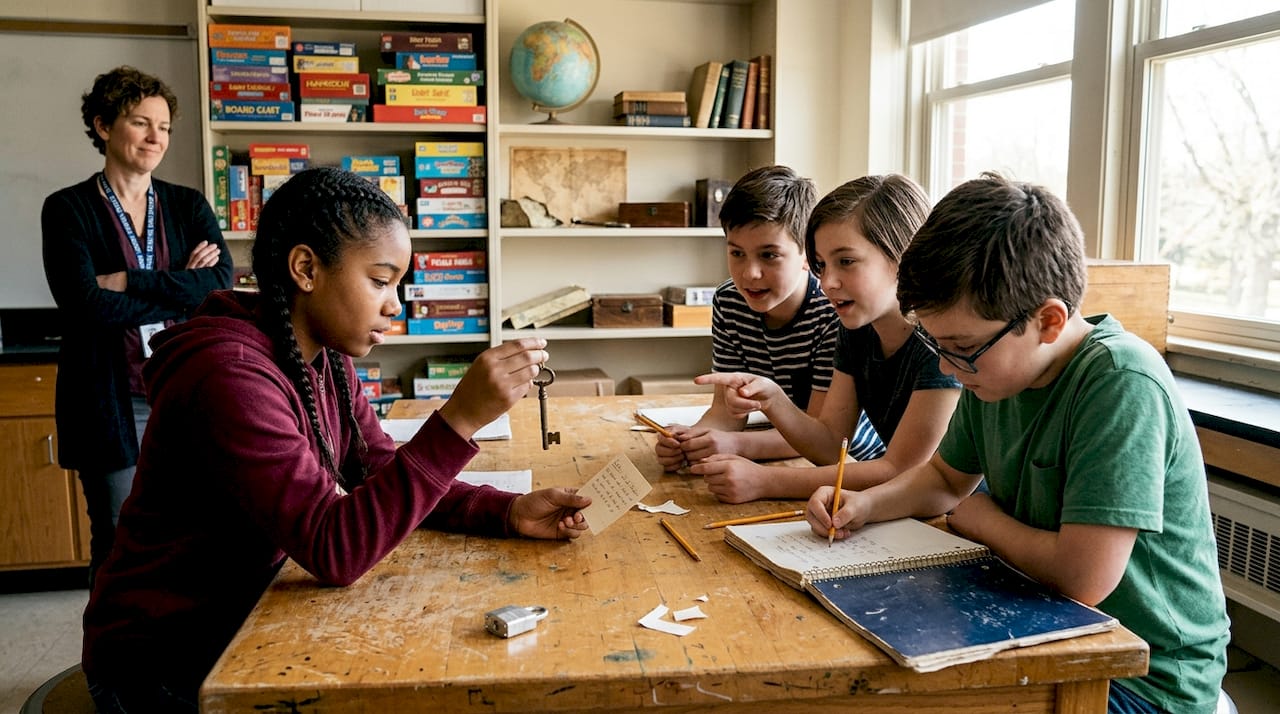
Getting students genuinely excited about learning is one of the hardest challenges educators and parents face today. Traditional worksheets and lectures have their place, but they rarely spark the kind of deep engagement that makes knowledge stick. Educational escape rooms (EERs) are changing that equation fast. Meta-analyses on EERs confirm that EERs significantly improve learning outcomes including knowledge acquisition, retention, critical thinking, and skills development. Whether you are a teacher planning a field trip or a parent looking for enriching weekend activities in Colorado Springs, this guide breaks down exactly what makes these experiences work and how to find the best ones near you.
Table of Contents
- Criteria for effective educational escape rooms
- Top learning benefits: Knowledge and skills boost
- Motivation, engagement, and teamwork: A game-changer
- Local opportunities: Colorado Springs field trips and DIY options
- Beyond the hype: The real impact and limits of educational escape rooms
- Find your escape: Local rooms and resources for families and educators
- Frequently asked questions
Key Takeaways
| Point | Details |
|---|---|
| Improved learning outcomes | Escape rooms significantly boost knowledge retention and critical thinking in learners across all ages. |
| Enhanced collaboration | Educational escape rooms foster teamwork, communication, and real-world problem-solving skills. |
| Motivation and engagement | Escape room activities dramatically increase student motivation and enjoyment compared to traditional methods. |
| Accessible local options | Families and educators in Colorado Springs have multiple venues and DIY resources for educational escape experiences. |
| Balanced approach best | Escape rooms are most effective as supplements to existing teaching strategies, with careful debriefing. |
Criteria for effective educational escape rooms
Not every escape room delivers real learning value. The difference between a fun distraction and a genuinely educational experience comes down to intentional design. Before booking or building one, it helps to know what separates the good from the great.
According to design and execution frameworks, the most effective EERs share several core characteristics. The educational escape rooms criteria that matter most include:
- Clear learning objectives: Every puzzle should connect directly to a skill or concept students need to master. Vague themes produce vague results.
- Balanced difficulty: Puzzles that are too easy bore participants; puzzles that are too hard frustrate them. The sweet spot keeps everyone engaged without leaving anyone behind.
- Inclusivity and accessibility: Good rooms offer adjustable roles and puzzle types so students with different abilities can contribute meaningfully.
- Structured debriefing: The conversation after the game is often where the deepest learning happens. Skipping it wastes most of the educational value.
- Format flexibility: Physical, virtual, and hybrid rooms each serve different classroom and home environments.
Best Practices in EER Design notes that EER mechanics involve narrative-driven puzzles, game elements, and structured team-based play. That narrative layer is what separates escape rooms from standard group activities. Students are not just solving problems; they are living inside a story, which activates emotional memory and deepens retention.
“The best educational escape rooms feel like play but function like a well-designed lesson plan. The story pulls students in; the puzzles do the teaching.”
Pro Tip: When evaluating a room for educational use, ask the organizer what the debrief process looks like. If they do not have a structured post-game reflection plan, the learning impact will be significantly lower.
Physical rooms offer the richest sensory experience, while virtual formats allow classrooms with limited budgets or mobility constraints to participate fully. Hybrid options, where students interact with physical clues but also use digital tools, are growing in popularity for their flexibility.
Top learning benefits: Knowledge and skills boost
With criteria established, let’s explore what specific learning benefits escape rooms actually deliver, and the numbers here are striking.
A major meta-analyses on EERs found that EERs deliver superior learning outcomes versus traditional methods, especially for retention and thinking skills. The standardized mean differences (SMDs, a measure of effect size) reported are remarkable:
| Learning Area | SMD Score | Interpretation |
|---|---|---|
| Knowledge acquisition | 4.59 | Very large positive effect |
| Clinical skills | 5.33 | Exceptionally strong effect |
| Critical thinking | 11.06 | Transformative effect |
Those numbers are not typos. An SMD above 0.8 is generally considered a large effect in educational research. Scores in the double digits for critical thinking suggest escape rooms are doing something fundamentally different from passive instruction.
Springer EER Outcomes also found significant improvements in critical thinking and clinical skills across multiple study groups. These are not niche findings limited to medical training. The benefits translate across subjects and age groups.
Here is what that looks like in practice for families and educators:
- Retention: Students who learn through escape room scenarios remember content longer because the emotional engagement of the experience anchors the information in memory.
- Analytical thinking: Puzzles require students to evaluate clues, test hypotheses, and revise their thinking in real time, which is exactly what analytical reasoning looks like.
- Subject flexibility: EERs have been successfully applied to history, science, math, language arts, and even social-emotional learning.
- Cross-age applicability: Elementary students, teenagers, and adults all show measurable gains, though puzzle complexity should be adjusted accordingly.
For local escape room learning outcomes, Colorado Springs venues offer themed rooms that naturally build these skills through immersive storytelling and layered puzzles. The combination of narrative pressure and collaborative problem-solving creates a learning environment that textbooks simply cannot replicate.
The bottom line: If your goal is to help a student think more sharply and remember more deeply, escape rooms are among the most evidence-backed tools available outside a traditional classroom.
Motivation, engagement, and teamwork: A game-changer
Once the learning benefits are clear, the next question is whether students actually want to participate. Motivation is the engine that drives all learning, and escape rooms deliver it in abundance.
Springer EER Engagement Study found that 82% of participants report improved communication and 78% report better problem-solving after escape room experiences, with overall satisfaction reaching an odds ratio of 10.24. That is a dramatic difference compared to self-reported satisfaction after traditional group projects.
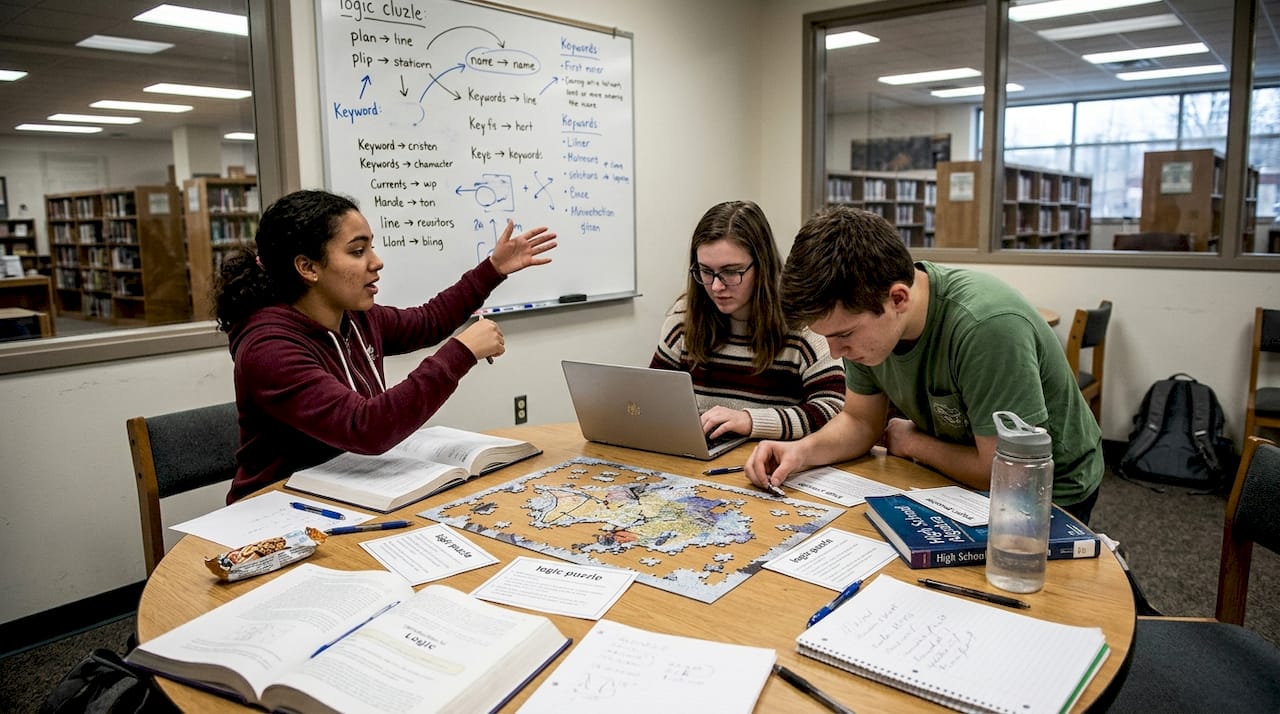
Here is how escape rooms stack up against conventional group activities:
| Factor | Traditional group activity | Educational escape room |
|---|---|---|
| Student motivation | Moderate | Very high |
| Communication demand | Structured, teacher-led | Organic, peer-driven |
| Problem-solving pressure | Low to moderate | High, time-based |
| Fun factor | Variable | Consistently high |
| Post-activity retention | Lower | Higher |
The teamwork dynamic inside an escape room is genuinely different from a classroom group project. There is no one student who can dominate the work. Every clue requires input, every lock requires collaboration, and every minute of the countdown creates shared urgency. Students who rarely speak up in class often find their voice when the team is stuck and they spot the answer.
CSU escape room workshops at Colorado State University use this dynamic deliberately for leadership and community-building programs, recognizing that the pressure-cooker environment of an escape room reveals and develops real interpersonal skills.
For Colorado Springs family team-building, escape rooms also offer a rare opportunity for parents and children to collaborate as equals. The puzzles do not care about age or authority; they just need to be solved.
Pro Tip: Use an escape room experience as the kickoff event for a new school year, club, or family reunion. The shared challenge creates an instant bond that takes months to build through ordinary social activities.
Key engagement benefits at a glance:
- Students self-report higher fun and motivation compared to standard activities
- Communication skills grow organically under time pressure
- Shy or disengaged students often emerge as key contributors
- Families and classrooms build lasting shared memories
Local opportunities: Colorado Springs field trips and DIY options
With core teamwork and engagement benefits explored, let’s consider actionable steps for families and educators in Colorado Springs.
Colorado Springs has a growing ecosystem of escape room venues, educational workshops, and community programs that make it easier than ever to bring EERs into your learning plan. Denver-area STEAM Escape Camps confirm that Colorado Springs and Denver-area venues, universities, and camps utilize escape rooms for family and educator bonding, workshops, and adaptable school programs.
Here are practical steps to get started:
- Book a local venue: Professional rooms like those at Colorado Springs educational escape room options offer themed experiences designed for groups, with options for school field trips and family events.
- Explore university programs: Colorado State University and other regional institutions run educator-focused escape room workshops that double as professional development.
- Look into STEAM camps: Summer and after-school programs in the Denver and Colorado Springs area use escape room formats to teach coding, engineering, and creative thinking.
- Try a virtual room: Several platforms offer free or low-cost virtual escape rooms aligned to specific curriculum standards, perfect for classrooms with limited field trip budgets.
- Build your own: DIY escape rooms are more accessible than they sound. Start with a single puzzle tied to a learning objective, then expand from there.
For those interested in building their own, educational escape room guides like the IGLUE framework walk educators through design, testing, and evaluation in a structured way. The Room2Educ8 model within that framework is especially useful for classroom teachers with limited budgets.
“You do not need a fog machine and a padlock collection to run an effective educational escape room. A well-written puzzle, a clear learning goal, and a ticking timer are enough to start.”
Local parent groups and homeschool co-ops in Colorado Springs are also increasingly organizing escape room field trips as part of enrichment programs, making it a community activity as much as an educational one.
Beyond the hype: The real impact and limits of educational escape rooms
We have seen the research, toured the local options, and explored the teamwork magic. Now for a more grounded take.
Escape rooms are genuinely powerful for motivation and immediate skill-building. The evidence is real and the effect sizes are large. But they are not a replacement for sustained instruction, and treating them as one is a mistake we see educators make too often.
Meta-analyses on EERs confirm that EERs align with active and experiential learning theories, but long-term evidence is still emerging and they work best as supplements to traditional teaching. The studies that show dramatic SMD scores are often measuring short-term outcomes. Long-term retention and nuanced skill transfer need more research.
The single most overlooked element is debriefing. A 60-minute escape room with no structured reflection afterward is like reading a great book and never discussing it. The debrief is where students connect the experience to the concept, and skipping it cuts the educational value in half.
Our honest advice: use escape rooms selectively and deliberately. One well-designed room per unit, paired with a 20-minute guided discussion afterward, will outperform three rooms used as pure entertainment. Prioritize venues and designs that build reflection into the experience, not just the puzzle-solving.
Find your escape: Local rooms and resources for families and educators
If the research and local options have you ready to take action, the next step is simple: find the right experience for your group.
Colorado Springs escape rooms at CodeBusters Escape Room offer themed adventures like “Past to the Future,” “Stranger 80’s,” and “Flight of Deception,” each designed for groups of different sizes and skill levels. Whether you are organizing a school field trip, a family outing, or a team-building event for a parent group or staff, there is a room and a format that fits. The venue also provides guidance for educators who want to connect the experience to specific learning goals, making it a genuinely educational outing rather than just a fun one. Book a private session, grab a gift voucher, or reach out to discuss group rates and educational customization.
Frequently asked questions
What ages are educational escape rooms suitable for?
Escape rooms can be adapted for elementary through adult learners, with structured play for various age groups recommended in ideal team sizes of 4 to 6 participants. Puzzle complexity and narrative themes should be adjusted to match the developmental stage of participants.
Do educational escape rooms work better than traditional classroom activities?
Studies show superior retention versus traditional methods, but escape rooms work best as supplements to regular instruction rather than replacements. The combination of both approaches produces the strongest long-term learning outcomes.
Are there accessible options for students with disabilities?
Inclusivity emphasized in design methodologies means well-designed rooms offer adjustable puzzles and flexible roles so every participant can contribute meaningfully. Always ask venues about accessibility accommodations before booking.
Where can families and teachers find escape rooms in Colorado Springs?
CodeBusters Escape Room offers themed educational experiences with options for groups, parties, and school events in Colorado Springs. They provide private room bookings and can accommodate various group sizes and learning goals.
How can I create a DIY educational escape room?
Start with narrative-driven puzzles aligned to specific learning goals, following frameworks like Room2Educ8 and guides for design, build, and evaluation. Even a single well-crafted puzzle with a timed challenge and a debrief session can deliver measurable educational value.