10 educational escape room ideas to engage your classroom
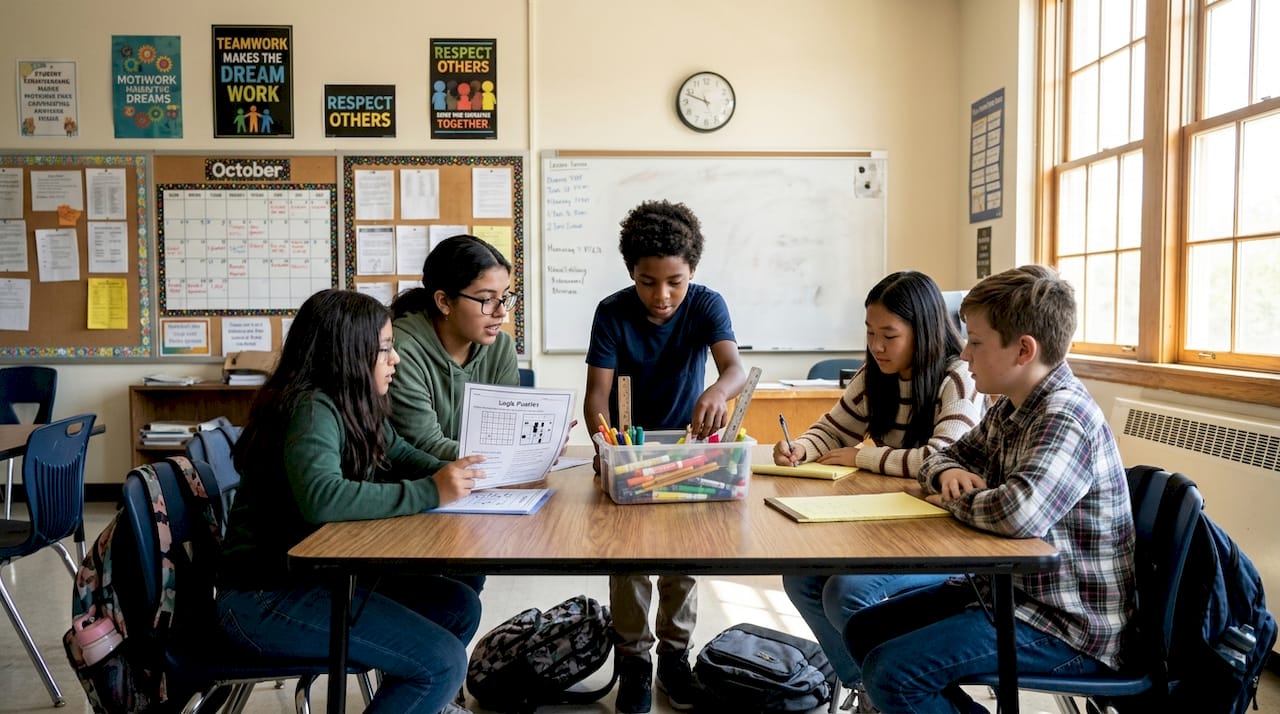
Finding escape room ideas that genuinely engage students while meeting curriculum standards can feel overwhelming. You want activities that spark collaboration and critical thinking, not just entertainment that misses learning goals. This article delivers research-backed escape room concepts designed specifically for educators and youth leaders in Colorado Springs. You’ll discover practical, low-cost ideas spanning STEM, history, math, and language arts, plus clear criteria to evaluate which formats and themes work best for your classroom. These proven strategies help you balance fun with measurable educational outcomes.
Table of Contents
- Key takeaways
- How to choose educational escape room ideas for your classroom
- Creative educational escape room ideas by subject
- Comparing physical, digital, and hybrid escape room formats
- Tips for maximizing learning and engagement in escape rooms
- Bring educational escape rooms to life in Colorado Springs
- Frequently asked questions
Key Takeaways
| Point | Details |
|---|---|
| Objectives alignment | Start with clear learning goals and tie them directly to curriculum standards to ensure measurable educational value. |
| Small teams and reflection | Prioritize 2 to 4 students and include standards aligned debriefs to assess learning. |
| Flexible formats | Use physical, digital, and hybrid formats to provide flexible low cost options that fit your class. |
| Inclusive and balanced design | Design puzzles to balance engagement with cognitive load and provide multiple pathways for visual, auditory, and kinesthetic learners. |
How to choose educational escape room ideas for your classroom
Selecting the right escape room starts with clear learning objectives. Define what students should know or demonstrate by the end, then tie those goals directly to curriculum standards. This alignment ensures your escape room delivers measurable educational value, not just entertainment.
Team size matters more than most educators realize. Prioritize small teams of 2-4 students and include standards-aligned reflections for assessment. Larger groups often lead to passive participants who disengage while a few students dominate puzzles. Smaller teams keep everyone actively problem solving.
Puzzle difficulty and type should match your students’ ages and prior experience. Younger learners thrive with visual and tactile challenges like matching symbols or unlocking simple combinations. Older students handle multi-step logic problems and abstract reasoning tasks. Game duration of 45 to 60 minutes fits most class periods while maintaining focus without fatigue.
Accessibility ensures every student can participate meaningfully. Design best practices include defined learning objectives, puzzle difficulty, and inclusivity considerations. Provide alternative puzzle pathways for students with different learning needs, and use materials that accommodate visual, auditory, and kinesthetic learners.
Structured reflection turns gameplay into lasting learning. Build in debrief time where students articulate what they discovered, how they solved problems, and which concepts they applied. This metacognitive step reinforces content and gives you formative assessment data.
Pro Tip: Balance educational goals with engagement by limiting puzzles to those that genuinely require collaboration. Over-reliance on teamwork for simple tasks can actually reduce efficiency and frustrate students.
When evaluating escape room options, visit CodeBusters Escape Room in Colorado Springs to experience professionally designed puzzles firsthand. Observing how experts structure challenges can inform your classroom designs.
Creative educational escape room ideas by subject
Math escape rooms transform abstract concepts into tangible challenges. Around the World rounding puzzles use themed adventures aligned to standards for grades 3-4. Students decode messages by rounding numbers to specific place values, unlocking combination locks when they calculate correctly. Fraction challenges work similarly: students match equivalent fractions to unlock clues hidden in envelopes.
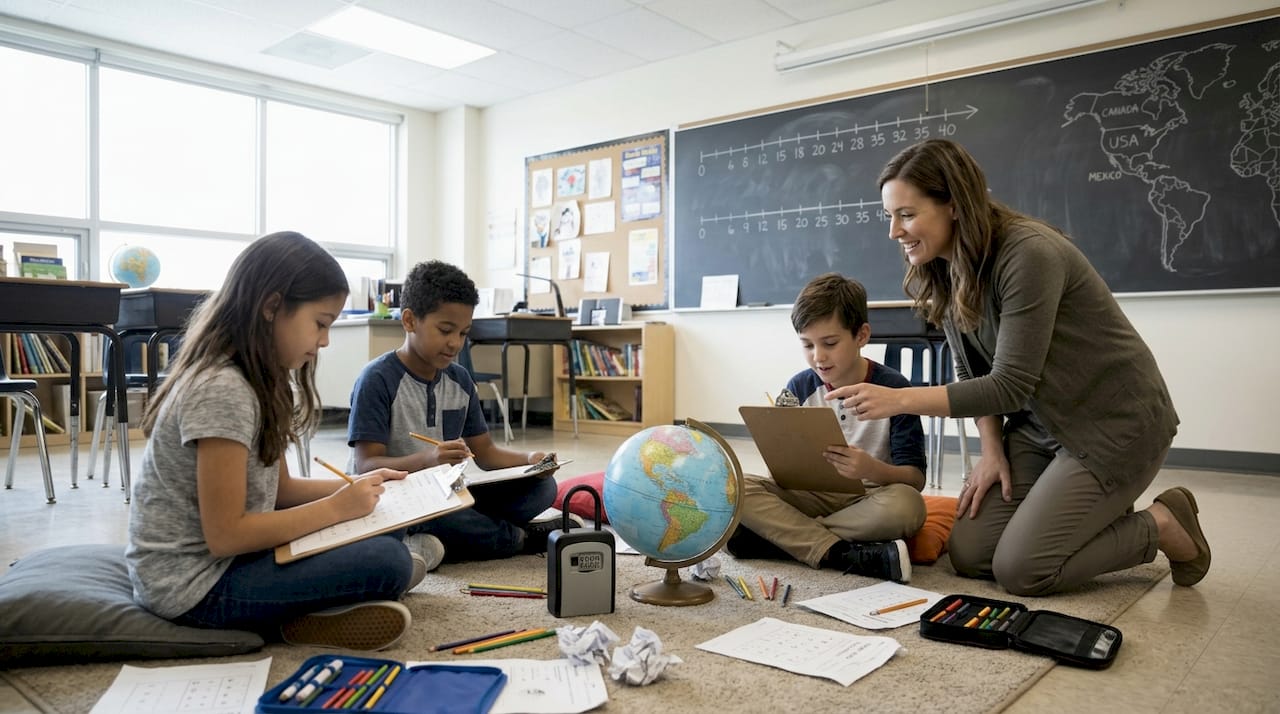
History themes bring past events to life through immersive storytelling. WWII escape rooms use riddles, maps, and locks tied to historical standards like SSUSH19. Students analyze primary sources, decode encrypted military messages, and solve geography puzzles to “escape” a 1940s bunker. This format works equally well for ancient civilizations, where students decipher hieroglyphics or reconstruct timelines to progress.
STEM challenges integrate multiple disciplines through hands-on problem solving. Coding and logic-based puzzles using LEGO SPIKE kits engage grades 6-8 with compound conditionals and logic operators. Students program security devices, troubleshoot sensor malfunctions, and apply engineering principles to unlock physical boxes. Chemistry escape rooms can require balancing equations to find safe combinations or identifying unknown substances through observation.
Medical and health science escape rooms build interdisciplinary knowledge through realistic scenarios. Students diagnose patient symptoms, interpret lab results, and apply anatomy knowledge to unlock treatment protocols. These cases improve retention by requiring teamwork to solve complex, multi-step medical mysteries.
Language learning escape rooms boost vocabulary and cultural understanding. Virtual reality formats promote collaboration while students navigate foreign language clues, translate passages, and apply grammar rules to progress. Literature-based rooms challenge students to analyze character motivations, identify literary devices, and sequence plot events to escape.
For inspiration beyond the classroom, explore escape room STEM activities that demonstrate how professional designers layer puzzles for maximum engagement.
Comparing physical, digital, and hybrid escape room formats
Physical escape rooms use tangible materials you likely already have. Low-cost, hands-on experiences with common classroom items like combination locks, envelopes, boxes, and printed clues create immersive environments without technology barriers. Students manipulate objects, discover hidden messages under UV lights, and unlock containers through tactile problem solving. Setup takes minimal time, and troubleshooting mid-game is straightforward.
Digital formats offer flexibility for remote or hybrid learning environments. VR and Google Forms enable engagement with automatic feedback and branching logic that adapts to student responses. Online escape rooms allow asynchronous participation, letting students work at their own pace. Digital platforms track progress automatically, providing instant data on which puzzles challenge students most. However, these formats require reliable technology access and can exclude students without devices.
Hybrid designs combine the best of both approaches. Students might solve physical puzzles to unlock QR codes that reveal digital clues, or complete online challenges to receive combinations for physical locks. This layered approach maximizes engagement by varying interaction types, but demands careful planning to prevent cognitive overload from switching between formats.
| Format | Pros | Cons | Best For |
|---|---|---|---|
| Physical | Low cost, tactile engagement, easy setup | Limited by materials, harder to scale | In-person classes, kinesthetic learners |
| Digital | Flexible pacing, automatic feedback, immersive VR | Requires technology, potential access barriers | Remote learning, tech-savvy groups |
| Hybrid | Varied engagement, combines strengths | Complex planning, cognitive load management | Advanced classes, blended learning |
Pro Tip: Start with physical formats for your first escape room. The immediate feedback from watching students interact with tangible puzzles helps you refine difficulty and pacing before investing time in digital development.
For team-based escape room design insights that apply across formats, consider how professional venues in Colorado Springs escape rooms structure progressive difficulty to maintain flow.
Tips for maximizing learning and engagement in escape rooms
Limit team size to 2-4 students. Smaller groups ensure every participant actively contributes rather than watching others solve puzzles. This structure reduces social loafing and increases individual accountability, forcing students to communicate and divide tasks strategically.
Incorporate reflection prompts aligned to standards throughout and after gameplay. Pause points where teams must articulate their reasoning before receiving the next clue transform problem solving into explicit learning. Post-game debriefs should ask students to connect puzzle solutions to curriculum concepts, making abstract knowledge concrete.
Design puzzles requiring genuine interdependence. Each team member should possess unique information or skills necessary for progress. Avoid puzzles one student can solve alone while others wait. Sequential challenges where one person’s answer unlocks another’s clue optimize collaboration benefits.
“Balance fun and engagement with learning objectives, and avoid over-reliance on collaboration if puzzles don’t genuinely require teamwork. High cognitive load from unnecessary collaboration can reduce efficiency and frustrate students.”
Monitor cognitive load during gameplay by observing frustration signals. If teams stall for more than five minutes, provide scaffolded hints that guide thinking without giving answers. Watch for students who disengage or become overwhelmed by complexity. Adjust puzzle difficulty in real time by offering alternative pathways or simplifying steps.
Debrief sessions solidify content understanding and provide formative assessment data. Ask students which concepts they applied, what strategies worked, and where they struggled. This metacognitive reflection transforms gameplay into transferable problem-solving skills. Gather feedback on puzzle clarity and difficulty to improve future escape rooms.
Ensure materials accommodate diverse learners through multiple representation modes. Provide visual, auditory, and kinesthetic puzzle options so students with different strengths can contribute. Offer written instructions alongside verbal explanations, and include tactile elements for hands-on learners. Cognitive load management becomes critical when collaboration itself adds mental burden, so simplify extraneous elements.
Test your escape room with a small group before full implementation. Observe where students get stuck, which clues need clarification, and whether timing feels appropriate. Iterate based on this pilot run to eliminate frustration points and optimize flow.
Bring educational escape rooms to life in Colorado Springs
After exploring how to design effective educational escape rooms, consider bringing professionally crafted experiences to your students. CodeBusters offers immersive escape room experiences in Colorado Springs that emphasize teamwork, problem solving, and critical thinking aligned with classroom objectives.
Their themed rooms provide customizable challenges suitable for diverse learning needs and group sizes. Whether you’re planning a field trip, team-building event, or reward activity, CodeBusters escape rooms in Colorado Springs deliver expertly designed puzzles that complement your educational programming. Experiencing these professionally developed challenges can also inspire your own classroom designs with fresh puzzle mechanics and narrative structures.
Frequently asked questions
What materials do I need for a low-cost educational escape room?
Common materials include envelopes, boxes with combination locks, classroom items like clocks or books, printed puzzles, and simple props you likely already own. Many escape room kits provide ready-to-use assets with instructions, or you can create your own using inexpensive supplies from dollar stores. Digital alternatives using Google Forms or QR codes reduce physical material needs entirely while maintaining engagement.
How long should an educational escape room session last?
Sessions of 45 to 60 minutes balance engagement and cognitive load effectively while fitting standard class periods. Adjust time based on age group and puzzle complexity, with younger students benefiting from shorter 30-40 minute experiences. Build in buffer time for setup, instructions, and debriefing beyond the actual gameplay duration.
Can escape rooms be used for remote or hybrid learning?
Yes, digital and VR formats support remote learning with effective vocabulary and concept gains through collaborative problem solving. Hybrid designs combine physical tasks students complete at home with digital clues shared online, creating flexible learning environments. Platforms like Google Forms, Breakout EDU, and specialized VR apps enable synchronous or asynchronous participation.
What team size works best in an educational escape room?
Teams of 2-4 participants optimize collaboration and reduce social loafing by ensuring everyone contributes actively. Smaller groups enable more direct communication and prevent passive observation that occurs in larger teams. This size also simplifies logistics and allows you to run multiple escape rooms simultaneously with one class.