Boost collaboration with corporate team building escape rooms
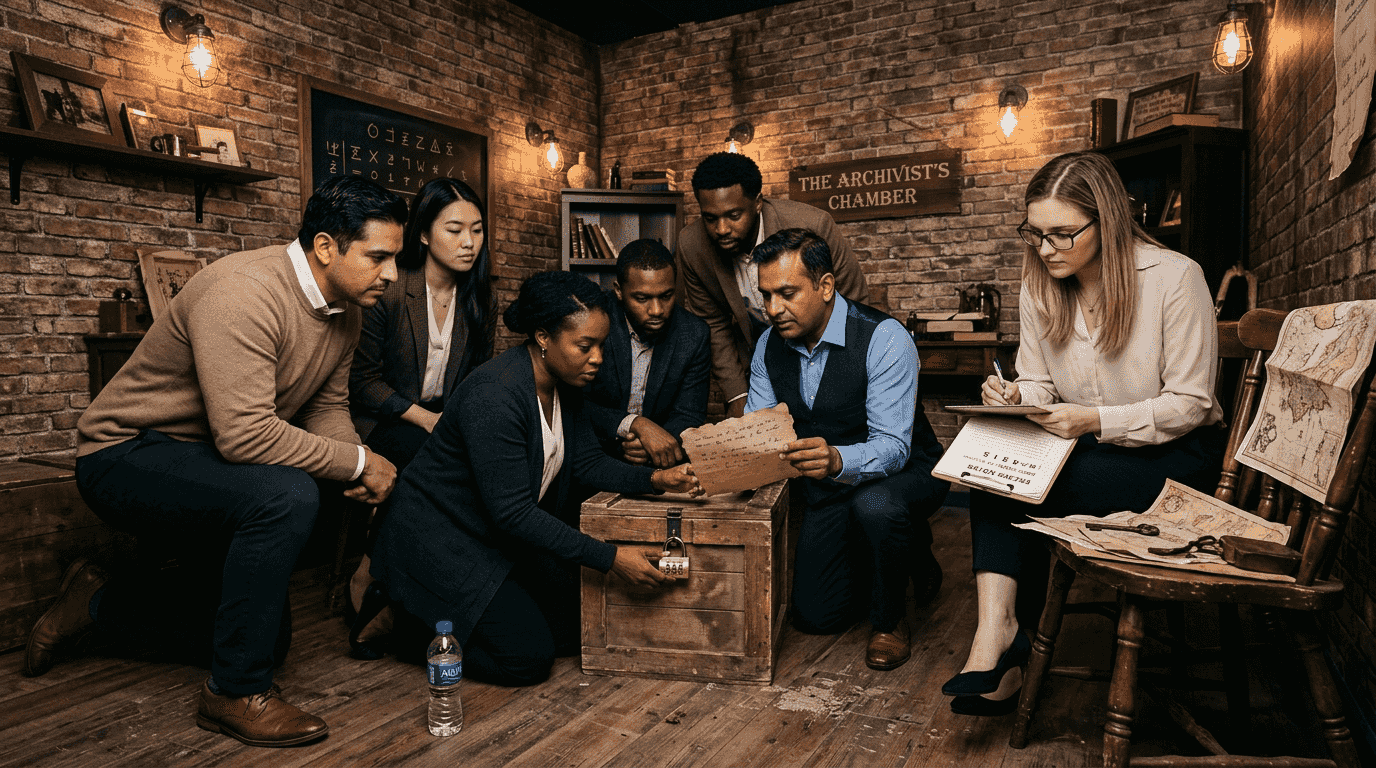
Most corporate teams invest thousands in team-building events that produce little lasting impact on workplace collaboration. The problem isn’t the intention, it’s the approach. Traditional activities often feel disconnected from real work challenges, leaving employees disengaged and managers frustrated. Escape rooms in Colorado Springs offer a refreshing alternative that transforms team building into an immersive experience. These interactive challenges create authentic pressure scenarios where teams must communicate clearly, solve problems creatively, and leverage diverse strengths to succeed. This guide reveals why escape rooms deliver measurable improvements in collaboration and problem-solving skills for corporate teams.
Table of Contents
- Why Traditional Team-Building Activities Often Fall Short
- How Escape Rooms Enhance Corporate Team Collaboration And Skills
- Comparing Escape Rooms With Other Corporate Team-Building Activities
- Planning A Successful Corporate Escape Room Event In Colorado Springs
- Discover Corporate Escape Rooms At CodeBusters In Colorado Springs
- Frequently Asked Questions About Corporate Team Building With Escape Rooms
Key takeaways
| Point | Details |
|---|---|
| Immersive problem-solving | Escape rooms create time-pressured scenarios that mirror workplace challenges and require collaborative thinking |
| Natural role emergence | Teams discover individual strengths as participants naturally assume leadership, analytical, or support roles |
| Enhanced communication | Puzzle-solving demands clear information sharing and active listening under constraints |
| Measurable engagement | Unlike passive workshops, escape rooms provide observable team dynamics and immediate feedback |
| Flexible application | Activities adapt to various corporate goals from leadership development to creative thinking |
Why traditional team-building activities often fall short
Corporate teams face a persistent challenge. They invest time and resources into team-building events that promise improved collaboration, yet few activities translate into meaningful workplace change. The disconnect stems from fundamental design flaws in conventional approaches.
Many traditional activities fail to engage diverse corporate teams or replicate real work challenges. Trust falls and icebreaker games feel forced and artificial to employees who crave authentic connection. These exercises rarely mirror the complexity of actual workplace problems, making it difficult for teams to transfer learned behaviors back to their daily roles.
The limitations of conventional team building include:
- Passive participation that allows disengagement without consequences
- Predictable formats that fail to challenge experienced professionals
- Limited cognitive demand that doesn’t stimulate creative problem-solving
- Absence of time pressure that reduces urgency and focus
- Minimal role differentiation that prevents leadership emergence
Workshops and seminars often prioritize information delivery over experiential learning. Employees sit through presentations about communication or collaboration without practicing these skills in realistic scenarios. The result is theoretical knowledge that rarely influences behavior when teams face actual workplace pressure.
Outdoor activities and sports-based events present their own challenges. Physical limitations exclude some team members, creating unintended divisions rather than unity. Weather dependencies and logistical complications add stress that detracts from team-building objectives. These activities also struggle to accommodate diverse fitness levels and interests across corporate teams.
Escape rooms in Colorado Springs address these shortcomings by creating immersive environments where every team member contributes meaningfully. The structured yet flexible nature of escape room challenges ensures that cognitive abilities matter more than physical prowess, making them accessible and engaging for diverse corporate groups.
How escape rooms enhance corporate team collaboration and skills
Escape rooms function as behavioral laboratories where teams practice essential workplace skills under controlled conditions. The immersive environment creates authentic pressure that reveals how individuals communicate, make decisions, and collaborate when stakes feel real.
Escape rooms improve team dynamics by combining cognitive challenges with social interaction. Unlike passive activities, every participant must actively engage to succeed. This requirement eliminates the free-rider problem common in traditional team building where some members coast while others carry the workload.
The collaboration mechanisms in escape rooms include:
- Information distribution forces teams to share discoveries and insights immediately
- Parallel puzzle streams allow multiple sub-teams to work simultaneously on different challenges
- Sequential dependencies create natural handoff points that require coordination
- Resource constraints demand negotiation about how to allocate time and attention
- Hidden connections between puzzles reward teams that communicate discoveries effectively
Communication quality improves rapidly in escape room environments. Teams quickly learn that withholding information or failing to listen costs precious time. Clear, concise updates become essential as the clock ticks down. Participants practice articulating complex ideas under pressure, a skill that transfers directly to workplace meetings and project discussions.
Leadership patterns emerge organically during escape room challenges. Some team members naturally coordinate efforts, others excel at detailed analysis, and still others provide creative breakthroughs. These roles shift dynamically as different puzzles require different strengths, giving everyone opportunities to lead and support.
Pro Tip: Assign an observer during your escape room session to note communication patterns and role dynamics. This external perspective provides valuable debrief material that helps teams recognize their natural collaboration tendencies.
“The best team-building experiences create safe spaces for failure where teams learn more from mistakes than successes. Escape rooms provide exactly this environment, allowing corporate teams to experiment with different approaches without real-world consequences.”
Decision-making under time pressure represents another critical skill that escape rooms develop. Teams must balance thorough analysis with decisive action, learning when to commit to a solution and when to pivot. This mirrors workplace scenarios where perfect information is unavailable and delays carry costs.
The reflection phase after completing an escape room experience amplifies learning. Teams discuss what worked, what didn’t, and how their collaboration patterns helped or hindered progress. These insights become frameworks for improving workplace interactions, making abstract concepts like “better communication” concrete and actionable.
Comparing escape rooms with other corporate team-building activities
Corporate decision-makers need clear criteria for evaluating team-building investments. Escape rooms offer a unique blend of fun, challenge, and meaningful team development compared to conventional methods. Understanding these distinctions helps organizations choose activities that deliver genuine value.
| Activity Type | Engagement Level | Skill Development | Inclusivity | Measurable Outcomes |
|---|---|---|---|---|
| Escape Rooms | High | Problem-solving, communication, leadership | Excellent | Observable team dynamics, completion metrics |
| Workshop Seminars | Low to Medium | Theoretical knowledge | Good | Knowledge retention tests |
| Sports Events | Medium to High | Physical teamwork | Limited | Performance scores |
| Volunteer Activities | Medium | Empathy, collaboration | Good | Project completion |
| Outdoor Adventures | High | Trust, risk-taking | Limited | Participation rates |
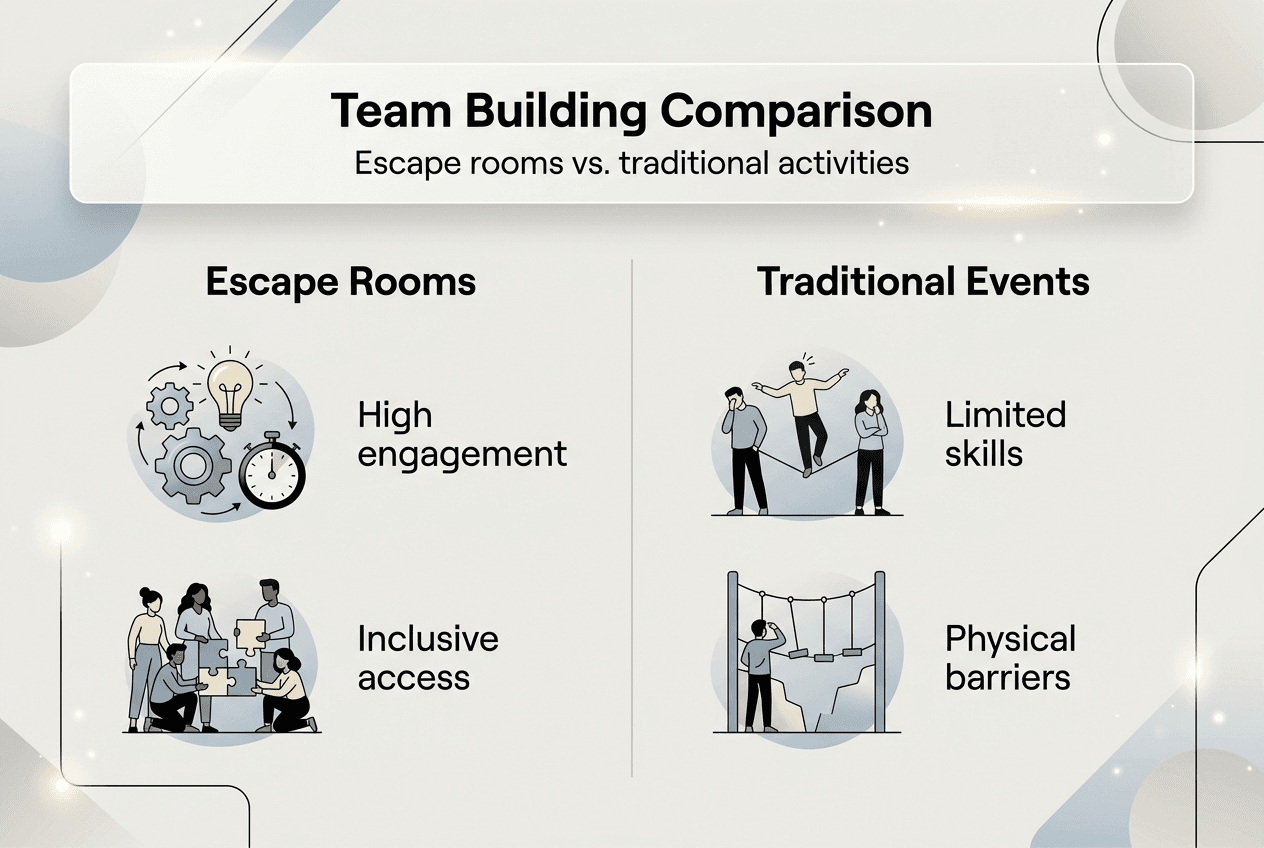
Escape rooms excel in several dimensions that matter for corporate team building. The cognitive demands engage professionals who find physical challenges less appealing. Every puzzle requires mental contribution, ensuring that analytical thinkers and creative problem-solvers both find meaningful roles.
The advantages of escape rooms include:
- Universal accessibility regardless of physical fitness or outdoor preferences
- Controlled environment that eliminates weather and logistics concerns
- Scalable difficulty that adapts to team experience and objectives
- Immediate feedback loops that reinforce effective collaboration
- Natural debriefing opportunities built into the experience structure
Workshops and training sessions provide valuable knowledge but lack experiential depth. Participants may understand collaboration principles intellectually without practicing them in realistic scenarios. The passive nature of most workshops also allows disengagement, reducing overall impact on team dynamics.
Outdoor retreats and adventure activities create memorable experiences but often exclude team members with physical limitations or outdoor aversions. The uncontrolled variables in outdoor settings can also overshadow team-building objectives when weather disrupts plans or safety concerns dominate attention.
Volunteer activities build empathy and shared purpose but may not directly address workplace collaboration challenges. Teams work together toward external goals without necessarily improving internal communication patterns or problem-solving approaches that transfer to daily work.
Escape rooms provide benefits that combine the engagement of adventure activities with the skill focus of workshops. The immersive scenarios create emotional investment while the puzzle structure ensures that cognitive skills receive systematic development. This dual focus on engagement and skill-building explains why corporate teams increasingly choose escape rooms for team development.
The measurable nature of escape room outcomes offers another advantage. Teams can track completion times, puzzle-solving efficiency, and collaboration quality across multiple sessions. This data-driven approach appeals to organizations that value quantifiable results from team-building investments.
Planning a successful corporate escape room event in Colorado Springs
Effective corporate escape room events require thoughtful planning that aligns activity design with organizational objectives. Random team outings provide entertainment but miss opportunities for meaningful development. Strategic planning transforms escape rooms from fun diversions into powerful team-building tools.
Careful planning and aligning escape room challenges with corporate objectives maximizes benefits. The process begins with clearly defining what your team needs to improve, whether communication clarity, leadership development, creative problem-solving, or cross-functional collaboration.
Follow these steps to organize an impactful escape room event:
- Identify specific team-building objectives based on workplace challenges or development goals
- Select escape room themes and difficulty levels that match team size, experience, and objectives
- Brief participants on goals without revealing puzzle solutions, emphasizing collaborative mindset over competition
- Observe team dynamics during the experience, noting communication patterns and role emergence
- Conduct structured debriefs immediately after to capture insights while experiences remain fresh
- Create action plans that translate escape room lessons into workplace behavior changes
Theme selection matters more than many organizers realize. Different escape room scenarios emphasize different skills. Mystery-solving rooms reward analytical thinking and attention to detail. Action-oriented themes demand quick decision-making and risk assessment. Narrative-driven experiences require creative thinking and pattern recognition. Match the theme to skills your team needs to develop.
Group size considerations affect the experience quality significantly. Teams of four to eight participants typically provide optimal engagement, ensuring everyone contributes meaningfully. Larger corporate groups benefit from running multiple simultaneous sessions followed by collective debriefing where teams share different approaches and insights.
Pro Tip: Schedule your escape room event mid-week rather than Friday afternoons. Participants bring more focus when the experience doesn’t compete with weekend anticipation, and insights transfer more immediately to workplace application.
Pre-event communication sets expectations that enhance learning. Explain that the escape room serves specific development objectives beyond entertainment. Encourage participants to notice their communication patterns, decision-making processes, and collaboration tendencies. This metacognitive awareness amplifies learning from the experience.
The debrief session transforms entertainment into education. Facilitate discussions about what collaboration patterns emerged, which approaches worked, and how the team might apply lessons to workplace challenges. Ask specific questions about communication breakdowns, leadership moments, and problem-solving strategies. Document insights and create accountability for implementing changes.
Professional escape room providers experienced with corporate groups offer valuable support. They understand how to facilitate debriefs, customize difficulty levels, and align experiences with business objectives. Booking with experienced providers in Colorado Springs ensures your team receives maximum value from the investment.
Discover corporate escape rooms at CodeBusters in Colorado Springs
Transforming your team’s collaboration and problem-solving capabilities requires more than good intentions. It demands immersive experiences that challenge assumptions and reveal hidden strengths. CodeBusters Escape Room in Colorado Springs specializes in creating exactly these transformative moments for corporate teams.
CodeBusters offers multiple themed escape rooms designed to engage corporate teams at every skill level. From the time-travel puzzles of “Past to the Future” to the nostalgic challenges of “Stranger 80’s,” each room provides unique opportunities for teams to practice communication, leadership, and creative problem-solving under pressure.
The experienced staff at CodeBusters understands corporate team-building objectives. They customize difficulty levels, facilitate meaningful debriefs, and provide insights that help teams translate escape room successes into workplace improvements. Convenient Colorado Springs location and flexible booking options make planning your corporate event straightforward and stress-free. Elevate your team’s performance with an experience that combines challenge, engagement, and measurable skill development.
Frequently asked questions about corporate team building with escape rooms
Can escape rooms accommodate large corporate groups?
Most escape rooms handle groups of four to eight participants per room optimally. Larger corporate teams can book multiple rooms simultaneously, creating friendly competition between sub-teams. This approach maintains engagement while allowing entire departments to participate. Providers often offer group packages with coordinated timing and shared debrief sessions that bring all teams together afterward.
How long does a typical corporate escape room session last?
A complete corporate escape room experience typically spans two to three hours. This includes pre-game briefing, the 60-minute escape challenge, and a 30 to 45-minute debrief session. The debrief is crucial for translating entertainment into learning, so rushing this phase reduces overall value. Plan for adequate time to capture insights while they’re fresh.
Are escape rooms suitable for employees new to gaming?
Escape rooms welcome participants of all experience levels, including those unfamiliar with gaming. The puzzles rely on logic, observation, and teamwork rather than gaming knowledge or physical prowess. First-time participants often bring fresh perspectives that experienced gamers miss. Staff provide guidance without spoiling solutions, ensuring everyone contributes meaningfully regardless of prior experience.
What safety measures are in place for COVID-19 or allergies?
Reputable escape room providers maintain rigorous cleaning protocols between sessions and offer private bookings for corporate groups. Rooms feature emergency exits and staff monitoring for safety. Discuss specific health concerns or allergies when booking so providers can accommodate needs. Many facilities have enhanced ventilation systems and can adjust room capacity to maintain comfortable spacing.
How do escape rooms adapt to different team-building goals?
Escape rooms naturally emphasize different skills based on puzzle design and facilitation approach. Providers experienced with corporate clients customize briefings to highlight specific objectives like leadership development or communication improvement. The debrief session focuses discussion on relevant themes, helping teams extract lessons aligned with their development goals. Some facilities offer multiple rooms with distinct skill emphases, allowing you to match the experience to your specific objectives.