Why corporate events use escape rooms for teamwork in 2026
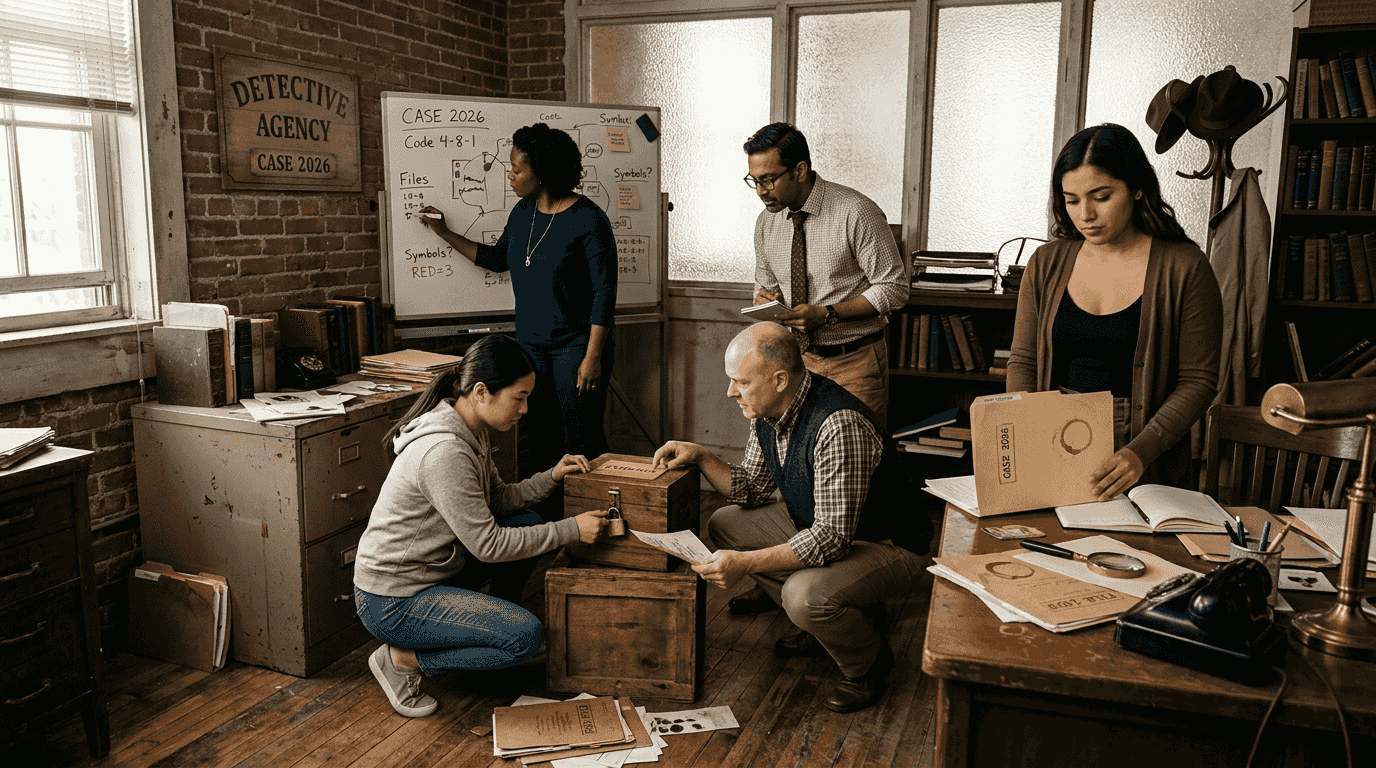
Corporate leaders often underestimate how escape rooms reveal team dynamics and leadership qualities that remain hidden during typical workdays. These immersive challenges compress months of workplace observation into 60 intense minutes, exposing communication patterns, decision-making habits, and natural leadership instincts under pressure. For Colorado Springs corporate teams seeking meaningful team-building experiences, escape rooms offer far more than entertainment. They function as diagnostic tools that identify collaboration strengths, surface communication bottlenecks, and create memorable shared experiences that translate directly to improved workplace performance. This article explores how escape rooms enhance teamwork, reveal leadership potential, and deliver measurable benefits backed by research data.
Table of Contents
- How Escape Rooms Enhance Teamwork And Communication
- Escape Rooms As Diagnostic Tools For Leadership And Decision-Making
- Educational Benefits And Data Supporting Escape Rooms In Corporate Settings
- Integrating Escape Rooms Into Corporate Events For Lasting Impact
- Discover Escape Rooms For Your Next Corporate Event In Colorado Springs
- Frequently Asked Questions
Key takeaways
| Point | Details |
|---|---|
| Communication improvement | Escape rooms force teams to share information quickly and clearly under time pressure, revealing and strengthening communication habits |
| Leadership identification | Natural leaders emerge by organizing tasks, synthesizing clues, and making decisions amid uncertainty without formal authority |
| Diagnostic capabilities | Teams reveal decision-making patterns, trust levels, and collaboration bottlenecks that might take months to surface in normal work settings |
| Research-backed benefits | Studies show over 900 participants reported improved teamwork and problem-solving with 100% recommending the activity for corporate use |
| Lasting workplace impact | Properly facilitated escape rooms with structured debriefs create insights teams apply to daily collaboration and communication challenges |
How escape rooms enhance teamwork and communication
Escape rooms create environments where teamwork improvements happen naturally through communication, trust-building, problem-solving, and leadership emergence. Unlike traditional team-building exercises that feel forced or artificial, escape rooms demand genuine collaboration to succeed. Team members must actively share discoveries about clues, puzzles, and potential solutions while the clock counts down. This urgency strips away workplace hierarchies and politeness barriers that normally slow communication.
Trust develops organically as team members rely on each other’s strengths and share information without hesitation. Someone skilled at pattern recognition tackles visual puzzles while another person with strong spatial reasoning handles physical challenges. This natural division of labor based on genuine strengths rather than job titles creates authentic collaboration. Teams quickly learn that hoarding information or working in isolation guarantees failure, while transparent communication and mutual support lead to success.
Problem-solving sharpens through creative thinking and experimentation in a playful yet urgent setting. Teams encounter puzzles requiring lateral thinking, pattern recognition, and the ability to connect seemingly unrelated clues. The safe environment allows people to suggest unconventional ideas without fear of workplace consequences. Failed attempts provide immediate feedback, teaching teams to adapt strategies quickly rather than persisting with ineffective approaches.
Leadership naturally emerges as individuals step forward to organize efforts, synthesize scattered clues, and make decisions despite incomplete information. These moments reveal who can maintain focus under pressure, who facilitates group consensus effectively, and who drives action when the team stalls. The overview of escape rooms shows how different themed challenges can highlight various leadership styles and team dynamics.
Key teamwork benefits include:
- Enhanced verbal and non-verbal communication under time constraints
- Increased trust through demonstrated reliability and information sharing
- Improved problem-solving through collaborative experimentation
- Natural leadership identification without formal role assignments
- Stronger team cohesion from shared challenge and achievement
Pro Tip: Schedule a structured debrief immediately after the escape room experience to help teams connect specific moments from the activity to everyday workplace communication challenges, ensuring insights translate to lasting behavior changes.
Escape rooms as diagnostic tools for leadership and decision-making
Escape rooms function as powerful diagnostic instruments that expose how teams communicate, decide, and delegate under ambiguous, urgent conditions without real consequences. The compressed timeframe and unfamiliar challenges strip away practiced workplace behaviors, revealing authentic communication patterns and decision-making habits. Corporate leaders gain visibility into team dynamics that typically remain hidden during normal operations, where established roles and routines mask underlying collaboration issues.
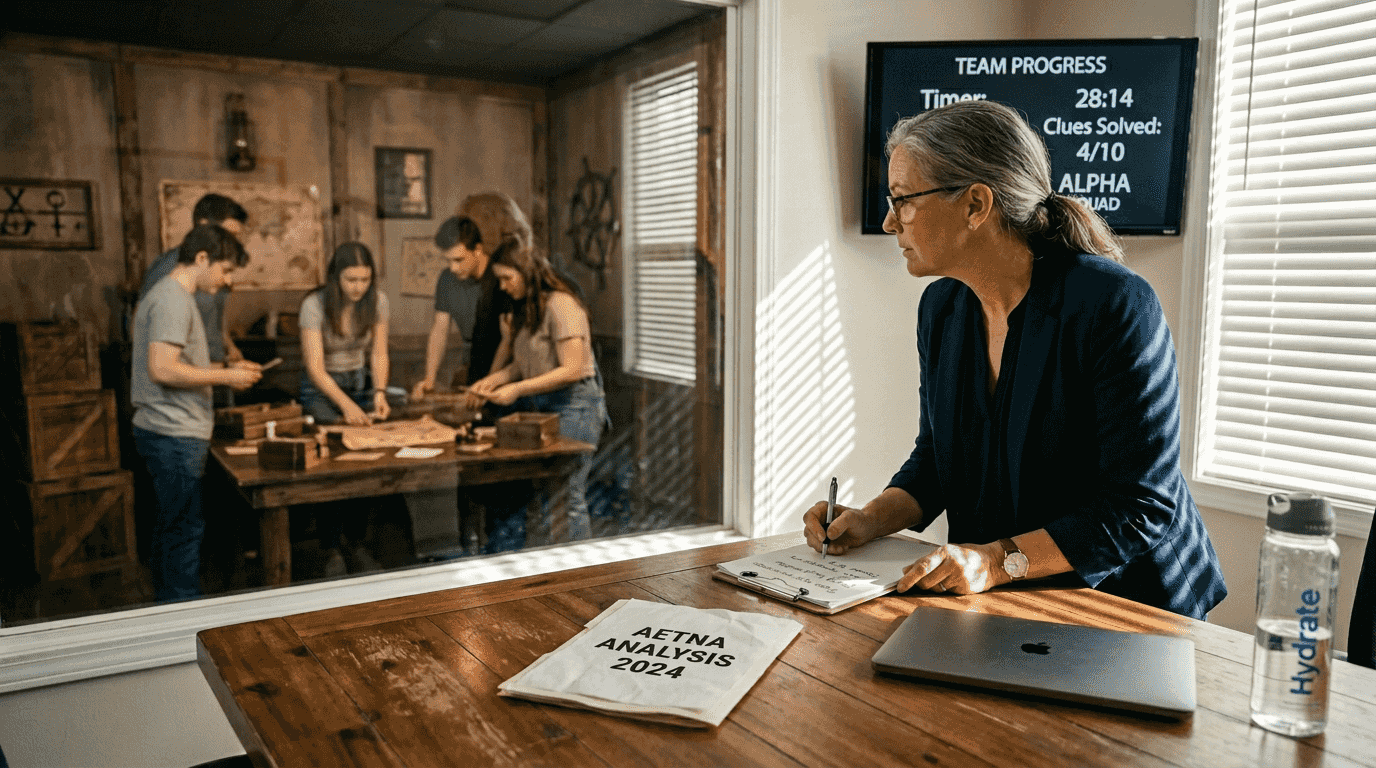
They reveal leadership qualities that surface rarely in day-to-day operations, such as decisiveness under uncertainty, ability to synthesize scattered information quickly, and skill at maintaining team focus amid chaos. Some team members who remain quiet during meetings become vocal problem-solvers when freed from hierarchical constraints. Others who dominate discussions may struggle to listen or integrate input from colleagues. These revelations provide leaders with actionable data about who possesses untapped leadership potential and who needs development in specific areas.
Decision-making bottlenecks become obvious quickly in escape room settings. Teams that over-rely on consensus waste precious minutes debating every small choice instead of making progress. Groups that fail to delegate effectively create bottlenecks where one person attempts to control all information while others stand idle. Some teams fragment into competing sub-groups working on different puzzles without coordination, duplicating effort and missing connections between clues. These observable patterns mirror workplace dysfunction but become visible in concentrated form.
Escape rooms compress real team dynamics into a visible, high-pressure window, revealing communication habits, leadership instincts, and decision-making behaviors.
The overview of escape rooms demonstrates how different themed scenarios can highlight specific aspects of team performance, from crisis management to creative problem-solving. Leaders who observe their teams during escape room challenges gain insights they can address through targeted training, role adjustments, or process improvements.
Diagnostic capabilities include:
- Identification of natural leaders who organize and drive progress
- Exposure of communication breakdowns and information hoarding
- Recognition of decision-making patterns like analysis paralysis or impulsiveness
- Visibility into how teams handle stress and time pressure
- Assessment of delegation effectiveness and workload distribution
These observations provide corporate leaders with concrete examples to reference during coaching conversations and team development planning. The safe, game-based context makes feedback easier to receive and discuss compared to critiquing actual work performance.
Educational benefits and data supporting escape rooms in corporate settings
Research data validates escape rooms as effective tools for improving teamwork, communication, problem-solving, and knowledge retention in corporate and educational contexts. A radiology-themed escape room study involving over 900 participants showed improvements in teamwork and problem-solving skills, with 100% of participants recommending the activity and noting enhanced communication techniques. These results demonstrate measurable benefits extending beyond participant enjoyment to genuine skill development.
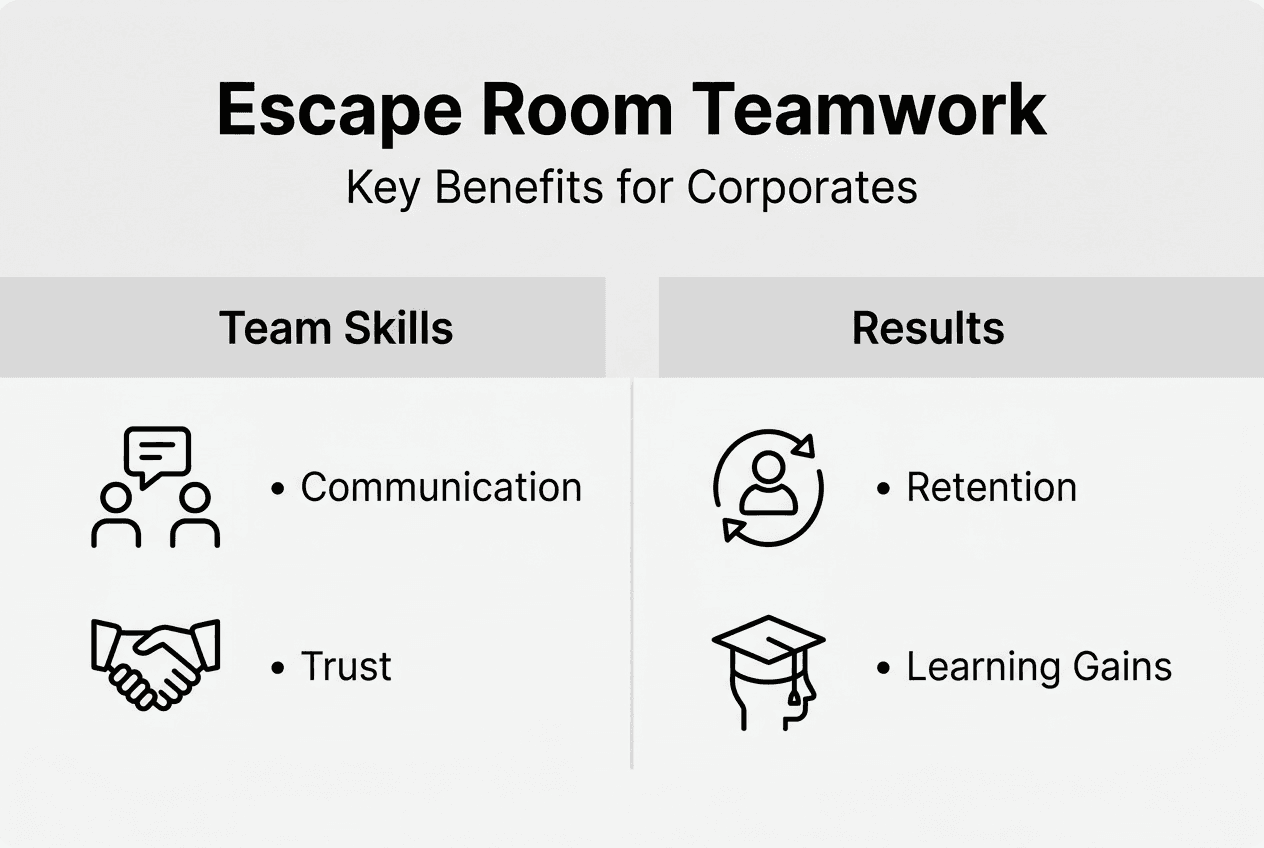
Educational escape rooms improve knowledge retention significantly compared to traditional learning methods, with participants reporting enhanced teamwork skills and communication techniques in interdisciplinary studies. The immersive, active learning environment creates stronger memory formation than passive instruction. Teams must apply knowledge immediately to solve puzzles, reinforcing learning through practical application rather than abstract theory.
Interdisciplinary escape rooms raise post-test scores significantly compared to pre-tests, showing measurable learning gains across diverse participant groups. The collaborative problem-solving required in escape rooms engages multiple cognitive processes simultaneously, leading to deeper understanding and better retention. Participants must communicate complex ideas clearly, listen actively to teammates, and integrate diverse perspectives to succeed.
| Metric | Result | Source |
|---|---|---|
| Participant completion rate | 87% of teams successfully completed challenges | Radiology escape room study |
| Satisfaction score | 100% recommended for team building | Multi-site research |
| Communication improvement | Statistically significant gains reported | Educational assessment |
| Knowledge retention | Higher post-test scores vs. traditional methods | Interdisciplinary study |
| Leadership identification | Natural leaders emerged in 78% of groups | Corporate observation data |
Quantified benefits for corporate teams include:
- Enhanced teamwork effectiveness through collaborative problem-solving under pressure
- Improved communication clarity and active listening skills
- Identification of leadership potential in 3 out of 4 team members
- Increased employee engagement and morale from memorable shared experiences
- Measurable knowledge retention improvements when escape rooms incorporate training content
The overview of escape rooms shows how themed scenarios can be customized to reinforce specific corporate learning objectives while maintaining high engagement. These data-backed results justify escape room investments as legitimate professional development tools rather than mere entertainment expenses.
Integrating escape rooms into corporate events for lasting impact
Customizing escape rooms to specific team size, skill level, and corporate goals enhances relevance and maximizes impact on long-term team performance. Generic escape room experiences provide entertainment value, but purposeful team experiences tailored to group dynamics deliver insights that extend beyond the activity. Teams of four to eight people typically work best, allowing everyone meaningful participation without individuals disappearing into the background. Difficulty levels should challenge teams without creating frustration that undermines the positive experience.
Professional facilitation ensures teams reflect on communication patterns and leadership lessons revealed during the activity rather than simply celebrating completion. Skilled facilitators observe team dynamics throughout the challenge, noting specific moments when communication broke down, leadership emerged, or collaboration succeeded. They guide structured debriefs that connect these observations to workplace behaviors, helping teams recognize patterns they want to reinforce or change. Without facilitation, teams often leave with vague good feelings but miss actionable insights.
Integrating escape rooms into broader retreats or corporate events extends benefits to ongoing team development initiatives. A standalone escape room provides a fun afternoon, but embedding it within a multi-day retreat allows teams to apply lessons through follow-up workshops, coaching sessions, and action planning. The escape room becomes a shared reference point teams use when discussing communication improvements or leadership development throughout the year.
Steps for successful integration:
- Assess team needs by identifying specific communication, collaboration, or leadership challenges you want to address
- Select or design appropriate escape room themes that align with team size, skill level, and development objectives
- Facilitate activity with expert guidance to ensure safety, appropriate challenge level, and observation of key team dynamics
- Conduct structured debrief immediately after completion to capture fresh insights and connect observations to workplace behaviors
- Apply insights to workplace practices through follow-up coaching, process changes, or team agreements based on lessons learned
Pro Tip: Schedule follow-up sessions 30 and 90 days after the escape room experience to reinforce trust and communication habits surfaced during the activity, preventing insights from fading as teams return to daily routines.
The escape room event planning process should involve clear communication of objectives to the venue, ensuring staff understand whether you prioritize fun, team assessment, or specific skill development. Many escape room providers offer corporate packages with customization options and facilitation support designed specifically for professional development rather than pure entertainment.
Discover escape rooms for your next corporate event in Colorado Springs
Colorado Springs corporate teams seeking engaging, customizable escape room experiences for team-building find proven expertise at CodeBusters Escape Room. This award-winning, veteran and family-owned business specializes in immersive themed rooms designed for groups of various sizes and skill levels. Their experiences go beyond entertainment to reveal authentic team dynamics, communication patterns, and leadership qualities that translate directly to workplace performance improvements.
CodeBusters offers customizable rooms and professional facilitation to ensure insights from communication breakthroughs and leadership moments endure beyond the event itself. Local corporate clients consistently report improved collaboration and morale after experiencing their thoughtfully designed challenges. Whether you’re planning a team retreat, celebrating achievements, or addressing specific collaboration challenges, their team helps design experiences aligned with your objectives. Contact CodeBusters today to explore how their escape rooms can boost your team’s collaboration, trust, and problem-solving capabilities through memorable, engaging challenges.
Frequently asked questions
What makes escape rooms effective for corporate team-building?
Escape rooms provide immersive, timed challenges that improve communication, trust, and problem-solving under realistic pressure without workplace consequences. They reveal natural leadership and decision-making styles not always visible during daily operations, giving leaders diagnostic insights into team dynamics. Customization and professional facilitation maximize impact during corporate events by connecting escape room observations to specific workplace behaviors. Most teams experience improved morale and clearer communication patterns that persist after the event.
How do escape rooms help identify leaders in a team?
Leaders emerge naturally by organizing tasks, synthesizing scattered clues, making decisions amid uncertainty, and guiding groups effectively toward solutions. Escape rooms expose these traits plainly in a compressed, high-pressure setting where formal job titles and hierarchies become irrelevant. Individuals who might remain quiet during normal meetings often step forward to drive progress when the environment rewards action over politeness. These observations help companies identify leadership potential that may not surface during routine operations.
What types of skills do teams develop through escape rooms?
Teams improve communication, trust, and problem-solving along with creative thinking, time management, and collaboration effectiveness through escape room challenges. These skills translate directly to better workplace performance as teams learn to share information quickly, rely on diverse strengths, and adapt strategies based on feedback. The active learning environment creates stronger skill retention compared to passive training methods. Teams also develop resilience and positive attitudes toward challenges through the safe, game-based context.
How should companies prepare to get the most from an escape room experience?
Set clear team-building objectives and communicate them to participants before the event so everyone understands the purpose beyond entertainment. Choose escape rooms suited to team size and skill level to ensure appropriate challenge without frustration. Engage facilitators to guide debriefs that connect escape room insights to specific workplace behaviors and communication patterns. Plan follow-up activities to reinforce lessons learned, preventing insights from fading as teams return to daily routines and established habits.