15 Examples of Corporate Icebreakers That Actually Work

Most managers have been burned by icebreakers. You pick one from a list, the room goes quiet, someone gives a reluctant answer, and suddenly you’ve made things more awkward than if you’d just started the meeting. The problem isn’t the concept of examples of corporate icebreakers. It’s that most lists don’t tell you why an activity works, when to use it, or how to adapt it for your specific group. This guide does all three.
Table of Contents
- Key takeaways
- How to evaluate examples of corporate icebreakers for your team
- 1. Two truths and a lie
- 2. Rose, thorn, bud check-in
- 3. Icebreaker bingo
- 4. Speed networking rounds
- 5. Back-to-back drawing
- 6. Word association
- 7. The 4 C’s icebreaker
- 8. This or that polls
- 9. Emoji check-in
- 10. Virtual scavenger hunt
- 11. Human bingo
- 12. Team timeline
- 13. Personal user manual
- 14. Structured debrief after any activity
- 15. Escape room experiences as extended icebreakers
- Comparison of icebreakers by context and use case
- What I’ve actually learned after running hundreds of team activities
- Take your team bonding further with immersive experiences
- FAQ
Key takeaways
| Point | Details |
|---|---|
| Match the activity to group size | Scaling icebreakers to team size prevents awkwardness and maximizes participation. |
| Use a debrief after every activity | A structured reflection session transforms fun into real performance improvement. |
| Virtual icebreakers need time limits | Keep online activities under 15 minutes to maintain focus and energy. |
| Anonymity improves honesty | Anonymous polls and responses reduce pressure and increase genuine participation. |
| One great question beats many generic ones | A single well-tailored prompt creates more engagement than a list of forgettable ones. |
How to evaluate examples of corporate icebreakers for your team
Before picking any activity, you need a short checklist. Not every icebreaker works in every context, and choosing the wrong one signals poor judgment before the meeting even starts.
Here are the criteria that matter most:
- Team size and setting. A small in-person team of six needs something different from 30 people on a Zoom call or a hybrid room where half the group is remote.
- Time available. Most meetings cannot spare more than 10 minutes on an opener. If you’re running a full-day workshop, you have more latitude.
- Group familiarity. Longtime colleagues can handle more vulnerability-based prompts. New hires or cross-department groups need lower-stakes entry points.
- Personality diversity. Introverts shut down when put on the spot. Activities with a moment to think, or written responses shared on screen, give everyone a fair shot.
- Your actual goal. Are you trying to energize a sluggish Monday morning meeting? Build trust before a sensitive project kickoff? Generate creative thinking before a brainstorm? The goal shapes the format.
Pro Tip: A single well-matched icebreaker question is more effective than running through several generic ones. Pick one, facilitate it well, and move on.
1. Two truths and a lie
Best for: Groups of 4 to 15 people, in-person or virtual.
Each person shares three statements about themselves. Two are true, one is false. The group guesses which one is the lie. Two Truths and a Lie works best with groups of 4 to 15 participants, where the group is small enough that everyone stays engaged through all the rounds.
The strength here is humor and surprise. People reveal unexpected facts about themselves, which is far more memorable than a standard “tell us your name and role.” Give people 60 seconds to think before going around the room, and you’ll get much better material.
2. Rose, thorn, bud check-in
Best for: Teams with ongoing projects, any size up to 20 people.
Each person shares a rose (something going well), a thorn (a current challenge), and a bud (something they’re looking forward to). This works especially well at the start of project meetings because it surfaces real context fast. You learn who’s stuck before the agenda begins.
It’s low pressure, emotionally honest, and takes roughly 90 seconds per person. For a team of ten, you’re looking at about 15 minutes total, which is worth it for the situational awareness you gain.
3. Icebreaker bingo
Best for: Large groups of 10 or more, networking events, onboarding sessions.
Each participant gets a bingo card filled with traits or experiences (“has worked in another country,” “owns a pet,” “speaks more than two languages”). They mingle, find people who match each square, and get a signature. Icebreaker Bingo works best with groups of 10 or more because it requires enough participants to fill the card without repeats.

This is one of the best icebreaker activities for forcing interaction across departments. People who would never naturally speak to each other end up in conversation. Use a digital version for hybrid or virtual settings.
4. Speed networking rounds
Best for: Large or newly formed teams, conferences, off-sites.
Speed Networking Rounds pair participants for two-minute conversations built around a specific prompt, then rotate. The prompt does the heavy lifting. Instead of “tell me about yourself,” you use questions like “What’s one thing about your work that people outside your team never understand?” or “What’s a skill you have that rarely comes up at work?”
The rotation keeps energy high and prevents anyone from getting stuck in a bad pairing. Time it strictly. Two minutes per round, three to four rounds total.
5. Back-to-back drawing
Best for: In-person teams, workshops focused on communication.
Two people sit back to back. One holds a simple image (a geometric shape, a basic scene). The other has a blank page and a pen. The person with the image describes it, and their partner draws it, without asking clarifying questions. Afterward, you compare the original to the drawing.
The results are almost always funny, and the debrief is genuinely useful. Teams immediately see how assumptions, vague language, and missing feedback loops cause miscommunication. This is one of the best icebreakers for workshops because it connects directly to real work challenges.
6. Word association
Best for: Teams that need quick energizing, any size.
The facilitator says a word. Each person around the room says the first word that comes to mind, building a chain. It sounds simple, but the pace and spontaneity force people out of their heads and into the room.
Use it as a 90-second warm-up before brainstorming sessions. Variations include using the company name as the starting word, or using a theme tied to the meeting’s topic. It’s low effort with a high payoff on group energy.
7. The 4 C’s icebreaker
Best for: New teams, onboarding sessions, cross-department introductions.
Each person shares a car, color, cartoon character, and cuisine that represents them. The 4 C’s framework comes from Penn State’s team building resources and works well because the categories are specific enough to spark creativity but universal enough for anyone to answer.
You get personality insights without anyone feeling interrogated. The cartoon character answer alone usually generates five minutes of conversation.
8. This or that polls
Best for: Virtual and hybrid meetings, any group size.
The facilitator presents two options (“Mountains or beach?”, “Early bird or night owl?”, “Spreadsheets or whiteboards?”) and participants vote instantly using a polling tool. Virtual icebreakers like ‘This or That’ can be completed in under five minutes and require zero preparation on the participant’s end.
This is one of the most effective virtual icebreakers for remote teams because it works at any scale, requires no speaking, and keeps the energy moving. Use it to open a Monday all-hands or before a sensitive discussion that needs a lighter mood first.
9. Emoji check-in
Best for: Remote and hybrid teams, recurring meetings.
Before the meeting starts, each person drops an emoji in the chat that represents how they’re feeling today, then adds one sentence of context. The facilitator reads them aloud or calls on a few people to elaborate.
This works because it acknowledges the human in the room without dragging the meeting off track. It also gives quieter team members an equal voice. The emoji creates just enough psychological distance that people are more honest than they’d be if asked directly.
10. Virtual scavenger hunt
Best for: Remote teams, team building sessions, onboarding.
The facilitator gives participants 60 seconds to find something in their home that fits a description: “Something that represents your biggest hobby,” “An object that’s been with you for more than ten years,” “Something that describes your current energy level.”
People share their items on camera, which immediately humanizes the remote experience. You learn far more about your colleagues from their homes than from any formal introduction. Keep prompts specific to avoid people wasting time thinking.
Pro Tip: Anonymous polling tools in virtual meetings significantly increase honest participation by removing the fear of judgment. Use them before transitioning to open-floor discussions.
11. Human bingo
Best for: In-person large groups, conferences, company-wide events.
Similar to Icebreaker Bingo but played without a card. Each person gets a list of traits and must physically find someone in the room who matches each one. The first person to match all traits wins.
The physical movement is the differentiator here. Getting people out of their chairs and crossing the room breaks the invisible walls that form in large group settings. Pair it with a corporate event entertainment checklist to layer it into a broader event agenda.
12. Team timeline
Best for: Established teams, annual retreats, milestone meetings.
Draw a horizontal line on a whiteboard or shared screen. Each person places a dot representing when they joined the team, then adds two or three key moments they remember from that time. The team talks through the shared history.
This icebreaker works differently from the others. It doesn’t generate laughs. It generates belonging. Teams that have been through hard stretches together often find this exercise quietly powerful.
13. Personal user manual
Best for: New team members, project kickoffs, leadership groups.
Each person prepares a one-page “user manual” for themselves: how they prefer to communicate, what drains their energy, when they do their best thinking, what they need when stressed. They present a 60-second summary to the group.
This is one of the most useful icebreaker questions for workplaces because the insights don’t disappear after the activity ends. Teams that do this consistently report fewer miscommunications and better collaboration over time.
14. Structured debrief after any activity
Best for: Any team building activity you want to actually stick.
This is less an icebreaker and more a principle. Effective team-building games require structured debriefs to translate the experience into real improvement. The ORCA method asks participants to Observe, Reflect, Connect, and Act, turning a 10-minute game into a conversation about actual team dynamics.
Without a debrief, even the best icebreaker is just entertainment. The debrief is where the work happens. Budget at least five minutes for it no matter how short the activity was.
15. Escape room experiences as extended icebreakers
Best for: Quarterly off-sites, leadership retreats, new team formations, large corporate events.
When you need something that goes beyond a five-minute opener, immersive team activities like escape rooms are among the best team building exercises available. They require real-time communication, role distribution, and problem-solving under pressure, which reveals how a team actually functions. The team collaboration benefits carry directly into workplace performance.
Quick icebreakers set the collaborative tone that makes an escape room experience land even better. Use a short opener at the start of the event, then let the room experience deepen what you started.
Comparison of icebreakers by context and use case
| Activity | Team size | Time needed | Virtual friendly | Engagement depth | Ease of facilitation |
|---|---|---|---|---|---|
| Two Truths and a Lie | 4–15 | 10–15 min | Yes | Medium | Easy |
| Icebreaker Bingo | 10+ | 15–20 min | Moderate | Medium | Moderate |
| Speed Networking Rounds | 10+ | 15–25 min | Yes | High | Moderate |
| This or That Polls | Any | 3–5 min | Yes | Low | Very Easy |
| Rose, Thorn, Bud | Up to 20 | 10–20 min | Yes | High | Easy |
| Emoji Check-In | Any | 5 min | Yes | Medium | Very Easy |
| Back-to-Back Drawing | 6–20 | 15–20 min | No | High | Moderate |
| Virtual Scavenger Hunt | Any | 5–10 min | Yes | Medium | Easy |
Use this table when you’re planning a meeting and need to match the right activity to your constraints. If you’re short on time and running a virtual session, This or That or Emoji Check-In wins every time. If you’re running a half-day workshop and want something that sparks real conversation, Speed Networking or Rose, Thorn, Bud are worth the extra minutes.
What I’ve actually learned after running hundreds of team activities
I’ve watched managers run perfectly good icebreakers and get nothing from them. The activity wasn’t the problem. The approach was.
Managers often confuse fun outings with strategic team-building. An icebreaker that isn’t connected to a meeting goal or followed by reflection is just a way to fill time. The teams that get the most out of these activities are the ones that treat them intentionally. They choose activities that match the group’s current state, they facilitate with energy rather than apology, and they spend five minutes afterward asking “what did we notice?”
Cultural sensitivity matters more than most training materials admit. An activity that feels playful to a Western corporate culture may feel invasive or performative to someone from a different background. I always tell managers: give people an opt-out that doesn’t embarrass them. “You can pass and share something else” goes a long way.
My honest opinion? The best icebreaker you can run is one you’ve done before. The second time you facilitate any activity, you’re twice as effective. Stop hunting for novelty and start mastering two or three activities that fit your team culture, then rotate them with purpose.
— CodeBusters
Take your team bonding further with immersive experiences
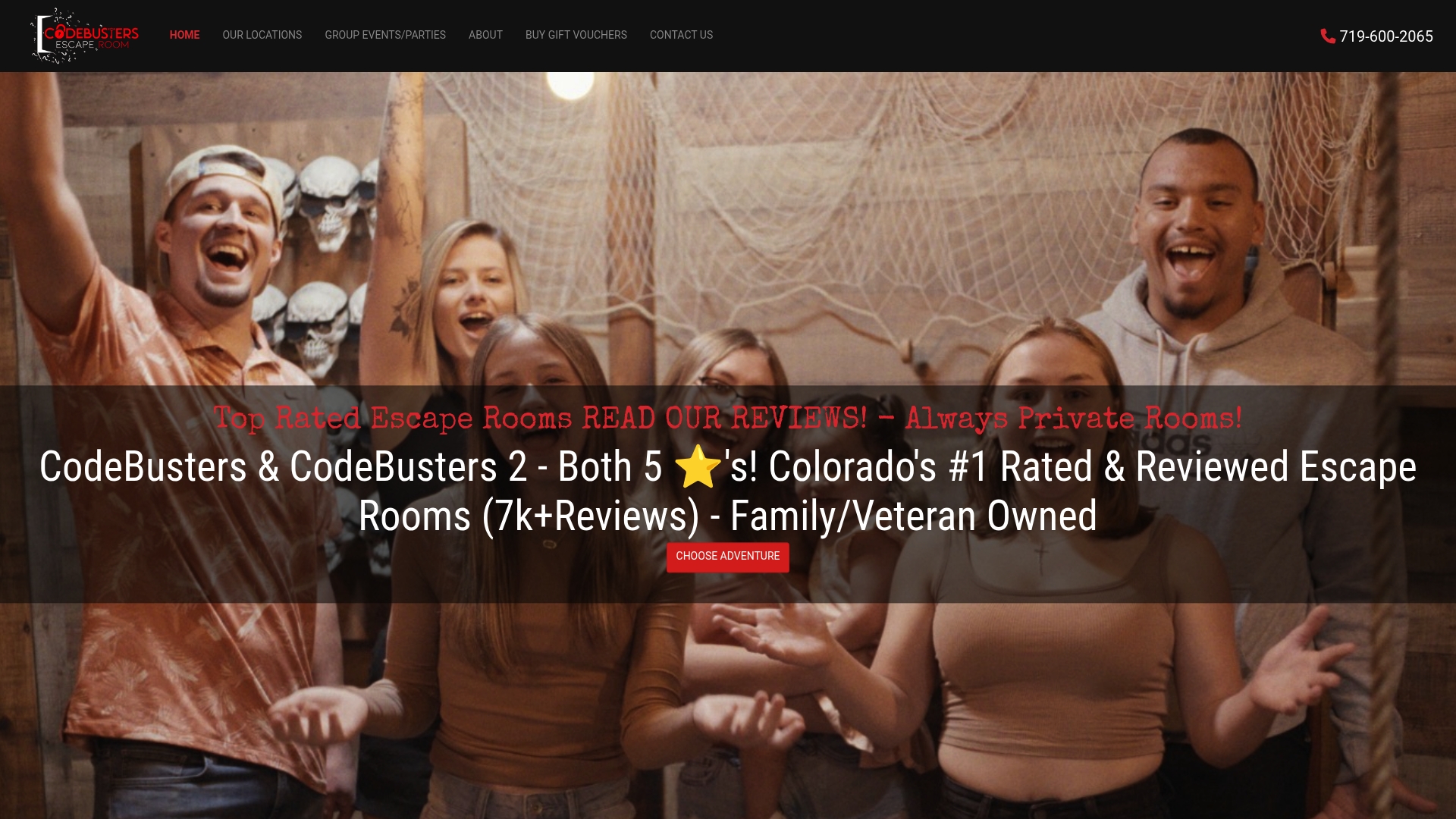
When a five-minute opener isn’t enough, your team deserves something more memorable. At Codebustersescaperoom, we’ve seen corporate groups walk into our rooms as polite colleagues and walk out as a genuine team. Our themed escape rooms in Colorado Springs, including Past to the Future, Stranger 80’s, and Flight of Deception, are designed to put groups under pressure in the best possible way, forcing real communication, creative problem-solving, and trust-building in under an hour.
Whether you’re planning a leadership retreat, an onboarding event, or a quarterly team day, our rooms accommodate groups of various sizes with private bookings available. You can also explore escape room vs. alternatives to see how immersive experiences compare to other group activities when you’re deciding what fits your goals best. Book your session today and give your next icebreaker a room worthy of it.
FAQ
What are the best examples of corporate icebreakers for large groups?
Icebreaker Bingo and Speed Networking Rounds are among the most effective large-group options, both working well for groups of 10 or more by encouraging broad mingling and structured conversation.
How long should a corporate icebreaker last?
Most effective icebreakers run between 5 and 15 minutes. Virtual icebreakers should stay under 15 minutes to maintain focus, while in-person activities at workshops can extend to 20 minutes if followed by a debrief.
Do icebreakers actually improve team performance?
Yes, when paired with a structured debrief. Debriefing is half the effort in effective team building because it turns shared experience into real behavioral insights and team agreements.
What icebreakers work best for virtual and remote teams?
This or That polls, Emoji Check-Ins, and Virtual Scavenger Hunts are proven virtual icebreakers for remote teams. Anonymous polling tools also help by reducing the pressure of speaking up in an open-floor format.
How do I choose the right icebreaker for my meeting?
Match the activity to your group size, available time, and meeting goal. A single well-matched prompt outperforms a string of generic questions every time, so prioritize fit over novelty.