How to Improve Team Communication: A Manager’s Guide

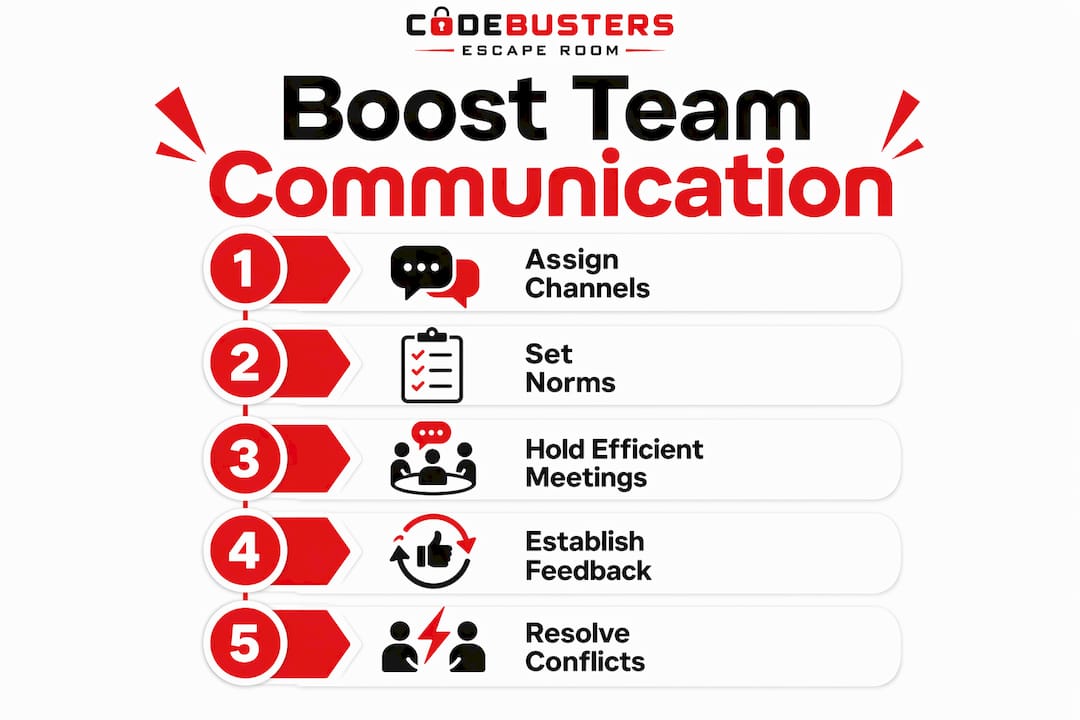
Effective team communication is defined as the structured exchange of information that drives decisions, reduces errors, and keeps teams aligned on shared goals. Managers spend up to 90% of their working hours communicating. That number makes communication mastery a performance strategy, not a soft skill. Knowing how to improve team communication means building systems around the right channels, clear meeting norms, and feedback loops that actually close. This guide gives team leaders and managers the specific methods that produce measurable results.
What tools and channels should you use to improve team communication?

The single biggest source of team confusion is using the wrong channel for the wrong message. Teams fail when they use wrong channels for messages, and the fix is a written protocol that assigns each message type to a specific channel. Without that protocol, urgent decisions land in email threads, casual questions clog project boards, and nobody knows where to look first.
Match every channel to a purpose
Channel-to-purpose matching means each communication type has one designated home. Slack or Microsoft Teams handles quick questions and informal updates. Email covers formal communications and external stakeholders. Tools like Loom handle async video messages for complex explanations that would take 20 minutes to type but three minutes to record. Project management platforms like Asana or Jira carry task updates, deadlines, and documented decisions. When every team member knows which channel to use, noise drops immediately.
| Channel | Best use case | Expected response time |
|---|---|---|
| Slack / Teams | Quick questions, informal updates | Within 4 hours |
| Formal requests, external communication | Within 24 hours | |
| Loom (async video) | Complex explanations, walkthroughs | Within 24 hours |
| Asana / Jira | Task updates, project decisions | Per sprint or deadline |
| Video call (Zoom) | Real-time decisions, sensitive topics | Scheduled in advance |
Build an async-first culture with clear norms
Async-first means the default is not a meeting or an instant reply. It means recording a Loom video, writing a detailed comment in Asana, or sending a voice note instead of scheduling a call. Defined response time norms such as chat within four hours and email within 24 hours reduce anxiety and prevent bottlenecks. Teams that skip this step create an always-on culture where people feel pressure to respond instantly, which destroys focus time.
Async video prevents miscommunication according to 70% of employees who say short recorded video messages would have stopped recent misunderstandings. That is a significant signal. When tone and context are visible, the gap between what was said and what was understood closes fast.
Pro Tip: Set your channel norms in a shared document and review them every quarter. Teams grow and change, and a protocol written for five people rarely works for fifteen.
How can you run more effective meetings to boost team communication?
Poorly planned meetings are one of the most expensive communication failures a team can make. A one-hour meeting with eight attendees consumes eight person-hours of productivity. That cost demands discipline around when meetings happen and who attends them.
The steps to a meeting that actually works
Follow this sequence for every meeting your team holds:
- Write the agenda before sending the invite. No agenda means no meeting. The agenda defines the decisions to be made, not just the topics to discuss.
- Limit the attendee list. Invite only the people who need to make or approve a decision. Everyone else gets the written summary afterward.
- Assign a note-taker. Rotate this role so it does not fall on the same person every time. The note-taker captures decisions and action items, not a transcript.
- Open with the goal. State in one sentence what the meeting needs to produce by the end. This keeps discussion on track.
- Close with a summary. Read back every decision and action item, including who owns it and when it is due.
- Send the written summary within one hour. Delay kills accountability. A summary sent the next day is a summary nobody reads.
Pro Tip: Use the “summarize back” technique during the meeting itself. Ask each person to restate their action item in their own words before the call ends. Active listening and summarizing catches misunderstandings before they derail a project.
| Meeting type | Ideal length | Required elements |
|---|---|---|
| Weekly team sync | 30 minutes | Agenda, decisions, action items |
| Project kickoff | 60 minutes | Goals, roles, timeline, risks |
| 1:1 check-in | 20–30 minutes | Progress, blockers, feedback |
| Retrospective | 45–60 minutes | What worked, what did not, next steps |
What strategies help create feedback loops that improve ongoing team communication?
Feedback loops are the mechanism that keeps communication from going stale. A feedback loop is not a suggestion box. It is a system where input is collected, acted on, and the action is reported back to the team. Most feedback systems fail at the last step.
Set up the right feedback channels
Three channels cover most team needs. Weekly or biweekly one-on-ones give managers direct insight into individual blockers and morale. Quarterly anonymous surveys surface patterns that people will not say in a room. Sprint retrospectives, borrowed from agile software teams, give the whole group a structured space to name what is working and what is not. Using all three prevents any single channel from becoming the only place people feel heard.
Feedback loops fail unless leadership visibly closes the loop. Even a brief update, such as “You told us meetings ran too long, so we are cutting the weekly sync to 30 minutes,” maintains trust and keeps people willing to speak up. Skip that step and participation drops fast.
Best practices for sustaining feedback loops
- Schedule feedback touchpoints on the calendar rather than running them ad hoc. Consistency signals that input matters.
- Respond to feedback within one week, even if the response is “we heard this and are still deciding.”
- Share survey results with the full team, not just leadership. Transparency builds credibility.
- Rotate who facilitates retrospectives so the same voice does not dominate the format.
- Track recurring themes across multiple feedback cycles to spot systemic issues early.
Pro Tip: Recognize good communication publicly. When a team member writes a clear project brief or runs a tight meeting, call it out in your team channel. Public recognition reinforces the behavior you want to see more of, and it costs nothing.
How to address and resolve communication conflicts and misunderstandings quickly?
Communication breakdowns do not fix themselves. Left alone, a misunderstood deadline or an ambiguous ownership decision grows into a real conflict. The fastest resolution is a direct, private conversation within 24 hours of the misunderstanding surfacing.
Guidelines for clearing up misunderstandings fast
- Address the specific message, not the person’s character. “The brief said Friday but the task was due Thursday” is fixable. “You never read anything carefully” is not.
- Use written confirmation for any decision that involves a deadline, a budget, or a deliverable. Verbal agreements disappear.
- Name the ambiguity out loud. Saying “I am not sure who owns this” is faster than assuming someone else will figure it out.
- Correct misinformation immediately and publicly when it spreads in a team channel. Silence reads as confirmation.
“Structuring communication norms and documenting decisions builds transparency and clears misinformation quickly, improving team cohesion.” — Atlassian Work Management
Documenting decisions and addressing misinformation immediately builds the kind of transparency that prevents small misunderstandings from becoming team-wide distrust. The documentation does not need to be formal. A pinned message in Slack or a one-line note in Asana is enough.
Pro Tip: Build a communication charter with your team. A one-page document that defines how decisions get made, where they get recorded, and how conflicts get raised gives everyone a shared reference point. Update it when the team grows or the work changes.
Key Takeaways
Improving team communication requires matching channels to message types, disciplining meetings with agendas and summaries, and closing feedback loops visibly so trust stays intact.
| Point | Details |
|---|---|
| Match channels to message types | Assign Slack, email, Loom, and Asana to specific communication purposes to cut noise. |
| Discipline every meeting | Write the agenda first, limit attendees, and send a written summary within one hour. |
| Close feedback loops visibly | Report back on what changed after collecting input to keep teams engaged and honest. |
| Address conflicts within 24 hours | Direct, specific conversations resolve misunderstandings before they become team-wide problems. |
| Build async-first norms | Set response time expectations in writing so teams can focus without always-on pressure. |
What we have learned running teams through high-pressure communication at Codebustersescaperoom
The most common mistake managers make is treating communication as a personality issue rather than a structural one. When a team miscommunicates, the instinct is to blame unclear speakers or poor listeners. The real problem is almost always a missing system. There is no written norm for which channel carries which message. There is no agenda template. There is no feedback cycle that closes.
At Codebustersescaperoom, we see this play out in real time. Groups that walk into an escape room with no communication plan spend the first ten minutes talking over each other. Groups that assign roles and agree on a quick check-in rhythm before the clock starts perform dramatically better. The communication dynamics in team settings we observe in our rooms mirror what happens in workplace teams under deadline pressure.
Technology helps, but it does not replace the human side. Loom and Asana reduce noise, but active listening and direct conflict resolution still require deliberate practice. The teams that improve fastest are the ones whose leaders model the behavior they want. If you want clear, concise messages, send clear, concise messages. If you want people to raise problems early, raise your own problems early and thank the people who do the same.
Communication protocols also need to evolve. A system built for a five-person team breaks at fifteen. Review your norms every quarter, not just when something goes wrong. The teams that treat communication as an ongoing practice rather than a one-time fix are the ones that stay aligned as they grow.
— CodeBusters
Team building that puts communication skills to the test
Strong communication does not develop in a conference room alone. Teams that practice under pressure, with real stakes and a shared goal, build the habits that carry back into the workplace.
Codebustersescaperoom offers team-building experiences in Colorado Springs designed for corporate groups who want to practice exactly these skills. Themed rooms like “Flight of Deception” and “Stranger 80’s” put teams in situations where clear roles, fast decisions, and direct communication are the only path to success. Private bookings are available for corporate groups of all sizes. If your team is working on collaboration under pressure, an escape room session gives you a concrete, memorable way to see your communication norms in action.
FAQ
What is the fastest way to improve team communication?
The fastest fix is assigning specific channels to specific message types and writing those norms down. Channel clarity alone removes a large share of daily confusion and repeated questions.
How do you stop meetings from wasting time?
Require a written agenda before any meeting is scheduled. Limit attendees to decision-makers and send a written summary with action items within one hour of the meeting ending.
Why do feedback loops fail in most teams?
Feedback loops fail when leadership collects input but never reports back on what changed. Visibly closing the loop is the step most managers skip, and it is the step that determines whether people keep participating.
What is async-first communication?
Async-first communication means the default response is a recorded message, written update, or video note rather than a live meeting or instant reply. It works best when teams set clear response time norms in writing.
How does an escape room help with workplace communication?
Escape rooms place teams under time pressure with a shared goal and no pre-assigned script. That environment surfaces real communication habits, including who speaks up, who listens, and who takes ownership, making it a practical mirror for team communication dynamics in the workplace.