Group Activity Benefits: What Science Says in 2026
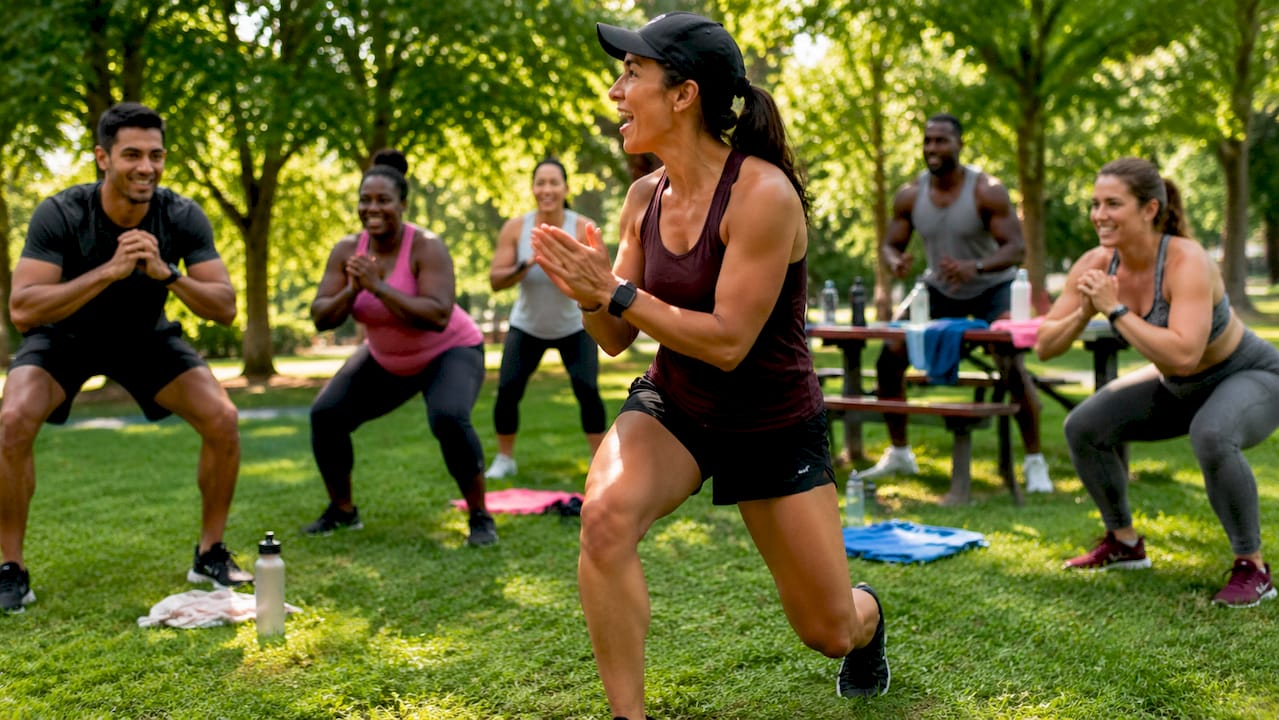
Group activity benefits are the positive physical, mental, and social effects that come from participating in organized shared experiences, and research consistently shows these effects exceed what solo activities produce. A 2026 meta-analysis of 71 studies involving 31,607 adults confirmed that group-based interventions deliver statistically significant advantages in functional outcomes like strength and flexibility. The social architecture of a group changes how people move, think, and connect. Whether you join a fitness class, a community arts program, or an escape room in Colorado Springs, the group format itself is doing measurable work.
1. What are the main group activity benefits for physical health?
Group exercise produces better physical outcomes than solo training. A meta-analysis of 71 studies found that group-based interventions show a statistically significant advantage in functional outcomes like strength and flexibility compared to individual-only interventions. That means the group format itself, not just the exercise type, drives better results.

The reasons are practical. When you work out with others, social accountability raises your effort level. You show up more consistently because canceling affects other people, not just your own schedule. Group exercise classes, team sports, and partner training all exploit this dynamic.
Key physical advantages of group activities include:
- Improved adherence: People stick to group programs longer than solo routines.
- Higher effort output: Social presence raises performance on physical tasks.
- Better functional gains: Strength, flexibility, and endurance improve more in group settings.
- Structured progression: Facilitated groups provide consistent programming that solo exercisers often skip.
Pro Tip: Choose a group activity with a fixed schedule and a consistent set of participants. The social commitment is what keeps you returning week after week.
2. How does group participation improve mental and emotional well-being?
Group activities produce measurable psychological benefits. A study of 782 community residents across 54 settings found that structured group arts activities significantly boost psychological well-being, with emotional intelligence acting as the key mediating factor. That finding matters because it identifies the mechanism: groups build your ability to read and manage emotions, and that skill then improves your overall mental health.
The mental health case for group exercise is equally strong. A meta-analysis of nearly 80,000 participants published in the British Journal of Sports Medicine found that exercising with others significantly decreases symptoms of anxiety and depression and enhances psychological functioning. Solo workouts do not produce the same effect at the same scale.
Group participation also creates access to a psychological state researchers call “communitas.” Communitas is a sense of connection and vitality that emerges during shared experiences and is simply not available in solo activity. Think of the energy in a packed fitness class or the shared tension in a group puzzle challenge. That feeling is real and measurable.
“Group activities don’t just improve mood temporarily. They build the emotional skills that protect mental health over the long term.” — Psychology Today, 2026
Pro Tip: If you struggle with anxiety, prioritize group activities with a clear shared goal. The focus on a common task reduces self-consciousness and lowers the mental load of social interaction.
3. Why group activities build social connections faster than solo efforts
Close friendship requires roughly 50 hours of shared time to form. Groups compress that timeline because multiple people accumulate shared hours simultaneously, and the social friction of one-on-one interaction is lower in a group setting. You are not the sole focus of anyone’s attention, which makes it easier to relax and engage authentically.
The mechanisms behind group bonding are specific and well-documented:
- Behavioral synchrony: Moving or acting in rhythm with others increases cooperation and trust. A Stanford psychologist’s study in Psychological Science confirmed that acting in synchrony with others increases social bonding essential for collective well-being.
- Shared adversity: A University of Queensland study found that shared challenges produce higher trust and bonding than passive social events. Mild difficulty, like solving puzzles under time pressure, accelerates connection.
- Collective effervescence: The emotional energy of a shared experience creates a sense of group identity that outlasts the activity itself.
- Reduced evaluation pressure: Small groups lower the fear of judgment compared to one-on-one interactions, making people more open and willing to contribute.
| Bonding method | Solo activity | Group activity |
|---|---|---|
| Hours to close friendship | 50+ hours one-on-one | Faster via shared group time |
| Social friction | High in direct pairs | Lower with group diffusion |
| Trust building | Gradual | Accelerated by shared challenge |
| Emotional energy | Individual | Amplified by collective experience |
Activities like escape rooms are particularly effective here because they combine all four bonding mechanisms in a single session.
4. How task complexity affects the advantages of group collaboration
Not every task benefits equally from group work. Research on cognitive load and task performance found that group collaboration benefits low-complexity tasks more than high-complexity tasks, which are better handled solo. This distinction matters when you are choosing a group activity for a specific goal.
| Task type | Best setting | Why |
|---|---|---|
| Low complexity (brainstorming, physical drills) | Group | Social energy raises output and engagement |
| Moderate complexity (puzzles, strategy games) | Group with structure | Shared challenge activates bonding and problem-solving |
| High complexity (deep analysis, creative writing) | Solo | Cognitive load is too high to share effectively |
The practical takeaway is that group activities work best when the challenge is real but achievable. A task that is too easy produces no bonding. A task that is too complex fragments the group. The sweet spot is a shared challenge where every member can contribute meaningfully.
Pro Tip: When organizing a team building event, choose activities that require coordination and communication rather than individual expertise. Escape rooms, relay challenges, and group cooking classes all sit in the productive middle range of complexity.
5. Social benefits of teamwork in schools and youth settings
Group activities produce distinct advantages for younger participants. Children and teenagers who participate in team sports, group arts programs, and collaborative classroom projects develop stronger communication skills, higher empathy, and better conflict resolution abilities than peers who primarily work alone. These are not soft outcomes. They are measurable competencies that affect academic performance and long-term career success.
The importance of group collaboration in school settings extends beyond social skills. Group work teaches students to manage disagreement, distribute tasks, and hold each other accountable. These are the same skills that define effective workplace teams. Schools that build structured group activities into their programs are investing in outcomes that compound over time.
Group activities also reduce social isolation in youth settings. Structured programs give students a low-pressure entry point into social interaction. The shared task removes the awkwardness of forced conversation and replaces it with a natural reason to engage.
6. How group activities improve cognitive skills and creative thinking
Group settings sharpen thinking in ways solo work cannot replicate. When you explain your reasoning to others, you identify gaps in your own logic. When you hear a different approach to the same problem, you expand your mental toolkit. This process, called collaborative elaboration, produces deeper understanding than reading or practicing alone.
Escape rooms are a strong example of this dynamic in action. The group escape room experience requires participants to share observations, test hypotheses out loud, and build on each other’s ideas in real time. That process mirrors the cognitive demands of high-performing workplace teams.
Group activities also build working memory and attention through the requirement to track multiple people’s contributions simultaneously. This is a cognitive load that solo activities simply do not impose. Over time, regular group participation strengthens the mental habits that support complex thinking.
7. Practical tips for choosing the right group activity
The right group activity depends on your goal. Use these criteria to narrow your choice:
- Shared challenge: Choose activities where the group must work together to succeed. Passive group experiences like watching a film together produce far less bonding than active ones.
- Clear goals: Activities with defined objectives, like completing a puzzle or finishing a race, give the group a shared focus that drives engagement.
- Appropriate group size: Smaller groups of 4–8 people produce stronger individual connections. Larger groups create energy but dilute personal bonding. Research on group size and outcomes confirms this pattern.
- Structured facilitation: Groups led by a skilled facilitator produce better psychological outcomes than unstructured gatherings. Structured facilitation by servant organizers is key to inclusive, positive group environments.
- Personal interest alignment: People engage more deeply when the activity matches their interests. A team that enjoys problem-solving will bond more in an escape room than in a mandatory trust fall exercise.
The best group activities combine physical or cognitive engagement with a social structure that makes contribution feel natural. Escape rooms, group fitness classes, community arts programs, and team sports all meet these criteria when run well.
Key takeaways
Group activity benefits are most powerful when the activity combines shared challenge, clear goals, and structured facilitation across physical, mental, and social domains.
| Point | Details |
|---|---|
| Physical outcomes improve in groups | A meta-analysis of 71 studies confirms group settings produce better strength and flexibility gains than solo efforts. |
| Mental health gains are significant | Group exercise reduces anxiety and depression symptoms at a scale that solo activity does not match. |
| Social bonding accelerates in groups | Shared challenges and behavioral synchrony build trust faster than one-on-one interaction. |
| Task complexity determines group advantage | Groups outperform solo efforts on low-to-moderate complexity tasks; high-complexity tasks are better handled alone. |
| Facilitation quality matters | Structured, well-led groups produce stronger psychological benefits than unstructured gatherings. |
Why I think most people underestimate what a group can do
Most people treat group activities as a social nicety, a way to make exercise more fun or to check a team building box at work. That framing sells the science short. The group format is not a delivery mechanism for an activity. It is the active ingredient.
What I have seen at Codebustersescaperoom confirms this repeatedly. Groups that walk into a themed room like “Stranger 80’s” or “Flight of Deception” as near-strangers walk out having built real trust. Not because the puzzles are clever, though they are. Because the shared challenge forced them to communicate, rely on each other, and succeed together. That process is the same one that research identifies as the driver of bonding, emotional intelligence, and psychological well-being.
The misconception I encounter most often is that introverts do not benefit from group activities. The opposite is true. Small groups with a shared task lower the social pressure that exhausts introverts in open social settings. The task gives everyone a reason to engage without requiring anyone to perform. That is why structured group formats consistently outperform unstructured social events in research on psychological outcomes.
My honest recommendation is to stop treating group activities as optional enrichment. Treat them as a core part of how you maintain your health, your relationships, and your mental sharpness. The research is clear. The only variable is whether you act on it.
— CodeBusters
Experience group activity benefits firsthand at Codebustersescaperoom

Codebustersescaperoom in Colorado Springs puts the science of group activity benefits into practice through immersive, award-winning escape room experiences designed for families, friends, and corporate teams. Rooms like “Past to the Future,” “Stranger 80’s,” and “Flight of Deception” are built around shared challenges, clear goals, and the kind of time pressure that accelerates real bonding. Every session is privately booked, so your group gets the full experience without distraction. Whether you are planning a team building event or a night out with friends, book your escape room and discover what a well-designed group challenge actually feels like.
FAQ
What are the main group activity benefits for health?
Group activities improve physical outcomes like strength and flexibility, reduce anxiety and depression, and accelerate social bonding. A meta-analysis of 71 studies confirmed group-based interventions outperform solo efforts across functional and psychological health measures.
Why do group activities build friendships faster than one-on-one time?
Groups reduce social friction and allow multiple people to accumulate shared hours simultaneously. Research shows close friendship requires roughly 50 hours of shared time, and group settings compress that timeline through shared challenges and behavioral synchrony.
Are group activities better than solo activities for mental health?
Group exercise significantly decreases anxiety and depression symptoms at a scale that solo activity does not match, according to a meta-analysis of nearly 80,000 participants published in the British Journal of Sports Medicine.
What makes an escape room a good group activity?
Escape rooms combine shared challenge, clear goals, and time pressure, which are the exact conditions that research identifies as drivers of trust, bonding, and emotional engagement. They sit in the productive middle range of task complexity where group collaboration produces the strongest benefits.
How does group size affect the benefits of group activities?
Smaller groups of 4–8 people tend to produce stronger individual connections because each person can contribute meaningfully. Larger groups generate collective energy but reduce the depth of personal bonding within the experience.